01Organized Inside review: a slow-paced tidying sim for cat-loving organizers who want zero timers or scores
STEAM DEAL · 15% OFF
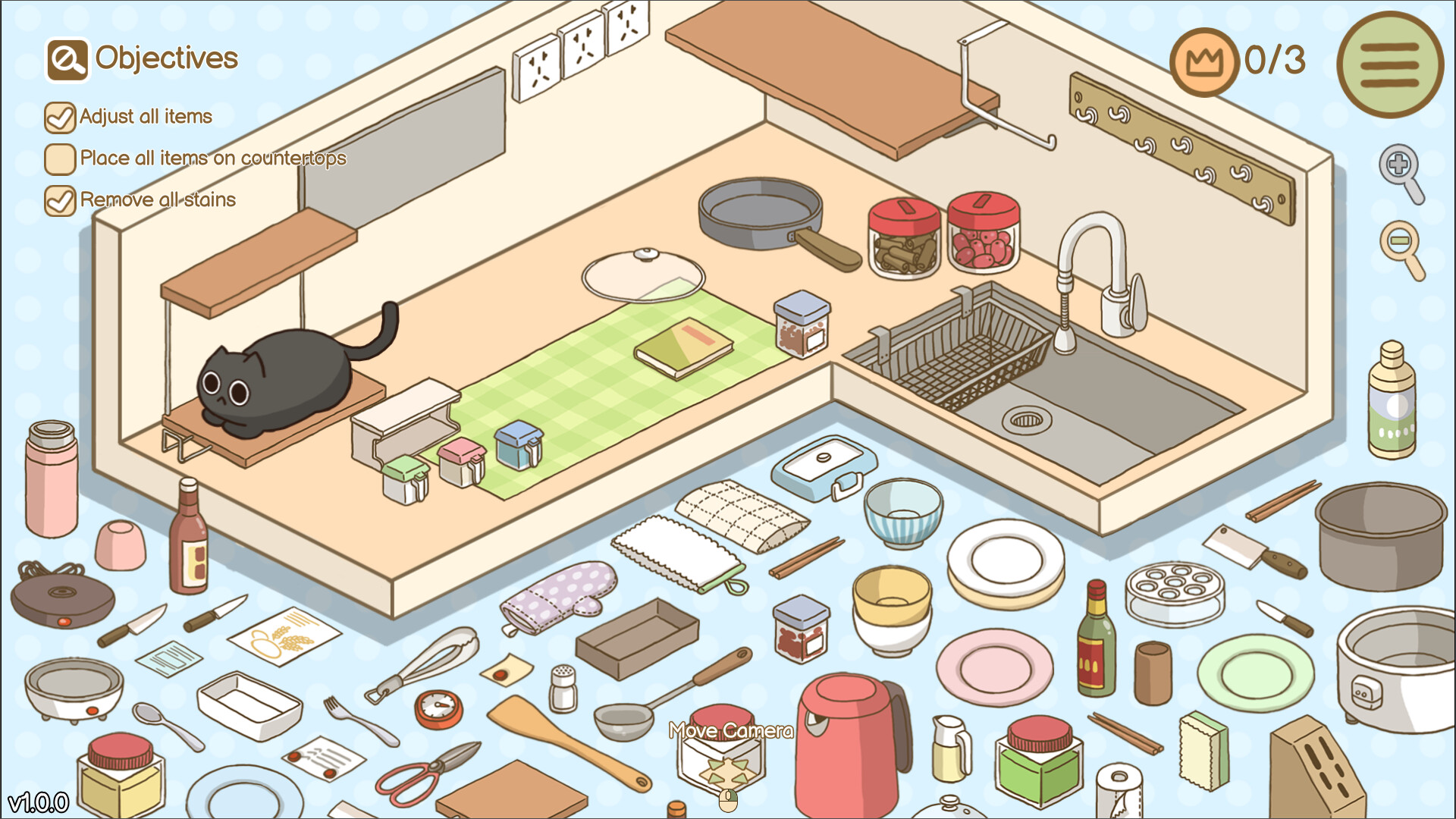
Organized Inside
A cozy cat-themed tidy-up sim that most players describe as relaxing and creative, but recurring criticism over its use of AI-generated music and localization is a hard filter for some buyers. If generative audio does not bother you, it scratches the Unpacking itch for a small price.
Game highlights
Unpacking-style sorting with no pressure
Official details confirm there are no timers, health bars, or scores, just methodical placement of everyday household objects. Players echo that the level structure (fridges, bakeries, campers, pet shops) gives clear objectives while leaving plenty of room to arrange items neatly, symmetrically, or with mild chaos. The click-and-hold item manipulation keeps hands relaxed during long sorting sessions.
Hidden interactions and openable containers
A thousand-plus items appear across levels, and official copy plus player tips note that purses, suitcases, and other containers can be opened to reveal smaller objects. Mystery items unlock when you combine or place things in specific spots, so experimentation pays off. This gives tidy-minded players something to chase beyond simply placing everything in a box.
A roaming cat mascot and five character arcs
The developer describes five strangers whose stories unfold through decor choices, with the black cat acting as a constant companion that players say follows placement decisions like a tiny quality-control inspector. Reviews highlight the cat's charm as a strong reason to keep progressing through the campaign.
Accessibility and platform reach
Steam categories list Mouse Only Option, Custom Volume Controls, Playable without Timed Input, Steam Achievements, Steam Cloud, and Family Sharing. The build supports Windows and macOS, so laptop cozy sessions and shared library play are straightforward. Audio sliders matter here, because several players say they mute or lower the in-game music after extended sessions.
What players are saying
What keeps coming up positively
- Players consistently call the sorting loop relaxing and satisfying, comparing the feel to Unpacking while praising the variety across roughly twenty themed levels.
- The click-and-hold placement, openable containers, and hidden-object puzzles give neat freaks and creative decorators room to make each space their own.
- The cat mascot, pastel art, and stackable items get frequent shout-outs as small touches that make long sessions feel cozy rather than repetitive.
- Several reviewers describe the game as a solid value pick at the discounted price given how much level variety is packed in.
Where the friction shows
- A large share of negative reviews focuses on the developer's disclosed use of generative AI for the soundtrack and for translations, with many players saying the disclosure is easy to miss on the store page.
- Multiple reviewers describe the music itself as repetitive, uninspired, or irritating after short sessions, and several report turning audio off to keep playing comfortably.
- Some players who enjoyed the game still lowered their recommendation because of the AI-music choice rather than because of gameplay issues.
Is it worth buying?
At $6.79 USD versus the $7.99 regular price (15 percent off as of 2026-08-15), the cost of entry is low and matches what most happy players describe as fair value. The bigger decision is philosophical: if AI-generated music and localization are a deal-breaker for you, wait for a clearer stance from the studio or pick an alternative. If you only care about tidy-up gameplay, this is a comfortable pick up at the current discount.
Price checked 2026-08-15:$6.79,down from $7.99(15% off)。Player-fit tags
Good fit
- Players who want a no-fail, no-timer tidy-up loop to wind down with after work.
- Unpacking fans looking for a new sorting fix with extra hidden-object puzzles to discover.
- Mouse-only cozy gamers who like experimenting with item placement across themed rooms.
- Cat-loving decorators who enjoy a constant companion reacting to their organizational choices.
- Budget-conscious players who want many levels of content for a small price.
Probably not for you
- Buyers who refuse to support games that disclose use of generative AI for music or translation.
- Players who want a strong, memorable soundtrack, since multiple reviewers mute or dislike the audio.
- Anyone seeking score-chasing, timers, or fail states, as the design deliberately removes those pressure systems.
02SpaceCraft: Shiro Games' slow online space builder for players who enjoy self-paced mining, automation tinkering, and co-op corporate logistics

STEAM DEAL · 20% OFF
SpaceCraft
SpaceCraft is a relaxing space factory and exploration MMO that rewards patient players who enjoy self-directed mining, crafting, and automation, but its persistent multiplayer structure and grind-heavy onboarding make it a poor match for anyone expecting a true single-player sandbox.
Game highlights
Persistent online galaxy with shared economy
SpaceCraft runs as an always-online MMO where every marketplace transaction shifts in-game prices, so your trade activity directly influences the universe around you. Players can join Corporations, assign roles, divide labor, and coordinate production across planets and systems. The catch that recurs in feedback is that there is no opt-in private solo or co-op mode; the shared server means competing for resource nodes and occasionally being blocked from deposits by other players.
Ship building, blueprints, and player-driven design
Ships are assembled from crafted parts, with each component meaningfully affecting performance so that small nimble craft and heavy transport cruisers feel distinct. Once you finish a design, you can sell the blueprint for others to build, and you can also buy ready-made blueprints from other players to skip the engineering grind. The creative-building side reads as a low-pressure outlet where you iterate at your own pace rather than racing a timer.
Automation, drones, and interplanetary logistics
Production scales through drones and cargo ships that move resources between outposts, letting players design multi-planet supply chains instead of micromanaging every hauler. Automation is presented as a long-term payoff: you start small with basic extractors and assemblers, then expand into energy-managed hubs. Several returning players specifically praise this loop as the moment the game clicks, with optimization and bottleneck-chasing being a core appeal.
Faster-Than-Light travel and seamless planetary exploration
Faster-Than-Light jumps shrink long voyages between systems, while gameplay transitions in real time from deep space flight down to the surface of planets for scanning, mining, and charting. Worlds include asteroid fields, abandoned stations, and derelict ships that serve as exploration hooks rather than combat encounters. This seamless traversal reinforces the low-pressure experimentation feel for players who enjoy scouting and surveying over twitch combat.
What players are saying
What keeps coming up positively
- Self-paced mining, planet scanning, and exploration are repeatedly described as relaxing rather than stressful
- Automation loops, drone logistics, and bottleneck optimization feel rewarding once production chains come online
- Co-op play inside Corporations gives the long-term grind purpose through shared goals and division of labor
- Ships assembled from crafted parts let players express design choices and trade blueprints with others
Where the friction shows
- Many solo buyers feel misled because the game has no real single-player mode and runs as a live shared MMO
- Progression feels extremely slow, with crafting wait times and resource gathering dominating early hours
- Solo players hit a hard cap of about two bases, which blocks most of the automation systems and makes the game feel like a second job
- Limited inventory capacity, unclear tooltips, and a long tutorial that buries the factory-building hook create real onboarding friction
Is it worth buying?
At $23.99 against a $29.99 regular price, SpaceCraft is a modest 20% discount rather than a deep sale, so it is best treated as a standard Early Access purchase. If you want a relaxing shared space factory to settle into with a group or Corporation, the current price is reasonable for the time investment on offer. If you primarily want a solo sandbox, the recurring solo friction means waiting for a deeper discount or further solo-quality-of-life updates is the safer call.
Price checked 2026-08-15:$23.99,down from $29.99(20% off)。Player-fit tags
Good fit
- Players who want a low-pressure online space sandbox focused on exploration rather than combat
- Builders who enjoy long-term automation, logistics, and production-chain optimization across multiple planets
- Groups or friends who want to share a Corporation, assign roles, and divide large-scale crafting work
- Solo players who treat slow mining and scanning as a relaxing loop and do not mind waiting through long crafting cycles
- Creative ship designers who want to assemble parts, iterate, and trade blueprints with other players
Probably not for you
- Anyone expecting a true single-player mode, because the game is built around a persistent shared MMO with no private solo or co-op toggle
- Players who dislike slow progression and long crafting wait times, since multiple reviews describe the early grind as overwhelming
- Buyers looking for combat or PvP, because encounters are currently limited to PvE exploration and resource competition rather than fighting
- Players with limited weekly gaming time, since meaningful automation and base expansion are repeatedly reported as requiring dozens of hours to unlock
03Two Point Campus review: a chill, décor-heavy university builder for laid-back sim fans who love tinkering with layouts
STEAM DEAL · 85% OFF
Two Point Campus
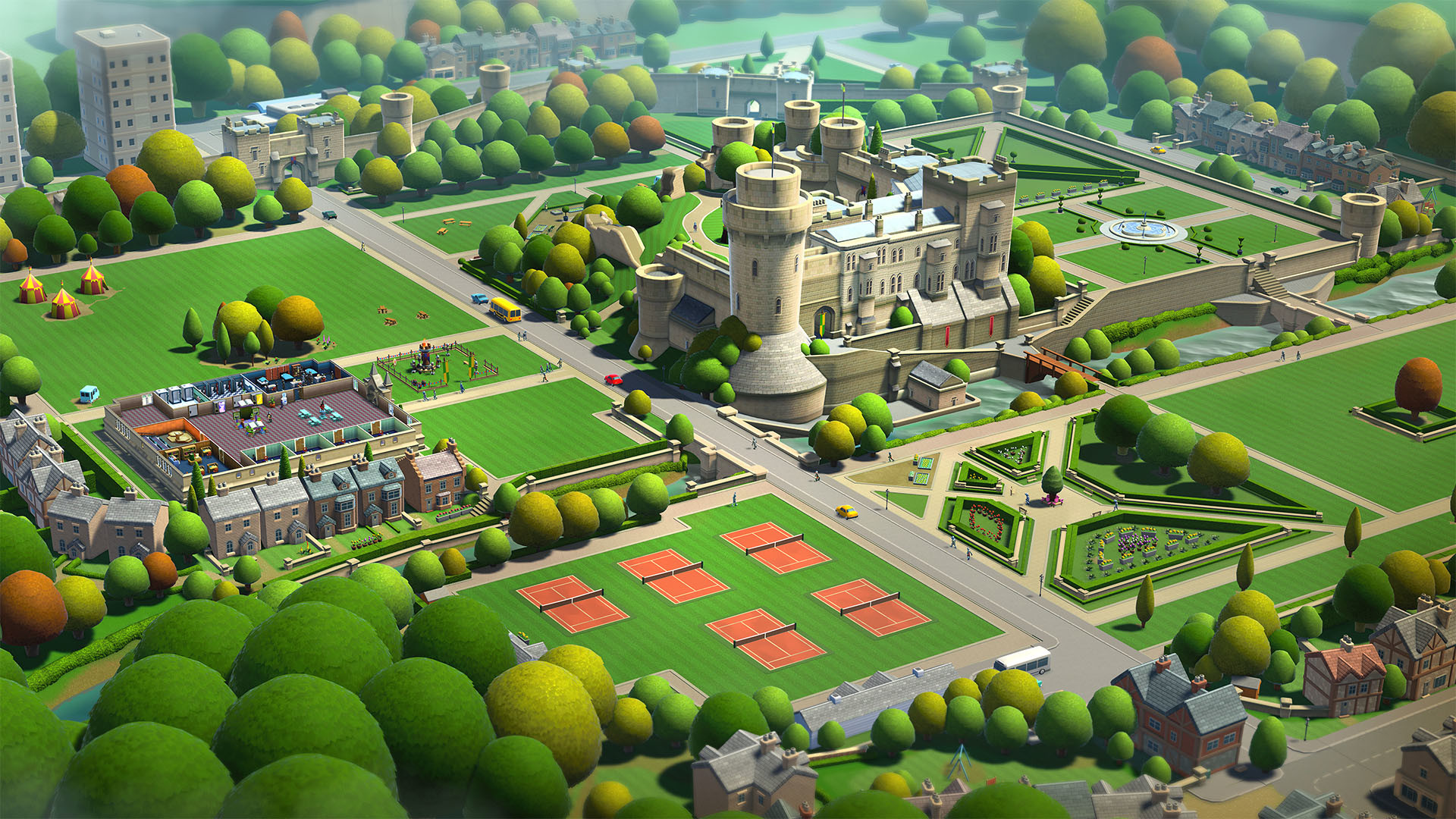
Two Point Campus is a relaxed management sim that leans hard into outdoor building, quirky courses, and student personalities, and at 85% off it is a strong pickup for anyone who wants a low-stakes tycoon to tinker with for dozens of hours. Players who need constant failure pressure or strict economy management may find it too forgiving.
Game highlights
Outdoor campus building with creative freedom
Two Point Campus lets you lay pathways, plant flora, drop benches, fountains, sculptures, and picket fences across open grounds, with simple tools for placing every tree or starting from a clean foundation. Players consistently call out the jump in design freedom compared with Two Point Hospital, and the wacky, oversized objects are part of the charm that makes layouts feel distinctively Two Point.
Bizarre courses and student life systems
Rather than standard academics, you unlock themed courses like Knight School and Gastronomy where students build giant pizzas and enormous pies, and you hire eccentric professors and madcap researchers to run them. Students have individual personalities, wants, and needs that you meet through clubs, societies, gigs, relationships, and pastoral care, which adds personality beyond pure room-building.
Smooth, approachable management loop
Each new campus unlocks new rooms, items, and courses, and the progression stays manageable enough that grades, funding, attractiveness, and student happiness never snowball into panic. Compared with Hospital, deaths and disasters are softened to occasional dropouts, which players who bounced off tougher sims consistently appreciate as a low-friction entry point.
Yearly rhythm with summer setup window
The academic year opens with a summer break, giving you breathing room to finish building before students arrive, then ramps into the busy teaching term. Reviewers regularly warn that time flies once terms begin, so a planned one-hour session can quietly stretch into five or six hours of tweaking layouts.
Training, research, and room upgrades
Beyond placing rooms, you manage staff training, research projects, equipment upgrades, event planning, and campus attractiveness, with clubs and societies layered on top to shape student happiness. The systems interlock enough to stay interesting without forcing constant micromanagement, which suits players who enjoy light optimization over reactive crisis management.
What players are saying
What keeps coming up positively
- Outdoor building and decoration feel expressive and are widely praised as a clear step up from Two Point Hospital.
- Courses, animations, and loudspeaker humor give the series its signature charm and keep long campaigns feeling fresh.
- Difficulty lands in a sweet spot for casual sim players who want progression without frequent bankruptcies.
- Long playthroughs of 50+ hours to three-star every map feel comfortable rather than grueling.
Where the friction shows
- Several players report save corruption that wiped 20+ hour campaigns, with cloud saves affected and unlocks not carrying forward.
- Compared with Two Point Hospital, the management layer is widely seen as easier, and later campuses can recycle the same loop with only one new course and a few animations.
- Staff training and room upgrade cycles feel slow and grindy for players who want faster payoff.
- A subset of negative reviews call out the inclusion of Denuvo as a friction point.
Is it worth buying?
At $4.49 against a $29.99 regular price, this is an 85% discount and a straightforward pickup for anyone even mildly curious. The price wipes out most risk for players who want to try the series, while completionist players get 50+ hours of campaign plus challenge maps and a sandbox mode for the asking price.
Price checked 2026-08-15:$4.49,down from $29.99(85% off)。Player-fit tags
Good fit
- Players who enjoy relaxed tycoon sims and want to decorate sprawling outdoor campuses without constant crisis management.
- Builders and décor-focused sim fans who like placing paths, plants, benches, and oversized props to chase prestige.
- Casual management players who bounced off Two Point Hospital's patient-death pressure and want a gentler entry point.
- Long-session players happy to lose hours tweaking layouts once the academic year gets rolling.
- Series fans who want to see how Two Point Studios evolved Hospital's formula before trying Two Point Museum.
Probably not for you
- Players who need genuine failure states or close-to-bankrupt tension, since most campuses stay comfortably profitable.
- Players sensitive to Denuvo DRM or wary of reported save corruption wiping multi-hour progress.
- Sim fans looking for deep mechanical innovation, since many systems carry over from Two Point Hospital with mostly cosmetic changes.
- Players who dislike slow staff training and upgrade grinds between new courses and items.
- Strategy-focused players expecting layered scheduling decisions, since clubs and routines resolve themselves with little player input.
Share this article