01Whiskerwood: a vertically ambitious cat-tyrant city builder for players who love automating tall mouse colonies
STEAM DEAL · 50% OFF
Whiskerwood
A solid 50%-off pickup for city-builder fans who want deep supply chains and don't mind Early Access quirks like a fast day cycle and intrusive ship interruptions. If you want a relaxed decorative sandbox, the tax pressure will fight you; if you love optimising conveyors and elevators, this clicks nicely.
Game highlights
Vertical construction as a core verb
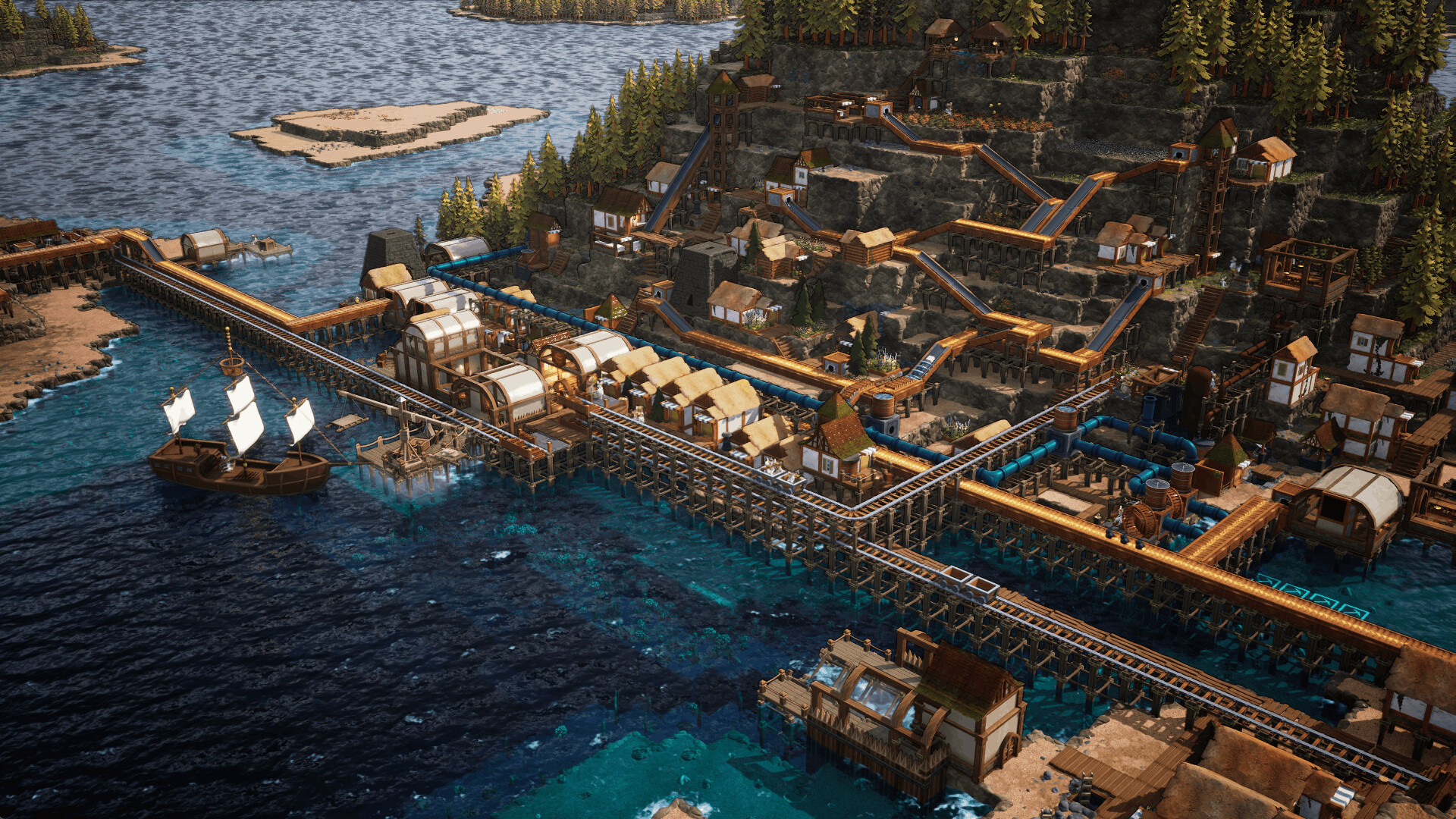
The official pitch and multiple reviewers call the build-anywhere axis the single biggest draw. Players stack skyscrapers or burrow into cliff sides for housing and storage, and elevators are repeatedly cited as the unlock that transforms late-game layout. It is closer to Dwarf Fortress meets Timberborn than a flat grid builder.
Complex production chains with real automation
Supply chains route through conveyor belts, pipes, trains, and steam-powered climate systems, with research gated behind a tech tree that several players compared favourably to Civilization-style progression. Mouse colonists have traits and guilds that push you to specialise workers, so optimisation becomes an ongoing puzzle rather than a one-time setup.
The cat tax loop
Cats demand escalating tribute, and the official description frames this as a constant balancing act against mouse morale and basic needs. Many players enjoy that tension, and the Mouselow hierarchy (food, rest, healthcare, then parks or claw-statue motivation) gives every decision a visible cost.
Climate, terrain, and exploration pressure
Procedurally generated islands mix mountains, seas, and weather that can ruin harvests or chill citizens, so heating pipes and winter stockpiles matter. You also sail to neighbouring islands for trade, salvage, and pirate encounters, though ship visits are one of the more polarising features.
Early Access with very active patches
The game released into Early Access in November 2025 and the developer cadence has been unusually fast, with multiple reviewers crediting rapid UI, balance, and bugfix updates. Steam Workshop support is already wired in for modders who want to tweak further.
What players are saying
What keeps coming up positively
- The supply chain and elevator-based vertical building loop is repeatedly described as the most satisfying part of the game
- The research tree earns consistent praise for feeling like organic era progression rather than arbitrary unlocks
- Dev response time is called out across multiple reviews, with several players impressed by patches landing within a day or two of complaints
- Aesthetics and decorative building reward creative players who enjoy prettifying towns once economy is stable
Where the friction shows
- The in-game day cycle runs short, forcing tight layouts where canteens, housing, and workplaces must sit close together or mice get unhappy
- Ship and pirate events interrupt gameplay frequently and feel mandatory to react to, breaking flow for players who want uninterrupted building
- Early-game research and industrial buildings are gated behind a single resource, so most runs follow the same optimal path
- Tax and pirate pressure can feel punitive rather than thematic, with several players hiding everything underground to ignore the threat
Is it worth buying?
At $14.99 against a $29.99 sticker, the discount halves the risk on an Early Access game with known pacing friction. Buy now if you specifically want vertical automation in this genre; if you are mainly after a chill decorative builder, wait for a deeper discount or more updates that ease the time pressure.
Price checked 2026-09-06:$14.99,down from $29.99(50% off)。Player-fit tags
Good fit
- Players who enjoy optimising long conveyor and pipe networks across multiple vertical layers
- Fans of Anno, Timberborn, or Frostpunk who want a similar simulation with a sharper cat-and-mouse theme
- Builders who like laying out compact colonies where every structure placement matters
- Early Access supporters who value a developer patching UI and balance issues on a near-weekly cadence
- Players comfortable with hostile events like raids and tax deadlines shaping every session
Probably not for you
- Anyone looking for a purely cozy, low-pressure wind-down builder
- Players who dislike being interrupted by ship arrivals or pirate demands every few minutes
- Fans of broad tech trees with multiple viable build paths, since early progression is narrow
- Anyone unwilling to restart or replan layouts when colonists struggle to reach distant canteens within the short day
02Timberborn: a vertical beaver city-builder where clever water engineering and terraforming turn every drought into a satisfying survival puzzle
STEAM DEAL · 30% OFF
Timberborn
Timberborn is a strong pick for players who enjoy engineering-driven city builders and don't mind teaching themselves the systems, but it loses momentum once survival is secured. The 30% discount makes the entry price easier to justify for the right audience.
Game highlights
3D water physics and terraforming as core gameplay
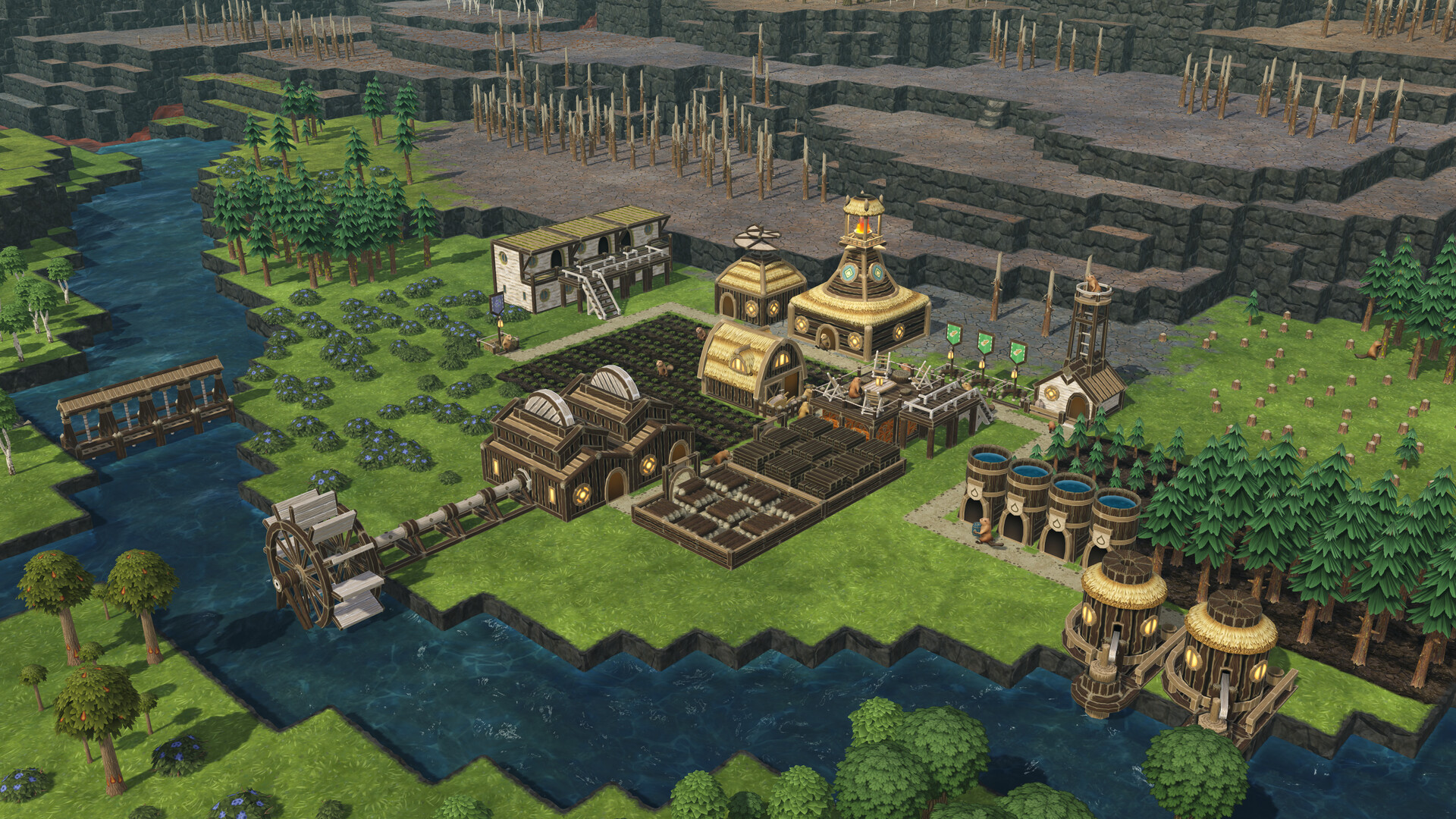
Timberborn's water simulation is the headline feature: dams, floodgates, aqueducts, explosives-dug canals, and reshaping terrain all feed into a drought-survival loop. Reviewers repeatedly call out the water engineering as what separates it from other colony sims, and the puzzle of routing and storing water around bad-tides is a recurring source of satisfaction.
Vertical architecture and zipline routing
The game pushes you off flat grids by stacking lodges, workshops, platforms, and bridges, then connecting them with ziplines or tubeways for fast beaver travel. Players highlight verticality as a creative outlet, and the built-in power grid ties the whole stack together.
Two distinct beaver factions
You pick between the nature-leaning Folktails and the industrial Iron Teeth, each with unique buildings, tech, and playstyle. The contrast is enough that switching factions changes your priorities, and several reviewers point to faction choice as a strong driver of replayability alongside the included maps and Workshop content.
Automation, bots, and end-game monuments
Late-game tools include sensors, relays, counters, and mechanized beaver bots that operate around the clock and tolerate hazardous areas, plus large monuments tied to the well-being system. These systems reward players who like wiring up self-running factories rather than micromanaging every beaver.
Built-in map editor and Steam Workshop support
Official mod support and a map editor extend the base game with community maps and quality-of-life additions. Reviewers lean on Workshop content for fresh scenarios, which helps offset the lack of structured objectives in the vanilla experience.
What players are saying
What keeps coming up positively
- The water-engineering loop is unusually deep and is what keeps players coming back across hundreds of hours.
- The 'just one more thing' pacing, especially around approaching droughts and finishing builds, makes sessions stretch far longer than planned.
- Vertical stacking, ziplines, and two genuinely different factions give real creative freedom rather than flat-grid optimization.
- Workshop support, mods, and a built-in map editor add meaningful replayability without paid DLC.
Where the friction shows
- After you stabilize water and food, late-game pressure drops sharply and the sandbox can feel directionless.
- A steep opening, especially on harder difficulties, pushes new players into trial-and-error before the systems click.
- Repetitive gathering and progression grind appear in longer playthroughs as colonies scale up.
- There is no traditional campaign, so players who want clear win conditions or scenarios often set their own goals.
Is it worth buying?
At $24.49 against a $34.99 regular price, the 30% off discount trims a meaningful chunk but is not a deep cut. If the water-engineering pitch appeals and you don't mind a self-directed sandbox, the discount makes it easier to commit; if you prefer structured objectives, waiting for a deeper sale is reasonable.
Price checked 2026-09-06:$24.49,down from $34.99(30% off)。Player-fit tags
Good fit
- Players who enjoy engineering and routing water through dams, canals, and aqueducts
- Builders who like stacking vertically and designing zipline-connected layouts
- Colony-sim fans comfortable teaching themselves systems through experimentation
- Sandbox players who set their own goals and iterate over many hours
- Workshop users who want fresh maps and mods to extend replay value
Probably not for you
- Players who want clear win conditions, campaigns, or scenario objectives
- Anyone expecting a relaxing, low-pressure cozy game
- Those who dislike a demanding opening before the systems click
- Players sensitive to repetitive resource-gathering loops at scale
03MineMogul: a physics-driven underground factory sandbox for automation players who love messy, hands-on conveyor puzzles
STEAM DEAL · 25% OFF
MineMogul
If physics-based automation in tight underground spaces sounds like your kind of puzzle, MineMogul is worth picking up at its 25% discount, especially given how early it is. Just expect clunky placement, repetition, and a grind toward very expensive late-game goals that a lot of players already flag as excessive.
Game highlights
Physics objects, not abstract numbers
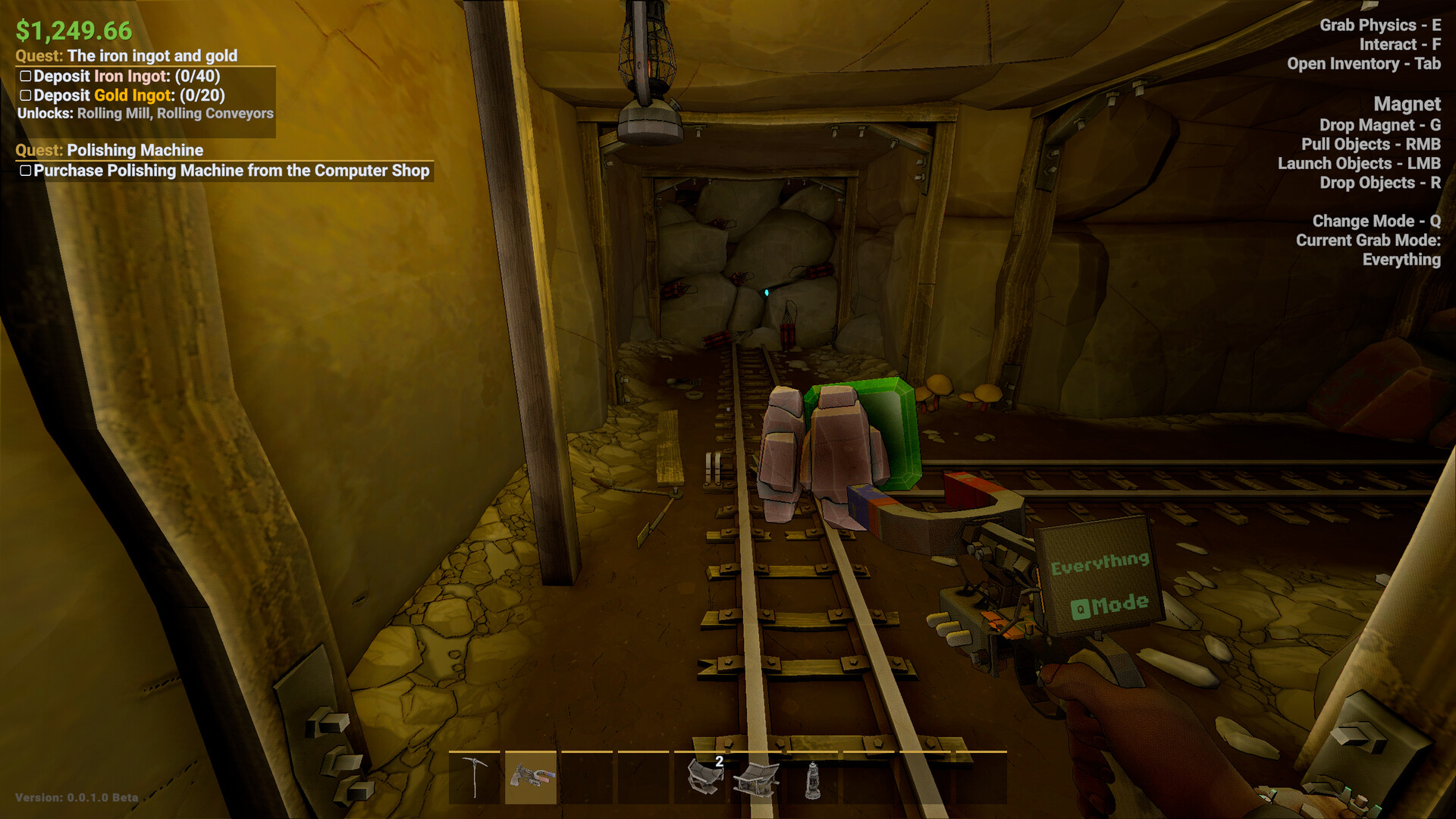
Official materials describe a sandbox where mined resources and machine outputs are physical objects that pile, spill, and jam. Multiple reviewers echo this, saying resources clog belts and overflow storage in ways that turn a routine automation puzzle into industrial slapstick. That shared unpredictability is what most positive reviews single out as MineMogul's hook.
Cramped cave maps that force tight designs
The official description mentions twisting mineshafts and a forgotten cave system that players rebuild through. Players confirm the underground setting is deliberately small, with limited room to expand, which pushes you toward compact layouts. Several reviewers compare the scale to Satisfactory or Factorio but at a much smaller footprint, which adds challenge but also frustration when squeezing in machines.
Automation loop centered on tweaking and rebuilding
Official text frames the game around managing chaos and optimizing machine placement as the factory grows. Reviewers describe a core loop of building a setup, watching it choke, then tearing it apart and rebuilding. Quests push for higher totals, which keeps the rework cycle going for dozens of hours before progress slows.
Active developer with an Early Access roadmap
The store page lists NoodleForge (Gvarados and Diomonder) as both developer and publisher, with an Early Access release on December 4, 2025. Reviewers who interacted with the Steam forums describe the developer as responsive and friendly. That visibility matters because many negative reviews explicitly call out how thin the current content is and lean on promised updates to justify the buy.
Casual, pressure-light tone with no combat
Categories confirm single-player, playable without timed input, stereo sound, Steam Cloud, and family sharing, with Windows as the only supported platform. Reviewers describe the mood as cozy, and several specifically call out the absence of enemy encounters as a feature. That makes it approachable for players who want automation without the threat layer Satisfactory or Factorio bring.
What players are saying
What keeps coming up positively
- Physics-based automation feels fresh compared with spreadsheet-style resource games, with items behaving like real objects instead of numbers.
- Factory design in a small underground space forces genuinely creative layouts, and figuring out where to route belts is satisfying once it clicks.
- The tone is relaxed and low-pressure, especially because there are no combat threats interrupting the building loop.
- The developer is active on the Steam forums and engages with player feedback during Early Access.
Where the friction shows
- Placing and routing conveyors is slow, clunky, and frustrating, with snapping that frequently fails, so the rebuild-heavy core loop feels more tedious than fun.
- Several players describe a heavy grind toward very expensive static trophy purchases, with late-game money goals that feel like placeholders rather than meaningful progression.
- Bugs and performance issues show up repeatedly in negative reviews, even from players who like the underlying concept.
- Content runs thin quickly for players who push past the first few hours, with little new to discover in the current Early Access build.
Is it worth buying?
At $11.24 with the 25% discount versus a $14.99 regular price, MineMogul sits in impulse-purchase territory, especially for automation fans who already own the big names. The price feels fair only if you actively enjoy physics-based conveyor puzzles and don't mind a grindy Early Access loop; if you want a polished, content-rich factory game on day one, waiting for more updates or a deeper sale is the safer call.
Price checked 2026-09-06:$11.24,down from $14.99(25% off)。Player-fit tags
Good fit
- Players who like solving congestion and overflow puzzles with physical objects rather than balancing abstract numbers
- Automation fans who enjoy tearing down and rebuilding compact factory sections when quests demand more throughput
- Builders who thrive in tight underground spaces and like squeezing belts through mineshafts
- Solo players looking for a low-pressure, no-combat automation loop they can leave and return to
- Early Access supporters who enjoy tracking a small developer's progress and giving forum feedback
Probably not for you
- Players who want large open maps with room to sprawl, since the cave setting is deliberately cramped
- Anyone who expects snappy Satisfactory or Factorio-style building, because conveyor placement is widely described as slow and finicky
- Players who dislike grind-heavy progression, because late-game goals and trophy costs stretch playtime far beyond the core loop
- Mac or Linux users, since the store page lists Windows as the only supported platform
- Players who want a finished, content-complete experience, given how thin the current Early Access build feels to several reviewers
Share this article