01Wanderburg Review: Drive a Devouring Castle for Accessible Survivors-Style Action and Whimsical Early Access Fun
STEAM DEAL · 35% OFF
Wanderburg
Wanderburg is worth considering for players who want a quick-to-learn survivors-style game built around a moving, devouring castle. Its strong presentation, active ability control, and flexible run options are appealing, but shallow meta-progression, grindy currency gains, limited weapon interaction, and Early Access rough edges make it a better fit for forgiving action fans than build-focused roguelike specialists.
Game highlights
A moving castle with direct control
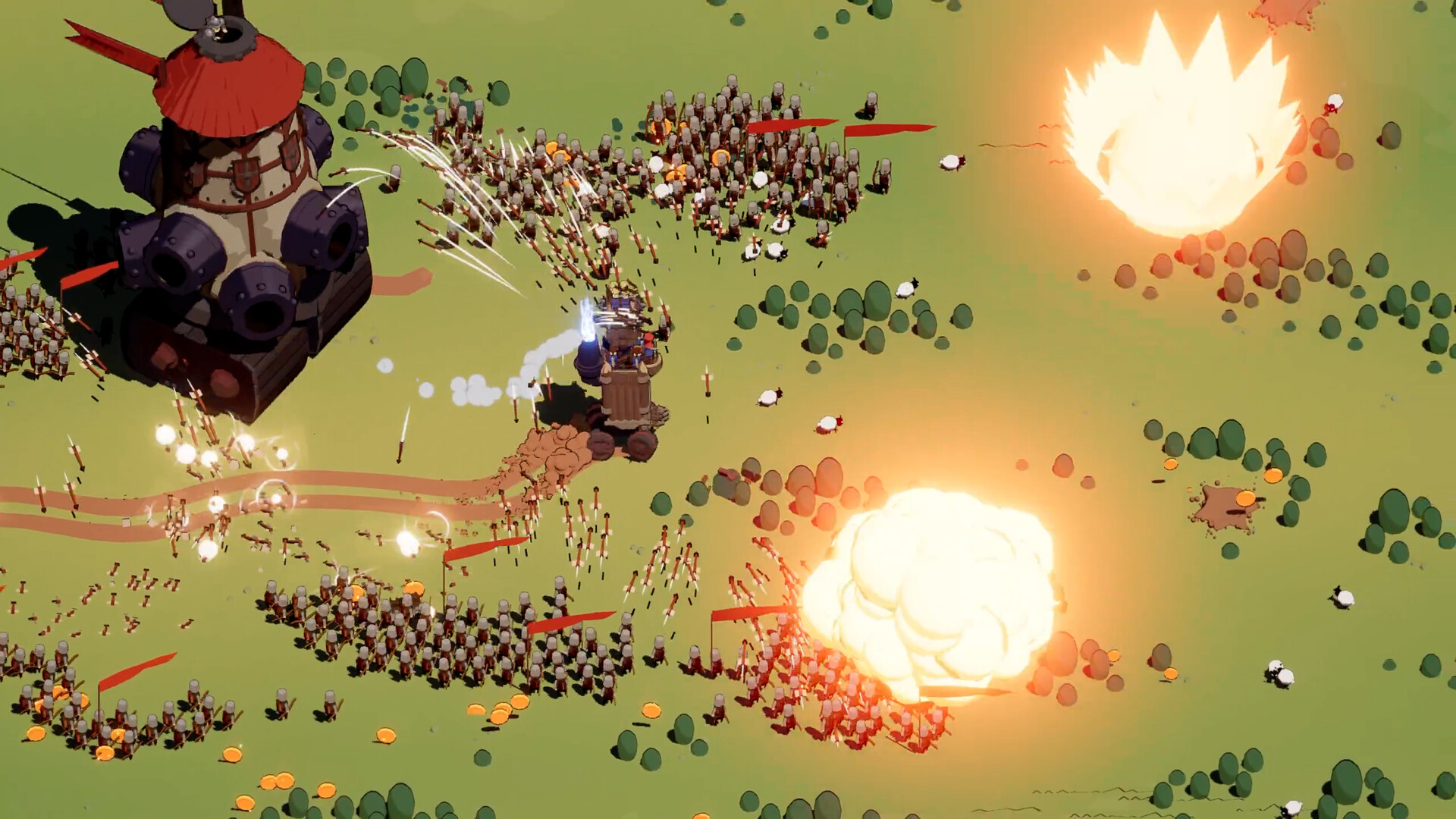
Wanderburg combines automatic projectile fire with up to four activatable abilities, letting players time cooldowns rather than merely watch attacks trigger. Rolling, dodging, and boosting add movement decisions, while villages, wandering creatures, and smaller fortresses can all be consumed to fuel growth.
Builds can grow wildly between runs
The official arsenal includes cannons, wizard-operated arcane towers, explosives, modules, artifacts, vehicles, and captains. Those options support experimentation, but recurring reviews argue that the four starting weapons offer little meaningful interaction, so build diversity may not deliver the same systemic payoff the official description suggests.
Easy to enter, with adjustable challenge
Players can use a mouse, keyboard, or controller, and the game does not require timed inputs. Adjustable difficulty, save-anywhere support, and a choice between hands-off and actively managed play make the core action approachable, though one review reports being unable to adjust difficulty on individual maps.
Whimsical medieval presentation
The minimalist visual style, absurdly enjoyable music, and imagery such as bicycle-riding knights give the game a distinctive identity. It also runs well on Steam Deck according to one review, making it a plausible choice for players prioritizing portable, low-friction action.
Early Access remains visibly unfinished
The current package includes translation-formatting problems, spelling errors, missing health-box spawns, and audio trouble after Alt-Tabbing. Controller-facing movement is another reported friction point, while overtime mode is described as an abrupt difficulty spike that cuts off longer farming attempts.
What players are saying
What keeps coming up positively
- The minimalist medieval look, whimsical music, and castle-devouring fantasy create strong charm without a story-heavy onboarding burden.
- Automatic fire, manually triggered abilities, turbo movement, and playable-without-timed-input options make the core action inviting for short or relaxed sessions.
- Players frequently find the basic rolling-and-dodging loop entertaining before progression or build depth becomes the main concern.
- The option to choose between hands-off and actively managed play suits different attention levels, and one review specifically reports strong Steam Deck performance.
Where the friction shows
- Several players describe the unlocks as too slow, the Silver requirements for upgrades and cosmetics as excessive, or the meta-progression as too limited for sustained replay value.
- Reviewers repeatedly question whether the game provides real builds: weapons often feel independent rather than synergistic, rerolls can be unhelpful, and upgrades may make little visible difference.
- Repetition sets in after only a handful of runs for some players, while overtime mode can abruptly end a promising run and restrict currency farming.
- Early Access issues include translation formatting, English spelling errors, missing health boxes, audio trouble after Alt-Tabbing, and awkward controller-facing movement.
Is it worth buying?
At $9.74 USD, reduced from $14.99, Wanderburg is affordable enough to justify a careful try for action-first players. Waiting is wiser for anyone who expects deep, permanent progression or strongly interacting weapons, because the review evidence already flags grind, repetition, and limited build synergy; the supplied package contains no additional discounted tiers.
Price checked 2026-09-09:$9.74,down from $14.99(35% off)。Player-fit tags
Good fit
- Players who enjoy survivors-style combat and prefer automatic attacks supplemented by a few manually triggered abilities.
- Players who want a fantasy action loop that is quick to understand without navigating a story-heavy tutorial or extensive menus.
- Controller, keyboard, and mouse users who value adjustable difficulty and support for non-timed play.
- Players attracted by the fantasy of driving a destructive medieval fortress and collecting villages, creatures, and enemy strongholds.
- Early Access players comfortable with progression friction and occasional technical or localization issues in exchange for a promising premise.
Probably not for you
- Players seeking deep meta-progression or substantial permanent growth across many runs.
- Build-theory players who expect weapons and upgrades to create clear combos, emergent interactions, or strong visual transformations.
- Players who dislike grind-heavy currency requirements, limited reroll value, or abrupt difficulty spikes that end otherwise successful runs.
- Anyone unwilling to tolerate Early Access bugs, localization errors, unusual controller mapping, or incomplete-feeling systems.
02Order Automatica review: a pocket-sized roguelite that rewards patient tacticians who learn from repeated failure
STEAM DEAL · 20% OFF
Order Automatica
At roughly $4.79 during a 20% discount, Order Automatica is a smart pick for players who enjoy squeezing deep strategy out of a tiny 3x3 grid, but expect a sharp difficulty curve and a finite content window once optimal builds surface.
Game highlights
Tiny board, real depth
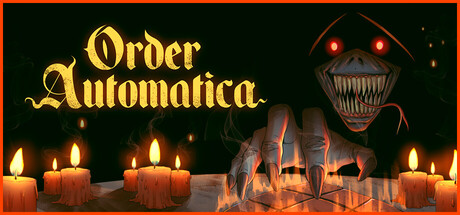
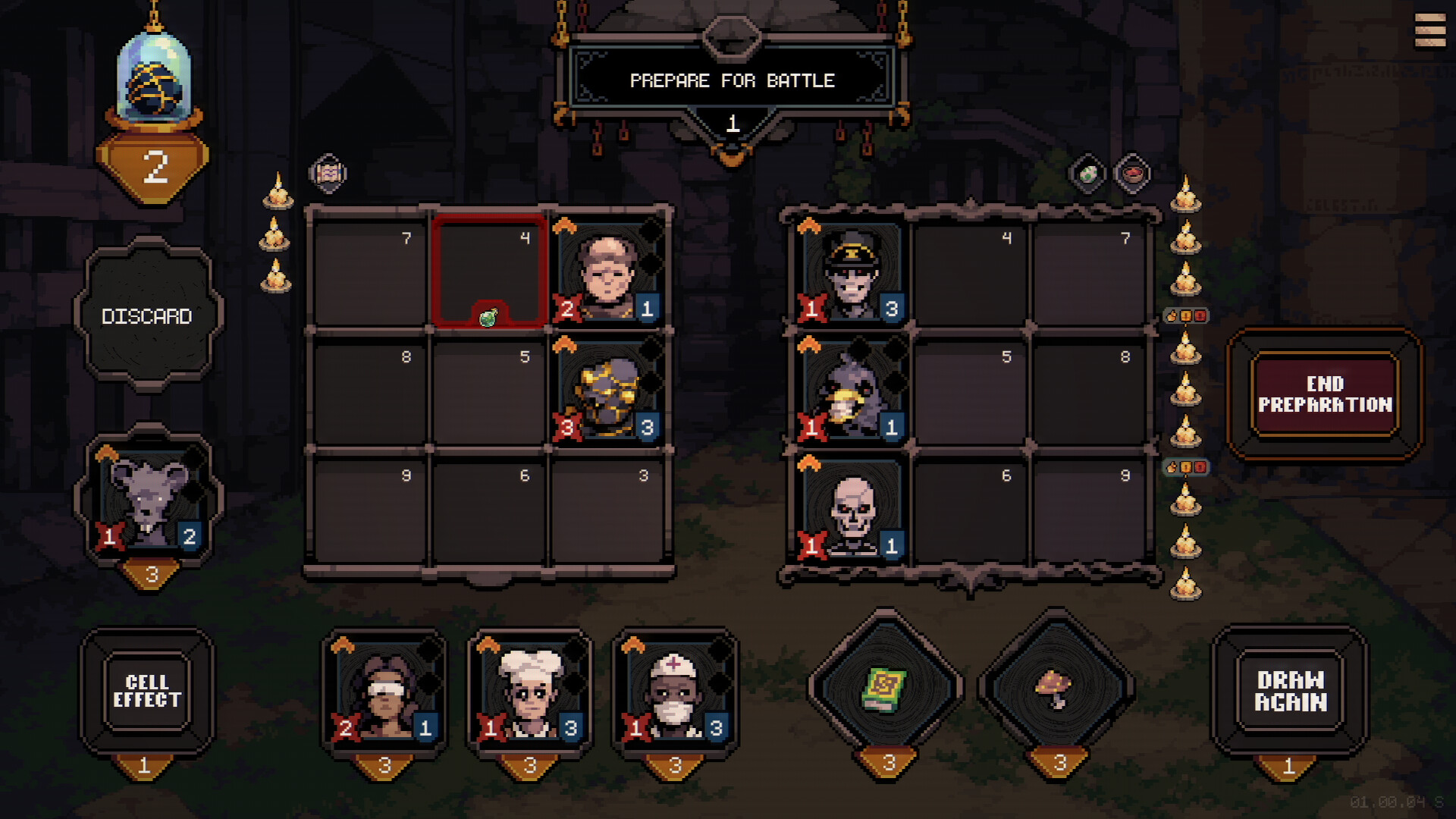
The 3x3 ritual grid looks deceptively simple, but positioning, unit merging, tile effects, and relic combinations create layered decision-making. Players consistently note that the game reveals more systems the longer they play, making each run feel like a fresh puzzle rather than a repeat. The official description leans into this idea with the tagline 'like chess with demons,' and player feedback backs it up.
Automated combat, manual planning
Enemies attack on their own, so the game removes twitch reaction from the equation entirely. Victory hinges on the setup you commit before each encounter, which turns every round into a planning exercise. Several players compared the rhythm to Into the Breach, where perfect-information decisions matter more than fast reflexes.
Easy to learn, punishing to master
The onboarding is gentle enough that new players are solving encounters within minutes, yet difficulty ramps quickly and losses are common before a winning strategy clicks. Recent reviews repeatedly describe the game as 'easy to learn, hard to master,' and roguelite fans see failure as the intended path to improvement. Save-anywhere support also means a failed setup is rarely lost progress.
Juicy presentation and atmosphere
Pixel art, animations, and soundtrack consistently earn praise, giving the dark demonic theme a tactile, satisfying feel. Players highlight the 'crunchy' visual feedback when synergies trigger, which makes even small wins feel rewarding. Full controller support and Steam Deck compatibility let you play it couch-side or handheld.
Build variety and unlock pacing
New units, mechanics, and relics unlock steadily as you progress, giving short runs a sense of forward motion. One player reported finishing all unlocks in about seven hours, while another found the unlock pace motivating enough to keep returning after multiple losses.
What players are saying
What keeps coming up positively
- The small board produces surprising strategic depth and feels like a fresh puzzle each run.
- Synergies and tile effects create satisfying chain reactions when setups finally click.
- Difficulty feels challenging but fair, with failure clearly tied to planning mistakes rather than randomness.
- Visual style, animations, and soundtrack give even short sessions a polished, rewarding feel.
Where the friction shows
- Once a strong combo is found, it can trivialize later acts, reducing motivation to experiment with other builds.
- Overall content can feel thin, with one player reporting full completion in roughly seven hours.
- Difficulty ramps quickly, and unprepared players may see repeated early losses before the systems click.
- Some runs reduce to grinding overkill points with a single buffing strategy rather than varied tactics.
Is it worth buying?
At $4.79 USD with a 20% discount off the $5.99 regular price, the cost is low for the mechanical depth on offer, and most players who enjoy the genre call it fair value. The risk is thin endgame variety once dominant strategies emerge, so waiting for a deeper sale only makes sense if you specifically want maximum content per dollar.
Price checked 2026-09-09:$4.79,down from $5.99(20% off)。Player-fit tags
Good fit
- Players who enjoy squeezing deep strategy out of minimalist board spaces
- Roguelite fans comfortable with repeated losses as the path to mastery
- Auto-battler and Into the Breach fans who prefer planning over reflexes
- Short-session players who want runs that fit into 20 to 40 minute windows
- Controller and Steam Deck users who want a tactile, mouse-optional tactics game
Probably not for you
- Players looking for dozens of hours of fresh content from a single purchase
- Anyone expecting a balanced meta where one optimal build does not trivialize late encounters
- Multiplayer-only players, since Order Automatica is single-player only
- Twitch-reaction players who want direct combat control rather than pre-round planning
03Moonlighter 2: The Endless Vault — Roguelite Shopkeeping for Players Who Accept Punishing Failure as Mastery
STEAM DEAL · 30% OFF
Moonlighter 2: The Endless Vault
If you bounced off the first Moonlighter's slow exploration and want a chunkier, faster combat loop with backpack-tetris pricing, Moonlighter 2 is worth considering on sale. If you came for the original's layered exploration and crafting, manage expectations — the loop has narrowed.
Game highlights
Backpack-Tetris Returns as a Pricing Puzzle
The core merchant fantasy is intact: you dive into runs, drag loot back through the gate, and arrange your backpack layout to maximize selling price. Official descriptions emphasize reading customers, setting prices, and arranging displays for synergy. In practice it becomes a spatial-optimization mini-game between runs, which is the most consistently praised piece of design from returning fans of the franchise.
3D Action Combat With Run-Long Boon Picks
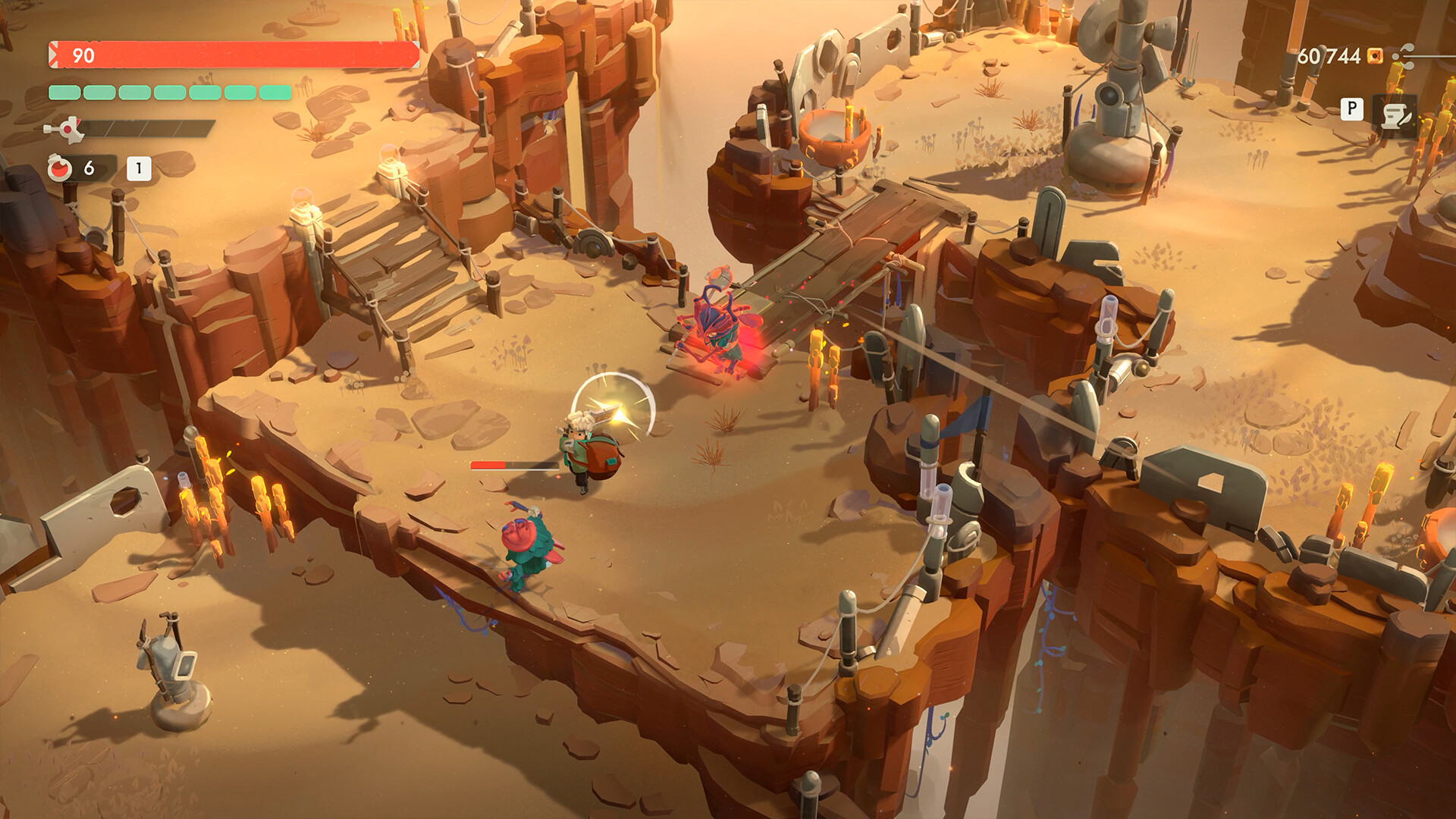
Combat moves from the 2D plane to full 3D, and Digital Sun has layered in a Hades-style perk/boon system gated behind room-clear rewards. Each weapon class has a distinct mechanic, with the greatsword called out specifically as feeling great to learn. Players opt into elemental themes per run, and you accept that late-game synergies collapse into one dominant element unless patches change it.
Shop Management Is Simpler but Faster
The shop now leans on roguelike perks, bunny helpers, and special customer events rather than the deep upgrade trees of the original. That keeps day cycles short and the action cadence high, which some players love and others feel strips the tycoon heart out of Moonlighter 1. You set prices and read customer mood meters to squeeze extra coin, then immediately head back into the next node-based route.
The Endless Vault Pushes Skill Ceiling Hard
The headline Endless Vault mode is positioned as the long-term mastery challenge, offering increasingly valuable rewards the deeper you push. Players repeatedly describe the difficulty curve as steep and unforgiving, especially on the hardest setting where camera tracking, dodge priority, and boss invulnerability windows become the real exam. Expect to die a lot and learn patterns.
Full Controller Support, Solo-Only Experience
This is a single-player journey with no co-op or online hooks at launch. Steam features include Steam Cloud, Trading Cards, DualSense haptics, and full controller layouts. If you wanted to drag a friend along on night hunts, that door is closed — the roguelite progression and shop tuning are built around one merchant's ledger.
What players are saying
What keeps coming up positively
- The backpack-pricing puzzle and shop haggling remain genuinely addictive, with the bunnies and sale perks adding fresh texture
- Combat feels chunky and rewarding once you commit to a single weapon class and learn its specific rhythm
- Skill trees, town upgrades, and unlock paths give a steady stream of self-set goals beyond the main quest
- Returning Digital Sun fans appreciate the visual leap to 3D and the broader biome variety already present in early access
Where the friction shows
- The loop narrows to combat, node choice, and selling — crafting and exploration depth from the first game feel stripped back
- On hard difficulty, the camera loses your character, ranged enemies fire from off-screen, and dodge inputs feel inconsistent
- Boss design relies on long invulnerability windows where you wait rather than engage, making fights feel padded
- Elemental boon interactions rarely combine the way Hades boons do, so most runs collapse into a single dominant build
Is it worth buying?
At $20.99 against a $29.99 regular (30% off, observed 2026-09-09), this is a reasonable entry for roguelite fans already sold on Hades-style perk loops who also enjoy shop management. If your main hook was Moonlighter 1's crafting and freeform dungeon crawling, the sale softens but does not erase the redesign — waiting for a deeper discount or more patches is reasonable, and never claim this as an all-time low.
Price checked 2026-09-09:$20.99,down from $29.99(30% off)。Player-fit tags
Good fit
- Players who want a short-cycle roguelite with a merchant layer on top
- Controller-first solo players who enjoy learning one weapon class deeply
- Fans comfortable with repeated deaths as the price of mastery
- Anyone who liked backpack inventory puzzles in Resident Evil 4 or Escape from Tarkov
- Players who enjoy setting their own upgrade goals across sprawling skill trees
Probably not for you
- Longtime Moonlighter 1 fans expecting deeper crafting and freeform dungeon exploration
- Anyone who dislikes long boss invulnerability phases and waiting out attack windows
- Players sensitive to camera tracking, off-screen ranged enemies, or input priority issues on higher difficulties
- Co-op seekers — this is a strictly solo, single-player experience
- Buyers who want the original game's layered exploration loop and are not interested in node-based Hades-style routing
Share this article