NEW ON STEAM
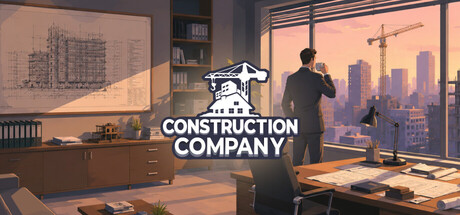
Construction Company

At a glance
Construction Company game facts
Steam store information checked 2026-09-12。- Studio
- Single Game Production Published by Single Game Production
- Release
- Aug 28, 2026 Released
- Official genres
- Simulation · Strategy
- Play mode
- Single-player
- Desktop platforms
- Windows
- Steam Deck
- Unknown No additional compatibility detail
- Controller
- Not listed
- Steam features
- Achievements · Cloud · Family Sharing
- Languages
- 8 listed languages English, Russian, French, German
What that means for your setupConstruction Company is a single-player Simulation and Strategy release on Windows from Single Game Production, who also acts as publisher; it launched on August 28, 2026, and is currently listed as Released. The store page advertises eight supported languages covering English, Russian, French, German, Spanish from Spain, Polish, Brazilian Portuguese, and Turkish, which is a noticeably broad localization footprint for a small indie team. Listed Steam features are Achievements, Cloud saves, and Family Sharing; Steam Deck compatibility is not specified by Valve, and controller support is not listed, so plan on keyboard and mouse. Because it is Windows only with no confirmed Deck verification and no listed controller profile, anyone planning to play portably should treat handheld play as unconfirmed rather than assumed. The studio is a small independent outfit, and reviews consistently highlight a developer who is unusually hands-on, replying to feedback and shipping patches quickly in the first days after launch, which is meaningful context for anyone weighing early support of a first release from a new team.
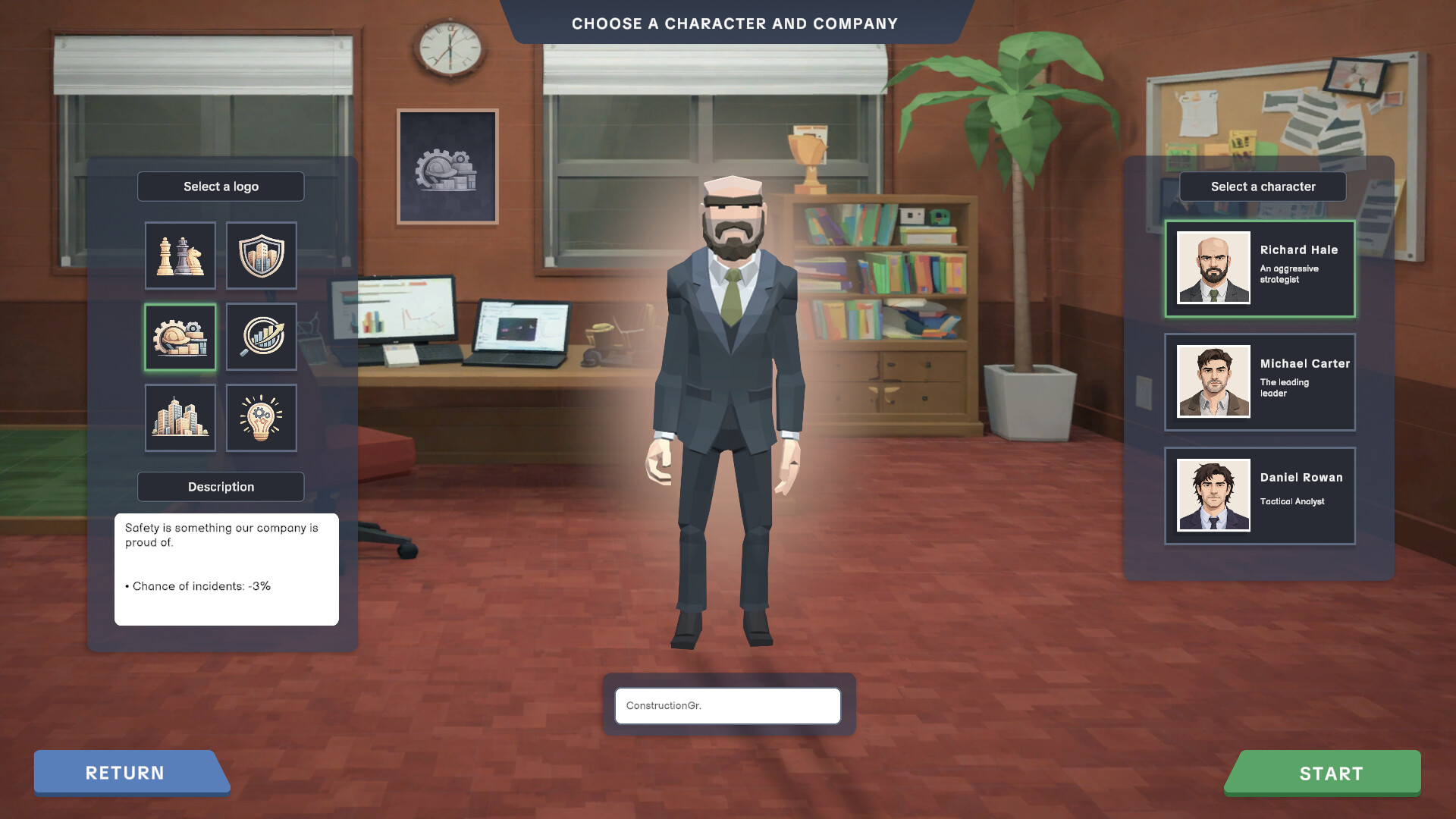
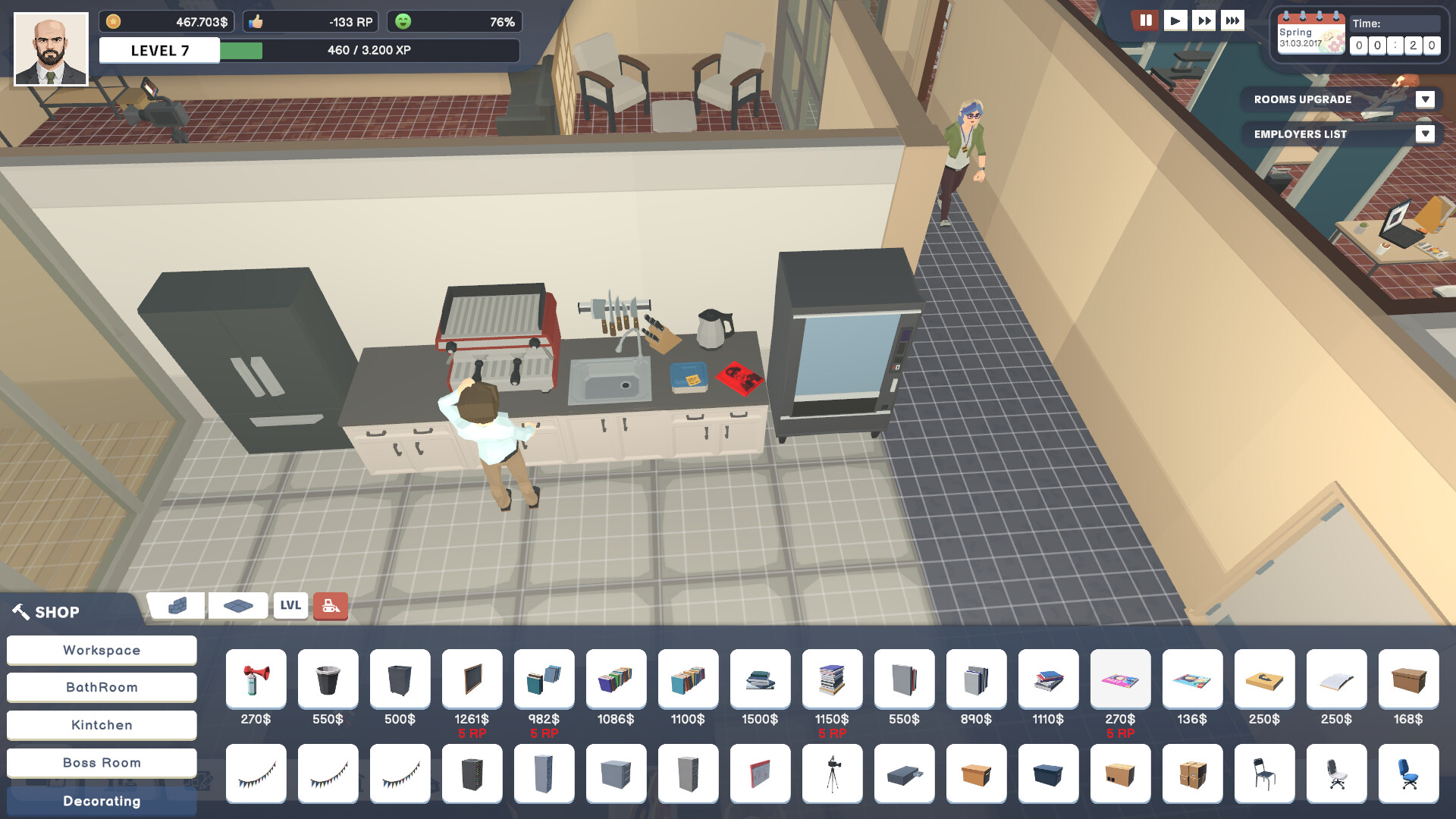
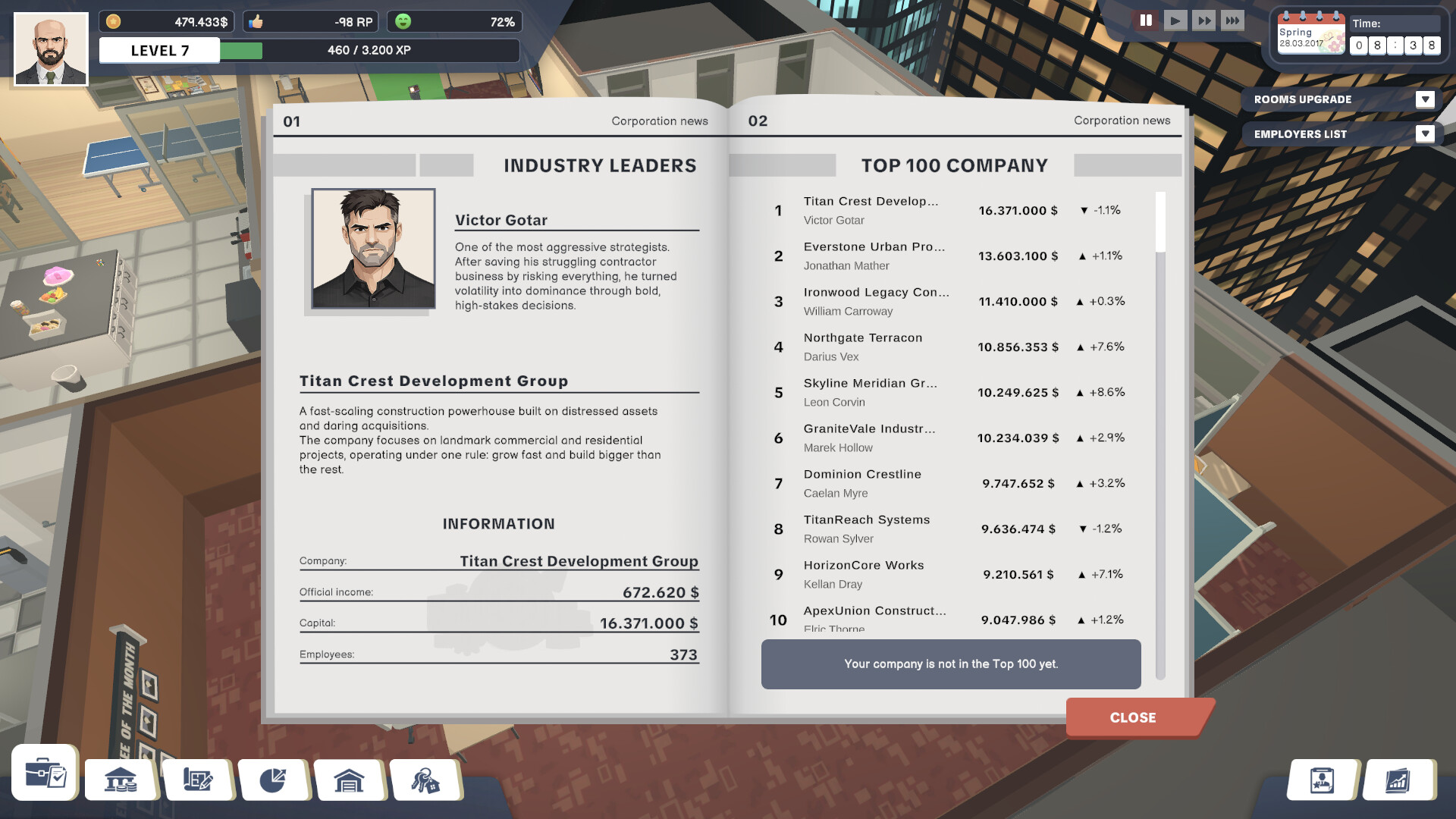
Construction Company plants you in the worn boots of an heir to a construction firm already deep in the red, and the appeal is the fantasy of untangling that mess your way. You hire crews with their own skills, buy equipment, take contracts across suburbs and downtown, and watch a small office slowly grow into something that resembles a real company. The first handful of reviews call out the concept as genuinely promising, and several players explicitly compare the trajectory to titles like Big Ambitions, which tells you where the design intent is pointing.
What the game actually feels like
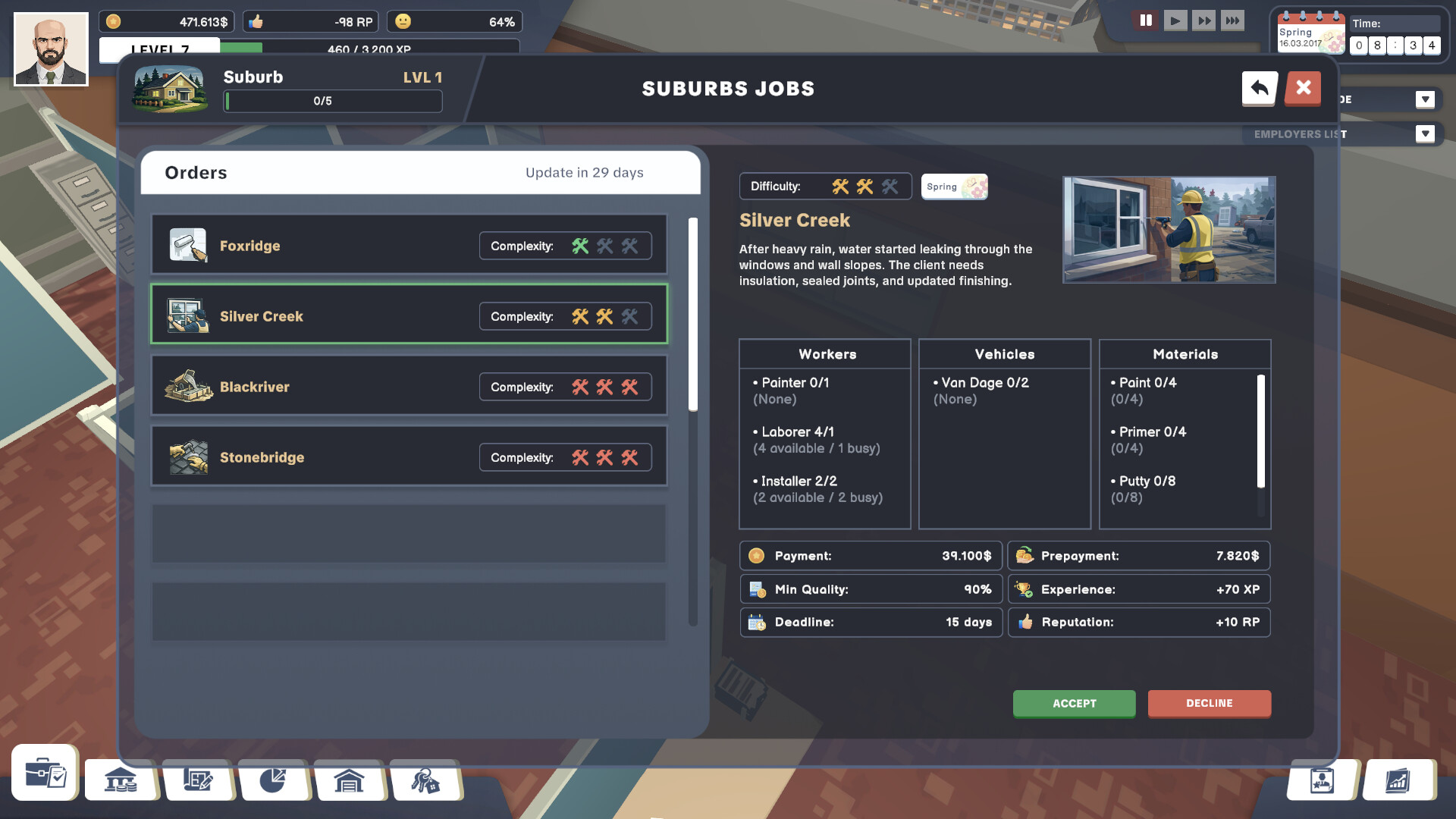
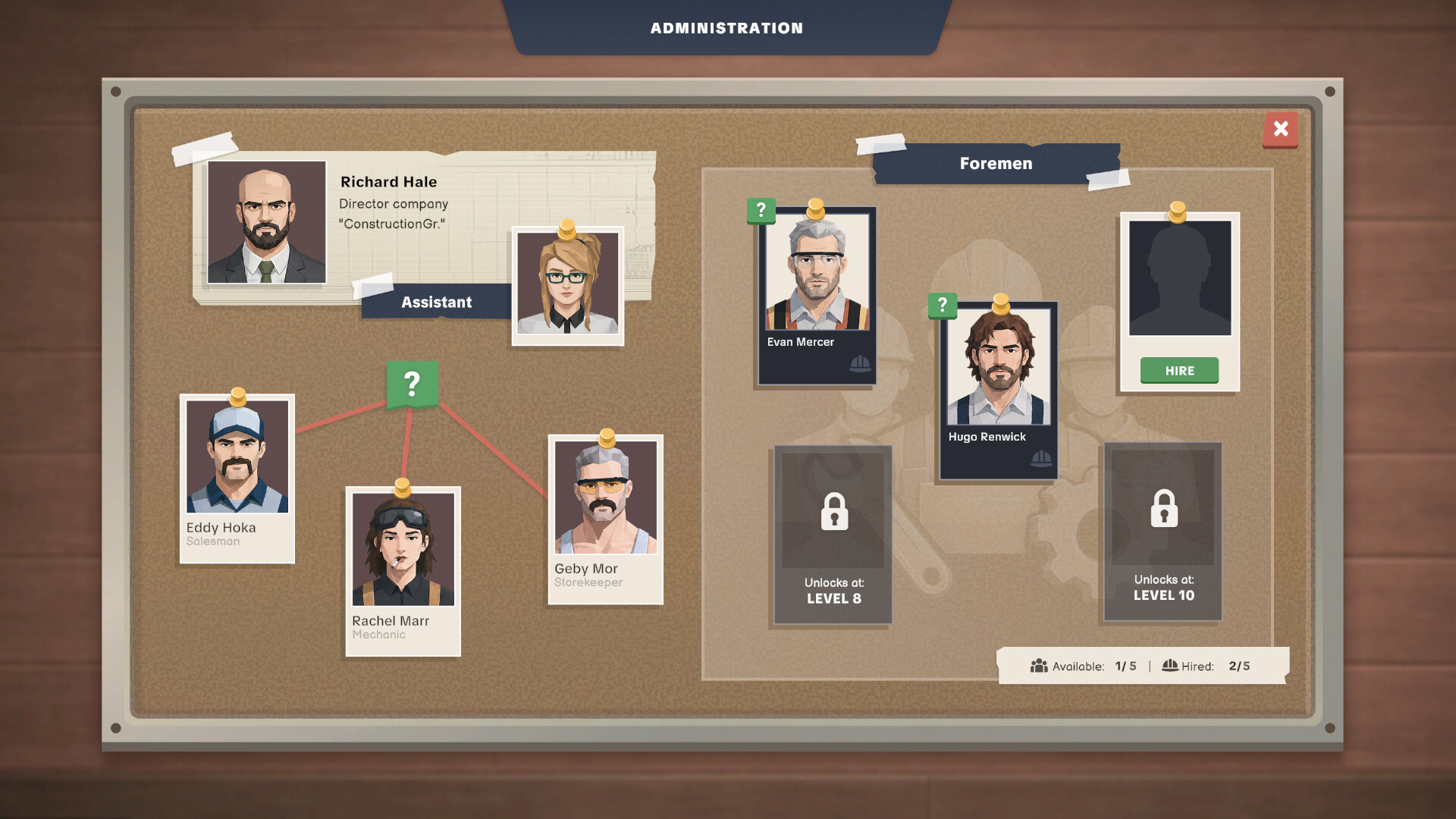
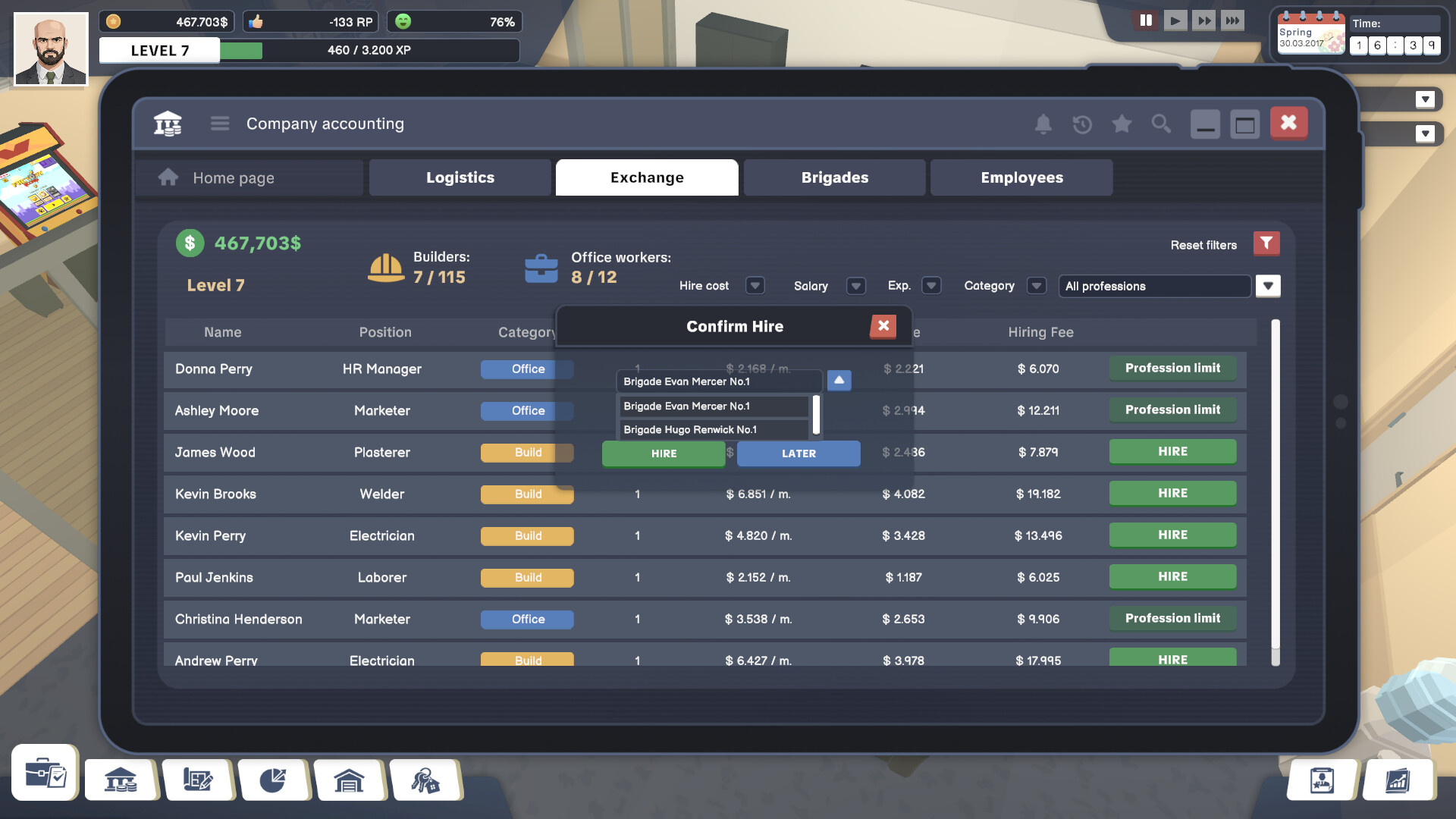
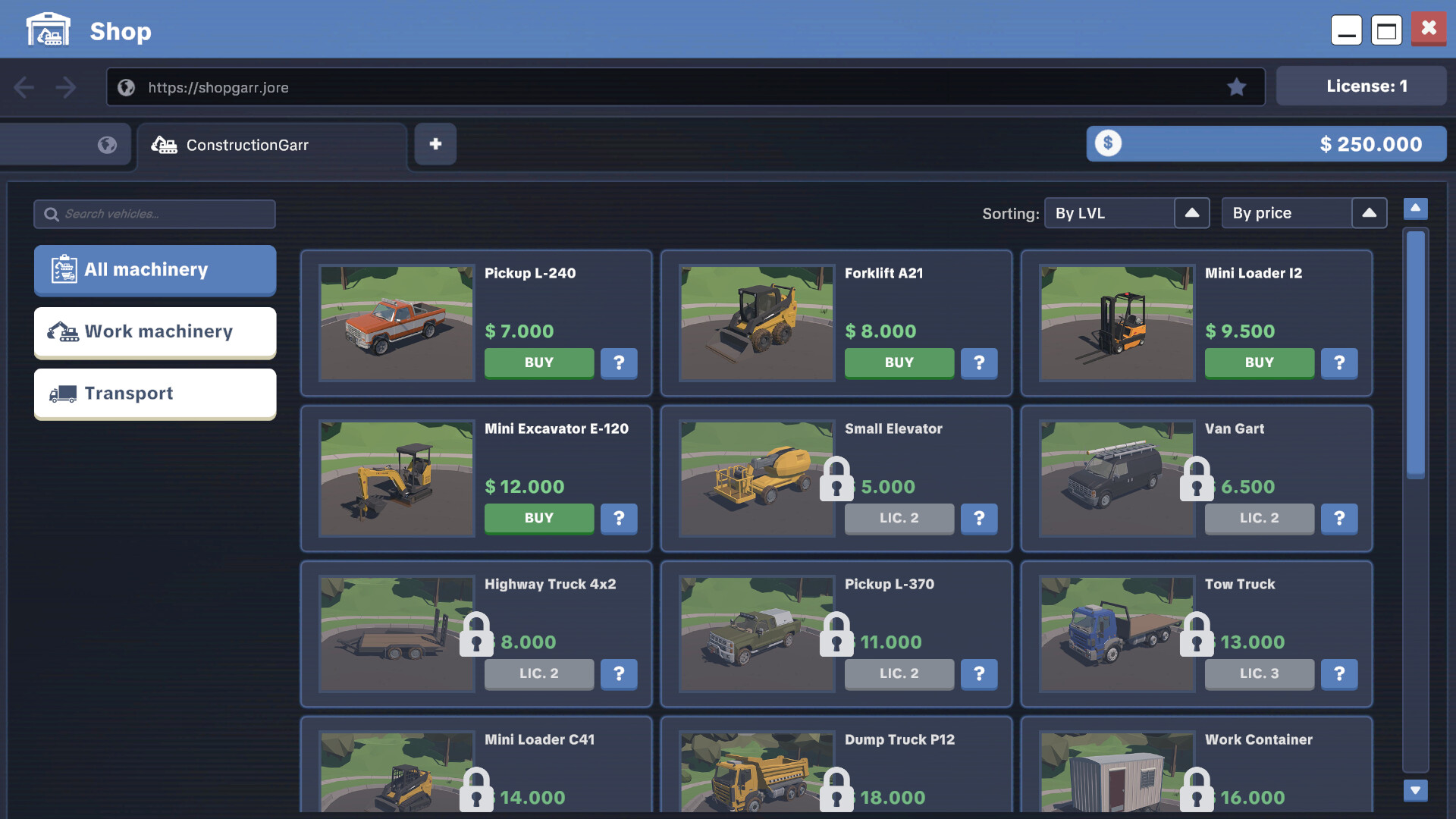
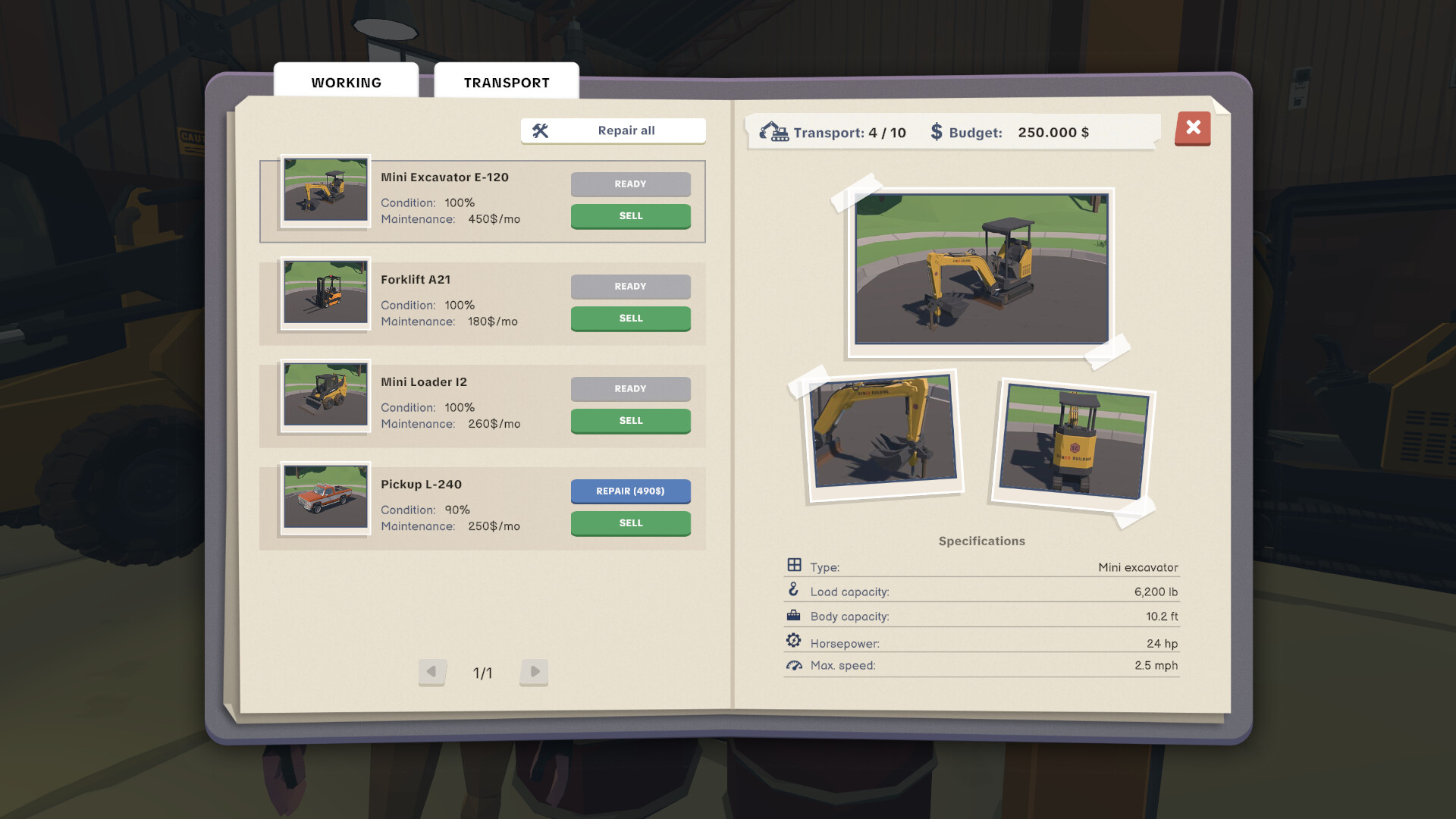
Hiring and assigning workers to crews, then watching your mix of skills and equipment shape how smoothly a project actually finishes.
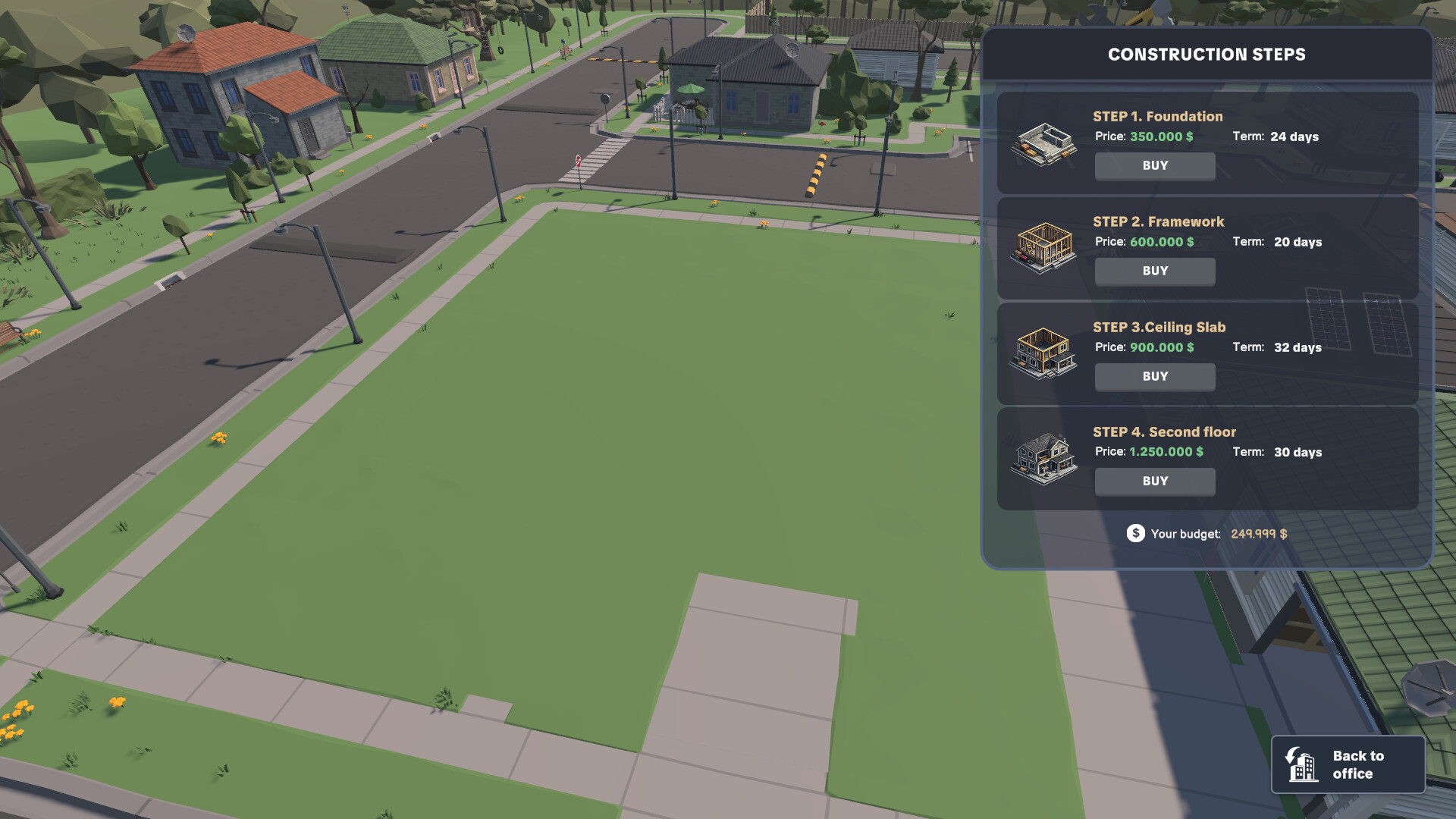
Tendering for contracts across suburbs, city districts, downtown, and special locations, where juggling deadlines, reputation, and your bank balance is the main hook.
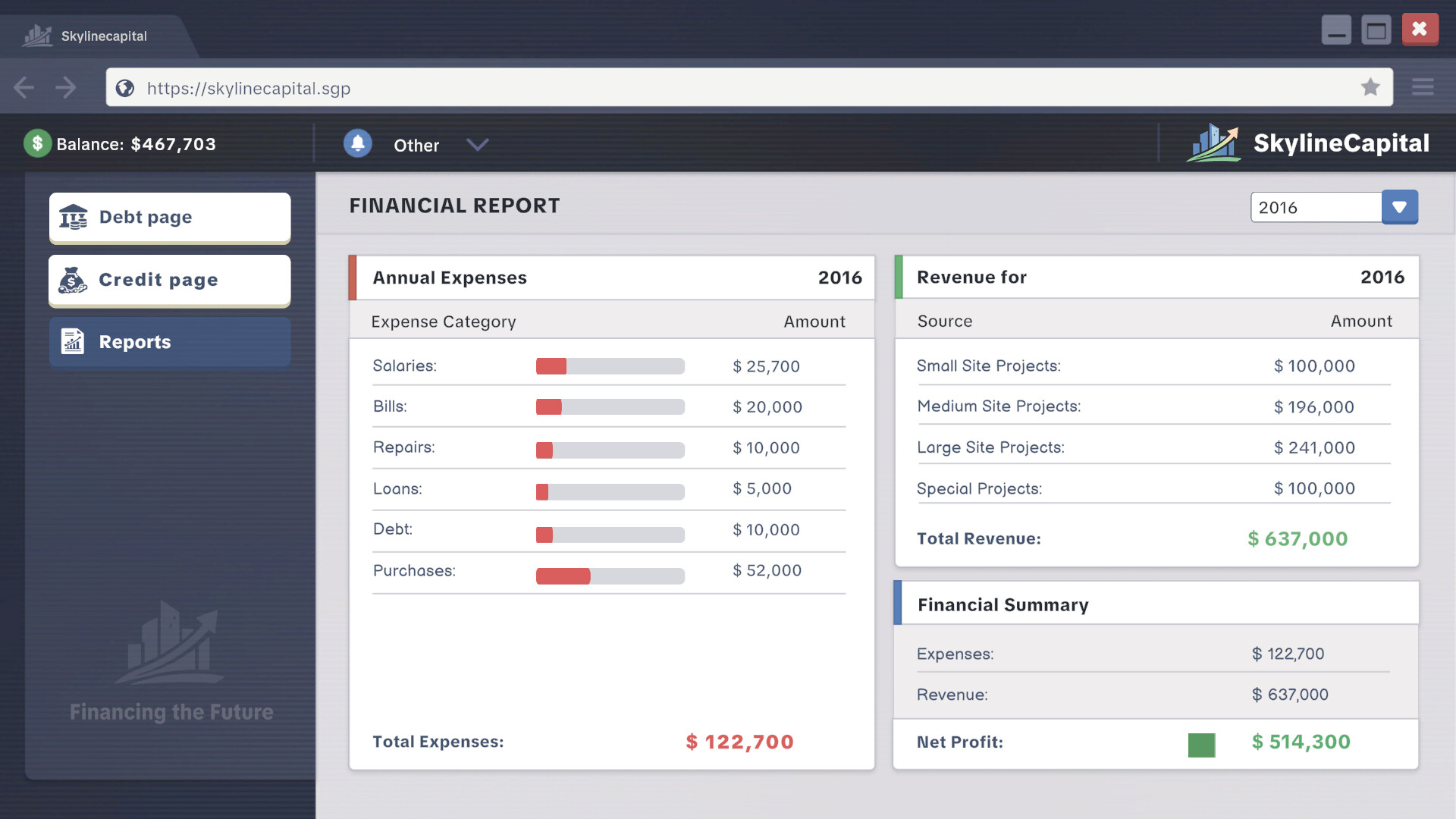
Running the financial side of a debt-heavy company: tracking expenses, taking loans, repaying what your grandfather left behind, and choosing when to reinvest in vehicles or new gear.
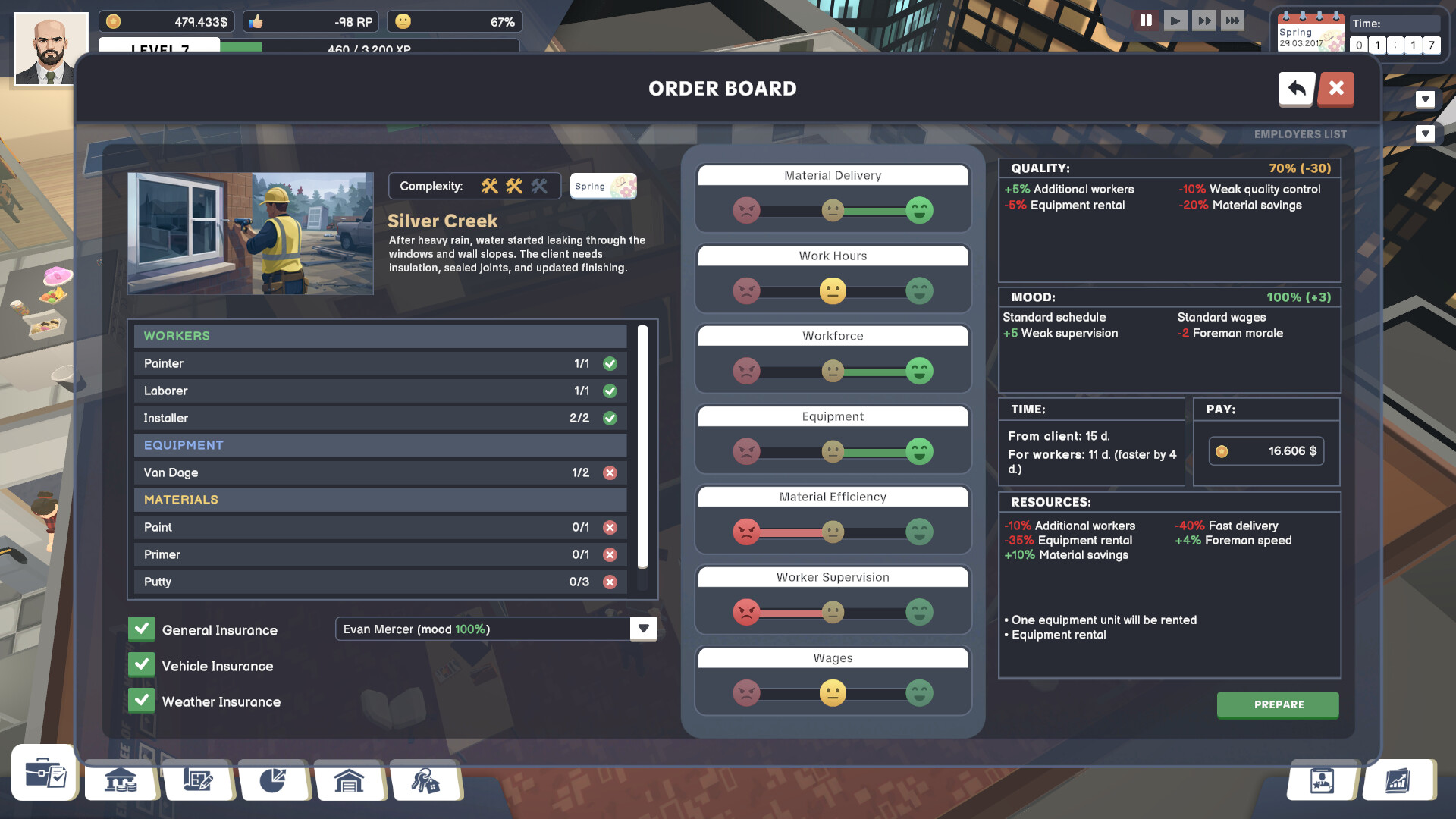
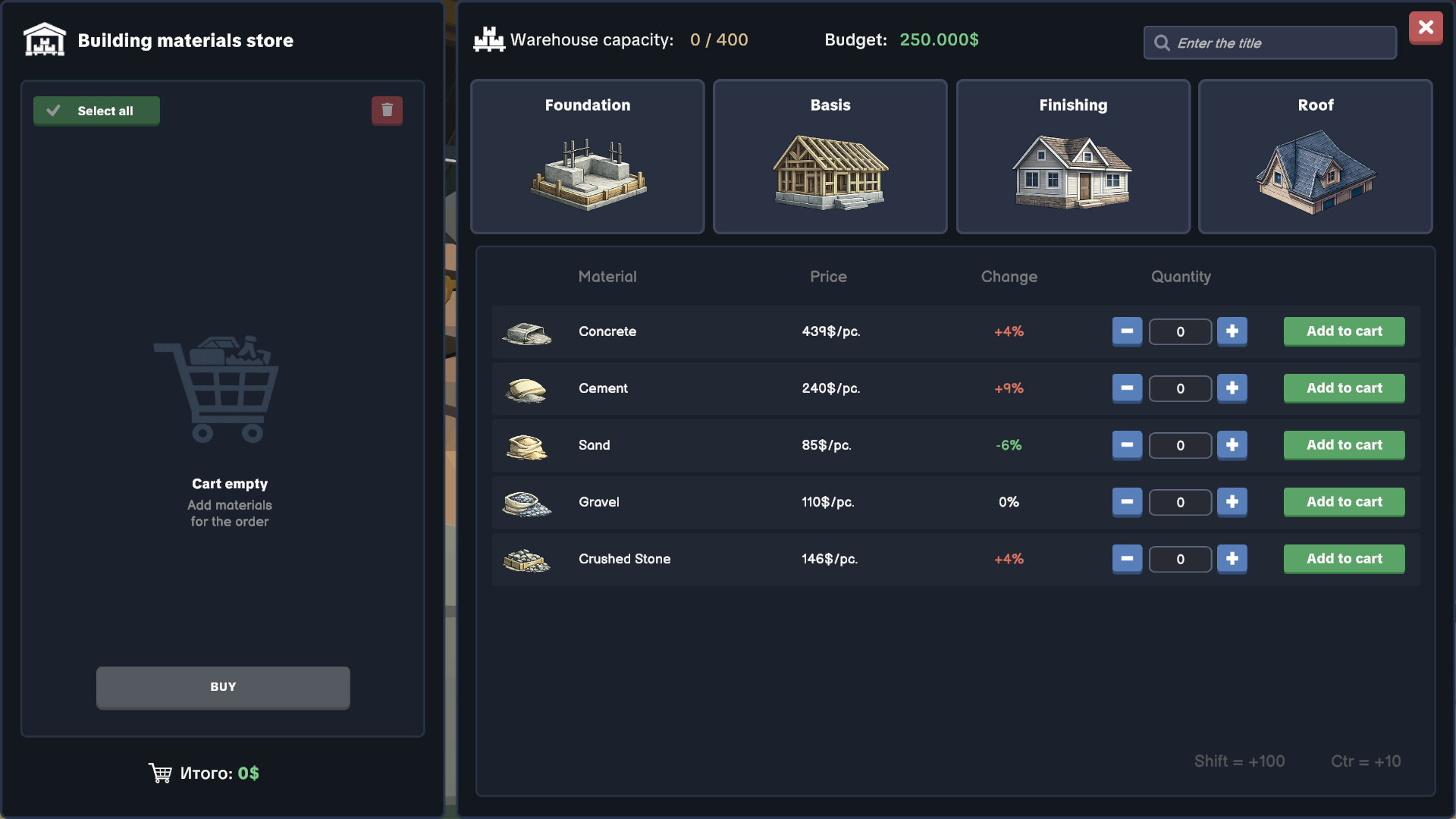
Watching material prices and supplies, since every contract needs the right resources lined up before work can really move forward.
What early players are seeing
What is landing
- Several players describe the developer's response time and humility as unusually strong for a first release, with one reviewer specifically noting meaningful improvements within 24 hours of launch and another crediting rapid community-driven patches for changing their mind from skeptic to buyer.
- A reviewer with over a decade in real construction praised the core fantasy, then put in roughly five and a half hours and walked away convinced the foundation can grow into something special with continued work.
- Multiple players singled out the visuals and textures as delightful, and one compared the long-term potential directly to Big Ambitions, which is a useful reference point for anyone who already enjoys that style of business-builder.
- A reviewer with the longest logged time in the sample called Construction Company fun and relaxing, and gave it a 5/5 while still flagging small launch kinks.
What still needs watching
- Several reviewers, including one who gave a thumbs up to support the concept, describe the current gameplay loop as shallow: accept a contract, buy missing materials and vehicles, click prepare and manage without much happening, and watch a progress bar, with no real view of an active work site or meaningful phases to orchestrate.
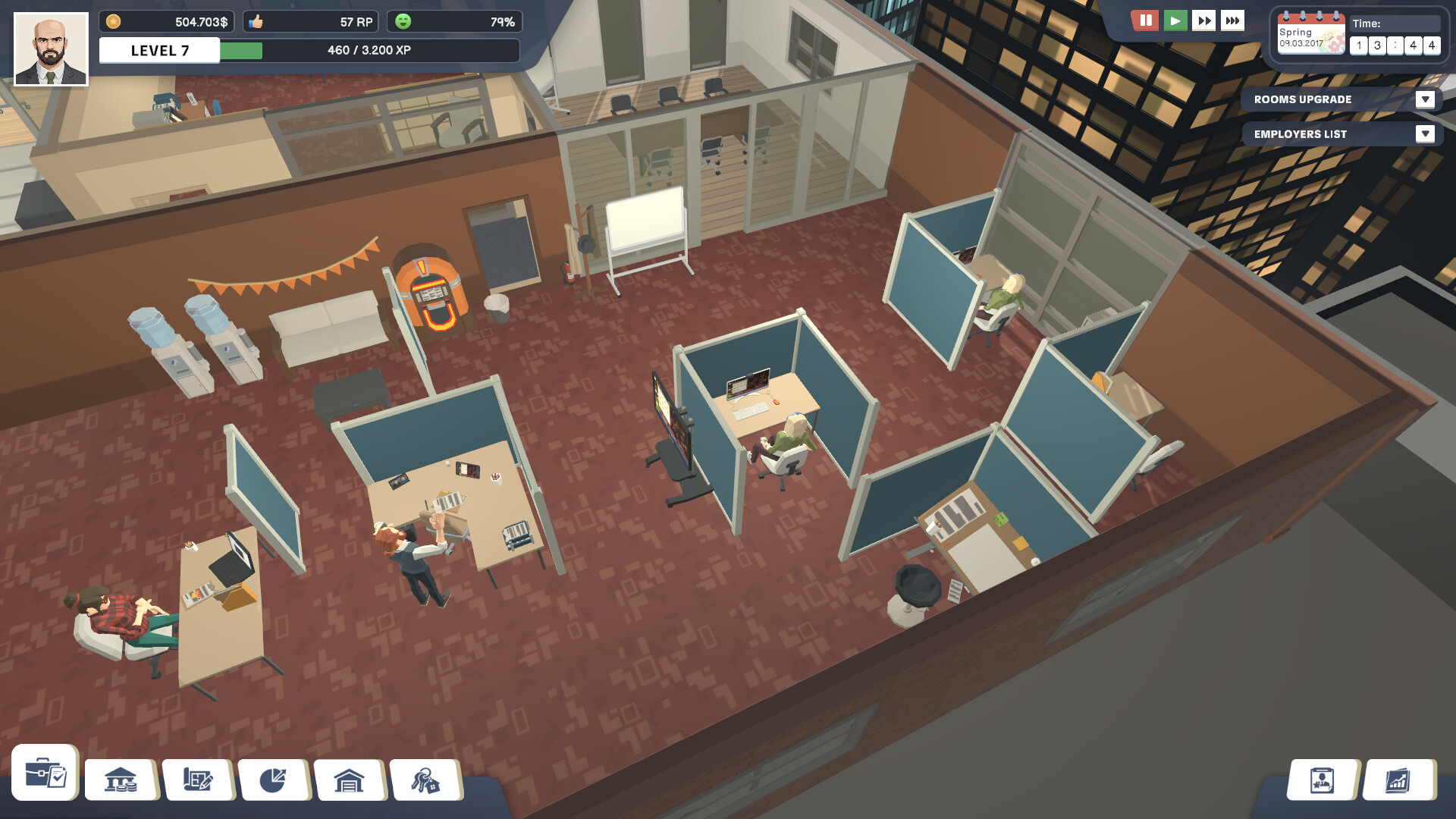
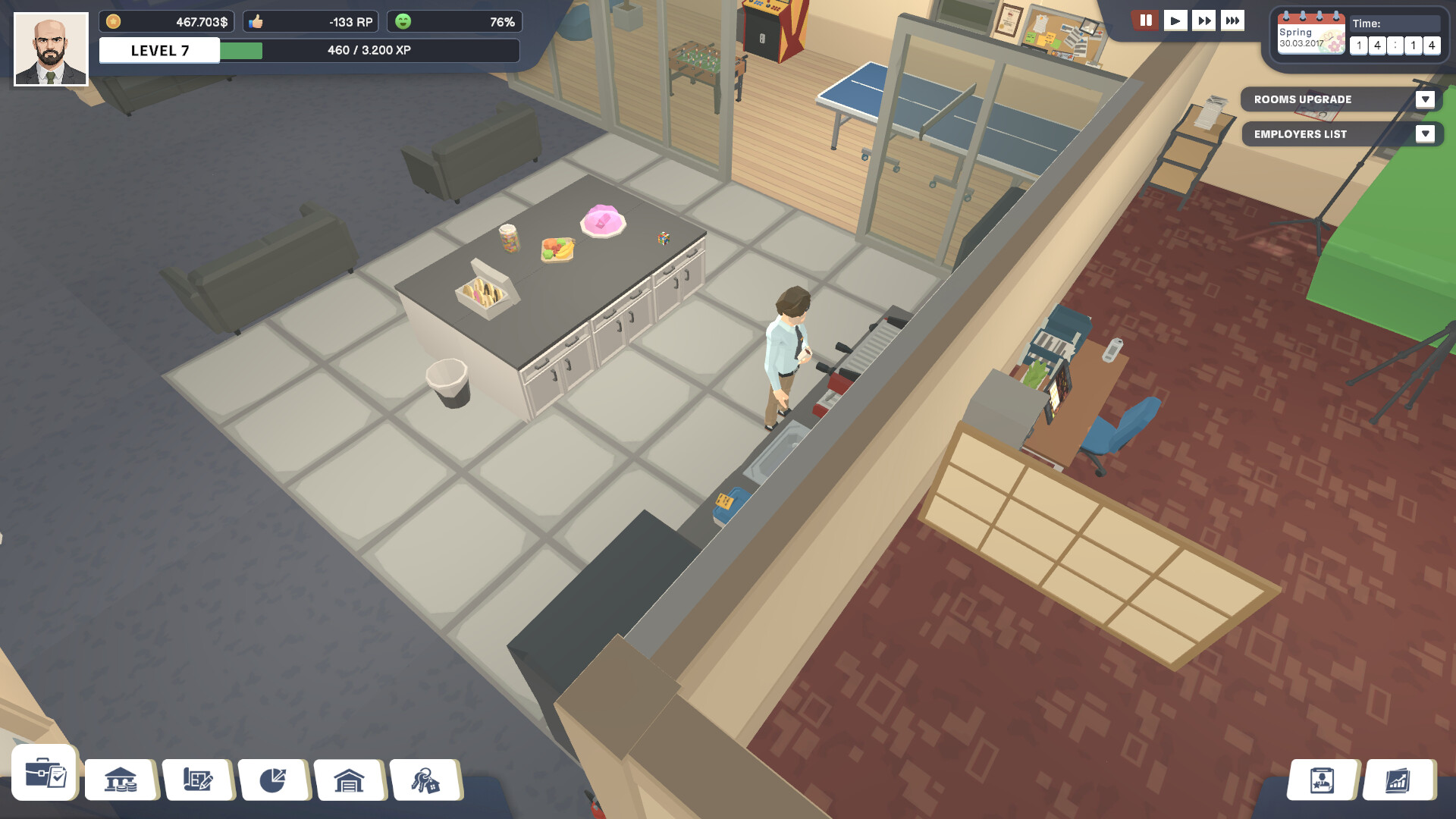
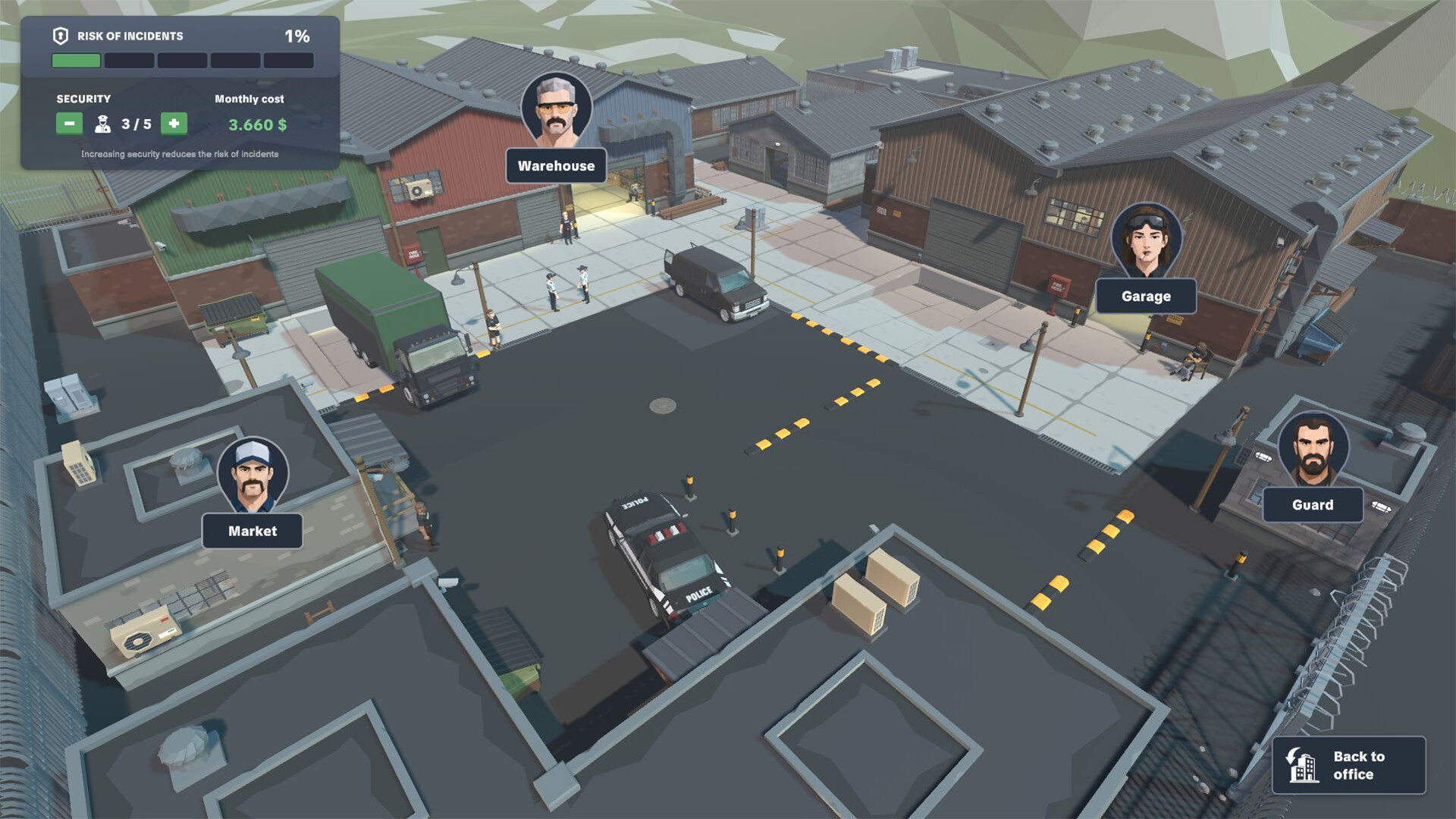
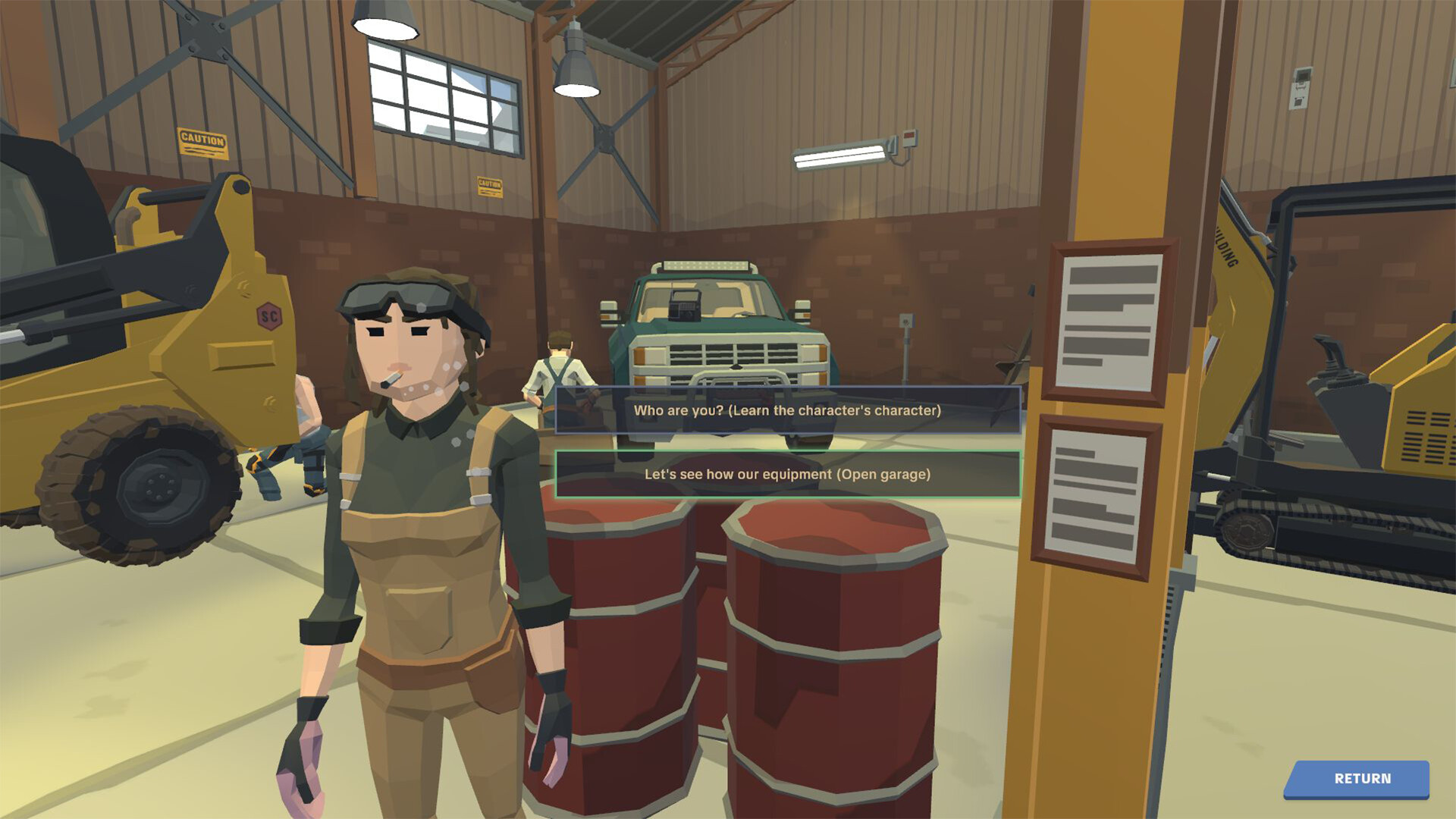
- The office and garage screens draw repeated criticism for feeling empty and underused, with one reviewer's specific complaint about employees wandering a large office layout while actual work happens elsewhere.
- A small number of negative reviews compare the current build to a cheap mobile game and call out the lack of a proper tutorial and very limited meaningful decision-making, so newcomers should expect a learning curve that the game itself does little to soften.
Is Construction Company worth buying now?
Current decision
Wait for more reviewsConstruction Company has a clear concept that several players genuinely love and an unusually responsive developer, but the same reviews that praise the foundation also flag shallow mechanics, an empty-feeling office, and a thin tutorial at launch, and the overall sample is still small enough that a fair verdict is hard to lock in. Waiting for more players to weigh in lets the developer's fast patch cycle work in your favor and gives the gameplay loop time to deepen before you commit.
Who this is for
A good fit if you…
- Fans of business-management sims who enjoy the Big Ambitions style of growing a small company from scratch and are comfortable supporting a first release from a small studio.
- Players who specifically like contractor and construction fantasy settings, since the store page leans hard into contracts, equipment, crews, and material logistics.
- Anyone who values an active, hands-on developer, because reviews repeatedly highlight fast patch turnaround and direct email replies.
- Sim players who do not mind a rough launch and prefer to arrive after the first wave of polish patches rather than on day one.
- Readers of eight languages who want a localized UI, since English, Russian, French, German, Spanish, Polish, Brazilian Portuguese, and Turkish are all listed.
Wait if you…
- You want a deep, fully-featured management sim on day one rather than a foundation that still needs content and tutorial work.
- You mainly play on Steam Deck or with a controller, since Deck verification is not listed and controller support is not listed either.
- You dislike shallow early loops where contracts can feel like progress bars without a visible worksite, which multiple launch-window reviewers called out.
- You prefer to wait until a small studio's first title has a wider review base before committing, which is a perfectly reasonable stance given the current sample size.
If Construction Company is not quite your game

SIMILAR OPTION
Terraria
Choose it ifChoose Construction Company if your interest is construction-business management on PC; choose Terraria if you want a long-running, cross-platform crafting and adventure sandbox.
How it comparesSandbox-style building and crafting as a core creative outlet Terraria is a 2D action-adventure with extensive combat, exploration, and a mature progression curve across many platforms, while Construction Company is a 3D Windows-only management sim about hiring workers and completing jobs, not exploring or fighting.

SIMILAR OPTION
Fallout 4
Choose it ifChoose Construction Company if you specifically want a contractor-themed management sim and want to support a small developer early; choose Fallout 4 if you want a polished, content-rich open world and do not need a construction theme.
How it comparesBusiness-building management loop with a sprawling world to grow into Fallout 4 is a fully open-world RPG with decades of post-launch content, mod support, and a far deeper simulation layer, while Construction Company is a focused Windows-only construction sim at an early stage with a much smaller scope and a thinner feature set today.
SIMILAR OPTION
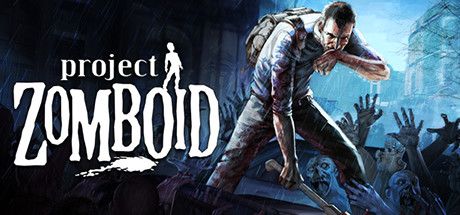
Project Zomboid
Choose it ifChoose Construction Company if you want a calmer company-runner focused on contracts and crew building; choose Project Zomboid if you want a deep, unforgiving survival sandbox with much more content already in place.
How it comparesTop-down management style with base-building, resources, and a survival-adjacent economy Project Zomboid leans hard into hardcore survival, scavenging, farming, and a customizable sandbox with a long development history, while Construction Company is single-player, debt-driven, and centered on hiring crews and finishing contracts rather than staying alive.
Share this article