Peanut-Shell Biosorption for Pesticide Removal from Produce

A 13-year-old Indian-American student from Minnesota, Arika Kundu, has developed a method that converts peanut-shell agricultural waste into a material capable of trapping pesticide residues on the surface of fresh fruits and vegetables. Her project, titled "LIGNEX — A novel biosorption based approach that uses agricultural waste material to eliminate pesticide residues from fresh produce," was described in reporting dated July 30, 2026. The approach relies on biosorption, in which treated peanut-shell material acts like a natural filter to capture pesticide residues that survive routine washing. Kundu, a seventh-grade student at Minnetonka Middle School East in Shorewood, Minnesota, positioned the work as a way to give a second use to material that would otherwise be discarded after nut processing.
Recognition Through the 3M Young Scientist Challenge
The project earned Kundu a place among 10 finalists in the 2026 3M Young Scientist Challenge, a national middle-school competition now in its 19th year organized by 3M and Discovery Education. Finalists were selected after submitting one- to two-minute videos, with entries judged on creativity, scientific knowledge, and communication skills. Over the summer, Kundu is working one-on-one with a 3M scientist to refine the project, and the competition will conclude on October 12 and 13 at the 3M Innovation Center in St. Paul, Minnesota. The grand prize is $25,000 and the title "America's Top Young Scientist." Kundu told Young Scientist Lab that she entered to "improve my innovation and turn it into a product that everyone can benefit from."
Living Fungal Textile with Self-Repair and Rapid Biodegradation
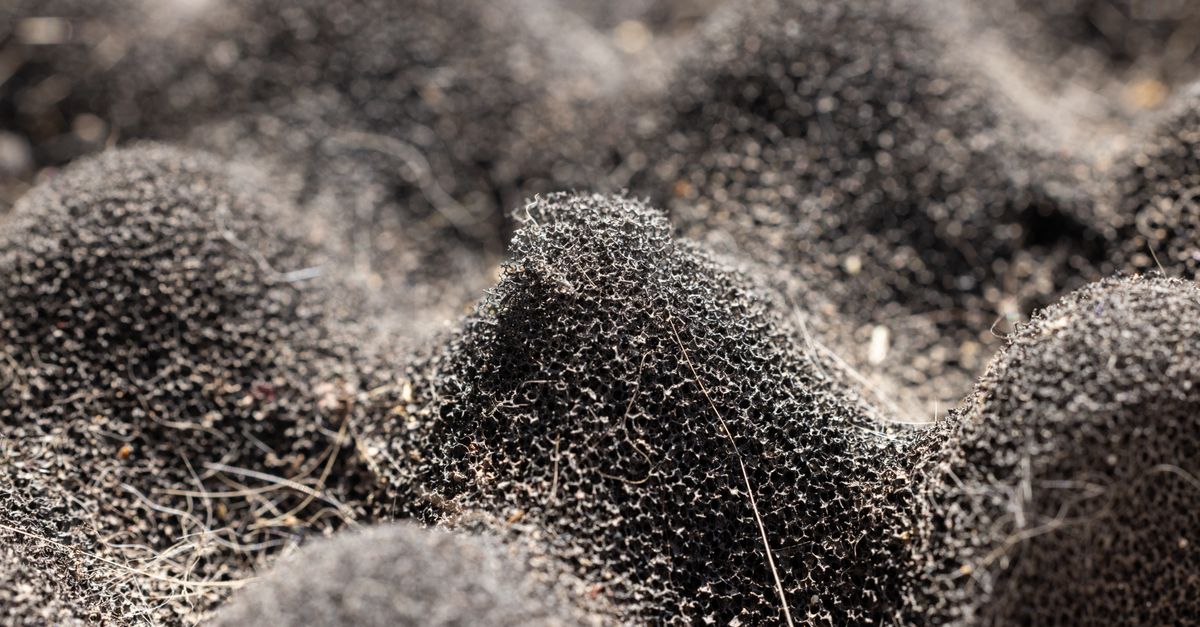
Separately, researchers at the Shenzhen Institutes of Advanced Technology (SIAT) were credited in July 30, 2026 reporting with developing a living textile derived from Cordyceps militaris, a fungus used in traditional Chinese medicine. The team's paper was published in Science Advances on July 27, 2026. The researchers engineered wearable structures from the fungus's thread-like hyphae, which form dense interconnected networks without synthetic binders, and the resulting material can self-clean, self-repair, and completely biodegrade within 41 days under suitable conditions. Unlike conventional bio-based materials that become inert after production, the fungal textile remains biologically active, allowing it to retain living functions after fabrication.
Programmability, Commercial Outlook, and Open Questions
The SIAT team demonstrated that the textile can be tailored by incorporating other microorganisms; introducing Aspergillus niger produced color pigmentation and enhanced ultraviolet protection. The choice of Cordyceps militaris may offer a commercial advantage because the species already has an established cultivation and supply chain in China owing to its use in traditional medicine. The researchers cautioned that the innovation remains at the laboratory stage and that several questions remain, including how the living properties will perform through conventional textile processes such as dyeing, cutting, sewing, and garment finishing, and whether the degradation rate can be adjusted for products requiring longer service life.
Upcoming Milestones
The next verifiable milestone for the peanut-shell project is the 3M Young Scientist Challenge final on October 12–13, 2026 at the 3M Innovation Center in St. Paul, Minnesota, where Kundu will compete for the $25,000 grand prize. For the fungal textile, the SIAT team's next steps include studying performance through standard textile finishing processes and exploring tunable degradation rates, though the available reporting did not specify a timeline for those studies.
Share this article