Catch up on the essentials
- The United States and Australia signed a critical-minerals agreement intended to expand American access to rare earths and other strategic materials.
- The first phase will involve each government paying more than $1 billion over the next six months for initial projects, with further projects contemplated in both countries, Albanese said.
- Yet the agreement’s own investment plans do not resolve the sector’s principal execution risk: rebuilding a distributed network of mines and processing plants requires substantial capital and time.
Selected from this article · 2026-11-07
Read on for the full pictureA bilateral minerals pact broadens US supply strategy
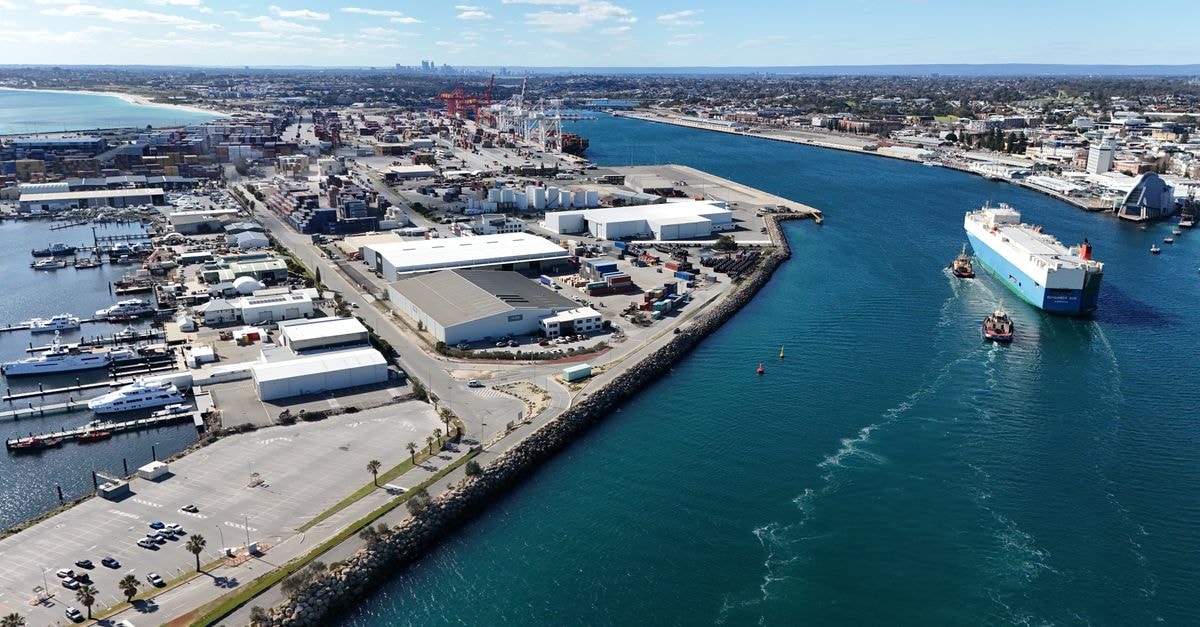
The United States and Australia signed a critical-minerals agreement intended to expand American access to rare earths and other strategic materials. The pact combines joint investment in Australian mines and processing projects, Australian processing capacity and measures to protect both countries’ domestic markets from “unfair trade practices,” according to the deal text circulated by Australian Prime Minister Anthony Albanese’s office.
The agreement marks a shift from a predominantly domestic US effort to diversify away from China toward a partner-based supply strategy. Gracelin Baskaran, a critical-minerals-focused director at the Center for Strategic and International Studies, described it as the most significant bilateral minerals cooperation between two major Western countries and said the United States was seeking appropriate partners rather than addressing supply security alone. The reported agreement does not identify which entities will provide the initial financing.
Initial funding is substantial but remains project-specific
The first phase will involve each government paying more than $1 billion over the next six months for initial projects, with further projects contemplated in both countries, Albanese said. Separately, the US Export-Import Bank is issuing letters of interest for more than $2.2 billion in financing for critical-mineral projects. Those figures represent announced funding mechanisms rather than completed mine or refinery construction.
Australia also presented an $8.5 billion project pipeline. Trump said that in about a year the United States would have enough critical minerals and rare earths to meet its needs, but the reviewed reporting does not provide a project-by-project schedule demonstrating that outcome. The Pentagon will also help finance the planned 100-ton-a-year Alcoa-Sojitz gallium refinery in Western Australia, according to the White House.
Processing remains the central implementation test
The pact includes Australian processing of rare earths and other critical minerals, with Albanese saying Australia had the capacity to expand those activities. That focus is material because reported industry data place China’s share of rare-earth mining at about 60% and its processing capacity at roughly 85%; other assessments cited in the context reporting put China’s control of the global supply chain near 80%.
China’s export restrictions and production quotas have increased the incentive for alternative capacity, particularly in processing, where the United States has limited facilities despite holding reserves. Yet the agreement’s own investment plans do not resolve the sector’s principal execution risk: rebuilding a distributed network of mines and processing plants requires substantial capital and time. The reported pact also contains no disclosed procurement timetable, named equipment suppliers or completed capacity additions.
Market safeguards complement industrial investment
The agreement’s proposed trading standards include “price floors or similar measures,” according to the text circulated by Albanese’s office. These provisions could reduce the risk that subsidized or unfairly traded material undermines investment in mines and refining capacity, although the reviewed material does not provide implementation details or a timetable.
The next observable test is whether the governments identify the initial projects, financing entities and processing milestones, followed by evidence that committed capital is being deployed. Until then, the pact establishes a bilateral investment and policy framework, not completed replacement of Chinese rare-earth supply.
Industry and product implications
Industry / product | Disclosed fact | Interpretation & stage | Verification signal | Main risk |
|---|---|---|---|---|
Australian rare earth and critical mineral mines and processing projects (upstream) | The two governments will jointly invest in mines and processing projects in Australia.; Disclosed scope: mines and processing projects [1] | Disclosed fact; planned. Joint government investment is intended to increase production of materials used in electric vehicles, semiconductors and fighter aircraft. | A subsequent disclosure should identify the initial projects, financing entities and project-level capacity milestones. | The reported agreement does not name financing entities or provide a project-by-project completion schedule. |
Alcoa-Sojitz gallium refinery (midstream) | The planned refinery in Western Australia is designed for 100 tons of annual gallium capacity, and the Pentagon will help fund its construction.; Disclosed scope: construction of the planned 100 ton-a-year Alcoa-Sojitz gallium refinery [1] | Disclosed fact; planned. Pentagon funding is intended to support construction of domestic gallium processing capacity. | A subsequent disclosure could confirm construction financing, construction progress and commissioning. | The reviewed reporting does not establish that construction has begun or that the refinery is operating. |
Share this article