Langur-mimic teams replace a banned live-deterrent practice

Indian organisers of the BWF World Championships have hired three men trained to mimic langur calls to scare away monkeys from the Indira Gandhi Indoor Stadium, an unusual measure prompted by disruptions at the India Open earlier in 2026, when a monkey was photographed in the stands and practice hall in Delhi. The venue had also been disrupted by pigeons during that tournament, prompting the broader wildlife response. One mimic, identified by local media as Jabbar, said he works with two other men, timing calls so monkeys are steered away from people and traffic. A second mimic, Zafar, told Reuters that macaques are "absolutely terrified of langurs" and that the aim is to deter, not harm, the animals. The mimicry trade is a substitute for an older practice, the use of live grey langurs, which was halted after the species was listed under India's Wildlife Protection Act, a ban that ended the deployment of trained langurs at events such as the 2010 Commonwealth Games in Delhi. At the 2023 G20 Summit in the capital, organisers instead used langur-call mimics and life-size langur cut-outs, the same playbook now being applied to badminton's flagship event.
Stadium overhaul aims to close the gaps exposed at the India Open
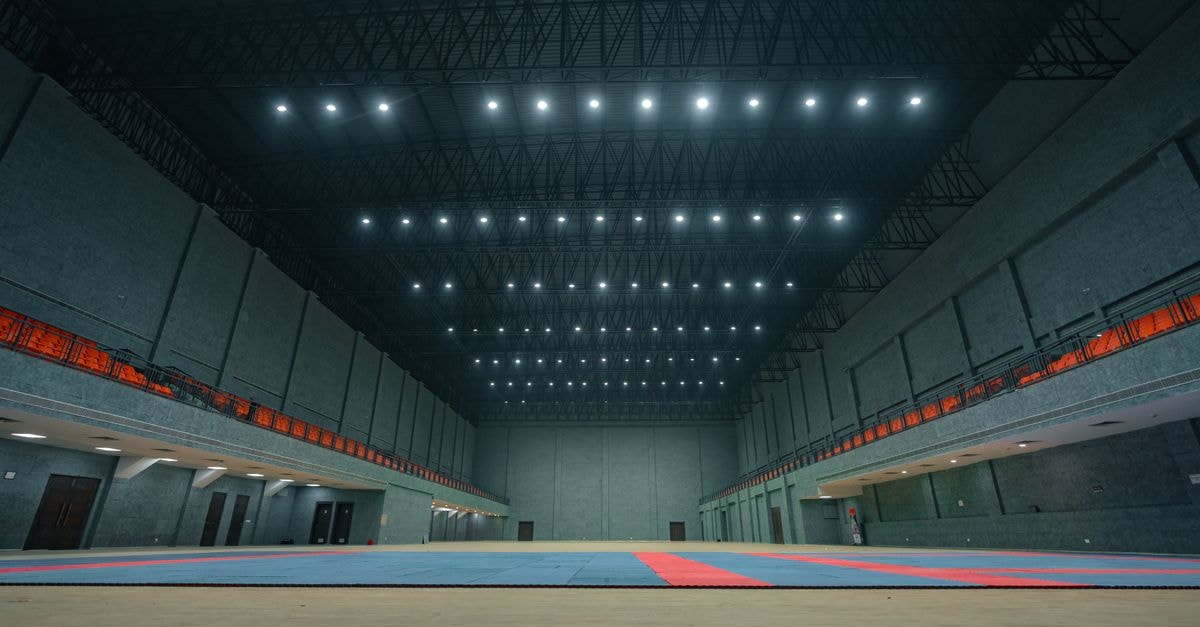
The Sports Authority of India has spent approximately Rs 20 crore on an overhaul of the Indira Gandhi Indoor Stadium, with personnel from a newly formed SAI engineering division and the Central Public Works Department carrying out the work. Seating capacity has been raised to 7,500 with 2,500 new seats, and 57 of the stadium complex's 66 toilets have been renovated, according to SAI Executive Director Ambar Pratap Singh. Roof leakages and expansion joints have been treated, the drainage system improved, a new false ceiling installed, and parts of the building repainted. The lighting system has been upgraded in consultation with BWF specialists, with the goal of delivering between 2,200 and 2,400 lux of uniform illumination without shadows on the courts, an upgrade Badminton Association of India general secretary Sanjay Mishra said was a direct response to problems identified during the previous tournament. Court drift, another long-standing professional concern, has also been addressed, and the repaired roof is being repeatedly tested because the championships fall during India's monsoon season.
A multi-layered effort to keep birds and monkeys out of the arena
To prevent a repeat of the India Open's pigeon droppings, organisers have installed heavy-duty bird netting beneath the roof, sealed openings around the stadium, and applied a non-toxic US-sourced gel to air-conditioning pipes and other vulnerable spots to stop pigeons from roosting. Double doors have been fitted at all 16 entrances to the inner hall, broken windows sealed, and ventilator openings covered, while a patented US-made device that emits sounds to deter and repel birds is being deployed at the venue. Together with the three langur-call mimics, the measures form a layered deterrent system against both avian and primate intrusions during the tournament window. SAI's Ambar Pratap Singh said planning for the improvements began in February, shortly after the India Open, reflecting how directly the previous event's failures have shaped the current preparations.
Political and sporting weight on a second Indian hosting
India is hosting the BWF World Championships for only the second time, having previously staged the tournament in 2009 at Hyderabad's Gachibowli Indoor Stadium, a 17-year gap that has put the country's ability to deliver a flagship badminton event under intense scrutiny. Former world champion PV Sindhu publicly endorsed the langur-mimic hire, writing online that the solution could invite laughter but reflected the effort being made to welcome the world, adding that India's solutions, like its hospitality, were "uniquely Indian." The championships, scheduled for August 17 to 23, are expected to feature top-ranked players including Shi Yu Qi, Akane Yamaguchi, Kim Won Ho and Seo Seung Jae, with Indian draws placing Sindhu ninth in seeding and the men's doubles pairing of Satwiksairaj Rankireddy and Chirag Shetty fifth.
What remains to be verified on site
The tournament's opening on August 17 will be the first sustained test of whether the roof repairs hold under monsoon rain, whether the upgraded lighting delivers the targeted lux range across all courts, and whether the combined netting, gel, acoustic devices and langur mimics prevent further animal and bird intrusions. With one of four competition courts reported as ready on August 11 and finishing work still under way, the remaining courts and spectator areas are the immediate items to be completed before play begins.
Share this article