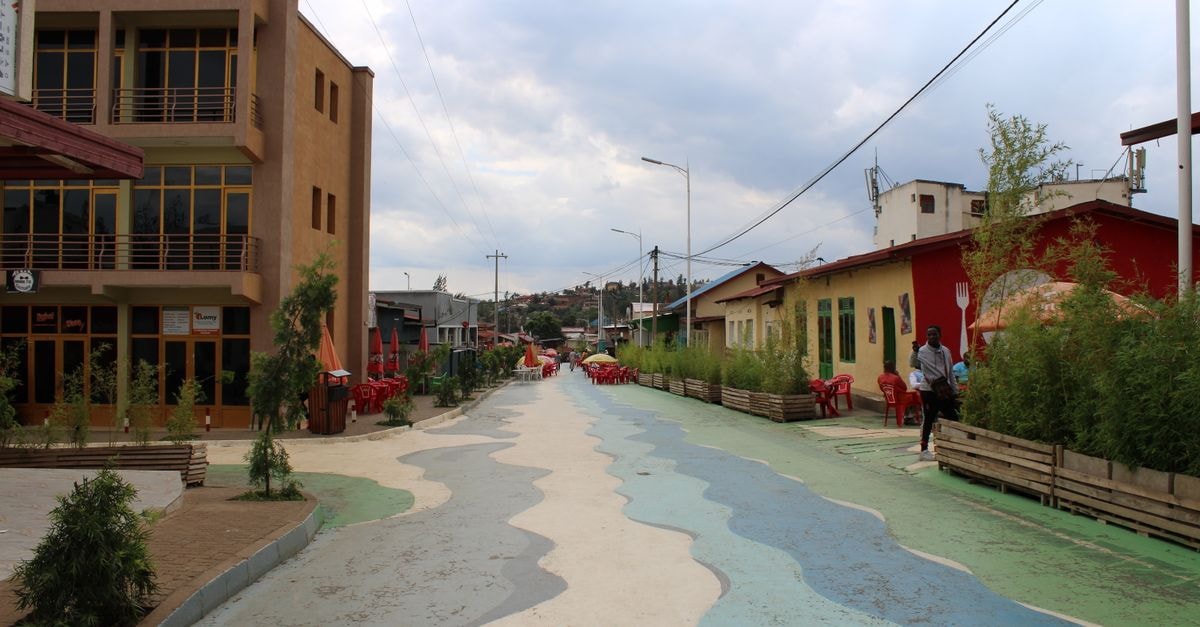
Arriving in Accra and finding your footing

Accra has a way of pulling you into its rhythm before you've even dropped your bag. The Ghanaian capital is loud in places, soft in others, and threaded through with a kind of everyday confidence that reads less as a tourist attraction and more as a city simply being itself. For travellers planning a first visit, the appeal is rarely one landmark alone. It's the layering: a coastline that nudges right up against busy neighbourhoods, a music scene that drifts out of doorways after dark, and a sense that history here is still living somewhere in the conversation.
This guide is built around what a traveller actually needs to know to move through Accra with curiosity and a little care. It leans on three threads that came through clearly in research: how to get around on a budget, where the cultural and historical weight of the city sits, and how food opens up a deeper read on the place. There is no checklist of days here, no pre-packaged itinerary. Think of it as a set of lenses that should make your own wandering feel more confident.
Getting around on public transport
Public transport is widely described as the most affordable way to travel between Accra Kotoka Airport (ACC) and the city itself, and it's a useful starting frame for anyone watching their budget on arrival. The bus network, in particular, runs regular routes that connect the airport with key locations across Accra, which means visitors who don't need a private transfer can still reach central neighbourhoods without much fuss.
Beyond the airport corridor, the bus system forms the backbone of everyday movement for many residents. It's not a polished metro-style service, and most travellers find that the experience is part of getting to know the city: a window into which neighbourhoods flow into which, who is commuting at what hour, and how Accra breathes between morning and night. For visitors, the practical approach is to treat public transport as a default for short and medium hops, especially when cost matters more than speed or door-to-door convenience.
The honest caveat: specific routes, frequencies and ticketing details shift over time. Anything you intend to rely on for a connecting flight, an early morning departure or a timed meeting should be confirmed through an up-to-date channel before you set out. Public transport in Accra rewards a small amount of local orientation, and a quick question at your guesthouse or hotel about which bus serves your intended stop can save a lot of trial and error on day one.
Historical sites and the cultural fabric
Accra's vibrant nightlife tends to get most of the attention in casual conversation, but there's a quieter reason the city pulls people in: the density of historical sites that connect visitors to a much longer story of Ghanaian culture and history. Walking into those spaces, you get a sense of the city as something layered rather than new, and that's a meaningful counterweight to the faster, louder impressions you might pick up on the same trip.
Travellers tend to find that these historical sites work best when they're not raced through. The value isn't only in seeing the buildings or the displays; it's in the room they create to think about how the country arrived at this moment. Some sites sit close to the centre, others require a little more planning, and the exact visiting conditions, opening windows and admission details for any specific location are best checked through an official or up-to-date source before you go. Treat the historical strand as a thread you weave through the trip rather than a single afternoon block.
A small note on cultural calendar. Annual festivals do cycle through Ghana, including harvest celebrations such as the Mifele-Gbero festival observed by the Sissala people in Ghana's Lambussie district. That specific event sits outside Accra and outside what visitors to the capital should plan around, but it is a useful reminder that the country has a layered ceremonial calendar. If timing matters for you, look at what's scheduled in and around your travel window, and consider whether any festival overlaps with your stay in a way that adds rather than complicates your plans.
Food as a way into Accra
If you want to understand Accra, you'd do well to start with what its people eat. That isn't a romantic framing; it's how the city introduces itself. Ghana's capital carries a food culture that isn't a niche interest reserved for food writers, but a daily, visible, often loud conversation happening in markets, roadside kitchens, family homes and late-night street stalls.
The range is wider than most first-time visitors expect. There are dishes rooted in ritual and tradition, cooked and shared in ways that carry real meaning, and there are the casual bites that come out after the sun goes down, the kind of food you eat standing up, talking to whoever happens to be next to you. Both ends of that spectrum are part of how Accra expresses itself.
For a traveller, the practical takeaway is simple. Eat with intention. Try the everyday staples you'd see locals reaching for; ask what a particular dish means before you taste it; be open to the late-evening food stalls that often reveal the city's most unfiltered flavours. You don't need a long list of recommended restaurants to have a meaningful food experience here. You need curiosity, a willingness to point at something unfamiliar, and enough patience to let a meal take longer than you'd expect.
Reading the city more slowly
Beyond the three core strands above, there's a more general piece of advice that applies to Accra almost more than to many other capitals: slow down. The city doesn't reward a checklist. It rewards attention.
Give yourself permission to walk a stretch of neighbourhood at sunset without a destination. Sit somewhere with a cold drink long enough to hear the language and the music shift as the evening settles. Notice how the markets reorganise themselves between morning and night, and how the same street can feel different depending on which direction you face.
That's the Accra that stays with people: not a single monument or one iconic plate, but the accumulated impression of a city that reveals itself in layers.
A few honest caveats before you go
A few things deserve flagging up front. Public transport details and specific route information change over time, and any traveller relying on them for tight connections should confirm details through a current source before travelling. Similarly, opening hours, admission policies and the operating status of specific historical sites can vary, and should be checked with official channels close to your visit.
Currency and prices are not addressed in detail in this guide because the evidence base doesn't support a clear per-day figure or a current exchange framing. Travellers should treat any costs they encounter as something to verify on the ground, ideally through a recent, reliable source or simply by asking locally.
Conditions in any city shift, and Accra is no exception. Use this guide as a starting frame, not a final word, and build your trip on the most current information you can gather before and during your stay.
Share this article
TOOLS FOR THIS PLAN
Make the Accra plan measurable
Choose a tool only when it answers the next question in your trip. Your values stay in the browser, and each tool offers a route back to this planning context.