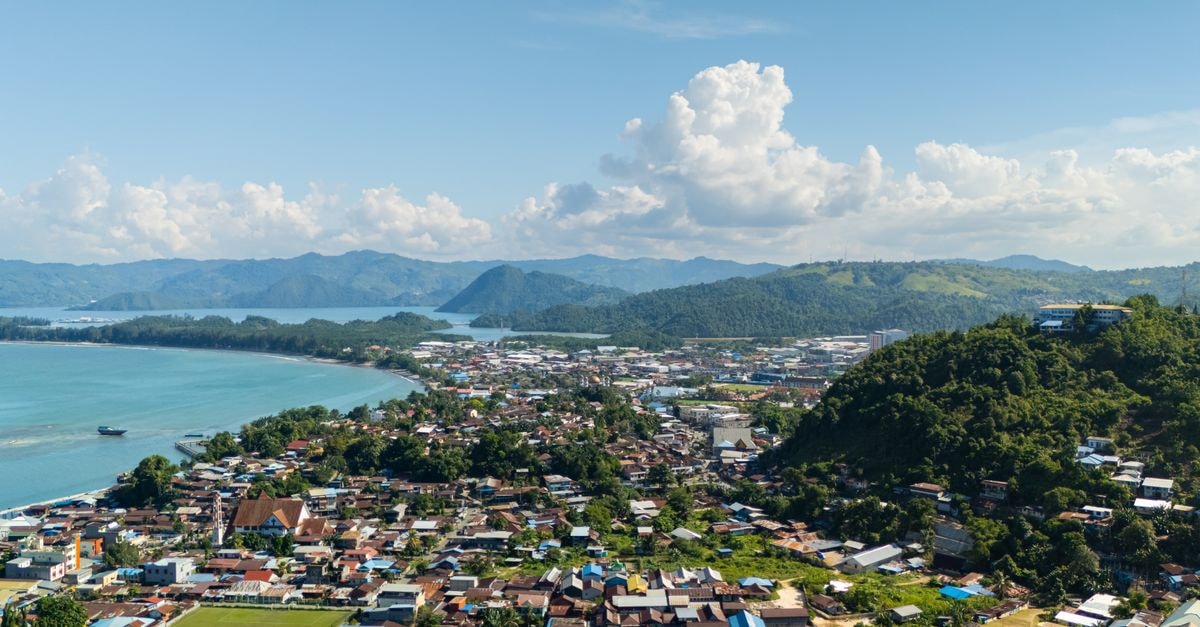
A first impression of Bandar Lampung

Bandar Lampung sits on the southern tip of Sumatra, where the land curls toward the Sunda Strait. As the largest city in Lampung province, it carries the easy rhythm of a regional capital: a working harbor town wrapped in tropical greenery, with the Bukit Barisan mountains rising in the distance and the sea never far from sight. Travelers often pass through on their way to the islands and beaches beyond the city, but Bandar Lampung itself rewards a slower look — even if the most photogenic stretches of coast lie further afield.
Weather and seasonal context
Bandar Lampung has a tropical climate shaped by its coastal position and the wider weather patterns of southern Sumatra. Historical climate data for the city is drawn from reanalysis datasets, which give a long-term picture rather than a live forecast. That means the temperatures and humidity you experience on any given day will be guided by broader regional conditions rather than a precise prediction, and it is always worth checking a current forecast closer to your trip.
In practical terms, visitors can expect the kind of warm, humid air that comes standard for a Sumatran coastal city. Short tropical showers are possible at any time, and the air can feel heavy, especially after rain. Lightweight clothing, a compact umbrella or rain jacket, and comfortable shoes for slick pavements make day-to-day exploring more pleasant. If you are sensitive to humidity, plan indoor pauses during the hottest hours and lean toward early mornings or late afternoons for outdoor wandering.
Because this guide is written for the long view rather than a single window of time, it focuses on the patterns you are most likely to encounter rather than the conditions of any particular week.
Getting around
Bandar Lampung does not have a tourist-friendly official network of route maps, so figuring out the local transport system on the fly can be a small adventure in itself. Public transport options exist in the form of angkots (shared minibuses), but without readily available comprehensive maps for visitors, navigating by them often relies on local knowledge, a phrasebook of destination names, or the patience to ask a friendly passenger for help. For many travelers, angkot travel becomes a cultural experience as much as a way to get somewhere.
Once you are settled in the city, ride-hailing apps remain a comfortable option for short trips, while taxis and angkots cover more local routes. If you plan to explore at your own pace, particularly for evenings or forays to outlying neighborhoods, having a small amount of local cash on hand is helpful, even when you intend to rely on apps.
Attractions and planning
Bandar Lampung is, at heart, a coastal city, and the sea is part of its everyday character. That said, the beaches immediately around the city center are not the headline draws of the wider Lampung region. Travelers sometimes arrive expecting postcard-perfect shores right on the doorstep and leave a little underwhelmed by the urban coastline.
Most beaches in Bandar Lampung feature white sand, which gives the shoreline a soft look even where the surrounding setting is more working harbor than tropical resort. The honest takeaway for planning is simple: if your main goal is beach time and scenic coastlines, you will likely be happiest treating the city's beaches as a brief introduction rather than the main event, and looking further afield within Lampung province for the most striking stretches of sand and sea.
Within the city itself, the appeal tends to be more about atmosphere — waterfront views, local markets, mosques, and the everyday buzz of a Sumatran capital — than a checklist of marquee attractions. Give yourself room to wander, sample street-side snacks, and let the coastal setting color the experience rather than chase a packed sightseeing schedule.
Food and local context
Bandar Lampung's position on the coast shapes what ends up on the table. The city's coastal location ensures a steady supply of fresh seafood, which forms a foundation of many local dishes. Grilled fish, prawns, squid, and shellfish prepared with chili, lime, and aromatic herbs are common threads in the local food scene, often served with rice and sambal.
For travelers with specific dietary needs, it helps to know the lay of the land in advance. Kosher food is extremely rare and virtually non-existent in Bandar Lampung, so visitors who keep kosher will need to plan carefully, likely relying on self-catered supplies and clear communication with accommodations.
If you are new to Indonesian food, Bandar Lampung is a friendly place to ease in: seafood is familiar territory for many travelers, the spice levels can usually be adjusted by asking for less sambal, and the local take on fresh fish tends to be more accessible than some of the more challenging regional specialties you might encounter elsewhere in the archipelago.
A few last notes for your trip
A little preparation goes a long way in Bandar Lampung. Save offline maps for the city in case your data connection wobbles, keep small bills ready for markets and informal transport, and build flexibility into your days so that a sudden rain shower or a friendly chat with a local does not derail your plans. The city rewards a slower, more curious traveler — someone who treats the urban coast as a starting point rather than a finish line, and who is happy to let seafood, sea air, and Sumatra's signature humidity set the pace.
Travel conditions can change over time, so it is worth double-checking transport details, airport services, and any local regulations through official channels before you depart. Rates, routes, and on-the-ground availability may shift, and current guidance from your government and local authorities should always have the final word on safety and entry requirements.
Share this article
TOOLS FOR THIS PLAN
Make the Bandar Lampung plan measurable
Choose a tool only when it answers the next question in your trip. Your values stay in the browser, and each tool offers a route back to this planning context.