A capital designed from a blank page

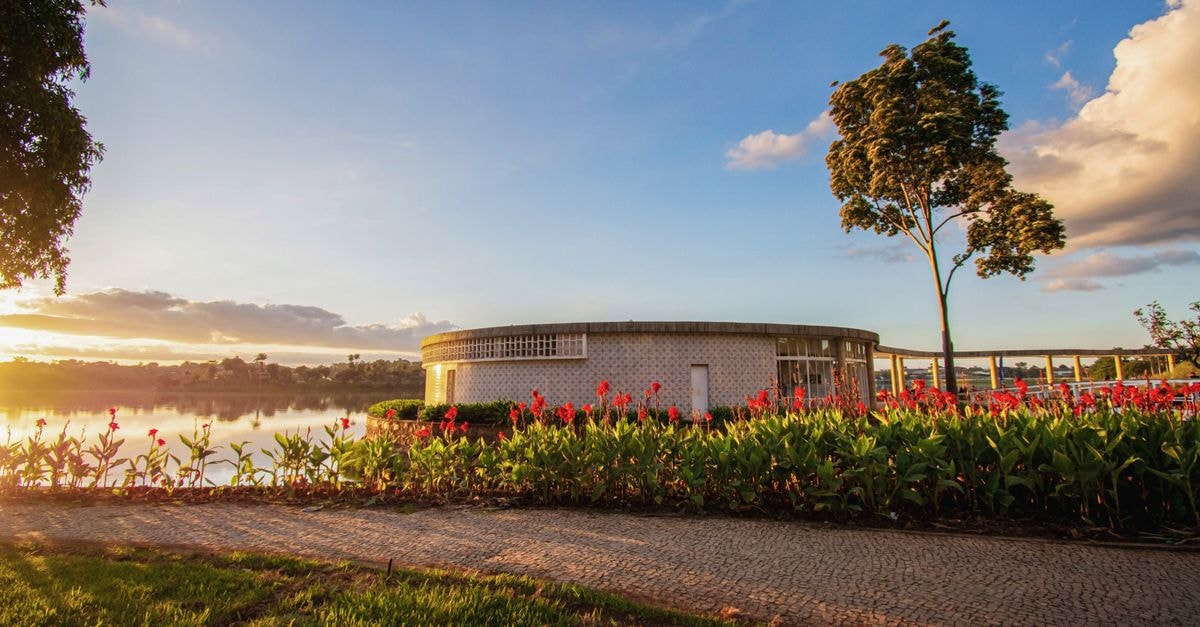
Brasília feels different the moment you arrive, and that difference is the point. Inaugurated in 1960, the city was conceived as a forward-looking national capital rather than a place that grew organically over centuries. Its monumental axis and sweeping planned districts were laid out as a unified architectural statement, and that experiment has since been recognized as a masterpiece of modernist architecture listed as a World Heritage Site by UNESCO, attracting architecture enthusiasts worldwide. Walking through the planned sectors, you sense a city that doubles as an open-air museum of twentieth-century design, where civic buildings, plazas, and residential superblocks were all drawn on a single canvas.
Beyond its visual identity, Brasília also functions as an important transportation hub for travel within Brazil. That dual identity, design landmark and transit crossroads, gives the city a specific rhythm. Travelers often arrive expecting the street-level bustle of older Brazilian capitals and instead find a capital engineered around sweeping sightlines and a calmer, more deliberate pace.
A capital built to its own scale
Brasília rewards visitors who adjust their mental map. The distances tend to be longer, tourist attractions are spread out, and some regions depend heavily on transportation, so the city is best approached as a place to move through deliberately rather than to wander on foot from one landmark to the next. Even visitors who love slow strolls find that the most rewarding views often come from moving between zones, watching the horizon shift from one architectural gesture to the next.
The underlying lesson is honest and freeing: you do not need to see everything in a single walk. Treating Brasília as a city of set pieces, each surrounded by its own generous open space, helps you arrive without the quiet frustration of comparing it to denser historic centers.
Getting around Brasília without burning half a day
Because so many points of interest sit at a distance from each other, transportation is not an afterthought here, it is part of the experience. Public transportation in Brasília is the spine that holds daily life and sightseeing together, and understanding its role early makes the rest of the trip easier. The system links the residential superblocks, commercial sectors, and the monumental core, which means visitors who plan a couple of connections into their day usually see more and stress less.
A few practical habits help most travelers:
- Plan a rough cluster per sector. Because the layout is zoned and the attractions are spread out, grouping nearby points reduces back-and-forth transit. - Allow buffer time between moves. Distances feel longer than they look on a flat map, and factoring in waiting and transfer time keeps the day relaxed. - Keep a backup option in mind for evenings or off-peak hours, since some regions depend heavily on transportation and service patterns can shift.
The result is a slower, more spacious kind of sightseeing that suits the city rather than fights it.
An architectural pilgrimage, not a checklist
Brasília is most often visited by travelers drawn to a specific idea, the chance to see how a whole capital was imagined and built within a single generation. It attracts architecture enthusiasts worldwide, and that focus shapes the best way to spend time here. Rather than racing through a long list, visitors usually get more from a smaller set of anchor buildings and the public spaces around them.
Because attractions are spread out, treating the city as a series of architectural encounters, each with its own approach and backdrop, often feels more satisfying than trying to compress the whole story into one very long day.
How to think about a Brasília trip
The honest framing for Brasília is that it is a destination with its own rules. It is a UNESCO-recognized modernist statement on a national scale. It is a transportation hub for moving on elsewhere in Brazil. And it is a city best navigated with transportation in mind, patience for long distances, and a willingness to let the architecture do the talking. Travelers who arrive expecting a coastal city or an old colonial center often feel underwhelmed at first, while travelers who arrive ready to read a capital like a designed landscape usually leave impressed by how singular the experience is.
For most first-time visitors, two to three unhurried days of architectural sightseeing, mixed with time to simply sit in one of the city's wide public spaces and watch daily life move across the planned sectors, offers the most satisfying introduction.
A few grounding notes before you go
Travel conditions, transit connections, and access details shift over time, so it is worth double-checking official channels close to departure for the latest information on transportation, opening details, and any visitor guidelines. Treat this guide as a grounded starting framework rather than a live status update, and pair it with up-to-date sources for the specifics that affect your dates.
Facts and conditions on the ground can change. Before you travel, confirm current details through official channels so your plan reflects what Brasília actually offers at the time of your visit.
Share this article
TOOLS FOR THIS PLAN
Make the Brasília plan measurable
Choose a tool only when it answers the next question in your trip. Your values stay in the browser, and each tool offers a route back to this planning context.