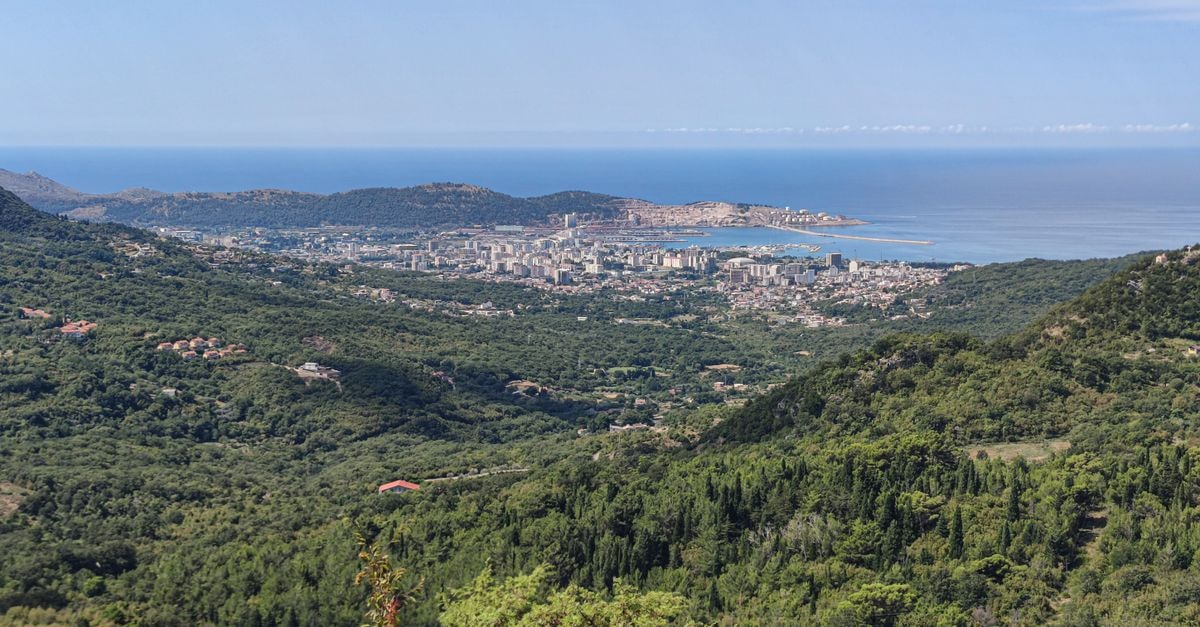
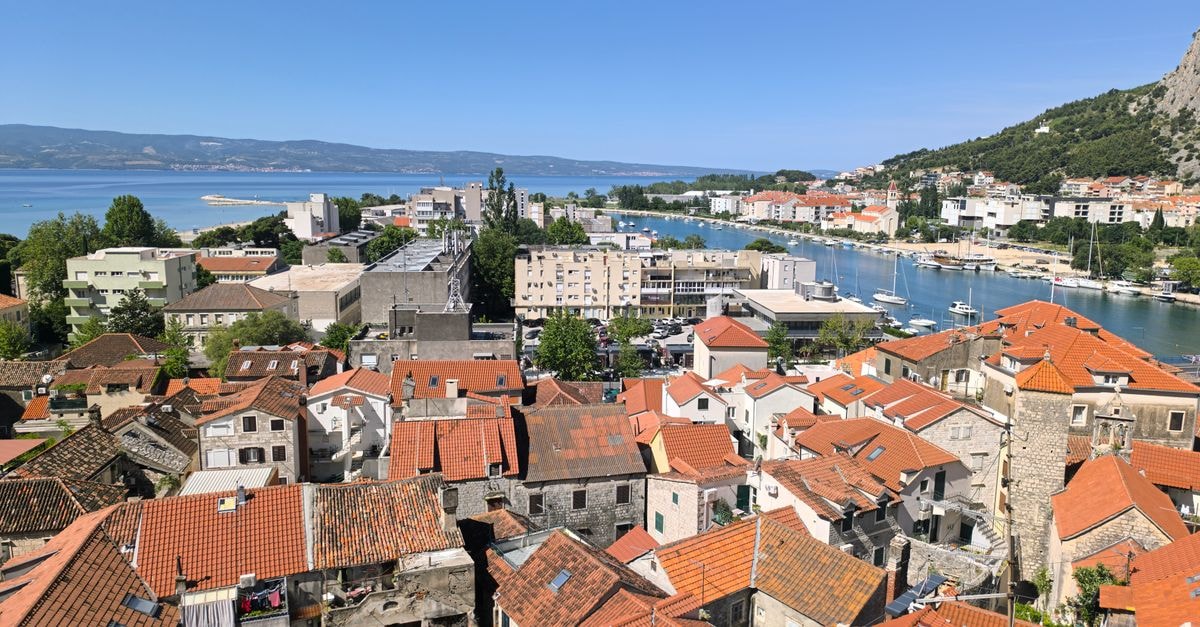
Cetinje in a karst plain at the foot of Mount Lovćen

There's something softly arresting about Cetinje the first time you see it. Where much of Montenegro's coast pulls the eye toward water and cliffs, Cetinje turns you inward instead. The town sits on a karst plain at the foot of Mount Lovćen, its low stone houses and faded 19th-century grandeur hinting at a time when this small inland settlement was, in effect, a European capital. Today, the rhythms are slower, but the buildings still hold the story.
That sense of being a capital-in-miniature is exactly what draws travelers here. It is described as Montenegro's old royal capital and its cultural and spiritual heart, a place where the country's story is kept rather than sold. If your idea of a good afternoon is wandering through layered streets and reading the architecture, Cetinje may suit you very well.
Getting around
Cetinje reads as a compact, walkable town. The reason to slow your pace is that much of the sightseeing experience is in the streets themselves: former embassy buildings from the decades when Cetinje was a European capital sit alongside low stone houses, and the contrast is easier to feel on foot than from any vehicle.
For travelers thinking about how to fit the town into a broader Montenegro trip, the practical framing is short rather than sprawling. Cetinje is often treated as a half-day stop on a longer route, and it pairs naturally with attention to Mount Lovćen, which rises just behind the town. If you prefer to combine your visit with a scenic uphill element, the Lovćen cable car is one way to layer that experience, though the ride itself is a separate excursion from the town itself rather than a Cetinje attraction in the city center.
Because the core is small, you can comfortably arrive, wander the historical streets, and continue onward without a heavy schedule. For travelers who want to pace a day around gentle terrain, this is a setting where a slow morning and an early lunch can carry most of the experience.
Attractions and planning
The town wears its history lightly, but the layers stack up quickly once you start looking. Cetinje is, in effect, an open-air archive of Montenegrin statehood — five centuries of history, medieval monasteries, former embassies and the legacy of the poet-prince Njegoš all overlap in a very walkable area.
If there is one stop to anchor a first visit, it is the Cetinje Monastery. Built in 1701 during the governance of Danilo Petrović — a spiritual and secular ruler of the former Montenegro — the monastery is widely treated as a place visitors inevitably encounter during their first acquaintance with Cetinje. The monastery is also described as guarding two of Orthodoxy's most precious relics, which gives the visit a weight beyond its modest footprint.
Beyond the monastery, the town's historical fabric continues with the residences and museums associated with Njegoš and King Nikola, and with the streets of former embassies from the era when Cetinje functioned as a European capital. Because these are part of the urban fabric rather than clustered in a single complex, they reward a meandering approach: choose a starting point, walk outward, and let the architecture frame the story.
A few practical considerations may help shape the visit. The historical core is small enough to see on foot without a fixed plan, so consider starting the day without a strict timetable. If your interest leans toward Orthodox heritage and royal history, the monastery and the Njegoš and King Nikola sites are the natural anchors. If your interest leans toward 19th-century diplomacy and everyday town life, the embassy street and surrounding lanes will carry more of your time. Either way, the town rewards travelers who read buildings as text.
Prices, opening hours, schedules, reservation rules, and local conditions can change; verify them through official channels before departure.
Share this article
TOOLS FOR THIS PLAN
Make the Cetinje plan measurable
Choose a tool only when it answers the next question in your trip. Your values stay in the browser, and each tool offers a route back to this planning context.