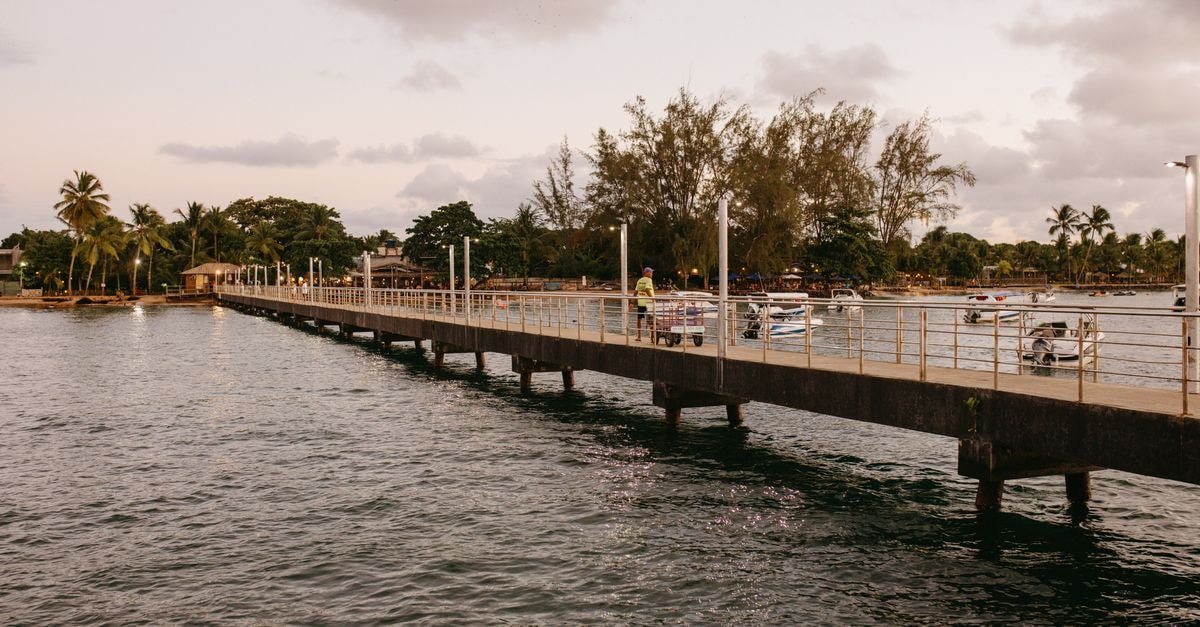
A capital that feels like the edge of the map

Funafuti is the main island and capital of the island nation of Tuvalu, a tiny dot in the Pacific where the travel rhythm slows down to almost nothing. Setting foot here requires a genuine shift in travel expectations, because the experience is shaped less by what you do and more by how much you are willing to let go of. This is a place where the day begins with light on the lagoon, the sound of outboard engines, and conversations that move at island pace rather than itinerary pace.
The island itself is wonderfully distinctive. Funafuti stretches the length of Fongafale islet, a coral ribbon sometimes too narrow for two cars to pass. The land is so thin in places that you can stand with the ocean on one side of you and the lagoon on the other within a few steps. In the centre sits the relatively massive Te Namo Lagoon, a calm inland body of water that gives the atoll its shape and gives visitors a recurring point of reference as they walk or ride along the coastal road.
Weather and seasonal context
Funafuti is a remote island destination, and like much of the Pacific, its climate has a rhythm of its own. Rather than four sharp seasons, the year tends to move between calmer, drier stretches and warmer, wetter periods, with temperatures that stay warm throughout. Because this is an evergreen guide rather than a dated forecast, it is worth thinking of the weather in terms of feel: bright tropical mornings, the occasional heavy shower, and long evenings where the air feels soft and close.
What the weather really shapes here is the texture of the day. Rain can arrive quickly, so a light waterproof layer is a sensible companion even when the sky looks clear. Heat and humidity can feel strong, particularly during the middle of the day, so pacing your time outside into early mornings and late afternoons tends to be the most comfortable approach. There is no need to plan around dramatic cold snaps or seasonal clothing changes; the wardrobe question is more about breathable layers and quick-dry fabrics.
Unlike crowded beach resorts, Funafuti remains untouched by mass tourism, allowing visitors to experience tranquility alongside some of the world's most pristine coral reefs. That stillness is part of the climate experience too. When the wind drops, the lagoon flattens to a mirror; when it picks up, the surf on the ocean side adds a low, constant rhythm that becomes the soundtrack of the day.
Getting around
Mobility in Funafuti is one of the first things that surprises new arrivals. International hotel chains and five-star resorts simply do not exist here, so the infrastructure is small, local, and easy to underestimate before you arrive. Once you are on the ground, the atoll reveals its scale quickly, and most of what you will want to see lies within a short radius of the main settlement.
The defining feature is the narrowness of the land. Fongafale islet is a coral ribbon sometimes too narrow for two cars to pass, which means road travel is short, slow, and very much part of the experience. Distances that look tiny on a map can take a little longer than expected, partly because the route curves around the lagoon and partly because the road is shared with pedestrians, cyclists, motorbikes, and occasional animals. Driving here is less about speed and more about attention.
Because the island is so compact, walking is often the most rewarding way to get around. You can move between stretches of coast, small communities, and the lagoon edge at your own pace, and you notice more of the daily life this way. Bicycles and motorbikes are also common ways to cover longer sections of the atoll without the formality of a car. The relatively massive Te Namo Lagoon sits in the centre and acts as a natural landmark, so it is hard to feel lost for long.
It helps to keep expectations in check. Setting foot in Tuvalu requires a genuine shift in travel expectations, and that applies just as much to transport as to accommodation. There is no metro system, no ride-share app to fall back on, and no expectation of high-speed transfers. Instead, transport tends to be arranged through guesthouses, local contacts, and small operators who know the island well. Building in a little extra time for any movement across the atoll makes the whole visit feel more relaxed.
What a slow-paced visit looks like
Funafuti suits a traveller who is happy to trade a packed schedule for a deep sense of place. The capital's scale invites lingering: a morning walk along the lagoon shore, a conversation with someone who has lived on the atoll their whole life, a quiet hour watching light move across the water. There is room here for unhurried discovery, and the island rewards visitors who arrive with patience rather than a checklist.
Because the infrastructure is small, planning tends to focus on the essentials: a comfortable place to stay, a reliable way to move around, and a willingness to let the days unfold. That simplicity is part of what makes Funafuti feel distinctive. It is a capital, but it moves at the pace of a village, and the contrast with busier travel destinations is exactly what many visitors come here to experience.
Practical notes before you go
A few general points are worth keeping in mind as you plan. International hotel chains and five-star resorts simply do not exist here, so accommodation is in local guesthouses and small lodges, and it is wise to book those in advance rather than assuming something will be available on arrival. Transport options on the island are limited but friendly, and asking locally about the best way to reach a particular spot is often more useful than any guidebook.
Travel conditions in a small atoll can shift quickly, whether that is the weather, a local event, or the availability of a particular service. Factual travel details can change over time, so it is always a good idea to confirm current arrangements through official channels, your guesthouse, or recognised local contacts before you set off.
Share this article
TOOLS FOR THIS PLAN
Make the Funafuti plan measurable
Choose a tool only when it answers the next question in your trip. Your values stay in the browser, and each tool offers a route back to this planning context.