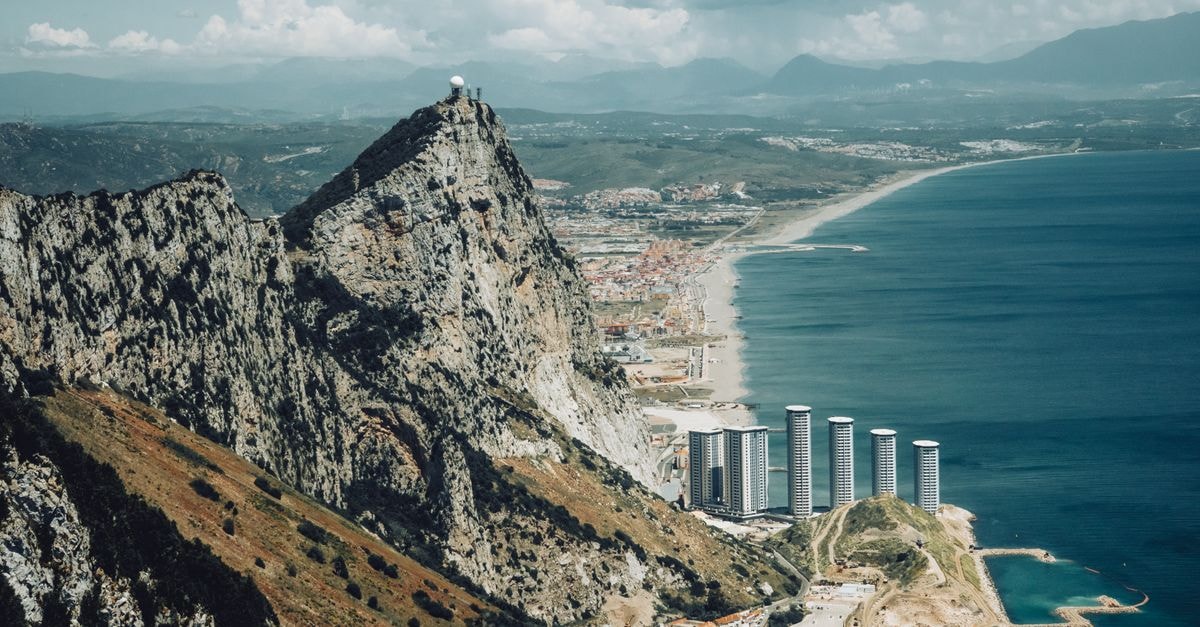
A compact, curious way into Gibraltar

Gibraltar has a way of surprising people before they have even properly arrived. It is a small territory stitched onto the southern tip of the Iberian Peninsula, with the rest of Spain on one side and the Strait of Gibraltar opening toward North Africa on the other. Visitors often arrive already noticing something unusual: a single main road that carries traffic, pedestrians, and aircraft movements all at once, because that road and the runway are the same piece of ground.
That single detail is a useful way to set expectations. Gibraltar is not a place you experience from a distance. It is dense, layered, and physically compact, and the experience of moving through it is part of the visit. This guide is built for travellers who want a clear picture of that texture before they go, with the two most distinctive things about the territory treated as the spine of the trip: the way people move through it, and the landmarks that anchor it.
Getting around
The first reality is that the main road into the city shares its space with the runway. Traffic and pedestrians are stopped to allow aircraft to take off and land, and this is a routine part of moving through the territory rather than a special event. Visitors tend to find this oddly charming on the first crossing and then entirely normal by the second, which is part of the fun.
The second reality is that several of the headline attractions are clustered around or within the Rock. St. Michael's Cave is one of those anchor points, and it sits naturally alongside the Rock of Gibraltar itself as part of the same elevated territory that defines the skyline. Travellers who plan their time around these two anchors tend to find that the rest of the territory falls into place around them, because the city, the road, and the Rock are all within walking scale of one another.
Because the territory is compact, it rewards a relaxed pace. There is no need to rush between far-flung districts, and the most memorable moments are often the in-between ones, like pausing at the road while an aircraft passes and then continuing into town on foot. Visitors who arrive with the expectation of a large, sprawling city are often pleasantly surprised by how quickly the territory opens up.
Attractions and planning
The attractions in Gibraltar are unusual because the territory itself is the attraction in many ways. The Rock of Gibraltar is the defining landmark and the single most recognisable feature visitors associate with the territory. It is not just a backdrop; it shapes the climate of the town, the orientation of the streets, and the rhythm of a visit. Most travellers will spend at least part of their trip simply looking up at it.
The Rock is also where St. Michael's Cave is found. The cave is one of the most visited sites in the territory, and it is naturally grouped with the Rock as part of any plan to understand what the territory offers above ground level. Visitors typically combine the two rather than treating them as separate decisions, because reaching the cave generally means engaging with the Rock itself.
Then there is the runway, and this is the detail travellers tend to remember longest. The runway was constructed during the Second World War, and it remains one of the shortest in the world. Its most striking feature for a visitor is not its length on a map, but the way it functions in everyday life: as it crosses the main road into the city, traffic and pedestrians are stopped to allow aircraft to take off and land. The crossing barrier, the waiting traffic, and the aircraft are not a spectacle arranged for tourists; they are the working arrangement of the territory.
For planning purposes, that means visitors should treat the runway crossing as a normal part of getting in and out, not as something to chase as a separate activity. Most travellers will experience it several times during a stay simply by moving between their accommodation and the town. Those who want a longer look can pause on the pedestrian crossings that flank the runway, which are widely used by visitors who want a clear view of the aircraft.
Because the territory is small, the practical shape of a visit tends to fall into two loose halves. One half is the town and the road, where the runway experience and the everyday crossings happen. The other half is the Rock, where the headline natural attractions sit. Travellers who keep those two halves in mind tend to feel that the territory is easy to read, even on a first visit.
A small note on what makes Gibraltar feel different
There is a particular quality to visiting Gibraltar that comes from how compressed everything is. A single road carries vehicles, walkers, and aircraft. A single rock houses a major cave system and defines the skyline of the town beneath it. Visitors who arrive expecting separation between landmarks tend to be struck by the overlap.
This is also why the territory suits travellers who prefer a slower, more observational kind of trip. There is less distance to cover, but there is more to notice per step. The runway crossing, the approach to the Rock, the entrance to the cave, and the view back across the town toward the strait each reward a moment of attention. Visitors who allow for that pace usually come away with a clearer picture of the territory than those who try to tick through a long list of stops.
Practical orientation before you go
A few simple habits make a Gibraltar visit smoother. Give yourself extra time at the runway crossing, because the waits are short but they are not optional; the road genuinely stops for aircraft. Wear comfortable shoes for the Rock, because the terrain around the upper sites is uneven and the views are best on foot. Plan the Rock and St. Michael's Cave for the same part of the day, since they sit within the same elevated area, and you will spend less time reorienting yourself.
It is also worth knowing that Gibraltar is small enough that most visitors do not need to commit to a fixed daily plan in advance. The town is easy to walk, the landmarks are clearly signposted, and the runway crossing is a built-in pause rather than an obstacle. Travellers who keep their plans light often find that the territory reveals itself more readily than they expected.
A note on verification
Factual travel conditions in Gibraltar can change, and details around the runway, the Rock, and St. Michael's Cave are worth a quick check through official visitor channels before departure. The two anchor experiences described here, the runway crossing and the Rock with its cave, are the most stable features of a visit, but opening arrangements, access routes, and on-the-ground logistics can shift. Treat this guide as a confident orientation, and confirm any specific detail you plan to rely on closer to your trip.
Prices, opening hours, schedules, reservation rules, and local conditions can change; verify them through official channels before departure.
Share this article
TOOLS FOR THIS PLAN
Make the Gibraltar plan measurable
Choose a tool only when it answers the next question in your trip. Your values stay in the browser, and each tool offers a route back to this planning context.