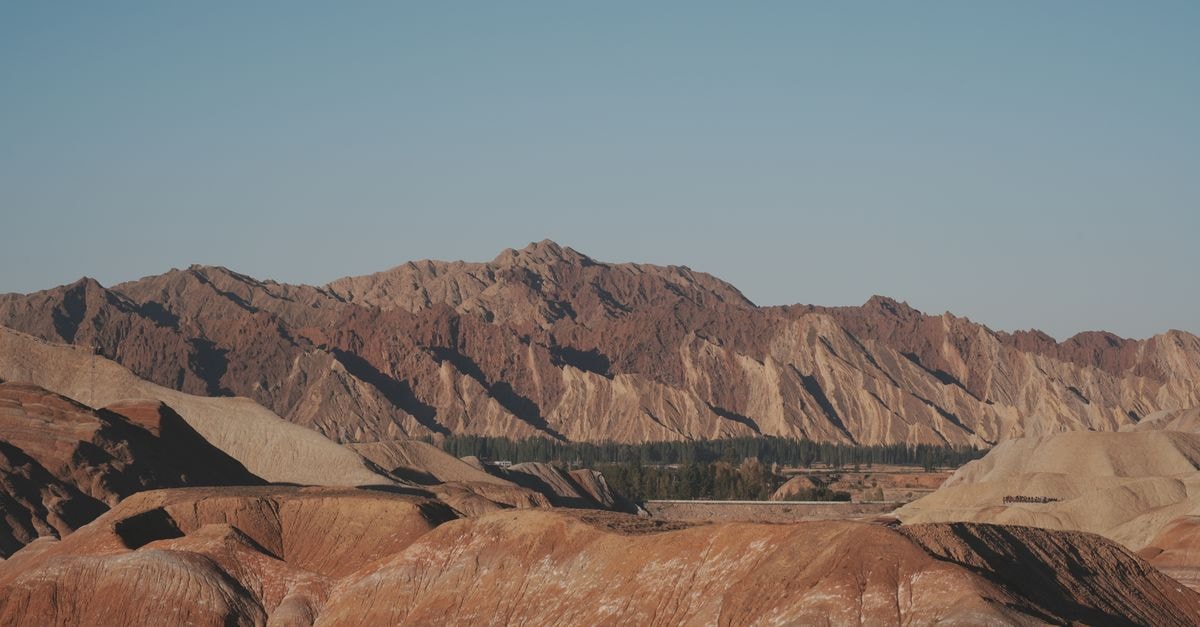
A quiet gateway on the eastern edge of the plateau

Haidong sits on the eastern fringe of the Qinghai-Tibet Plateau, the region described in travel literature as the birthplace of Hehuang culture and a natural gateway between the high plateau and the lower-elevation river valleys to the east. That position gives the area a quiet, layered feel: the air thins as you climb from the warmer canyon country toward higher ground, and the cultural fabric is woven from monasteries, former residences of senior Tibetan Buddhist figures, and the river-carved landscapes that have defined local life for centuries.
For independent travelers, the appeal of a Haidong visit is often its contrast with the more familiar Xining side of Qinghai. Many of the cultural sites here feel less crowded, and the natural scenery leans into forests, river canyons, and reservoirs rather than the high-altitude lakes that draw most visitors further west. If your interests run toward monastic architecture, Tibetan heritage sites, and slower nature walks through green valleys, Haidong can suit you better than a packed urban itinerary.
This guide sticks to what the local record clearly supports: how to arrive and move around, and the broad shape of the cultural and natural attractions that define a visit.
Getting around
The most practical way to approach Haidong is as an extension of a Xining base. Travel writing on the region points out that if you are staying in the provincial capital, hotel and airport logistics are covered in the Xining guide, and the well-known Ta'er Monastery makes a natural half-day stop on the way in or out of the city. That means you can keep your lodging simple in Xining and treat Haidong as a series of day moves by rail and road rather than a separate city to unpack in.
The rail network is genuinely useful here. The three main stations in Haidong are Haidong West Railway Station in Ping'an District, the principal high-speed rail stop connecting Xining, Lanzhou, and other cities; Ledu Railway Station in Ledu District, which is a convenient access point for the Qutan Temple area and eastern Haidong attractions; and Minhe Railway Station in Minhe County, useful for travel toward eastern Qinghai and Gansu. The short-distance rail link between Xining and Haidong is noted as especially convenient, so a base in Xining does not force a long overland drive just to reach the first site.
If you prefer not to switch trains for every outing, Haidong West is the most flexible anchor: from there you can head west back into Xining, north toward Lanzhou, or deeper into Haidong's districts. If you are primarily interested in the eastern cultural sites, basing closer to Ledu or building a route that uses Ledu Railway Station can save you backtracking.
Attractions and planning
The cultural density of Haidong is one of its quiet strengths. Local descriptions highlight the area's lush green forests and a string of historical sites, including monasteries and the former residence of a Panchen Lama, a senior figure in Tibetan Buddhism. For travelers interested in religious architecture and Tibetan heritage, this concentration within a relatively compact set of valleys makes the area rewarding without long transfers.
The natural counterpoint is Mengda National Nature Reserve in Xunhua Salar Autonomous County, described as the most representative scenic area in the Haidong region. Its core attraction is a body of water called the Heavenly Lake, set within the broader reserve. If your idea of a Qinghai trip extends beyond monasteries and you want a slower half-day or full-day in green, lake-ringed terrain, Mengda is the headline option and pairs naturally with the cultural sites if you are willing to spend a night in Xunhua.
Thinking about pacing, the district-level rail layout shapes how a Haidong day can come together. A route built around Ledu Railway Station works well if you are focused on Qutan Temple and the surrounding eastern attractions, while Xunhua and Mengda sit further along the same eastern corridor. Independent travelers who like to string together a few loosely connected stops rather than one big anchor visit will find this geography friendlier than it first appears.
Choosing what fits your trip
If you are the kind of traveler who prefers fewer overnights and one reliable base, Xining plus Haidong West Railway Station is the simplest rhythm: morning trains out, evening trains back, and Ta'er Monastery as a soft half-day on either end. If you would rather slow down and let the river country set the pace, splitting a night or two between Ledu and Xunhua lets you visit Qutan Temple and Mengda Nature Reserve without daily returns to the capital. Travelers drawn mainly to monastic heritage and former residences may find a single Xining base with one or two eastward day trips enough, while those who care more about forests and lake scenery will want to weight the plan toward Xunhua.
A note on verification
The descriptions above reflect what the regional travel record documents. Specific entrance fees, monastery opening hours, lake access conditions, and high-speed rail timetables for any given day are worth confirming through official channels or your hotel concierge before you set out, as these practical details can change.
General travel conditions in Qinghai can shift, and Haidong sits at elevations where weather and access can vary. Check current train schedules and site information through official sources before departure, and treat this guide as a starting framework rather than a final plan.
Share this article
TOOLS FOR THIS PLAN
Make the Haidong plan measurable
Choose a tool only when it answers the next question in your trip. Your values stay in the browser, and each tool offers a route back to this planning context.