Destination Overview

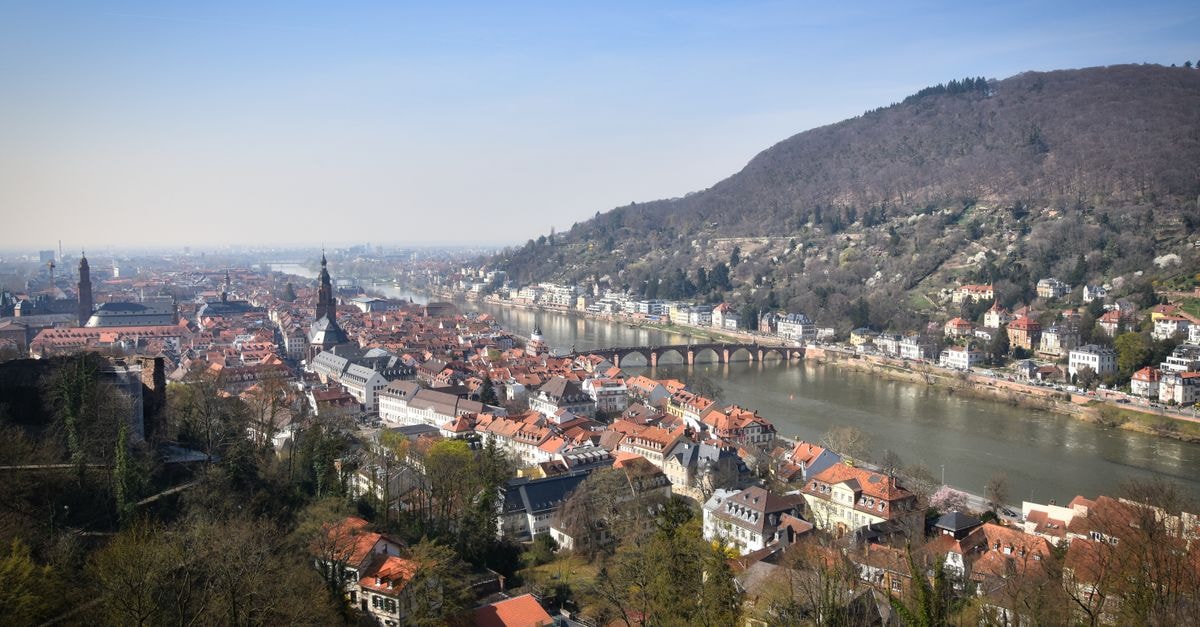
Heidelberg is a compact university city in Baden-Württemberg, set on the Neckar River and crowned by a red-sandstone castle ruin. Home to Germany's oldest university, founded in 1386, it draws roughly 11.9 million visitors a year and consistently ranks among the country's most photographed old towns. The Baroque Altstadt is largely car-free, with the 1.6 km Hauptstraße — Germany's longest pedestrian shopping street — running straight through it. Heidelberg is small enough to walk across in a morning but dense enough that a weekend barely scratches the surface.
July Weather and What to Expect
July is one of Heidelberg's hottest and liveliest months, with daytime averages around 26 °C (about 78 °F). Evenings are warm and stay light late, which makes open-air dining and river walks especially pleasant. The trade-off is that German Sommerferien (summer school holidays) are in full swing across most states during July, so the Altstadt, the castle path and the Neckarwiese fill up with day-trippers and family travelers.
If you want to dodge the midday heat on the steep climb to the castle, local guidance is to walk up before 10:30 or after 18:00. July is not a "bad" month by any stretch, but for cheaper hotels and shorter castle queues, late April to mid-May and the first week of October are generally considered the city's sweet spots. July suits travelers who prioritize long evenings, outdoor terraces, and a high-energy atmosphere over quiet sightseeing.
Getting to and Around Heidelberg
Heidelberg is easy to reach. Frankfurt Airport (FRA), roughly 80 km to the north, is the main gateway, and direct trains to Heidelberg's Hauptbahnhof run about once an hour, taking 50–60 minutes. Stuttgart Airport (STR) is around 125 km away, with journey times of about 90 minutes by rail. Drivers can use the A5 autobahn and the A656 into the city, but most of the historic center is a car-free zone, so most visitors park in one of the outlying garages and continue on foot.
Inside the city, distances are short and the Altstadt is walkable. For longer hops, Heidelberg's buses and streetcars (RNV) are integrated into the Rhine-Neckar Transport Network (VRN); a single ticket is around €3 and a day ticket about €7–8. Heidelberg is also notably cycle-friendly, with roughly 260 km of bike paths and a recurring "cyclist-friendly local authority" designation. Free public Wi-Fi (the "Heidelberg4you" network) is available at more than 200 locations across the city, which helps with maps and tickets on the go.
Top Sights and Experiences
Heidelberg Castle (Heidelberger Schloss) is the headline attraction. The Renaissance and Gothic ruin towers about 80 metres above the Old Town and houses the famous Great Barrel (Großes Fass) — a wine vat capable of holding over 220,000 litres — along with the German Pharmacy Museum and panoramic terraces. In summer the castle courtyard and barrel cellar are open 9:00 am to 6:00 pm (last entry 5:30 pm), while the Pharmacy Museum runs 10:00 am to 6:00 pm with last entry at 5:40 pm. Most visitors ride the Bergbahn funicular up and walk back down, or do the reverse to catch the views.
Down in the Altstadt, the Hauptstraße leads past the Church of the Holy Spirit, the Old Bridge (Alte Brücke), and the Marktplatz. The Student Prison (Studentenkarzer) — a quirky university-era lockup used until 1914 — is part of the standard sightseeing circuit. North of the river, the Philosopher's Walk (Philosophenweg) climbs the Heiligenberg for the iconic postcard view back across the Old Town and castle. Allow at least a half-day if you combine the castle, Old Town and the Philosopher's Walk.
For a change of pace, the Neckar River sightseeing boats are a relaxed way to see the valley; short cruises depart regularly in summer and pair well with an evening stroll along the Neckarstaden.
HeidelbergCARD, Castle Tickets and Funicular
The HeidelbergCARD is built for summer visitors. It bundles a castle ticket (admission to the castle courtyard, barrel cellar and the German Pharmacy Museum), a round-trip funicular ride from Kornmarkt to the castle with one stopover at Molkenkur, free unlimited travel on VRN buses, trams and authorized DB regional trains in 2nd class, one-time free admission to the University Museum, Student Prison, German Packaging Museum, Kurpfälzisches Museum, the Prinzhorn Collection and the Völkerkundemuseum, plus discounts at partner restaurants and shops. Pricing for 2026 is €25 (1 day), €36 (2 days) and €40 (4 days), with reduced rates of €21, €28 and €34 for school and university students up to 28, and visitors with 50%+ disability. Children aged 5 and under accompanied by an adult travel free. The card is personalized and must be shown with an official ID.
If you'd rather pay à la carte, the funicular's "Castle ticket" (lower section, Kornmarkt–Castle–Molkenkur) costs €11 adult single / €11 adult return, with the return including castle grounds, the wine cellar and the German Pharmacy Museum entry. A full panorama ticket (both sections, including the upper funicular up to Königstuhl) is €11 single / €17 return. In summer 2026, the funicular runs on its summer timetable from late March through early October: trains leave Kornmarkt for the castle every 10 minutes from 9:00 am, last trip 8:00 pm; Castle to Kornmarkt from 9:03 am, last trip 8:03 pm (subject to change). One important note: the funicular is closed for annual maintenance 9–27 March 2026, with a bus replacement — this falls well outside the July window, but matters if you arrive on the shoulder of the season. The HeidelbergCARD can be picked up at Tourist Information points at Heidelberg Hauptbahnhof, Neckarmünzplatz and Bismarckplatz, at the Castle ticket office and at the Kornmarkt funicular station.
Because July is peak season, expect queues at the castle during the late morning and early afternoon, particularly from cruise-ship groups and weekend day-trippers. To skip ticket-counter lines, reserve the HeidelbergCARD and castle ticket in advance through Heidelberg Marketing, and plan to start sightseeing either before 10:30 or after 18:00.
Where to Stay and July Booking Pressure
Heidelberg has a wide lodging mix: international chains cluster near the Hauptbahnhof and in the Bahnstadt (newer, business-oriented) district, while boutique guesthouses and small hotels sit inside the Altstadt itself. As a working baseline, July rates for 3-star hotels in the Altstadt typically run roughly €120 per night, 4-star properties around €170–175, and a hostel private room around €76 with dorm beds near €33, based on typical city pricing data. Because German school holidays fall in July across most states and the city is a popular conference destination (about 70% of overnight guests are reported as business travelers), mid-summer weekends can sell out 6–8 weeks ahead. Book as early as you can if you're traveling in the first three weeks of July, especially for Altstadt properties with castle views.
Local Food and Dining
Heidelberg's kitchen is firmly Baden and Palatinate, with strong student-tavern and Weinstuben traditions. Regional staples to look for include Maultaschen (pocket pasta filled with minced meat, spinach and onions, served in broth or pan-fried), Spätzle and Käsespätzle (soft egg noodles, the latter layered with cheese and crispy onions), Sauerbraten (marinated pot roast with red cabbage and dumplings), Flammkuchen (thin flatbread with crème fraîche, onion and bacon), and Pfälzer Saumagen, a pig's stomach stuffed with pork, potatoes and marjoram, served sliced with sauerkraut. White asparagus (Spargel) is a late-spring favorite — its season ends in June, so in July you'll see it less on menus.
For something uniquely Heidelberg, try a Studentenkuss — a chocolate-covered waffle-and-nougat praline first made in 1863 at Café Knösel, the city's oldest café. Pair meals with a glass of local Baden Riesling or Spätburgunder; the area around Heidelberg sits in one of Germany's important wine regions. For budget planning, expect bakery snacks and coffee around €3–7, bratwurst and street food around €3–6, a casual lunch main around €8–15, and a mid-range restaurant main around €15–30. A 0.5 L beer runs roughly €3–5 and a glass of house wine €3–6. The Altstadt's traditional taverns tend to serve generous portions; sharing a starter can stretch a meal for two.
Safety and Practical Tips
Heidelberg consistently rates as a safe city for visitors. Standard common-sense precautions apply: watch for pickpockets in dense Hauptstraße crowds on summer weekends, secure valuables if you leave them in parked cars in outlying garages, and carry a light layer for cooler riverfront evenings. The currency is the Euro (€); card acceptance is widespread in hotels, restaurants and shops, though smaller taverns and market stalls may prefer cash. Exchange rates fluctuate, so treat any reference rate as an approximation and check a live rate before exchanging money.
A few final July-specific reminders: pack sun protection for the castle climb and the Philosopher's Walk, book castle-area accommodation and restaurant tables early, and consider the HeidelbergCARD if you plan to take the funicular plus any paid museum — it usually pays for itself within the first two rides. Factual conditions such as funicular timetables, opening hours, ticket prices and exchange rates can change; always confirm the latest details with Heidelberg Marketing, the Bergbahn operator, and your bank before you travel.
The Tourist Information offices at Heidelberg Hauptbahnhof, Neckarmünzplatz and Bismarckplatz are staffed by local experts and can answer questions in English — a useful first stop on arrival, especially in July when events come and go quickly.
Prices, opening hours, schedules, reservation rules, and local conditions can change; verify them through official channels before departure.
Share this article
TOOLS FOR THIS PLAN
Make the Heidelberg plan measurable
Choose a tool only when it answers the next question in your trip. Your values stay in the browser, and each tool offers a route back to this planning context.