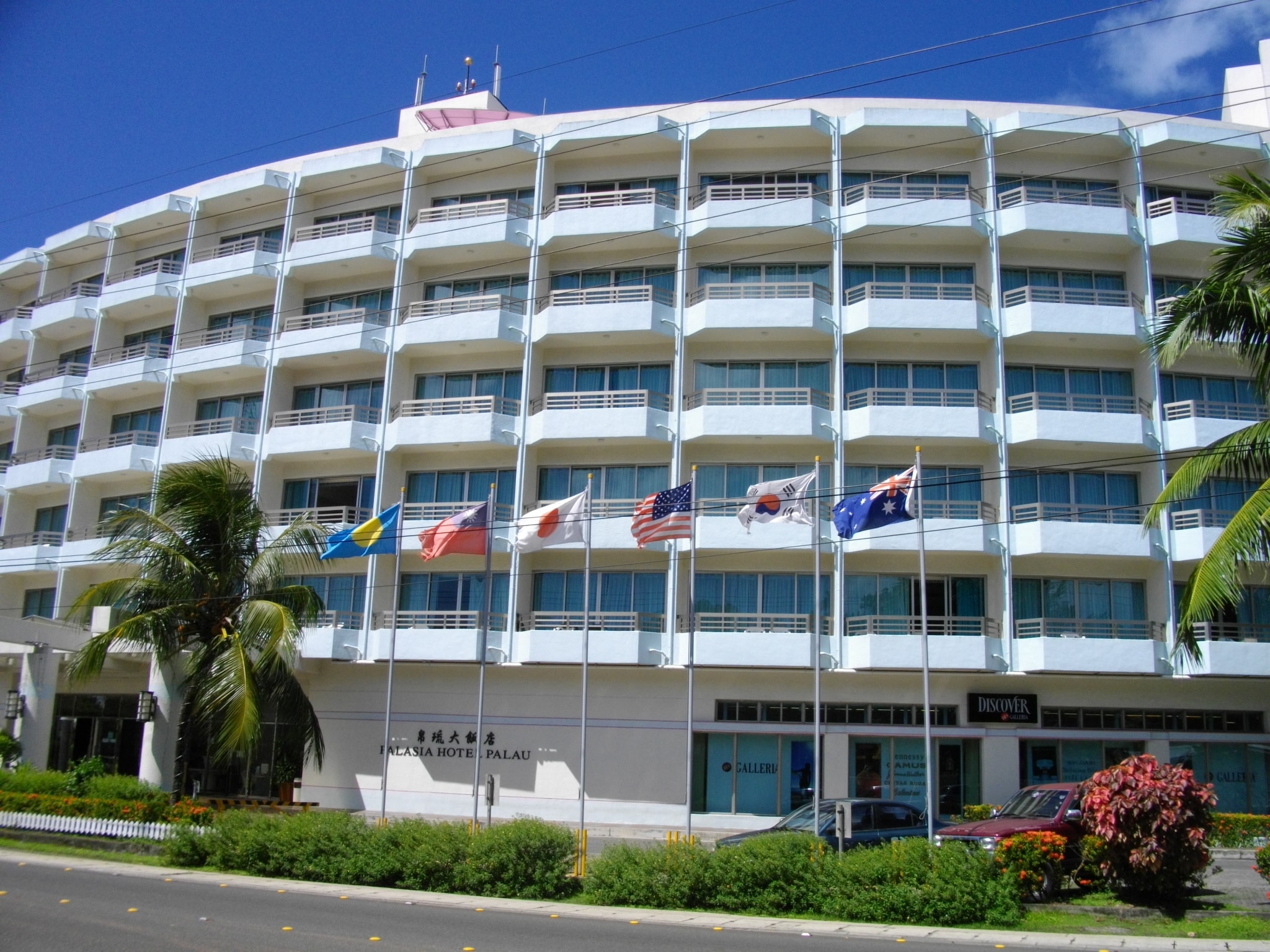
A first look at Koror

Koror sits at the heart of Palau as the country's practical travel nerve center. Even travelers whose real obsession is the reef often end up spending a meaningful stretch of time in the town itself, walking between a working marina, modest neighborhoods, and small museums that quietly hold the story of the islands. It feels less like a polished resort strip and more like a lived-in town that happens to have an ocean on its doorstep, and that mix is part of what makes it a useful base for getting to know Palau beyond the dive boats.
The waterfront is where most first impressions happen. Visitors typically arrive and orient themselves around the marina area, where boats come and go, dive operations have their bases, and the day's rhythm feels visibly tied to the sea. Step off that corridor and the pace softens, with quieter streets, small guesthouses, and pockets of everyday Palauan life that reward unhurried wandering.
A town built around the water
The defining trait of Koror is that almost everything practical orbits the coastline. The town functions as Palau's travel hub, with dive shops, liveaboard departure points, fish markets, and tour operators all clustering near the waterfront. That makes it an unusually efficient base: you can sort out a dive trip, pick up supplies, and find a place to eat without ever leaving the main drag.
But Koror is not just a launchpad. The town itself provides genuine cultural depth, especially at the Belau National Museum and the Etpison Museum. These are the sort of places where a couple of quiet hours can reframe how you understand the islands you're about to explore above and below the surface. After days spent bouncing between boats and reefs, they offer a welcome change of tempo.
For evenings, the downtown area around Koror Marina is where the town comes back to life. Waterfront restaurants serve as a natural gathering point after sunset, and the local markets in the same vicinity give the area a working, everyday feel rather than a tourist-only vibe. If you prefer something calmer, the nearby Malakal neighborhood offers quieter streets and a gentler pace, with guesthouses tucked into a more residential setting.
Weather and seasonal context
Koror has a tropical climate, so humidity and warmth are part of the baseline experience rather than a surprise. Rain tends to arrive in short, intense bursts rather than as an all-day washout, and the town's sheltered waterfront feel means most daily plans can flex around a passing shower. Because conditions can shift quickly, it is worth pacing outdoor and waterfront activities so the day still flows even if the sky briefly closes in.
Tropical precautions apply in their usual form: sun protection, hydration, and a basic awareness of the heat. Beyond that, Koror is consistently described as very safe for visitors, with low crime and a welcoming local attitude that makes independent movement around town feel easy. That sense of ease is one of the underappreciated parts of spending time here, especially for travelers arriving from busier urban hubs.
It helps to remember that the climate here shapes daily rhythm more than it dictates itinerary. Mornings and late afternoons tend to be the most comfortable window for walking between the marina, the markets, and the museums, with the slower midday hours better suited to a shaded café, a museum room, or simply pausing to watch the water.
Getting around
Koror is compact enough that movement is straightforward once you understand the shape of the town. The downtown area around Koror Marina is the natural anchor point for most visitors, both because that's where many of the waterfront restaurants and local markets are found and because it is close to most of the key cultural stops. From there, walking is usually enough to cover the core of the town without needing to think about transport logistics.
The nearby Malakal neighborhood gives travelers a slightly different texture. Quieter streets, a more residential feel, and a scattering of guesthouses make it a good area to stay in if you prefer evenings away from the marina buzz, while still keeping the main part of town within easy reach. Many visitors find that splitting their stay between the marina area and a quieter pocket like Malakal gives a fuller sense of how Koror actually lives.
Because the town clusters around the waterfront, navigation tends to be intuitive rather than planned. Landmarks like the marina, the museums, and the market areas are close enough that you can orient yourself within a day and then let the rest of your time unfold without a strict route. That is part of why Koror works so well as a base: you can handle arrivals, settle in, and shift into travel mode quickly, without a long list of transport decisions to make.
Making the most of your time
A useful rhythm in Koror is to alternate between active and reflective moments. Mornings work well for walking the marina area, checking in with dive or tour operators if you have plans beyond town, or browsing the local markets. Midday can be reserved for museums like the Belau National Museum and the Etpison Museum, where the indoor setting offers a break from the sun and a chance to absorb the broader story of Palau. Late afternoons and evenings are best saved for the waterfront, whether that means a slow dinner near Koror Marina or a quieter wander toward Malakal as the day winds down.
Because Koror is small, it rewards travelers who resist the urge to rush. The town reveals more on foot, at street level, when you let yourself linger in markets, sit through a longer meal, or stop to watch boats return for the day. That unhurried approach also pairs naturally with Koror's role as a gateway: the more settled you feel here, the more confident your transitions to reef trips and island excursions tend to be.
A quick verification note
Travel conditions on the ground, from opening hours to tour availability, can change over time. Before you finalize plans around the marina, the museums, or any local service, it is worth confirming current details through official channels or your accommodation. This guide is built to give you a grounded feel for Koror, with the specifics best double-checked closer to your trip.
Share this article
TOOLS FOR THIS PLAN
Make the Koror plan measurable
Choose a tool only when it answers the next question in your trip. Your values stay in the browser, and each tool offers a route back to this planning context.