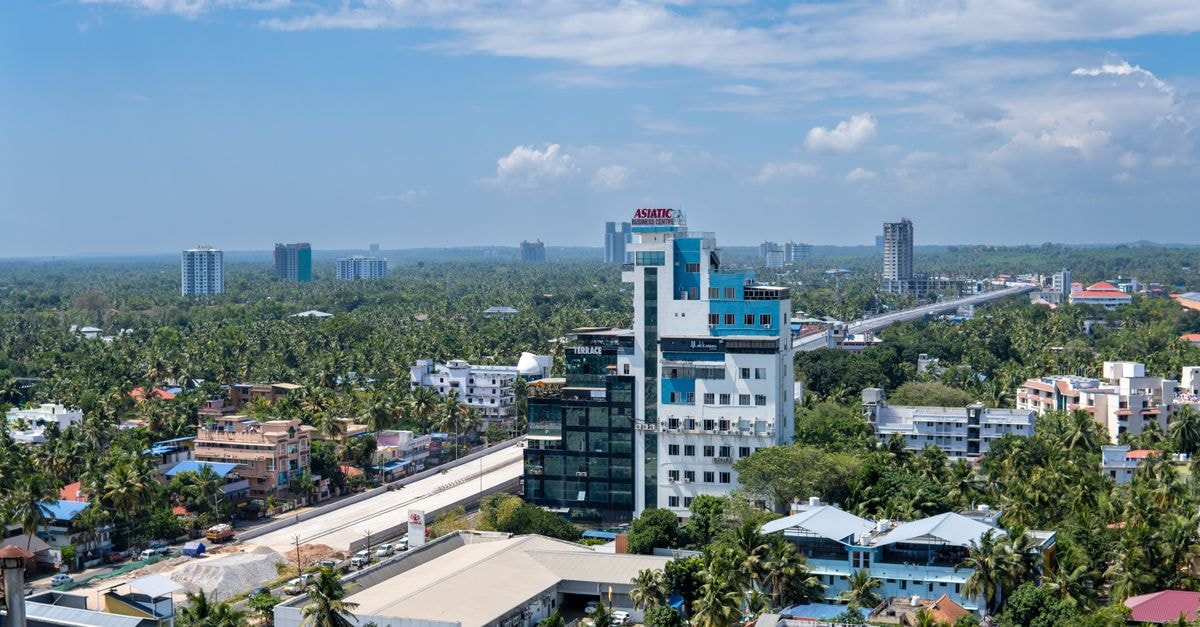
A coastal city with deep roots

Kozhikode carries the kind of layered history that rewards slow, attentive wandering. Known widely by its older Anglicized name, Calicut, the city sits in southern India, where the terrain rises toward the Western Ghats inland and falls toward the Arabian Sea at the coast. That geography has shaped everything from trade routes to culinary traditions for centuries, and it is what keeps drawing travelers here. The Kozhikode District Website describes the city as one that has been attracting travelers from antiquity, a reminder that long before modern tourism, this was a place people deliberately came to.
This guide is written as durable city context rather than time-specific advice, so the focus stays on what makes Kozhikode worth understanding before a visit: its position between sea and hills, and the kind of climate a traveler is likely to encounter.
Weather and seasonal context
Kozhikode has a tropical coastal climate, and understanding its rhythm is part of enjoying a visit. A widely cited weather overview points to daytime readings that typically sit between about 24°C and 31°C through much of the year, which matches what travelers generally experience on the Malabar coast. Mornings and evenings can feel a touch softer, while midday warmth tends to build, especially when the air is humid.
The same weather note references Kozhikode as the place where Vasco da Gama landed, a useful reminder that the city's identity is tied to its maritime history. For visitors, this means two things worth keeping in mind. First, the temperature range on its own is moderate by tropical standards, so the heat is steady rather than extreme. Second, the climate supports a relaxed pace, with time built in for shade, hydration, and unhurried movement between stops rather than back-to-back outdoor scheduling.
Because weather patterns in coastal Kerala can shift with monsoon influence and sea breezes, it is worth checking a live forecast closer to your travel dates. Treat any general climate number as a guide for what to expect, not a guarantee for the exact day you arrive.
Attractions and planning
Kozhikode is best approached as a city whose geography is its own attraction. The terrain rises toward the Western Ghats to the east, while the city meets the Arabian Sea at the coast to the west, and the urban fabric stretches between those two edges. That setting is the reason visitors have been coming here for so long, and it is also the reason the simplest planning move is to let the landscape set your rhythm rather than racing across a checklist.
The district's own tourism framing leans into this idea: Kozhikode is situated in southern India between the Western Ghats and the Arabian Sea, and it has been attracting travelers from antiquity. In practical terms, this suggests thinking about your days in broad strokes. Time near the coast, time in the older parts of the city, and time that lets you feel the transition between the sea-facing side and the greener inland edge are all part of what a visit here offers.
A few grounded points are worth keeping in mind as you plan. The city is also known by its Anglicized name, Calicut, which still shows up on maps, train boards, and older references. Recognizing both names helps with navigation and with reading any historical context you come across before or during the trip. Because Kozhikode's appeal is rooted in its setting and history rather than a single headline sight, the most useful planning approach is to leave room for the in-between moments: a long walk through a neighborhood, a slow meal, a pause by the waterfront.
How to think about timing and pace
Even without a specific month to anchor your visit, the climate context still shapes how a day here tends to feel. With temperatures that typically sit in the mid-20s to low 30s Celsius, the warmest part of the day often arrives in the early afternoon. Travelers who prefer being outdoors tend to favor mornings and late afternoons, when the light over the coast and the ghats is softer and the air is a little easier.
If you are deciding how long to stay, the most honest answer is to give yourself enough time to feel the transition between coast and inland without feeling rushed. A visit that includes both an evening by the sea and a slower morning in the older quarters tends to capture more of what Kozhikode actually is.
Practical notes for first-time visitors
Because this guide is deliberately evergreen, a few details are worth flagging as verification items rather than assumptions. Weather readings can shift with the season and with monsoon influence, so treat any general climate range as orientation rather than a forecast. For your actual travel dates, a current weather source and the official Kozhikode District tourism pages are the most reliable references.
Getting oriented is easier when you know that Calicut and Kozhikode refer to the same place. This dual naming shows up across transport, signage, and older guidebooks, so recognizing it removes a small layer of confusion. From there, planning is mostly about letting the geography guide you: coast on one side, ghats on the other, and the city as the living space between them.
It is also worth noting that many of the deeper experiences in Kozhikode, from its layered history to the way its setting unfolds between sea and hills, do not lend themselves to a tight schedule. Travelers who come with some flexibility tend to get more out of the city than those trying to compress it into a single packed day.
A note on accuracy
Travel conditions, including weather, transport options, and on-the-ground availability of services, can change over time. The climate and historical context in this guide are meant to help you understand Kozhikode as a destination, but for anything that affects your actual trip, from what to pack to how to get around, checking official and current sources before departure is always the right move.
The Kerala state tourism portal and the Kozhikode District Website are good starting points for up-to-date information, and a live weather service will give you a clearer picture of what your specific travel window will feel like.
Prices, opening hours, schedules, reservation rules, and local conditions can change; verify them through official channels before departure.
Share this article
TOOLS FOR THIS PLAN
Make the Kozhikode plan measurable
Choose a tool only when it answers the next question in your trip. Your values stay in the browser, and each tool offers a route back to this planning context.