Longyan is a sprawling prefecture-level city in southwestern Fujian, set where the province meets Guangdong to the south and Jiangxi to the west. The city has long drawn visitors interested in two things at once: the earthy, communal architecture of the Hakka people and the soft, forested landscapes that fold into the border mountains. For travelers arriving from Xiamen, Fuzhou, or Shenzhen, Longyan feels like a step into a slower, more rooted side of Fujian. It works well as a focused cultural stop rather than a whirlwind checklist, and its position on the regional rail and bus network makes reaching those rural Hakka villages fairly painless.
Getting around and arriving
Longyan's transport story is simple on paper and useful to think through before you arrive. The city has a working rail station in the northwestern part of the urban area, with direct train connections to Shenzhen, Fuzhou, and Ganzhou (the latter reported as roughly four and a half hours on a train numbered N520). Buses fill in much of the rest of the regional map, and Longyan is generally well connected to most other cities in Fujian, including Xiamen and Fuzhou, making it a feasible base for overland travel within the province. The closest airport is the Guanzhai Airport, which sits in Liancheng County rather than in the city center, so you may want to plan how you will get from the airport into town.
In practice, this means a few things for different travelers. Rail-first travelers may suit Longyan well, since the station links directly to two of Fujian's biggest cities as well as to neighboring Jiangxi. If you prefer door-to-door speed, consider that the Guanzhai Airport is located in Liancheng County, so you will need to arrange a transfer from there into the urban area. Travelers already based in Xiamen or Fuzhou may find Longyan easy to reach by bus for a longer Fujian trip, since the region is well connected by road.
Hakka heritage and what to see
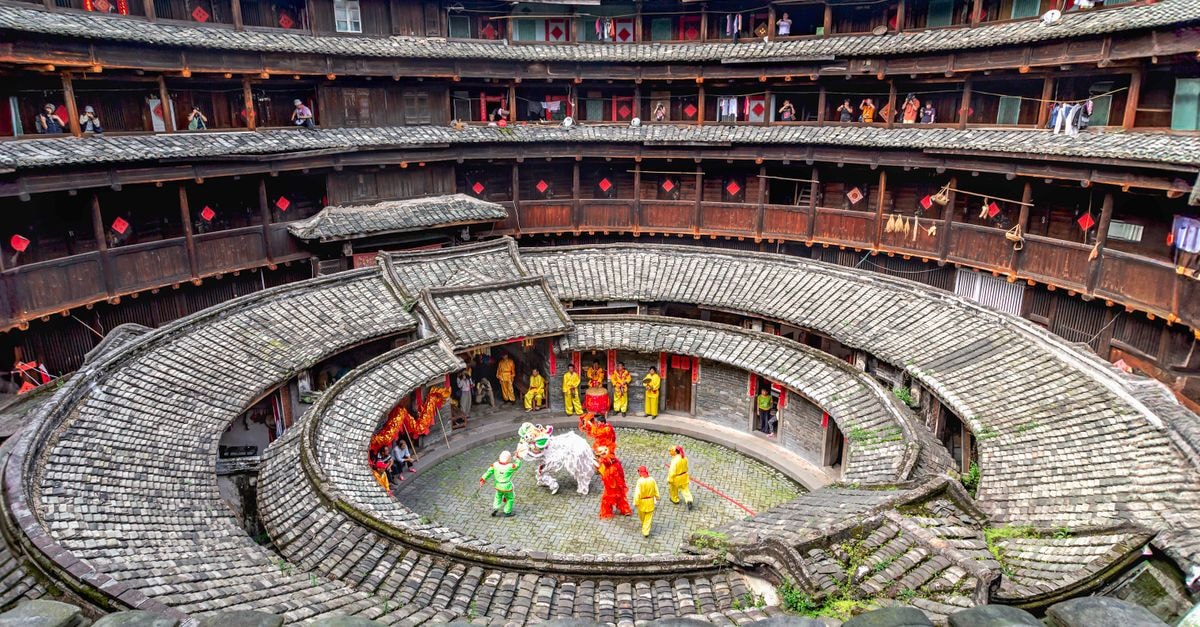
Longyan's identity, both visually and culturally, sits with the Hakka people and their tulou, the distinctive rammed-citadel dwellings that have been recognized as a world cultural heritage. Tulou are a kind of traditional rammed citadel of the Hakkas, and the large-scale Yongding Tulou is the most famous cluster associated with Longyan. Beyond the historic architecture, the appeal of Longyan extends past its historical and natural attractions, which is worth keeping in mind if you are deciding how many days to set aside: village walks, surrounding countryside, and smaller heritage sites round out the picture rather than compete with it.
Longyan's cultural identity is presented as a region-wide Hakka tradition rather than a single monument, with tulou villages spread across the area. If you prefer a more museum-style visit with one anchor building, treating the Yongding Tulou as the headline stop while leaving time for the surrounding landscape usually feels balanced. What is harder to plan ahead is the on-the-ground experience inside individual tulou: opening hours, tour availability, and local village access tend to vary, so it is reasonable to confirm current arrangements with a local guide or your guesthouse before traveling out.
Food and the regional table
Cuisine in Longyan is built mainly on Hakka dishes, which are described as fresh and natural, with a slightly "salty and oily" flavor profile. An old saying still echoed about the local table goes: "In Longyan, all chicken dishes and all kinds of soup are thick." That single line carries a lot of practical information: expect hearty, broth-forward plates, generous use of chicken in many forms, and a style that leans toward savoriness rather than delicate sweetness. Across Fujian and neighboring provinces, soup is widely treated as essential to the meal, and visitors to Longyan will quickly notice how often a clear, slowly simmered broth anchors the dining experience.
If you enjoy robust, slow-cooked flavors and whole-chicken preparations, Longyan's Hakka-leaning menus may suit you well. If you prefer lighter, bright seafood-forward cooking, you will still find options, but it helps to know that the local canon runs toward richer, saltier territory. As with any city, individual restaurants vary, so a quick look at recent local reviews or a host's recommendation goes further than any generic list.
Weather and seasonal context
Longyan's climate, like much of inland Fujian, leans mild rather than extreme. Looking at warm-weather travel comfort across the year, the city tends to score highest between late September and early November for warm-weather activities, based on a tourism score that characterizes how pleasant the weather is throughout the year. Even outside that window, the general pattern across the year is one of moderate conditions rather than harsh peaks, so a layered packing approach usually serves visitors well.
Choosing what fits your trip
A short synthesis can help if you are weighing Longyan against other Fujian stops. The city rewards travelers who want cultural depth and countryside over urban density, since the headline experience is shared between the Hakka heritage and the rural landscape. Rail connections to Shenzhen and Fuzhou, combined with bus links to Xiamen and Fuzhou, give the city regional reach. The Guanzhai Airport sits in Liancheng County, which means an overland transfer into the city is part of arriving by air. If you are drawn to slow heritage days, hearty Hakka cooking, and a quieter pace, Longyan tends to be a good fit; if you are looking primarily for a polished urban scene or a beach, the same strengths may read as limitations.
A note before you go
A few practical details can shift between guides and the actual experience on the ground. Train numbers, bus routes, airport transfers, and access arrangements at individual tulou villages are worth confirming closer to your travel date through official railway, transit, and local tourism channels. Factual conditions, including opening times and accessibility of rural sites, can change, so treating any printed or older reference as a starting point rather than a guarantee tends to make the trip run more smoothly.
Prices, opening hours, schedules, reservation rules, and local conditions can change; verify them through official channels before departure.
Share this article
TOOLS FOR THIS PLAN
Make the Longyan plan measurable
Choose a tool only when it answers the next question in your trip. Your values stay in the browser, and each tool offers a route back to this planning context.