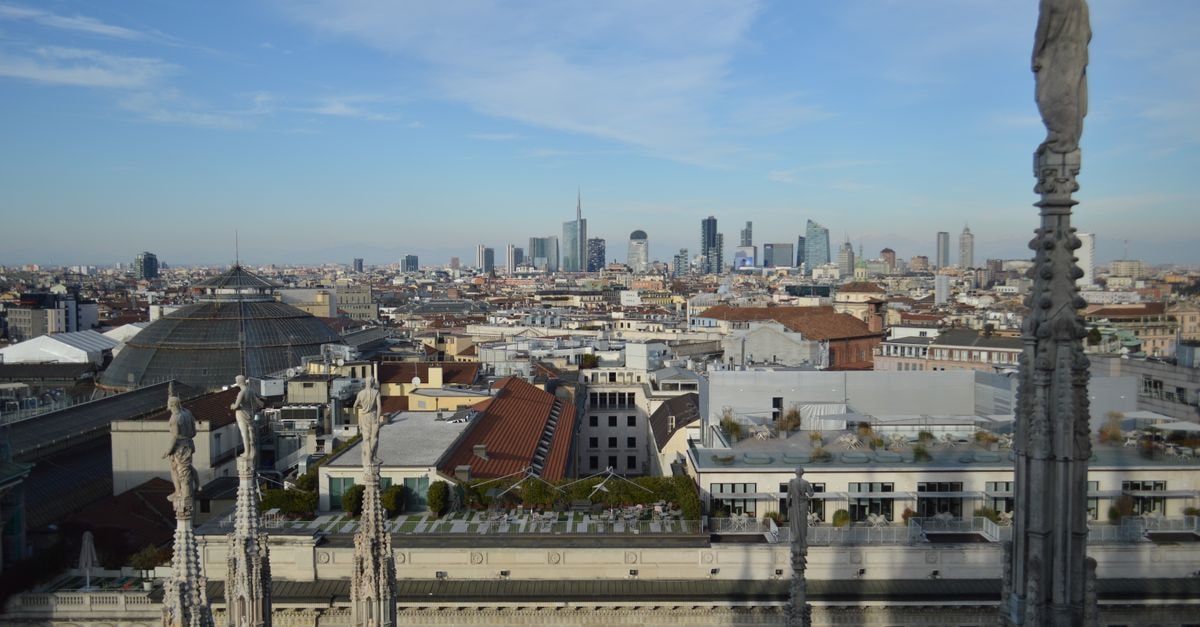
Milan moves at its own tempo, somewhere between a working Lombard capital and a quietly fashionable stage. There is the marble drama of Piazza Duomo, the green hush of Santa Maria delle Grazie, and then the evening hour when locals pour into neighborhood bars and the conversation turns easy. The city rewards visitors who treat it less like a checklist and more like a series of small, deliberate afternoons: one museum, one walk, one long table shared with friends.

This guide gathers what the approved sources actually support, from the feel of the season to how the metro works and where to begin with Milanese food. It is built for independent travelers who want a clear starting frame, not a promise of a perfect trip.
Weather and seasonal context
Milan's climate leans continental, which means summers can feel genuinely warm. The city's relationship with heat is part of its rhythm. Warmth has long been associated with the kind of sun that sends Milanese life outdoors, into piazzas and along the Navigli. That said, the approved sources speak in general terms about climate patterns and do not give precise temperatures or day-by-day forecasts, so this guide stays at the level of atmosphere and pacing rather than numbers.
In practical terms, warmth suggests a slower midday pace: museums and air-conditioned galleries in the middle of the day, longer lunches, and outdoor wandering in the early morning or after the sun softens. Light clothing, comfortable walking shoes and a refillable water bottle tend to matter more than a strict schedule. Because the sources do not confirm exact conditions, current temperatures and any weather alerts should always be checked through an official forecast before departure.
For travelers choosing when to visit, Milan's weather data is often used as a reference point for ranking months against personal priorities. The honest framing is that summer delivers warmth and energy, while the shoulder months trade some of that glow for cooler walking weather and a city that feels more like its working self. Either choice is defensible; the climate simply shapes the texture of the day.
Getting around
Milan's public transport network is the most reliable way to move between neighborhoods without thinking too hard about it. Tickets and passes are the entry point: purchasing the correct ticket is described by the approved source as vital for seamless travel on Milan public transport, which is a useful reminder that the system works smoothly once the right ticket is in hand, but can punish small assumptions.
For most independent visitors, the practical pattern is simple. Buy a ticket that matches your day's plan, validate it on first use, and keep it ready for inspections on metro, tram and bus. The metro covers the major sights and the central spine of the city efficiently, while trams and buses fill the gaps into quieter neighborhoods. Because the source does not list current prices or specific ticket types beyond the general guidance to choose correctly, exact fares and pass names should be confirmed on the official transit page before relying on them.
Walking remains surprisingly effective inside the central ring, especially between Duomo, Brera, the fashion district and the parks. Taxis and ride-hailing services are available but are best treated as a complement to transit rather than the default, particularly during commuter hours when traffic can tighten.
Attractions and planning
Milan offers far more than its famous silhouette suggests. One thorough local guide lists more than fifty things to do in the city, from iconic landmarks and museums to smaller places that most visitors walk past entirely. That breadth is worth knowing in advance, because it frees travelers from the pressure to see everything and instead invites a curated selection.
Piazza Duomo is the obvious starting point. The approved source describes it as the most famous and important square in Milan and notes that it is essentially impossible to visit the city without passing through this central gathering place. The Duomo itself, the surrounding architecture and the arcade of Galleria Vittorio Emanuele II sit within a few steps of each other, which makes the area easy to anchor an afternoon around.
The single most sought-after cultural stop, however, sits a short ride away. Leonardo da Vinci's The Last Supper was painted between 1495 and 1498 on the refectory wall of the church of Santa Maria delle Grazie, and it remains Milan's most in-demand attraction. Because timed entry is standard practice for such works and the approved sources do not confirm current booking rules, reservations should be arranged in advance through official channels, and visitors should expect to plan their day around the assigned slot rather than the other way around.
Beyond those two anchors, Milan preserves a remarkable stock of monumental churches and museums, alongside a Lombard capital identity that openly looks toward the future while keeping its history close. A balanced plan might pair one major cultural site per day with a slower neighborhood walk, leaving room for the kind of accidental discoveries the broader attractions list is built to encourage.
Food and local context
Milan's food culture is famously unsentimental. One trusted source phrases it directly: Milan doesn't cook for tourists. That line sets the tone. The city's kitchens are oriented toward Milanese palates first, and the visitor experience is at its best when it leans into that reality rather than chasing a separate "tourist menu."
A good entry point is the aperitivo hour, described in the approved material as the golden stretch between 6 and 8 PM when Campari flows like the Naviglio canals and the city unwinds. This is a ritual rather than a meal, a moment when a purchased drink comes with small plates and the conversation stretches. It is democratic in the sense that it happens across neighborhoods, from the Navigli canals to quieter side streets, and it doubles as a way to read the city's mood in real time.
For something more substantial, the local food guide frames the Milan food experience around a small set of dishes every visitor should try, with the Michelin Guide noted as a reference for those interested in the city's starred restaurants. Because the approved sources do not name specific addresses, prices or reservation details, any choice of restaurant, dish or trattoria should be confirmed through current guides and reviews before committing. The same caution applies to starred dining: a current Michelin listing is the right place to verify hours, menus and booking policies.
A simple visitor framework, drawn directly from what the sources support, is to anchor one meal around a traditional Milanese classic, treat aperitivo as a daily ritual rather than a special occasion, and reserve any high-end tasting menu for an evening when energy and timing are both on your side.
Practical notes and verification
A few final reminders that the approved facts support, and a few honest gaps the guide refuses to paper over.
- Transit tickets: confirm the right product and price on the official Milan transport site before traveling, because the approved source only confirms that choosing correctly matters, not current fares. - The Last Supper: book timed entry in advance through official Santa Maria delle Grazie channels, since the source confirms the work's significance but not the current reservation system. - Aperitivo timing: the 6–8 PM window is supported by the food source, but specific bar choices and menus should be verified locally. - Weather: the sources describe summer warmth in general terms only; check an official forecast close to departure for actual temperatures and any heat advisories.
Factual travel conditions can change, and official channels should be checked before departure for the latest information on tickets, opening hours and any citywide advisories.
Share this article
TOOLS FOR THIS PLAN
Make the Milan plan measurable
Choose a tool only when it answers the next question in your trip. Your values stay in the browser, and each tool offers a route back to this planning context.