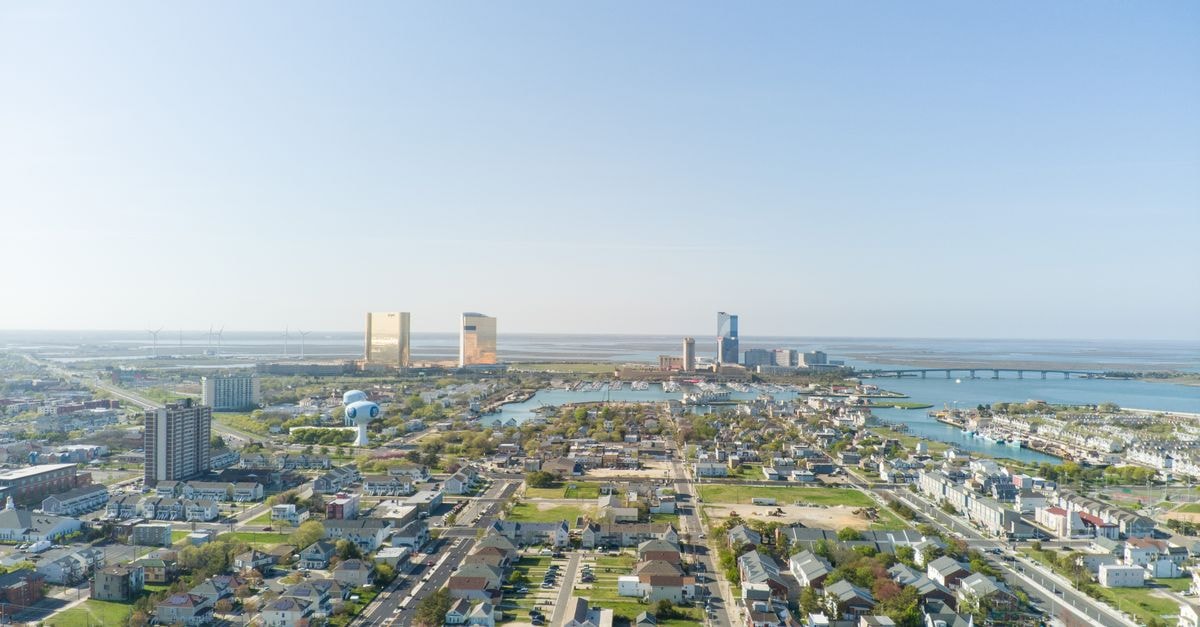
An Honest First Look at Newark

There is a particular kind of traveler who finds themselves in Newark without quite planning to: someone landing at Newark Liberty International Airport between flights, a visitor using it as a gateway to New York City across the Hudson, or a curious soul who has heard whispers about the Garden State's largest city and wants to see what is actually here. Newark is easy to underestimate from a plane window, but it rewards the traveler who slows down long enough to read the city properly.
This guide is built for that traveler. It works with what is genuinely supported about the city — how people move through it, what is worth planning around, and what to expect when the conversation turns to food. It is not a list of rankings, and it will not pretend to know more than the available facts allow. Think of it as a steady starting point you can build on once you arrive.
Getting Around
The connection runs in several directions. AirTrain services move passengers between the airport terminals and the rail station itself, while NJ Transit and Amtrak trains fan out into the surrounding region and beyond. PATH trains and the New York City subway extend that reach into Manhattan and the surrounding boroughs, which is why so many travelers treat Newark as a practical front door to New York City rather than a destination to rush through.
For those who prefer to keep things simple, licensed taxis queue outside each terminal at the airport. That option tends to appeal to travelers carrying heavier luggage, arriving late in the day, or heading to a destination that is not on a convenient rail line. Express buses are also part of the public transportation mix around the airport, giving budget-conscious travelers another tool for getting into the city center or to neighboring hubs. The transport picture, in short, is layered: rail for the independent traveler, taxis for ease, and buses for value.
Attractions and Planning
Newark often introduces itself through its size before anything else. It is the largest city in its state, joined to the sprawling New York City metro area by subways, light rail, bridges, and roadways that cross the Hudson just to the west. That proximity shapes how visitors experience it: Newark can feel like a city in its own right, and a moment later like an extension of somewhere much larger. Both impressions can be true at once, and getting comfortable with that duality is part of understanding Newark.
For travelers who like to orient themselves through a guided experience, Have You Met Newark Tours offers a structured way into the city. The tours pair food with sightseeing, weaving together neighborhoods and the places where people actually eat, gather, and spend their days. For a first-time visitor who wants context rather than a checklist of landmarks, that kind of curated walk can be a useful way to learn the shape of the city quickly.
When planning time in Newark, the practical rhythm matters. Because the city is so well linked to New York by transit, visitors sometimes find themselves bouncing between the two — a museum morning in Newark, an afternoon across the river, an evening back for dinner. Building that flexibility into a plan, rather than treating Newark as a single fixed stop, tends to suit how the city actually works.
Food and Local Context
The conversation about Newark and food tends to be lively, opinionated, and unapologetic. Newark does not apologize for being Newark, and that confidence carries into the way the city talks about what it eats. The defining flavor profile here leans toward salt and smoke — charcoal-grilled sardines served with crusty Portuguese bread, and wood-fired pizzas that taste like Naples by way of Newark's brick ovens. That pairing of Portuguese heritage and Italian-American tradition is not an abstract idea; it shows up on tables across the city's neighborhoods.
Beyond everyday dining, Newark has been positioning itself as part of wider United States culinary conversations. Savor Newark: The Culinary Cup — United at the Table Symposium frames the city as a gathering place around food, bringing together restaurants, food events, and culinary experiences under a shared banner tied to the broader New York–New Jersey region. For visitors, that kind of programming is worth knowing about, because it suggests that Newark's food culture is treated as something to celebrate publicly rather than something that happens quietly behind closed doors.
A practical note for travelers: in a city shaped by Portuguese and Italian-American influences, the best approach is to ask rather than assume. Ask which bakery makes the bread this week. Ask which wood-fired oven is firing. Ask which block has the longest line at lunch. Newark's food scene rewards curiosity, and the people working in it tend to answer generously. Keep your plans loose enough to follow a recommendation, and you will eat well.
A Few Practical Anchors
A few grounding details can help a trip feel less improvised. Newark runs on the same general rhythm as the wider New York metropolitan area, so planning meals and sightseeing around commuter patterns can save frustration. Public transit hubs in and around the airport make it easy to arrive, regroup, and head out in any direction without committing to a taxi. If you are traveling light, the rail connections alone will carry you a surprising distance.
Travelers coming from outside the United States should also be aware that Newark sits within a region where English is the everyday language, but Portuguese, Spanish, and a long list of other languages are heard regularly. A little patience and a willingness to listen goes a long way.
Before You Go
Factual conditions around travel — schedules, services, transportation details, and event programming — can change. Official channels, including transit operator websites and the airport's own information pages, should be checked before departure so that the guidance in this article is confirmed against the most current information. Treat what you have read here as a solid starting frame, not a final itinerary, and adjust as new details come in.
Above all, give Newark the kind of attention you would give any city you actually want to understand. It is not a waystation. It is a place with its own texture, its own appetite, and its own way of being approached. Travel thoughtfully, eat generously, and let the city show you what it is made of.
Share this article
TOOLS FOR THIS PLAN
Make the Newark plan measurable
Choose a tool only when it answers the next question in your trip. Your values stay in the browser, and each tool offers a route back to this planning context.