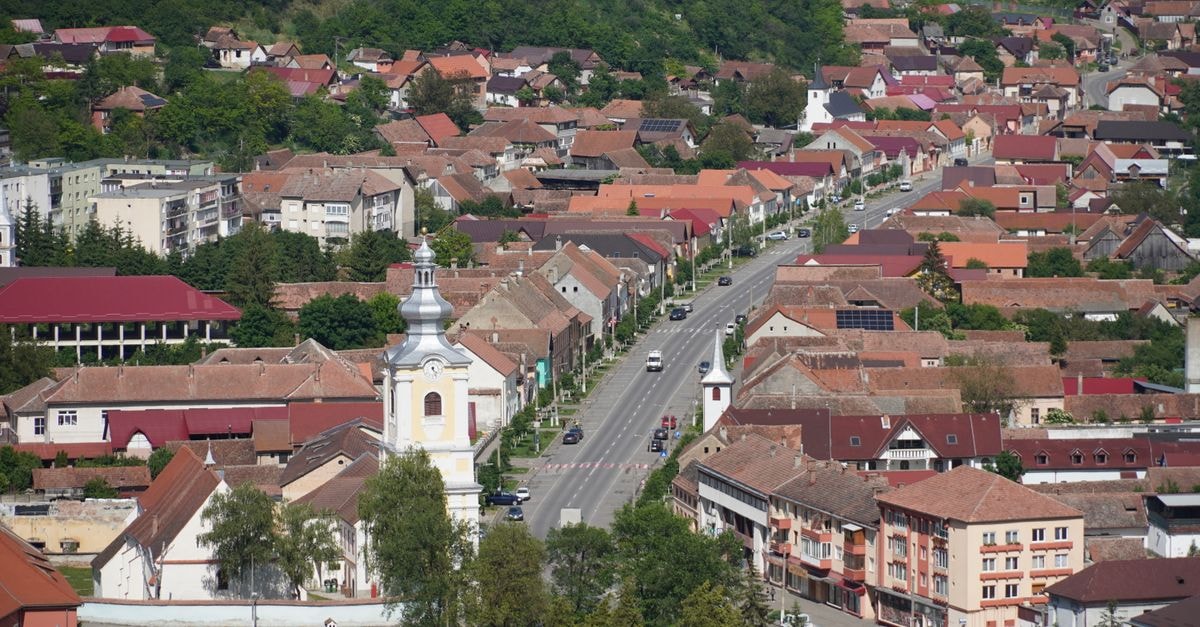
A city framed by the Bistrița valley

Piatra Neamţ has the kind of setting that quietly rearranges a trip. Long before it was a town, the valley was already a gathering place — the kind of landscape where rivers and ridges seem to be doing the talking. Today it remains a small Romanian city where the surrounding mountains and the flow of the Bistrița valley still feel like the main characters, and the streets fall into place around them.
For travelers planning a visit, that natural frame is the most useful thing to keep in mind. Piatra Neamţ is not the sort of place you rush through; it rewards people who arrive curious about its setting and willing to let the terrain set the pace.
Attractions and planning
The territory of today's municipality of Piatra Neamţ has been a permanent place of habitation for a very long stretch of human history, and the evidence for that habitation is unusually rich for a city of this size. The earliest archaeological traces come from the settlement at Poiana Cireșului, on the banks of the Doamna stream, and stretch back to the Upper Paleolithic, with finds characteristic of the Gravettian culture. In plain terms: people were already choosing this valley when the wider region was a very different world, which gives a modern visit a slightly different weight.
What makes the city feel distinctive today is less about a single headline sight and more about how closely the natural setting presses against the urban fabric. Local visitor material describes Piatra Neamţ as a place where nature is not just a backdrop but the main character — the city sits between watching mountains and gently flowing waters, and the geography is genuinely easy to read on foot. The official Visit Piatra Neamţ positioning also highlights that the municipality benefits from a unique natural setting with easy access from all directions, which is a helpful framing when you are sketching how you want to spend your time.
Practically, that means the most useful planning move is to leave room for the surrounding landscape rather than packing the day with a long checklist. Think of the city as a base from which the valley, the streams and the forested slopes are all part of the experience, not optional extras. If you are someone who usually races between museums and monuments, Piatra Neamţ is a good place to slow the rhythm down and let the terrain pull you outward.
A few evergreen planning notes, drawn directly from how the city presents itself:
- Treat the natural setting as the headline, not the supporting act. The mountains, the Bistrița valley and the smaller streams like the Doamna are repeatedly described as defining features. - Build in unhurried time. The appeal of the place comes from the way landscape and city sit together, which rewards walking pace over transit pace. - Keep an eye on orientation. The city is described as having easy access from all points of the compass, which is useful when you are deciding whether to base yourself centrally or closer to a specific valley approach.
For travelers who care about deep history, the Paleolithic and Gravettian context at Poiana Cireșului is a genuinely rare hook. It is not the kind of prehistory most city breaks get to claim, and it can change how the surrounding hills read when you are out in them.
Getting around
A few grounded points about moving through and around Piatra Neamţ:
- The Bistrița valley is the spine of movement, not just scenery. Routes that follow the river are the most natural way in and out. - Because the city is compact and terrain-led, walking and short local rides tend to cover most in-city needs; the valley itself is where longer-distance decisions start to matter.
If you are mapping out a stay, it is worth keeping the valley corridors in mind from the first plan rather than treating them as something you figure out on the day. The terrain does most of the orientation work for you.
How to think about the trip
The honest way to describe Piatra Neamţ is as a nature-led city break with a deep historical layer underneath. It suits travelers who like a base that is small enough to read on foot but interesting enough that the surrounding landscape keeps pulling them out of town for a half-day at a time. It is less suited to travelers looking for a dense checklist of big-ticket urban attractions.
A useful mental model is to split your time roughly in two: time for the city itself, and time for the valley and the forested hills that press right up against it. The official Visit Piatra Neamţ framing leans hard into that second half being essential rather than optional, and the geography backs it up.
A note on costs and what to expect
There is no fixed daily budget figure that can be responsibly quoted for Piatra Neamţ from the approved evidence base. Prices for accommodation, meals, local transport and entry fees are not stated in the supporting sources used for this guide, so any number offered here would be a guess. Treat this guide as a planning frame, and verify current costs through official tourism channels and up-to-date booking platforms before you set a final budget.
A note on prices and money
Because no currency, exchange rate or pricing detail is supported by the approved evidence for Piatra Neamţ specifically, this guide does not quote a rate. If you do exchange money before or during your trip, remember that posted rates are only a reference and the live rate at the moment of exchange is what actually applies.
Practical reminders before you go
- Treat the natural setting as a core part of the visit, not a side activity. - Allow time for the wider landscape; the city's own material describes nature as the main character. - Remember that the area has very deep human history, with Upper Paleolithic, Gravettian-era evidence at Poiana Cireșului.
Travel conditions, opening arrangements, transport details and on-the-ground prices can change, so official channels and current sources should be checked before departure. This guide is a starting frame, not a substitute for up-to-date local information.
Share this article
TOOLS FOR THIS PLAN
Make the Piatra Neamţ plan measurable
Choose a tool only when it answers the next question in your trip. Your values stay in the browser, and each tool offers a route back to this planning context.