Salzburg in July 2026: What Travelers Should Know

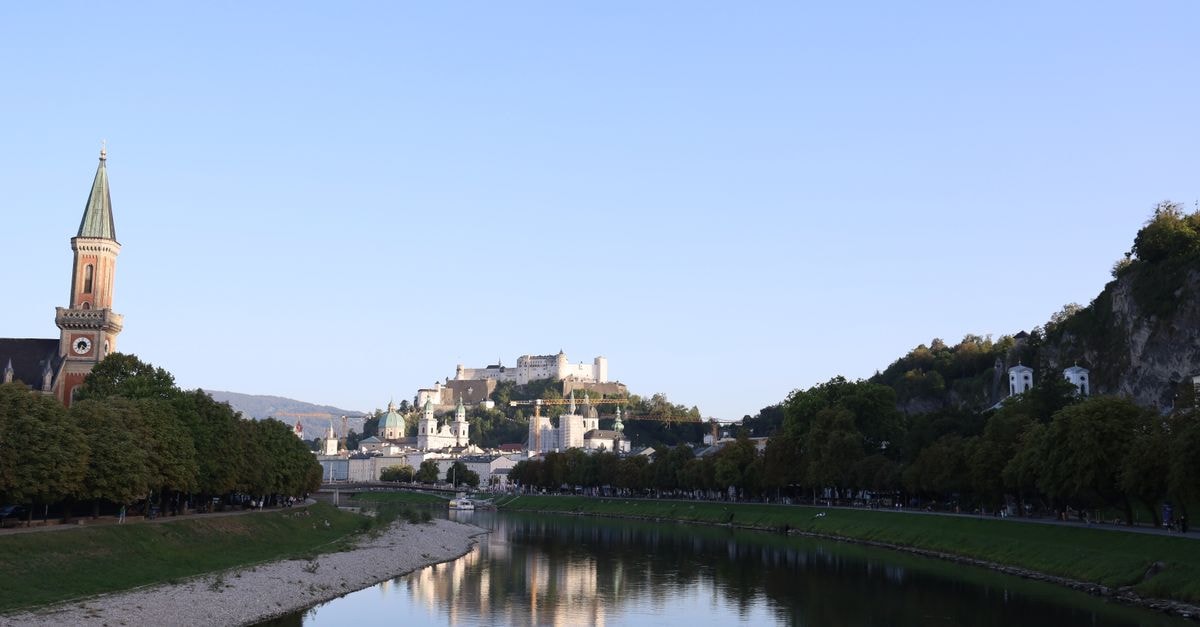
Salzburg, the baroque city on the Salzach River where Mozart was born, looks its most animated in midsummer. Long daylight, outdoor concerts, and easy escapes to alpine lakes all collide with one of the world's most prominent classical music festivals. July 2026 also brings a city-wide summer traffic regulation that changes how visitors reach the Altstadt, so a little pre-planning goes a long way.
July Weather and What to Expect
July is one of Salzburg's warmest months. Daytime highs average around 24°C (75°F) and nights sit around 13°C (55°F); another dataset puts the monthly average closer to 18°C with highs near 23°C. Either way, the city rarely feels sweltering. Sunshine runs from about 5:24 a.m. to 9:02 p.m. on the 15th, giving roughly 15.5 hours of usable daylight, ideal for late-evening strolls along the river or in the Mirabell gardens.
Rainfall is significant: roughly 14 days see measurable precipitation, with totals around 150 mm for the month, making July the second-wettest month of the year. Mornings are usually clearer, with afternoon thunderstorms possible. Pack a light rain layer and sunscreen; the UV index reaches an extreme level around midday, so SPF 50, a hat, and sunglasses are worth carrying. Mosquito activity peaks in July, especially around lakes and at dusk, so repellent and long sleeves at dawn and dusk are reasonable.
Getting Around Salzburg's New Summer Traffic Rules
From July 1 to August 31, 2026, Salzburg runs a "summer regulation" designed to cut up to 1,000 vehicle trips per day through the Altstadt. Regular cars are largely excluded from a wide swath of the city center, including Imbergstraße, Giselakai, the Staatsbrücke, Schwarzstraße, Müllner Hauptstraße, Ursulinenplatz, Franz-Josef-Kai, Griesgasse, and Rudolfskai. Vehicles with local SalzburgerLand plates (S, SL, HA, and BGL, BGD, REI, LF), residents, hotel guests with a booking confirmation, taxis, and public buses remain exempt.
A separate weekend night driving ban closes the Neutor (Siegmundstor) in both directions from 10 p.m. to 4 a.m. on Fridays, Saturdays, and Sundays. Festival ticket-holders with a valid ticket for the Großes Festspielhaus, Haus für Mozart, Felsenreitschule, or Domplatz may still be dropped off and picked up via the Neutor into Hofstallgasse during those hours; everyone else must route around the closure.
Practical workarounds: the Altstadt garages A and B stay reachable at any time via Neutorstraße. Park & Ride sites at Messe, Designer Outlet, Airport, and Salzburg Süd charge a flat €7.50 per car in July and August, including public transport for up to five people.
Two free-transport schemes make a car largely unnecessary. From July 17 to August 30, 2026, a valid Salzburg Festival ticket works as a public transport ticket on all SVV bus and train lines statewide, from six hours before the performance to the end of service, with night buses running every 30 minutes between 11 p.m. and 12:45 a.m. Overnight guests anywhere in Salzburg State also receive the free Guest Mobility Ticket, which covers city transit, regional buses, S-Bahn, regional and long-distance trains, and on-demand shuttles for the entire stay. With those two passes plus compact Altstadt distances, most visitors can base themselves almost anywhere in the city and skip driving entirely.
Salzburg Festival and Major Attractions
The Salzburg Festival runs July 18 to August 31, 2026, filling the Großes Festspielhaus, Haus für Mozart, Felsenreitschule, and Domplatz with opera, orchestral, and dramatic performances. Demand is intense: book accommodations and performance tickets 3–5 months in advance where possible.
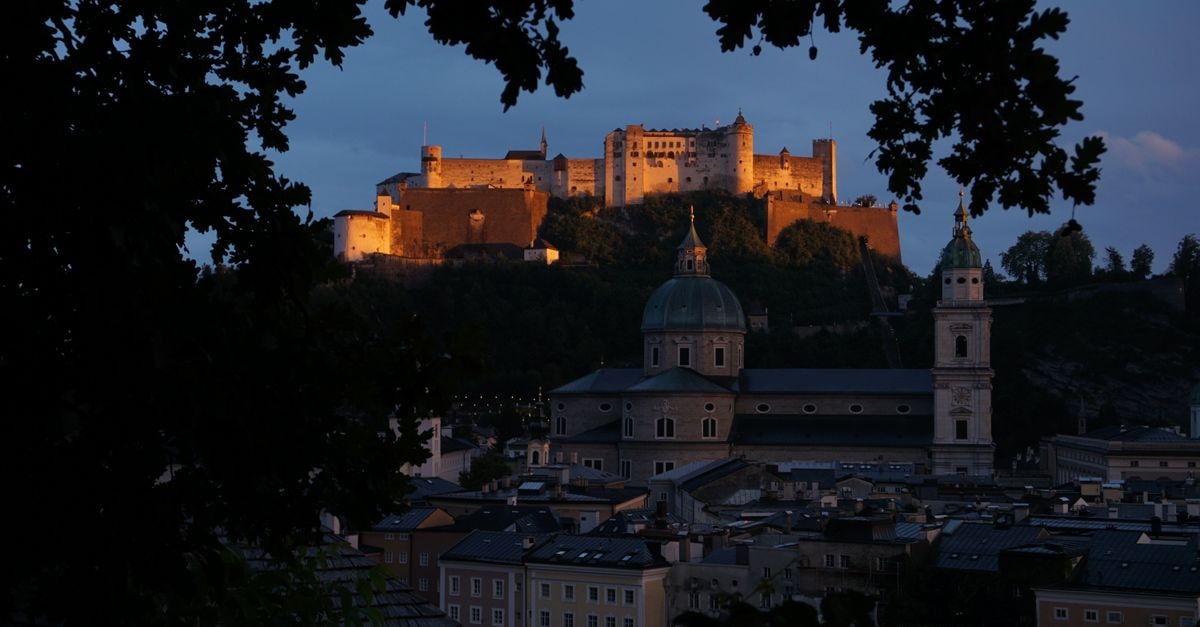
Beyond the festival, July's long evenings suit Hohensalzburg Fortress (open after sunset), the Mirabell Palace gardens, and a slow wander through the medieval Altstadt. The Salzburg Card, sold through the official tourism site, bundles free public transport with free or discounted entry to many museums and attractions, and pays off quickly for anyone visiting multiple paid sites in a day. For outdoor time, the Salzkammergut lakes (Wolfgangsee, Fuschlsee, and Lake Hallstatt) are a short ride south and offer swimming and lakeside walks when the city center feels crowded.
Where to Stay and Booking Pressure
July sits in the heart of Festival season and is the most expensive period of the year. Outside Festival season, indicative room rates run roughly €120–180 for a mid-range hotel double, €180–250 upper mid-range, and €250 and up for luxury; budget guesthouses charge about €70–100, and hostel dorms €25–35 per bed. During the Festival, expect a 50–70% surcharge on those ranges, and many hotels enforce 3–5 night minimum stays. Best value lies outside the Altstadt, around the Hauptbahnhof and the right-bank Neustadt, Elisabeth-Vorstadt, and Linzergasse areas, which trade a slightly longer walk for noticeably lower rates.
If you arrive without a booking, expect to pay a premium for whatever is left, especially in the Altstadt proper.
What to Eat in Salzburg
Salzburg's cuisine is Alpine-rooted, with strong Bavarian and Tyrolean influence, and a few signature dishes that show up everywhere from Würstelstände to award-winning restaurants.
- Bosna: a spicy sausage in a crusty roll, topped with onions, mustard, and curry powder. Created locally in the 1940s and still the city's defining street food. - Brettljause: a wooden board of cured meats, mountain cheeses, pickles, and horseradish, served in rustic Wirtshäuser. Built for sharing. - Kaspressknödel or Pinzgauer Kasnocken: fried cheese dumplings, or spätzle-style dumplings tossed with mountain cheese and onions. The signature dish of the Pinzgau region, often served in an iron pan. - Wiener Schnitzel: breaded and fried veal cutlet with potato salad, a country-wide classic that appears on virtually every Salzburg menu. - Gröstl: pan-fried potatoes with bacon and onions, often topped with a fried egg. - Salzburger Nockerl: a baked soufflé of egg whites, sugar, vanilla, and a little flour, served immediately before it collapses. Order only when you have 20–30 minutes to wait. - Mozartkugeln: marzipan and nougat coated in dark chocolate, invented by Paul Fürst in 1890. The original version is sold at Café Konditorei Fürst. - Apfelstrudel: warm apple pastry with cinnamon, raisins, and lemon, often served with vanilla sauce.
For lunch on a budget, look for the Mittagstisch set lunch at non-touristy restaurants (typically €12–16 on weekdays), a sausage stand (€3–6), or the Grünmarkt at Universitätsplatz for takeaway (€4–8). Dinner at the Augustiner Bräustübl self-service beer hall runs about €12–15 with beer, while mid-range tourist-area mains run €22–30.
Costs, Budget and Saving Tips
Salzburg sits in the upper-middle tier for European travel, more expensive than Prague or Budapest, broadly comparable to Vienna and Munich, and cheaper than Zurich or Geneva. Indicative 2026 daily costs per person run around €85 on a budget, about €241 mid-range, and €700 for luxury travel. A three-day budget trip costs roughly €258 per person excluding flights; a mid-range three-day trip runs about €723 per person. These figures exclude international airfare.
Build a 15% contingency into your budget. The mandatory City Tourism Tax (Ortstaxe) adds about €2 per night, and traditional restaurants sometimes levy a Gedeck cover charge. If you drive, budget separately for the Austrian motorway vignette.
Practical ways to keep costs down: - Use the Guest Mobility Ticket and the Festival Ticket = Bus Ticket scheme to skip taxis and parking. - Stay in Neustadt or near the Hauptbahnhof rather than in the Altstadt. - Eat lunch at a Mittagstisch or Würstelstand, then splurge on one nicer dinner. - Buy the Salzburg Card if you plan to visit several paid museums in a single day.
Currency, Safety and Practical Tips
Austria uses the euro (EUR). One 2026 reference rate lists roughly 1 € ≈ 1.15 USD, but exchange rates move constantly; check a live converter before exchanging cash or paying by card, and be aware that foreign-card transactions may carry bank fees.
Salzburg is a safe city for visitors. Standard urban precautions apply: watch for pickpockets in crowded Altstadt streets and at festival events, and keep an eye on belongings around the Staatsbrücke on busy nights. Tap water is drinkable. The single biggest July 2026 surprise for visitors is the new summer traffic regulation, so plan to leave the car at a Park & Ride and finish the trip on foot, by bus, or by train. With the Festival in full swing and the Altstadt calmer than usual for cars, late-July evenings along the Salzach or in the Mirabell gardens are some of the most atmospheric moments on the European music calendar.
Factual conditions, including weather, prices, ticket availability, traffic rules, and currency rates, can change. Confirm details with the official Salzburg Festival site, salzburg.info, and your government's travel advisory before departure.
Exchange rates shown are for reference only; check the current live exchange rate before departure. Prices, opening hours, schedules, reservation rules, and local conditions can change; verify them through official channels before departure.
Share this article
TOOLS FOR THIS PLAN
Make the Salzburg plan measurable
Choose a tool only when it answers the next question in your trip. Your values stay in the browser, and each tool offers a route back to this planning context.