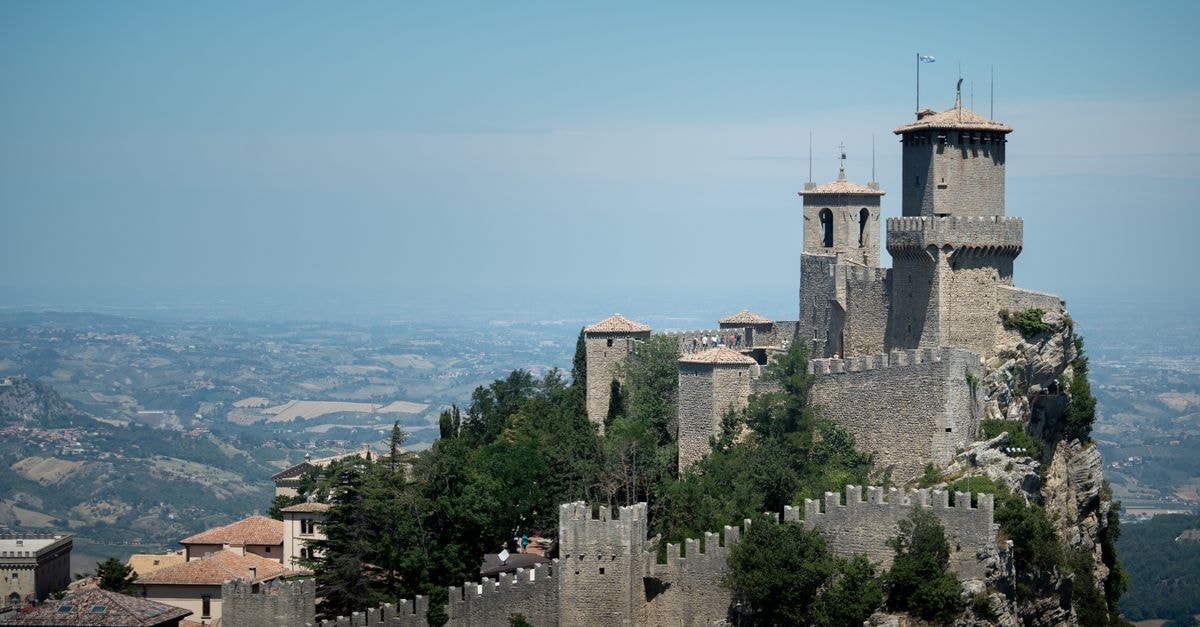
A Quiet Hilltop Republic: Getting to Know San Marino

There is something quietly cinematic about arriving in San Marino. The world's oldest surviving republic is a tiny, mountain-locked enclave perched on the limestone spine of Monte Titano, dropping away toward the Adriatic plain of Emilia-Romagna. It does not shout for attention; it earns it slowly, through cobbled alleys, panoramic terraces, and the kind of unhurried atmosphere that has little to do with the pace of nearby Italy. If you're visiting San Marino for the first time, the best approach is to slow down, plan a loose arc around the historic centre, and let the city's vertical geography surprise you.
This guide keeps things practical. Below, you'll find evergreen context on choosing a comfortable month to travel, the easiest ways to move around the republic, how to plan your time on Monte Titano without rushing it, and what to expect from the local food scene. Everything here is grounded in the city's own heritage, transport, and dining resources.
Choosing When to Go
Because San Marino's appeal is so tied to walking, viewpoints, and outdoor cafés, the calendar matters more here than in a flat capital. A good approach is to weigh the weather conditions against the kind of trip you want, then pick a month that lines up with your priorities. There are tools that rank every month of the year against San Marino's actual weather data so you can match the climate to your travel style rather than guessing from generic averages. Think about whether you want long, golden evenings on the ramparts, cooler walking weather for climbing between the three towers, or shoulder-season calm with fewer crowds on the streets.
Getting Around the Republic
San Marino is small, but its terrain is vertical. Most visitors base themselves in or near the historic centre on top of Monte Titano, and from there almost everything is walkable if you don't mind steep climbs and steps. For moments when your legs, the weather, or the schedule disagree with that plan, the republic offers two useful layers of public transport.
The first is the on-demand service **Smuvi**, a flexible, shared transport-on-demand option that lets people reach any location in the Republic of San Marino without having to stick to fixed timetables. If you're staying outside the centre, arriving with luggage, or simply want a door-to-door lift up the mountain, this is the easiest way to bridge the gap between your hotel and the old town.
Attractions and How to Plan Your Time
San Marino's compact old town is a UNESCO World Heritage Site, inscribed in 2008, and that single fact reframes how you should pace your visit. You are not racing through a checklist of blockbuster sights; you are walking through a continuous historic fabric that has been recognised for its cultural value. The most evocative experience is simply to wander from piazza to terrace, watching the city reveal itself in stages.
The classic anchors are the three towers that crown Monte Titano, the historic centre between them, and the views that open up unexpectedly along the ramparts. Because the whole old town sits high above the surrounding plains, the viewpoints are part of the sightseeing rather than an add-on. A slow morning or a golden-hour loop is often more memorable than trying to power through every site in a single push.
Parking is part of the practical story. Parking in San Marino is available throughout the city and is relatively inexpensive, which removes one of the usual headaches of a hilltop destination. A popular approach is to leave your car in one of the numbered lots at the base of the old town, marked P1 through P11, and either walk up or take the **Funivia di San Marino**, the cable car that rises from Borgo Maggiore to the historic centre. If you are arriving by rental car or motorbike, this is the cleanest combination: park once, ride up, and explore on foot for the rest of the day.
If you only have a short window, a soft plan is to pick one tower, one stretch of the walls, and one piazza, and to give each of them breathing room. San Marino rewards lingering far more than it rewards rushing.
Food and Local Context
Food in San Marino is one of the cornerstones of local tradition, and the republic has worked hard to preserve the flavours of its past while blending them with the tastes of the neighbouring regions of Romagna and Marche. That blending shows up on menus as a kind of cross-border comfort cooking: rustic, ingredient-led, and rooted in family-run kitchens rather than fashion.
The restaurants of San Marino offer an excellent selection of meats, mostly from local farms, alongside fish dishes and occasional gastronomic evenings that let chefs stretch into something more celebratory. If you want to eat the way the republic eats, lean into the meat dishes and the regional pasta traditions, and ask what is seasonal rather than defaulting to international staples.
One dessert that genuinely belongs on your list is the **Torta Tre Monti**, the "Three-Mountain Cake." It is built from wafer layers welded with dark-chocolate hazelnut cream, then pressed until it shatters like a communion host. It is not just a sweet bite; it is a small edible emblem of the city, and almost every traditional pasticceria in the historic centre will know it. Order it with an espresso after a long walk along the walls and let it do the talking.
Beyond that single signature, treat the food scene as a slow discovery. Pick one trattoria for a long lunch, a casual osteria for an early dinner, and a pasticceria for an afternoon pause, and you'll come away with a far better sense of the place than by chasing recommendations across the whole country in a single afternoon.
A Few Practical Notes Before You Go
A few small habits will make your trip feel smoother. Wear shoes that can handle the cobbles and the climbs; the centre is steeper than it looks on a map. Keep some cash on hand for smaller cafés and family-run shops, even though cards are widely accepted in the historic core. If you are driving in, plan to leave the car in one of the base-of-old-town lots and switch to the cable car or your feet. And remember that you are in a republic that takes its heritage seriously, so a relaxed pace, a little curiosity, and a willingness to look up at the views will carry you further than any packed schedule.
Travel conditions can change, and details such as transport timetables, parking arrangements, opening hours and seasonal menus evolve over time. Before your trip, double-check current information through official tourism channels and local tourism offices so your plans match what is actually available on the ground.
Prices, opening hours, schedules, reservation rules, and local conditions can change; verify them through official channels before departure.
Share this article
TOOLS FOR THIS PLAN
Make the San Marino plan measurable
Choose a tool only when it answers the next question in your trip. Your values stay in the browser, and each tool offers a route back to this planning context.