A small city with a specific job to do
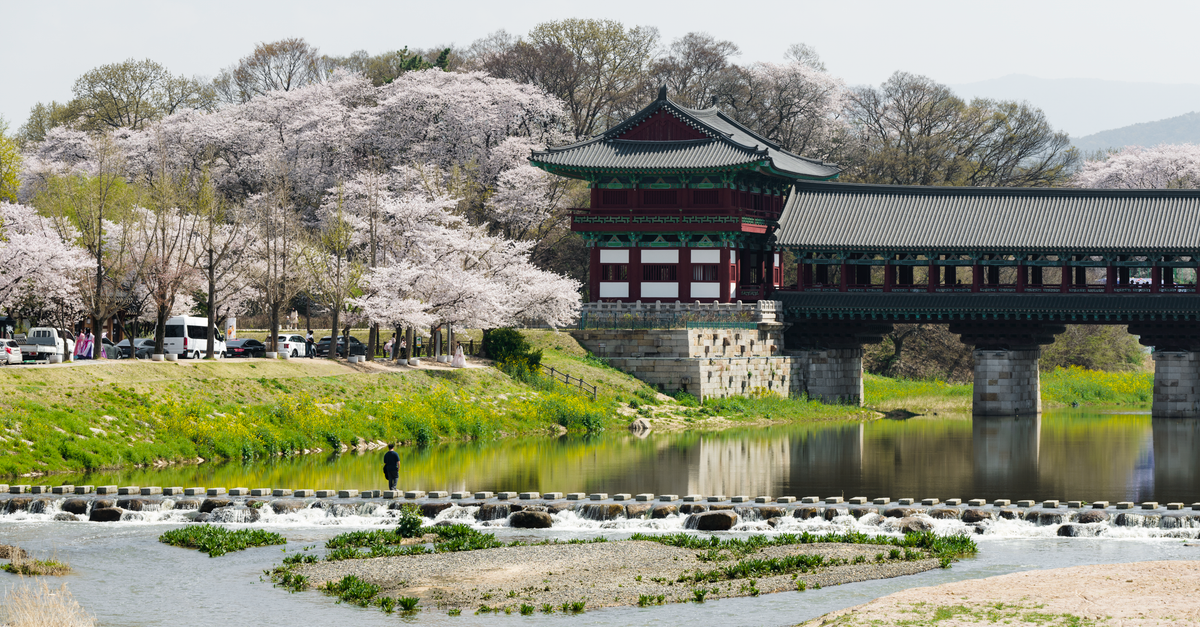
What tends to surprise first-time visitors is how much of the city's identity is built around presentation rather than spectacle. Sariwon is widely remembered for its reconstructed folk street, built after the war to evoke what ancient Korea is said to have looked like, and for the way everyday spaces feel arranged for observation as much as for daily life. That layering, between a working provincial capital and a curated showcase, is what most travelers actually come away thinking about.
This guide keeps the focus firmly on those two strands, transport and what there is to see, because that is where the reliable evidence sits.
Getting around and reaching the city
Sariwon's role as the southern gateway to Pyongyang shapes almost every practical decision a traveler makes. The city is on the Pyongbu Line, the rail corridor that links Pyongyang to Kaesong, which is why it tends to appear on itineraries as a stopover rather than a standalone destination.
As the capital of North Hwanghae Province, Sariwon is also an administrative center, and its size, well above 300,000 residents, means it has the kind of street life, market rhythm, and pedestrian flow that smaller provincial towns in the region do not. For travelers used to the capital, this density can feel both familiar and more low-rise at once. It is a place where you are likely to be on foot for long stretches between the few approved stops, so comfortable shoes and a willingness to slow down will serve you better than a packed schedule.
What there is to see and how to read it
Sariwon is best understood as a city where the visible layer, the reconstructed folk street, the agricultural and scientific universities, the grape wine production, the agricultural factories, sits on top of an actual working provincial capital. Knowing that two layers exist is the most useful planning insight here.
For travelers, the practical read is simple. If you are drawn to the idea of a smaller, slower city that openly performs its own version of tradition, Sariwon may suit you well. If you prefer to read cities through independent wandering and unmarked corners, this is a place where that instinct will be more constrained than usual.
Choosing what fits your trip
Sariwon is rarely a destination on its own. It sits between Pyongyang and Kaesong on the Pyongbu Line, and the city is one of the most densely populated in North Korea with a population well above 300,000, which means the rhythm here is provincial-urban rather than rural or remote. That combination shapes who tends to enjoy the stop.
If your main interest is the curated, presentational side of North Korean city life, the reconstructed folk street and the visible emphasis on agriculture, science universities, and grape wine production give you a focused lens. If you prefer cities that reveal themselves through daily routine rather than through arranged showcases, you may find the format narrower than expected, and a shorter stop may feel more proportionate.
Travelers who do well here tend to be the ones who arrive with one clear question, whether that is about daily life, planning, or the staging of tradition, and who are content to let the city answer it on its own terms.
Prices, opening hours, schedules, reservation rules, and local conditions can change; verify them through official channels before departure.
More Source-Checked Details
- With population well above 300,000 Sariwon is one the most densely populated cities of the DPR Korea. - Sariwon Folklore street was built after the war to show what ancient Korea looked like.
Share this article
TOOLS FOR THIS PLAN
Make the Sariwon plan measurable
Choose a tool only when it answers the next question in your trip. Your values stay in the browser, and each tool offers a route back to this planning context.