A first impression of Tallinn

Tallinn is the kind of capital that rewards slow attention. The medieval lanes of the Old Town are the postcard, but the city's real personality tends to surface once you step past the tourist guide version of it: in neighbourhood cafés, on a tram rattling between districts, and in kitchens where the air carries the smell of smoked birch wood and cured pork fat, a scent that locals often describe as the backdrop to Estonian cooking. For an independent traveller arriving for a short city break, the practical questions tend to be simple: how do I move around, what should I pack for the weather, and what should I actually eat? This guide focuses on those three, drawing only on what is directly supported about the city.
Getting around
Tallinn runs on a unified ticketing system across all of its public transport vehicles, and the rule is straightforward: you may travel only with a valid ticket or another document that confirms your right to travel. That single principle removes a lot of confusion at the start of a trip, because it means one ticket covers buses, trams and other vehicles operated under the same city network rather than a patchwork of separate fares.
If you arrive by air, the airport sits on a corridor that makes city access easy. Both the Ühiskaart, which is Tallinn's public transport card, and single tickets can be used on city buses running between the airport and the centre. For longer journeys, some long-distance buses that arrive in Tallinn via Tartu Highway also stop at the airport, which means the terminal can double as a transfer point if you are continuing onward by road rather than flying.
A practical rhythm for an independent visitor is to pick up the timetable before the first ride rather than improvise. Tallinn publishes public transport timetables online, and a few minutes spent checking the route that connects the airport, the Old Town and wherever you are staying tends to pay off across the whole stay. Because the system is unified, once you understand how one vehicle works you have understood them all, which is a quiet luxury in a European capital where public transport can otherwise feel like a small puzzle.
Weather and seasonal context
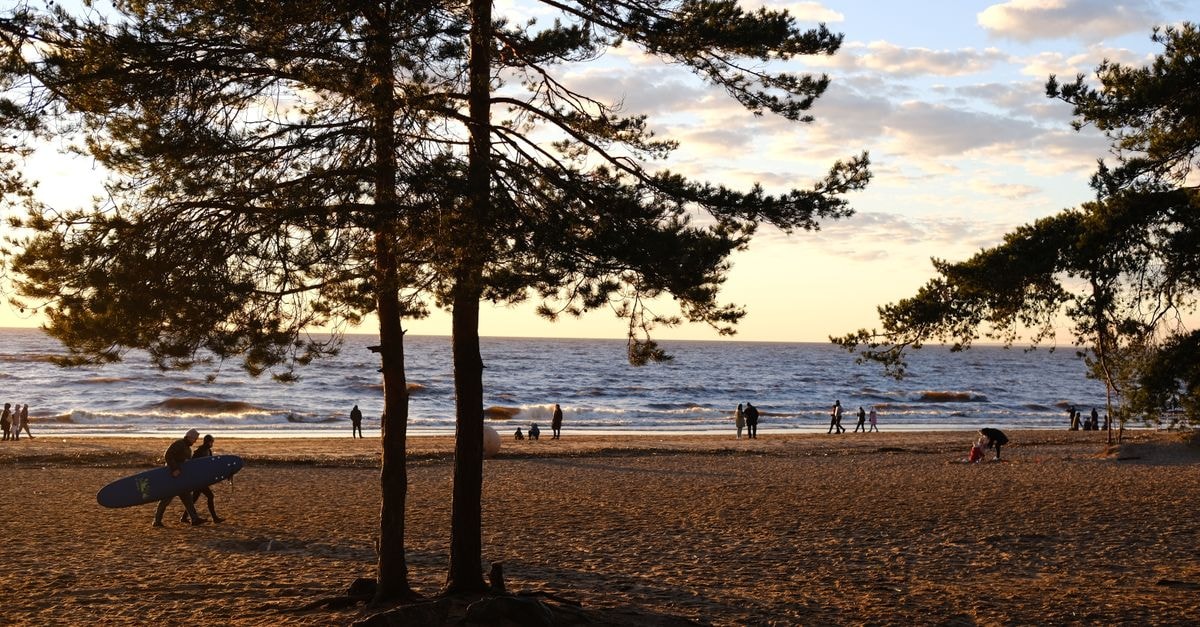
Tallinn sits at roughly the same latitude as southern Alaska, which is one of those facts that sounds like trivia until you stand outside in it. That northern latitude tells you less about any single extreme and more about the texture of a day: long, soft summer evenings can drift into late twilight, while winters arrive with a thin, persistent dimness. What makes Tallinn's weather distinctive is less any single extreme and more the sheer drama of its light, which shifts dramatically across the year and gives the same streets a different mood depending on when you arrive.
For packing, the practical lesson of the latitude is to expect changeability. The city's climate is not defined by one dramatic weather event so much as by the way the light and temperature can move within a single day, and the right approach is layered clothing rather than a single heavy coat or a single light outfit. Even in the warmer months, evenings can cool quickly once the sun drops, and the long Nordic twilight means that a dinner outside can feel very different from a midday walk. The city's winter cold can be sharp but is rarely the only thing happening; the more useful planning instinct is to build in flexibility around the light, treating any outdoor plan as something that may need to shift an hour earlier or later than you first imagined.
It is worth treating any specific number you see elsewhere as something to verify closer to the date. Rainfall totals, exact low temperatures and short-range forecasts shift from year to year, and the latitude is the only durable thing you can really plan a wardrobe around.
Food and local context
Food is where Tallinn's two identities show themselves most clearly. There is the Tallinn of the tourist guides, which tends to lean into medieval fantasy and menu items that can feel priced more for atmosphere than appetite, and there is the Tallinn where locals queue for blood sausage at seven in the morning at a market in Kopli, where the sausage-maker knows your grandmother's name. That split is not a criticism; it is just useful to know going in. The same city contains both experiences, and which one you encounter depends almost entirely on where you choose to eat.
If you want a sit-down meal that takes Estonian ingredients seriously, F-Hoone is often mentioned among the city's traditional-leaning restaurants, with a kitchen that works with local ingredients while adding a contemporary twist. It is worth treating any such recommendation as a starting point rather than a fixed verdict, since menus and reputations move over time, but it does illustrate a useful pattern: there are Tallinn restaurants that treat local food culture as something to reinterpret rather than to simply costume. For a visitor who wants to understand what Estonians actually eat, pairing a market or bakery visit in the morning with a more considered restaurant meal later in the day tends to cover a wider range of the city's food life than either stop on its own.
A few practical notes before you go
Three small habits tend to make a Tallinn trip smoother. First, decide early whether you want the Ühiskaart or single tickets, because the unified system means your choice shapes how you pay for every ride. Second, build any outdoor plan around the light rather than the clock, since the way the city brightens or dims across the day can matter more than the temperature. Third, eat at least once somewhere that is not optimising for tourists, whether that is a neighbourhood bakery, a market counter, or a restaurant working with local ingredients in a contemporary way.
Factual travel conditions can change, and details such as ticketing, transport timetables, and restaurant operations should be checked on official channels before departure. This guide is intentionally evergreen: it stays within what is durably true about moving around, weather, and food in Tallinn, rather than what is only accurate for a specific window of dates.
Share this article
TOOLS FOR THIS PLAN
Make the Tallinn plan measurable
Choose a tool only when it answers the next question in your trip. Your values stay in the browser, and each tool offers a route back to this planning context.