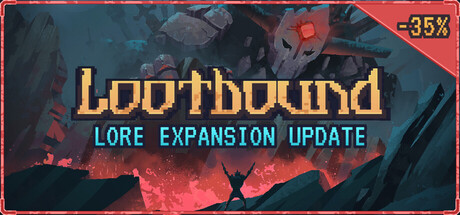
01Quasimorph: a steep, punishing cyberpunk roguelike for patient mercenary managers who enjoy learning through failure
STEAM DEAL · 33% OFF
Quasimorph
Worth picking up at the current 33% discount only if you actively enjoy cryptic systems and harsh failure, because the opening hours are brutal and many players bounce before the loop clicks.
Game highlights
Permadeath clone-mercenary loop
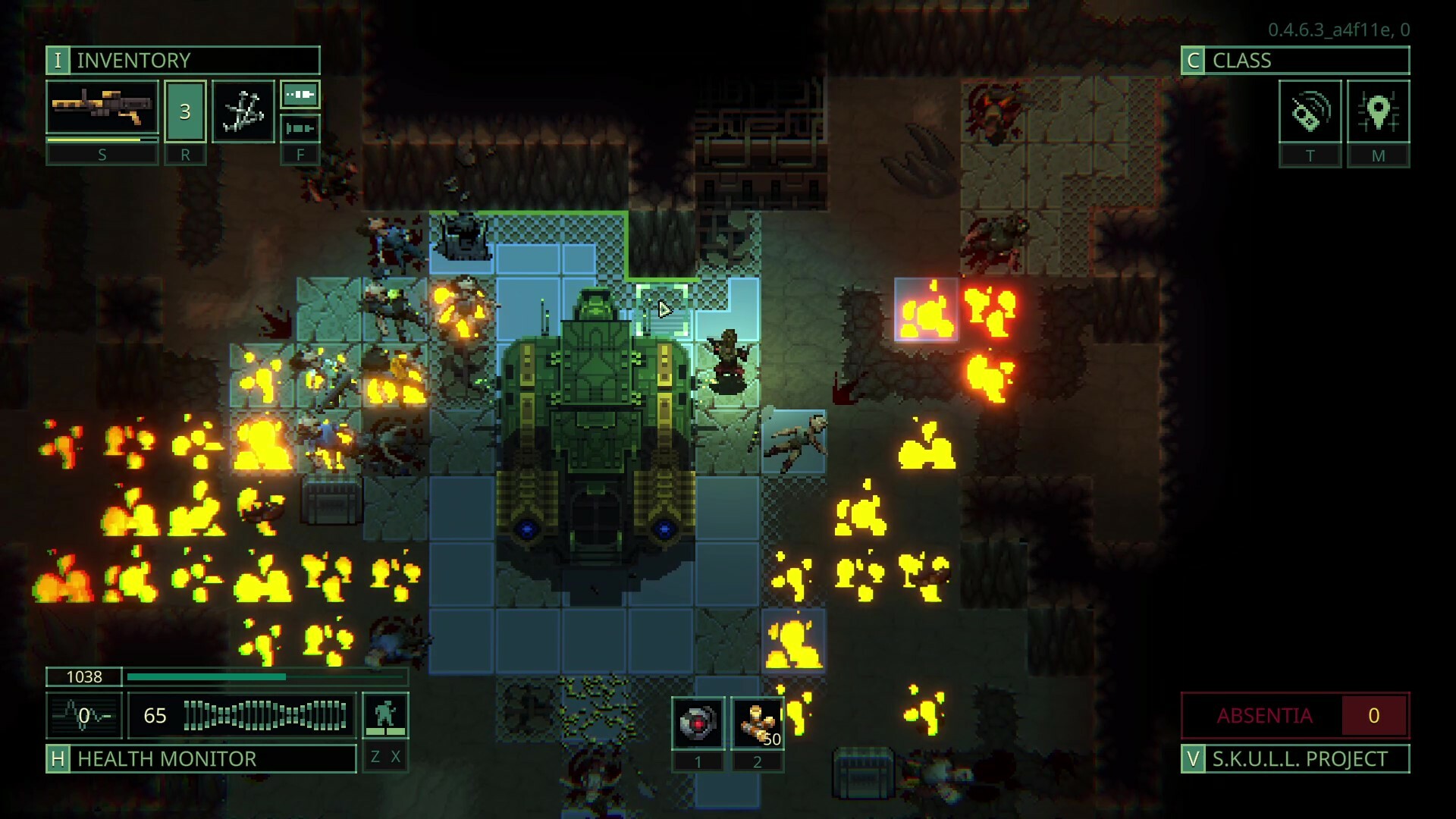
Quasimorph runs on a print-a-clone roguelike structure: take a contract, extract what you can, and losing your mercenary costs the gear they carried. Every successful run feeds back into your PMC's resources and reputation, so each death is real but not run-ending. The result is a long-form risk/reward arc where corporate contracts drive both immediate loot and slow organizational growth.
Deep cyberpunk build sandbox
The official pitch leans hard into hundreds of weapons, armor pieces, gadgets, classes, and a layered augmentation system for body modification. Players repeatedly mention that loadout tinkering and squad composition matter more than twitch execution, which fits the turn-based tactical combat. It's the kind of build depth that rewards reading the wiki and re-rolling clones with different specialties.
Exploration across planetary sites
Missions send you into planetary bases, secret laboratories, and starship wrecks, with recoverable tech and resources feeding flagship upgrades between runs. Reviewers who enjoy the game frame exploration and loot recovery as the main carrot that pulls them back into another contract. That structure gives the punishing combat a tangible purpose beyond pure attrition.
Cybernetic augmentation as identity
Body modifications are framed as the core way to turn hired clones into bespoke augmented weapons, which dovetails with the class and mercenary variety. The system lets you specialize squads around specific roles rather than fielding interchangeable soldiers. It's also where the steep learning curve bites hardest, because aug stacking and synergy aren't well documented in-game.
Solo, single-player management cadence
Steam categories list it as single-player only, with full controller support, Steam Cloud, and Steam Workshop, and the official description frames you as a PMC boss rather than a lone hero. The play rhythm is self-paced: manage the ship, pick contracts, field a squad, then return to base. There's no co-op, so the whole loop rests on solo decision-making.
What players are saying
What keeps coming up positively
- Players who push past the opening praise a genuinely deep build sandbox where loadout and aug choices visibly change how a squad handles fights.
- The cyberpunk PMC premise, dark tone, and soundtrack land well, with several long-time players calling the atmosphere one of the game's strongest draws.
- The extract-or-lose-everything structure gives even routine missions real tension, and successful extractions feel earned rather than handed out.
- Exploration of derelict labs and starships is repeatedly cited as the main reason to keep launching new contracts instead of dropping the game.
Where the friction shows
- The opening hours are widely described as opaque, with text-heavy tutorials scattered across screens that don't explain core mechanics like the multi-part mission difficulty gauge.
- Difficulty spikes sharply once the early grace period ends, and many players report being one-shot through top-tier armor by enemies wielding gimmick weapons like plasma or electric guns.
- Balancing feels binary to a sizable group: either you curbstomp regular enemies in heavy armor or a single stunlocking enemy deletes you, with little middle ground.
- Interface friction piles up: faction armor gates its own counters, inventory resets faction allegiance, and preparing for story missions can require dozens of grindy prep runs.
Is it worth buying?
At $16.74 against a $24.99 regular price with a 33% discount, the asking price is reasonable but not a steal, and the game's steep learning curve and unbalanced difficulty spikes mean it isn't a safe impulse buy. If cryptic systems and brutal failure loops are exactly your thing, the discount lowers the risk enough to justify trying it; if you're on the fence, waiting for a deeper sale or a balance patch is a sensible call.
Price checked 2026-08-13:$16.74,down from $24.99(33% off)。Player-fit tags
Good fit
- Players who deliberately seek out steep learning curves and don't mind consulting wikis or external guides to decode mechanics
- Mercenary-management fans who enjoy permadeath roguelikes with an extract-or-lose-everything contract loop
- Build-focused tacticians who want to theorycraft aug, weapon, and armor synergies across multiple mercenary classes
- Atmospheric single-player explorers who like mapping derelict labs, planetary bases, and starship wrecks for salvage
- Self-paced solo managers who prefer reading tooltips and planning loadouts in their own ship between runs
Probably not for you
- Players who want a gentle onboarding or hand-holding tutorial explaining every system
- Anyone uncomfortable with sudden difficulty spikes that can one-shot fully geared mercenaries
- Players looking for co-op or squad multiplayer, since it is single-player only
- Players who dislike opaque UI, scattered information, and faction-gated armor progression that demands repeated grind runs
- Tacticians who prefer balanced, granular combat over binary stomp-or-be-stunlocked encounters
02Steel Division 2 deep WW2 Eastern Front RTS for strategy players who accept a brutal early learning curve
STEAM DEAL · 75% OFF
Steel Division 2
At 75% off ($9.99 from $39.99), Steel Division 2 is worth considering for Eastern Front obsessives and patient RTS players who can tolerate a punishing opening and ideally bring a co-op partner. Solo-only buyers should temper expectations around the campaign AI.
Game highlights
1:1-Scale Dynamic Strategic Campaigns
Official store pages describe turn-based campaigns played on maps up to 150x100 km, where you move actual Operation Bagration battalions and manage supply over a week-long offensive. You decide which engagements to fight in real time and which to autoresolve, which makes the campaign feel like a whole second game inside the RTS. Multiple reviewers highlight it as the reason to buy even if the standard battles feel rough.
600+ Historically Detailed Units And Eastern Front Focus
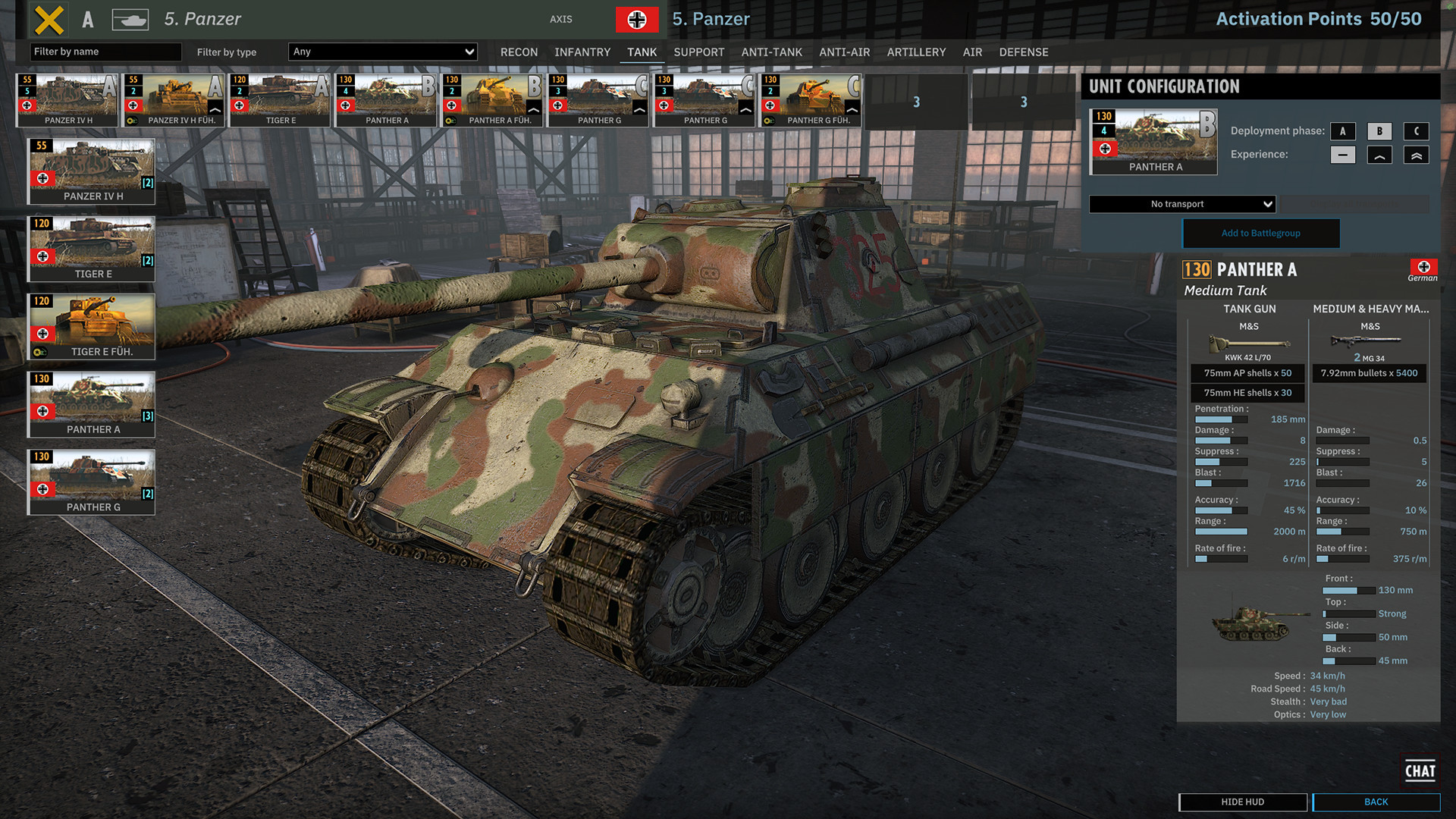
Steel Division 2 ships with over 600 units drawn from 18 divisions and the iconic T-34, Katyusha, and IL-2 mentioned in the store description. The Eastern Front focus is what reviewers consistently praise, since most WW2 RTS games lean on US or UK forces, and the broad unit catalog keeps deck-building varied across divisions and expansions like Normandy content.
Real-Time Tactical Battles With Deck Building
The real-time layer puts you in command of thousands of men across 25 maps, with a revamped deck system that lets you customize battlegroups before each match. Official features list co-op and 10v10 modes alongside single-player skirmishes, so the tactical fights scale from solo practice to large team play. Newer players should expect to lose a lot before the deck logic clicks.
Co-op And Large Multiplayer Modes
Online PvP, online co-op, and 10v10 matches are all listed in the store categories, and reviewers repeatedly point to co-op scenarios and operations as a major reason to stick with the game. The co-op path is also a much gentler way to learn the game than dropping into PvP cold, especially when matchmaking populations are thin.
What players are saying
What keeps coming up positively
- The historical accuracy and breadth of factions keep WW2 fans engaged far longer than typical RTS offerings.
- Co-op scenarios and operations are widely praised as the smoothest way to enjoy the game with friends.
- Players who push past the opening find the deck-building and tactical depth genuinely rewarding.
- Long-term fans report hundreds of hours invested in the campaign and skirmish modes.
Where the friction shows
- Solo players frequently describe the AI as overwhelming, spamming numerically superior forces across oversized maps.
- The opening hours are punishing, with high micro demands and friendly units that feel less responsive than enemy ones.
- Several single-player-focused reviewers feel the game is essentially optimized for multiplayer and abandoned solo balance.
- Matchmaking populations are described as very thin, making random PvP unreliable without a pre-made group.
Is it worth buying?
At $9.99 versus the $39.99 regular price during this 75% discount, the cost of entry is low for a deep WW2 RTS with hundreds of hours of content. The catch is the brutal learning curve and the fact that the game's strengths scale with patience, ideally with a co-op partner, and solo balance complaints are common enough that you should not buy it purely on the strength of single-player.
Price checked 2026-08-13:$9.99,down from $39.99(75% off)。Player-fit tags
Good fit
- Generals who want to plan a week-long Operation Bagration offensive turn by turn
- Co-op pairs or small groups who enjoy tackling scenarios and operations together
- WW2 history enthusiasts looking for less-covered Eastern Front factions
- Players willing to grind through a steep opening to reach tactical depth
- Deck-building tacticians who like customizing battlegroups before each match
Probably not for you
- Solo-only buyers hoping for a polished, forgiving campaign AI experience
- Casual RTS players who want a quick, low-micro entry into WW2 strategy
- Anyone who relies on random online matchmaking without a ready group
- Players with limited disk space or patience for a very large install
- Strategy fans who prefer turn-based 4X pacing over real-time tactical combat
03Conquest of Elysium 5: deep, brutally varied fantasy strategy for players who relish a punishing learning curve
STEAM DEAL · 35% OFF
Conquest of Elysium 5
Pick this up if you want a quick-to-load, asymmetric fantasy strategy romp that rewards long study, but only at a meaningful discount because the interface and onboarding will test your patience.
Game highlights
24 factions that actually play differently
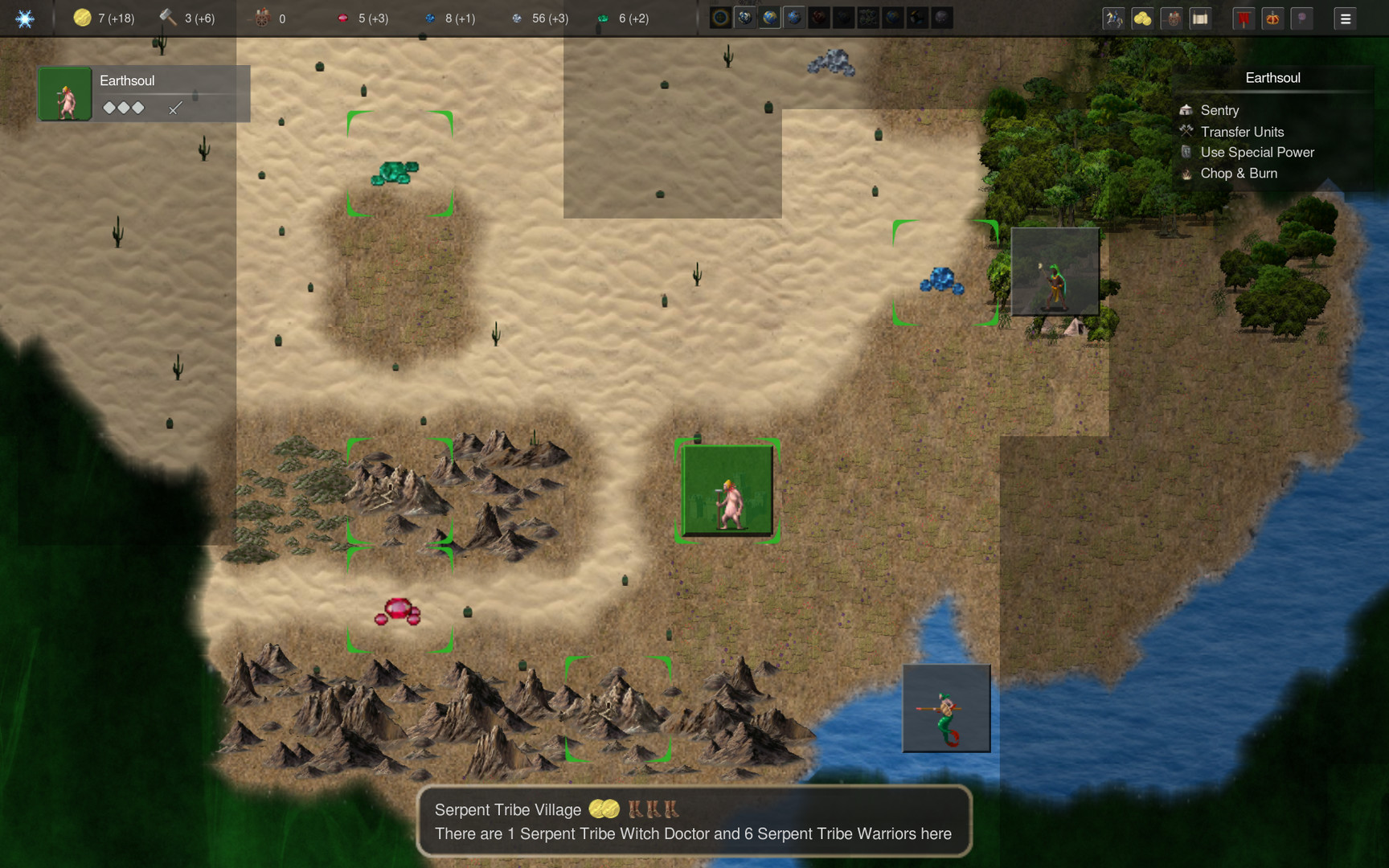
The official pitch centers on asymmetry, and the roster backs it up. A druid is busy growing forests to summon woodland creatures and largely ignores mines, while a dwarf mostly produces units at a fixed rate and pours effort into upgrading them because replacements are scarce. A Scourge Lord drains life force through pyramids of power into his Heralds, which is a fundamentally different economy from anything that builds towns. Each run starts with a randomized ritual set, randomized combat spells, and a randomized map, so the faction you know still throws new curves.
Ten planes and emergent nonsense
CoE5 added four new planes on top of Infernal, and the planes keep running in the background even when you are not visiting them. Summon a demon lord on the surface and Inferno suddenly has a vacant dark citadel, while banishing a devil sends it home instead of killing it permanently. The new sky-realm drops flying armies onto the map, and beanstalks, rainbows, or tall spires let ground armies climb up to answer them. Random events like the underworld literally opening into Elysium keep every turn list full before you ever find an enemy.
Boats, ports, and island-hopping
New for version 5 are boats and ports that let you sail to islands off the main continent, which expands the practical map size and forces land-locked strategies to reconsider. Three new factions, new rituals, new summons for older factions, and new battle maps tied to different fortifications round out the version-five feature set, so returning players get a real reasons list rather than a balance patch.
Solo and multiplayer modes covered
The store page lists Single-player alongside Online PvP, LAN PvP, Shared/Split Screen PvP, Online Co-op, LAN Co-op, Shared/Split Screen Co-op, Steam Workshop support, and Remote Play Together, with cross-platform multiplayer in the mix. That is a wide net for someone who wants to learn the game alone and then test a faction against a friend on the couch or online.
Light system footprint for long sessions
The official description calls the game quick and the loads short, which matters because runs drag on as planes simmer in the background and late-game stacks bloat. Windows, macOS, and Linux are all supported, so you are not locked into one desktop OS if you split your play across machines.
What players are saying
What keeps coming up positively
- Asymmetric factions create long-term replay value, with players regularly reporting dozens of hours still leaving most factions untouched
- Random rituals, spells, and maps produce memorable emergent runs, such as a primed druid plane reshaping the entire midgame
- Reading unit and location lore entries is repeatedly highlighted as a genuine pleasure, with a narrator voice that rewards curiosity
- Short session loops still feel productive, since a single turn can resolve meaningful scouting, recruitment, or ritual decisions
Where the friction shows
- The interface is repeatedly described as ugly and clunky, with setup options locked behind save-and-quit reloads
- Tooltips for spells, units, and traits are considered too thin, forcing external reading or trial-and-error to learn effects
- The opening is steep, with multiple players describing repeated early defeats before the core systems click
- Resource gathering and certain faction economies can feel repetitive across long runs, undercutting the variety the factions promise
Is it worth buying?
At the observed 35% discount the price is $19.49 against a $29.99 regular, which undercuts the $15 floor several players suggested as their comfort zone but stays above it. Given the steep onboarding and the interface friction that veterans still grumble about, this is a fair price for the curious but not an impulse buy; if you can wait for a deeper sale it is an easy upgrade to a must-buy.
Price checked 2026-08-13:$19.49,down from $29.99(35% off)。Player-fit tags
Good fit
- Players who enjoy studying systems deeply and do not mind losing repeatedly while learning
- Strategy fans who want meaningfully different factions rather than reskinned factions
- Short-to-medium session players who like resolving a turn's decisions in one sitting
- Co-op and PvP groups, including same-couch multiplayer, who want a fantasy strategy sandbox
- Readers who enjoy flavor text and lore notes as part of the experience
Probably not for you
- Anyone put off by an ugly, clunky interface and thin in-game tooltips
- Players who need a gentle, well-guided tutorial before their first run
- Photosensitive players, since the AI turn strobe is not optional
- Anyone expecting the variety of factions to erase repetitive mid-to-late-game economy loops
- Players who want a hand-held campaign rather than a sandbox you have to decode yourself
04Corsair Cove: A Pirate City Builder That Rewards Players Who Embrace a Steep Early Learning Curve
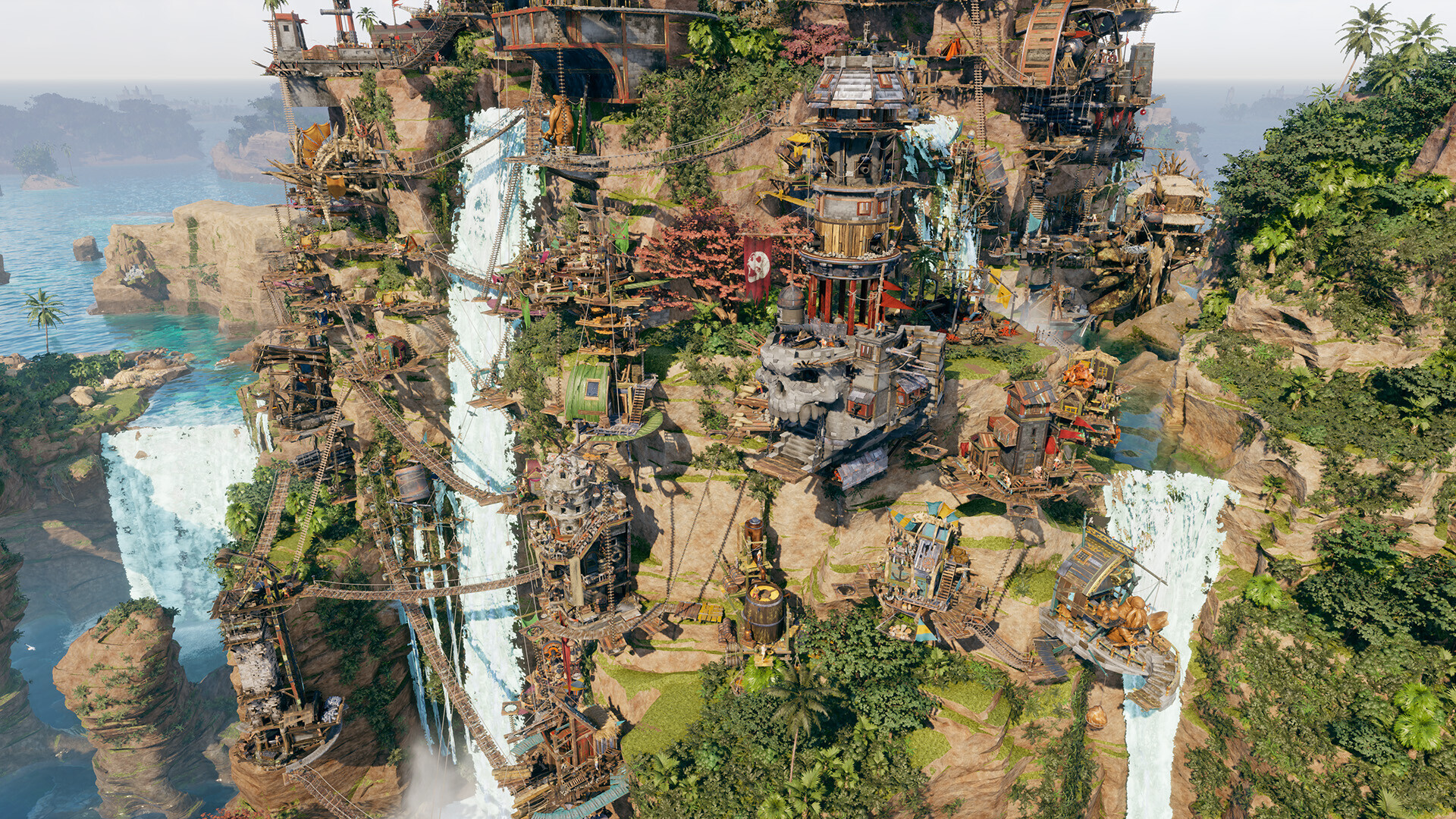
STEAM DEAL · 25% OFF
Corsair Cove
Corsair Cove is a thoughtful pirate-themed city builder worth picking up for players who enjoy layered production chains and slow-burn solo management, but expect a rough onboarding and grindy mid-game before the systems click. At the current 25% discount it sits in a reasonable spot for genre fans willing to push through the first hours.
Game highlights
Vertical cliffside building that actually changes logistics
Official features confirm you can place structures on cliff faces and hilltops, then move goods across chasms using bridges, ziplines, elevators, and aerial lifts. Players describe the placement system as fiddly at first, but the payoff comes once a layered network of lifts and bridges starts humming. It is a real twist on the standard flat-grid city builder.
Deep production chains covering 50+ goods
The store description details over 50 distinct goods, ranging from hard tack and turtle soup to spyglasses, cannons, and prosthetics. Production chains require raw materials flowing into crafting buildings and finished goods moving to distribution hubs. Several players spend most of their time iterating on these chains and chasing bottlenecks, which is the main gameplay loop.
Population tiers with escalating demands
Pirates are split into drifters, fetchers, builders, workers, specialists, and elite sailors like buccaneer descendants and veteran corsairs, each with their own needs. Higher-tier crews require tobacco, pistols, eye patches, medicine, and other luxury goods. Ignoring demands for too long causes pirates to abandon your cause, which raises the stakes of supply management.
Exploration, expeditions, and sea encounters
Some resources cannot be produced on your home island, so you must launch ships, hire captains, and raid nearby locations for grain, coin, whale blubber, silver, and wine. Distant islands host events like aiding smugglers, raiding forts, and fighting krakens or monstrous whales. Many players single out the exploration aspect as the most enjoyable part of the loop.
Accessibility and pacing options
The Steam page lists Adjustable Difficulty, Playable without Timed Input, Save Anytime, Mouse Only Option, and Camera Comfort features. Combined with the single-player focus, this makes the game approachable for players who prefer tinkering at their own pace over punishing real-time pressure.
What players are saying
What keeps coming up positively
- Atmosphere, artstyle, and theming consistently impress, with many players comparing the polish favorably to established city builders like Tropico 6
- Transportation network planning across vertical terrain feels genuinely novel and rewarding once aerial lifts and elevators come online
- Exploration of nearby islands and discovering new resources is repeatedly highlighted as a strong motivator to keep playing
- The pacing is relaxed and self-directed, letting players take their time with supply chains and base expansion
Where the friction shows
- Encounter and ship combat resolves into repetitive stat-check popups that several players describe as clicking the obvious win option
- Visual and logistical clutter becomes overwhelming once your base grows, with resource nodes, overlapping buildings, and fiddly placement
- Money and population bottlenecks stall progression for long stretches, with no reliable repeatable way to increase population when you run dry
- Events and story choices are widely described as shallow and interchangeable, offering little meaningful variety beyond which resource you sacrifice
Is it worth buying?
At $29.99 discounted from $39.99, Corsair Cove is a fair price for a full city builder with substantial content, but not a steal given the uneven reception around combat, event variety, and the steep opening. Genre fans who already love layered production chains will get the most out of the discount; everyone else should wait for further patches or a deeper sale.
Price checked 2026-08-13:$29.99,down from $39.99(25% off)。Player-fit tags
Good fit
- Players who enjoy slow, solo city building with layered production chains and bottleneck tweaking
- Players who like planning transportation networks across uneven, vertical terrain
- Players who want a self-paced management game with adjustable difficulty and save-anytime flexibility
- Players who enjoy base-building games with a strong thematic skin and exploration-driven progression
Probably not for you
- Players looking for deep, tactical combat or challenging pirate battles
- Players who dislike heavy resource grind, population gating, or waiting for quests to unblock progress
- Players sensitive to UI clutter and fiddly building placement on small or irregular surfaces
- Players who prefer multiplayer or co-op management experiences, since the game is single-player only
- Players who want rich, branching story events with meaningful narrative consequences
Share this article