01Lootbound: slow-paced tactical roguelite for solo players who enjoy careful inventory tetris and dice-risk decisions
STEAM DEAL · 35% OFF
Lootbound
A visually polished tactical roguelite with satisfying item-aura puzzles, but the dice-risk reward system and enemy scaling make runs feel uneven. Worth a try if the 35% discount lands within budget, though expect grind friction before a clear build emerges.
Game highlights
Inventory tetris with real consequences
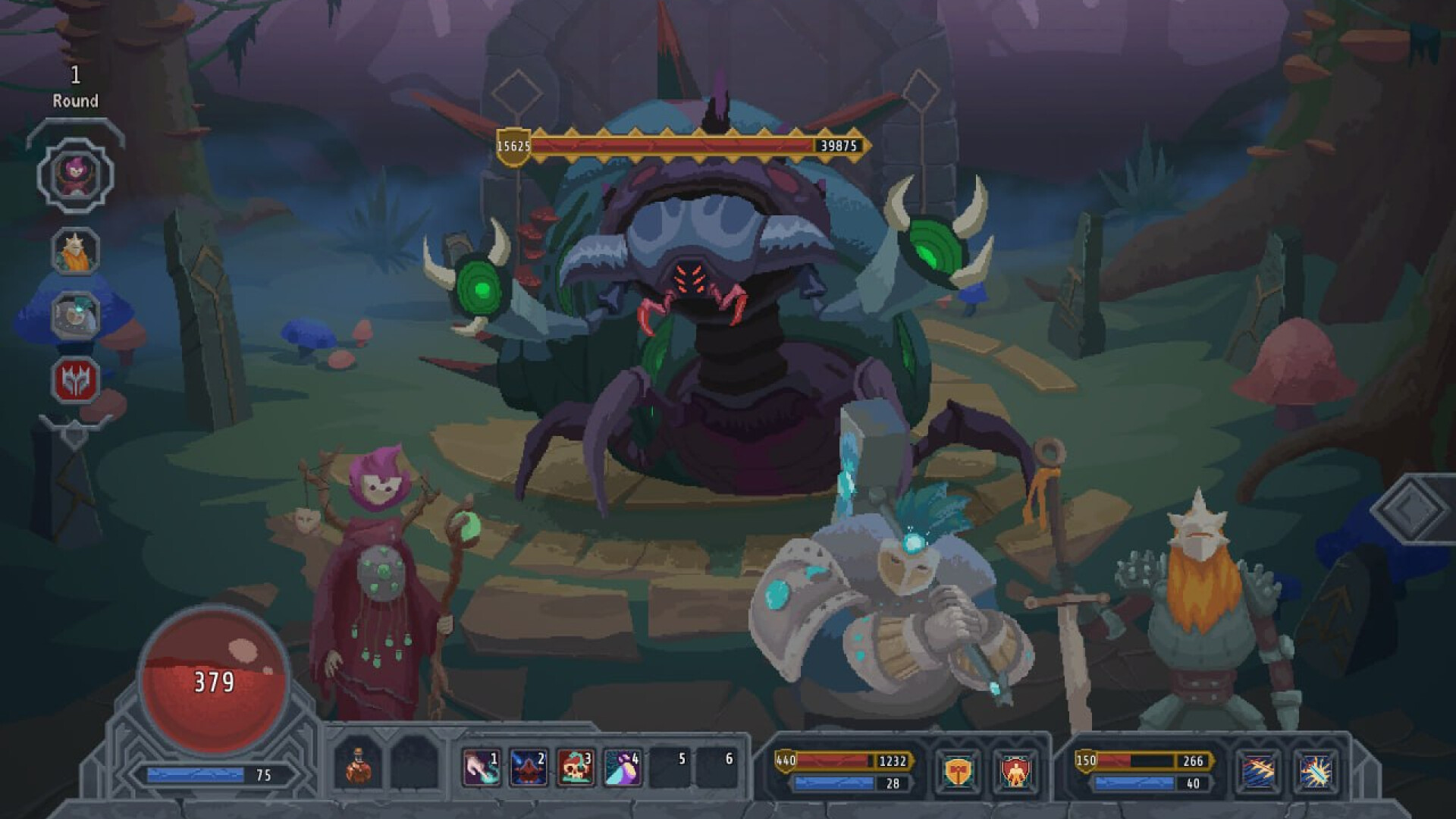
Items do not occupy fixed slots, so you can rotate and reposition gear freely in the inventory grid. Adjacent items trigger auras that strengthen nearby weapons or armor, and the official description explicitly notes that moving a single cell can change an entire build. That makes every loot drop a small spatial puzzle rather than a flat stat bump.
Companions handle themselves in combat
Only the main hero takes direct commands in turn-based fights; recruited allies act on their own and use their own abilities without micromanagement. This keeps encounters readable and lets you focus on the main build instead of juggling four characters every turn.
Boss parts let you sculpt a final Guardian
At the end of each biome you pick one of two boss parts, and each choice changes the Guardian's appearance and power. After clearing all biomes you face the final boss with the composite creature you have assembled, adding a tangible layer of meta-progression across runs.
Risk rooms trade difficulty for better loot
Special rooms offer several reward tiers tied to dice-roll difficulty, with the most valuable prizes requiring the hardest rolls. It is a built-in loop of choosing how much variance you are willing to stomach in exchange for stronger items, rather than a flat loot table.
Designed for self-paced solo play
Lootbound is a single-player game with mouse-only input, custom volume controls, and a self-paced category flag, so you can pause, plan, and rearrange your bag without time pressure. Steam Cloud, controller support, and stats tracking round out a session-friendly package.
What players are saying
What keeps coming up positively
- Visuals and presentation consistently impress players and give the loot-management loop a satisfying tactile feel.
- The item-aura adjacency puzzle is widely described as the strongest mechanic, rewarding careful inventory planning.
- Some theorycrafters enjoy winning the campaign across all difficulty tiers with self-imposed constraints.
Where the friction shows
- The dice-roll reward system is a recurring frustration, with players reporting that safe rolls yield weak loot and risky rolls can hand back nothing at all.
- Multiple reviewers describe the full release as effectively an extended demo, with a thin map pool and repetitive runs after the first few hours.
- Enemy and boss scaling draws repeated complaints, either feeling overwhelmingly punishing on lower difficulties or trivially easy once you understand the build.
- Persistent negative feedback targets the developer over a community-manager incident involving review-incentive offers, which colors how some buyers evaluate trust.
Is it worth buying?
At $9.74 (35% off the $14.99 regular) in USD, the price is below the launch baseline but not steep. Given the mixed balance feedback, the thin map pool, and the unresolved developer trust concerns in recent reviews, this is a reasonable buy only if you specifically enjoy inventory tetris and dice-risk loops; everyone else should wait for a deeper discount or further balance patches.
Price checked 2026-09-30:$9.74,down from $14.99(35% off)。Player-fit tags
Good fit
- Players who enjoy slow, self-paced solo runs where they can stop to reorganize a grid inventory between fights.
- Theorycrafters who like adjacency-based aura puzzles and want to experiment with placement-sensitive builds.
- Roguelite fans comfortable with heavy RNG and dice-risk decisions on reward rooms.
- Mouse-only or controller-only players who want a fully rebindable, paused-when-needed tactical experience.
- Buyers drawn to dark-fantasy D&D flavor who value a short, self-contained campaign over long grind arcs.
Probably not for you
- Players who dislike grinding meta-progression for meaningful power gains, since multiple reviews report upgrades feel flat.
- Anyone seeking deep tactical combat input, because companions auto-play and many encounters devolve into single-button spam.
- Buyers put off by unresolved review-manipulation controversies around the studio.
- Run-and-gun roguelike fans expecting varied maps, since the campaign is repeatedly described as a single map reskinned.
- Players who want a generous difficulty curve, given recurring complaints about either crushing boss scaling or trivializing the campaign once builds click.
02The Walking Trade: a quirky single-player shop sim where zombie raids meet slow-paced inventory and staff management
STEAM DEAL · 40% OFF
The Walking Trade
The Walking Trade is a charming but rough solo shop-and-survive sim that leans into cozy management before escalating raids push it toward base defense; worth a look on sale for patient players who enjoy tinkering with stock layouts.
Game highlights
Shop design with personality
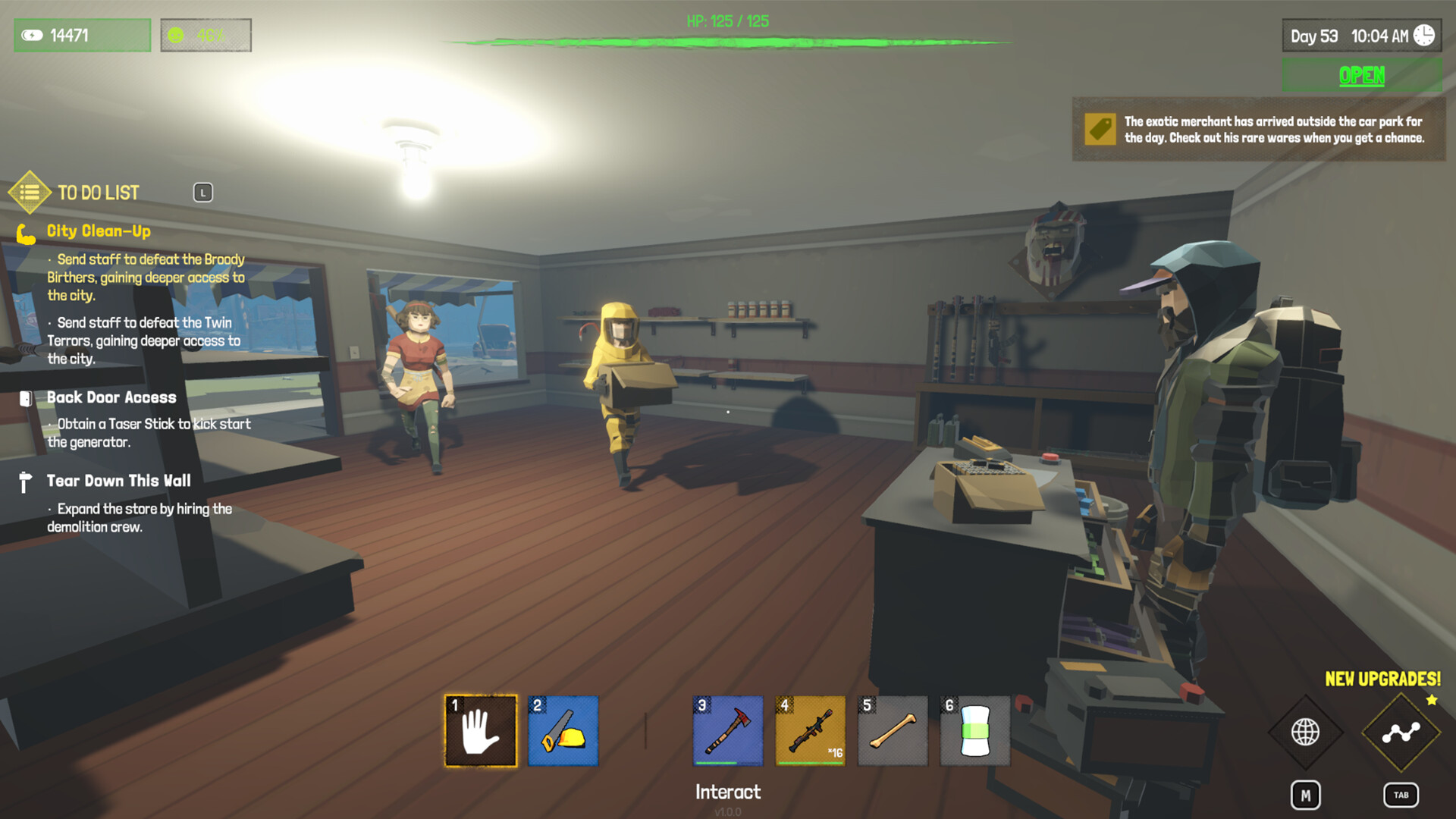
You arrange shelves, furniture, and equipment while choosing where customers and items flow, giving the loop a hands-on layout puzzle rather than a passive menu. Aesthetic choices blend with functionality, so rearranging racks also changes how fast transactions end up completing.
Hire and equip survivors
Staff can be assigned to scavenge supplies, serve customers, or guard the shop, and you keep them equipped and motivated through tools and weapons. Their presence lets you step back from manual labor, though it also opens the door to pathfinding and behavior quirks that you'll notice fast.
Combat during raids and hordes
When zombies push in, you switch to melee or firearms to defend the shop yourself, often using whatever you have scavenged or crafted. The fights layer onto the management loop, so a quiet inventory hour can suddenly become a defense scramble.
Crafting expands your toolkit
Crafting stations let you build weapons, shop upgrades, storage units, barricades, and makeshift traps, extending progression past simply buying stock. Later recipes require specific scavenged materials, tying your crafting ambitions back to the supply loop.
Reputation-driven choices
You decide whether to help the community, price gouge, or sabotage settlements, with reputation shaping who comes knocking as a customer. The branching tone gives the same shop a different feel across playthroughs, even though the core systems stay familiar.
What players are saying
What keeps coming up positively
- Players enjoy the cozy shopkeeping loop and the tongue-in-cheek tone of running a store in a zombie apocalypse.
- Many appreciate the responsive developer who has been pushing daily fixes and updates since launch.
- The combination of crafting, scavenging, and defense lands well for fans who like juggling several small systems at once.
- Customers behaving oddly enough to justify a bullet in the head becomes a memorable emergent story moment for several players.
Where the friction shows
- Cleaner AI frequently pathfails, picks up random items, and shelves them on the wrong racks, which interrupts manual shelf stocking.
- Items can launch across the room when walked over or when staff collide with the player, breaking crafting and looting flow.
- Performance dips noticeably during raids when many objects litter the floor, even on capable hardware.
- Ongoing balance changes like added constant raids push the game away from cozy management and toward a more demanding base-defense pace.
Is it worth buying?
At $7.19 (40% off the $11.99 list), the price matches the scale of a short-to-medium solo management sim, especially if you enjoy hunting for fixed-price sweet spots rather than waiting for an all-time low. Bugs and balance churn are real, so the sale softens the risk of paying full price during a rough patch. If you want a cheap cozy shop sim now, it's reasonable; if you'd rather see the cleaner AI and raid tuning stabilized, waiting another patch cycle costs nothing.
Price checked 2026-09-30:$7.19,down from $11.99(40% off)。Player-fit tags
Good fit
- Players who like slow, single-player shop management with light survival tension.
- Tinkerers who enjoy rearranging shelves, assigning staff roles, and optimizing small inventory puzzles.
- Fans of quirky zombie settings who want their defense fights layered onto a management loop.
- Solo players comfortable with rough edges and frequent patches who enjoy watching a game evolve.
Probably not for you
- Anyone put off by staff AI pathfinding bugs and items physics-glitching across the shop.
- Players who want a deep, long-form simulator rather than a focused 10–20 hour loop.
- Those who prefer cooperative or multiplayer management; this is solo only on Windows.
- Buyers looking for a finished, fully polished launch experience rather than an actively patched early access-style build.
03FluxWerks review: a fully destructible voxel factory sim with real fluid and heat systems for solo builders
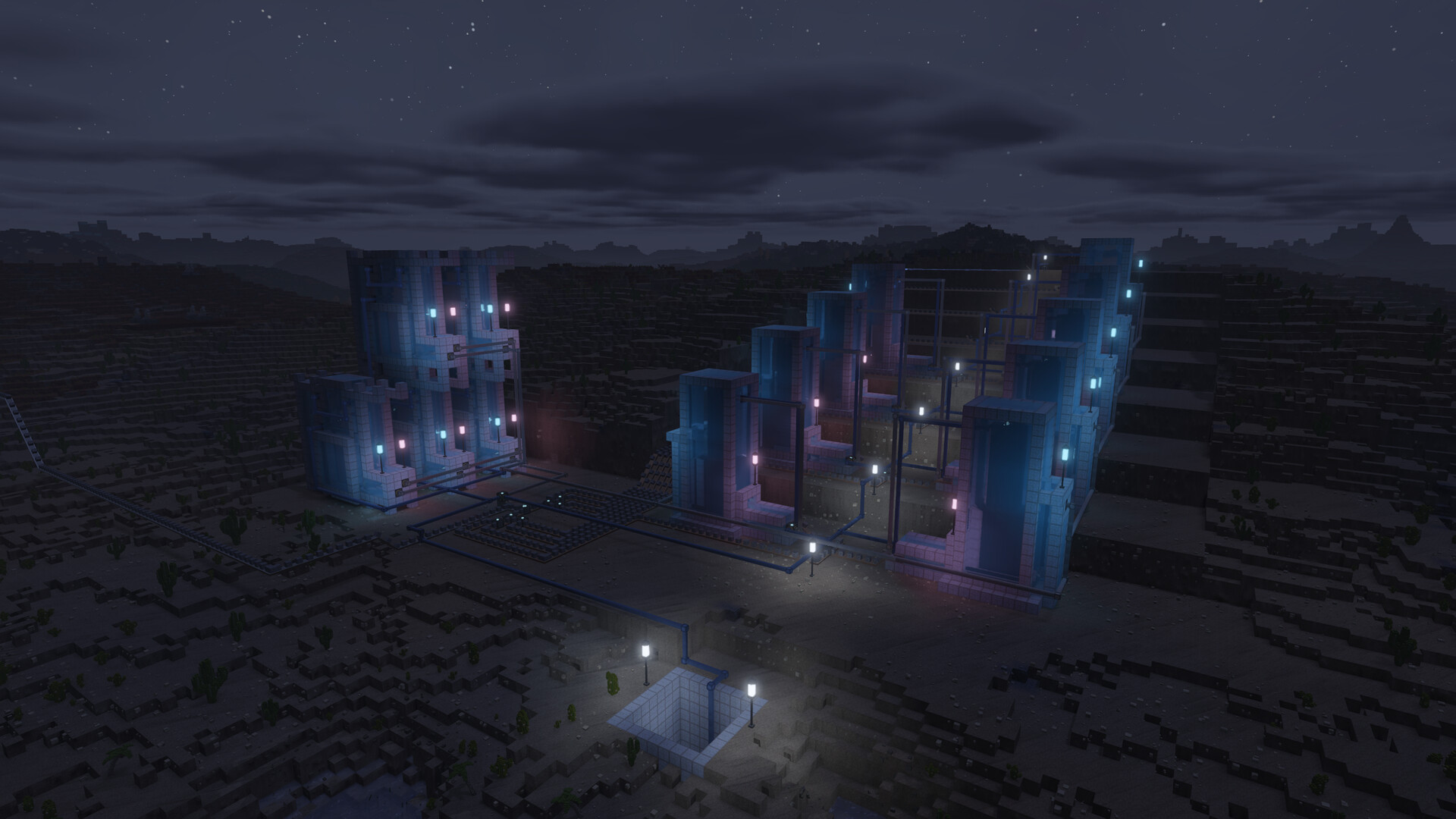
STEAM DEAL · 15% OFF
FluxWerks
FluxWerks is a strong Early Access factory builder that earns attention from genre fans, especially solo players who want a slower, more sandbox-like automation experience where terrain and physics matter as much as throughput.
Game highlights
Total voxel terrain you can actually dig
Every block in the world can be mined, moved, or built over, so you can strip-mine mountains, carve bunkers into deep rock, or build platforms over open oceans and tunnels underneath them. Because terrain is a resource and a hazard, placement decisions become as important as machine layouts. Players respond to that freedom by carving factories into craters, sinking into lakes, or building under roofs to dodge weather.
Real fluid and heat simulation
Water, oil, lava, and acid flow through the world and react where they meet, while heat moves block to block from your machines. Waste heat from a reactor can be piped away or turned back into power, and volcanoes erupt on their own terms. This is what makes FluxWerks feel different from a standard belt-and-inserter loop, since your layout has to account for cooling, drainage, and containment alongside throughput.
Pollution and weather pressure
There are no enemy factions, but the planet keeps score through pollution and exposure. Heavy air pollution can awaken something dormant in the soil, and rain, blizzards, sandstorms, and lightning degrade machines over time. Keeping a roofed, maintained factory becomes its own supply chain problem rather than just a cosmetic choice.
Blueprint and nanobot-driven building loop
You interact with the world through a nanobot swarm that clears terrain, harvests resources, and prints designs. Any working section of your build can be saved as a blueprint and stamped elsewhere, and a Router block handles merging and splitting in one. Players highlight that blueprints are available from the start and that resource markers can be added directly from the scan UI, which removes a lot of usual busywork.
Research eras and computing-layer puzzles
You climb from a first furnace to industrial chemistry and advanced electronics, with each era asking for a noticeably bigger factory. Advanced machines draw on a shared computing reserve produced by your computer clusters, which draw real power and put out real heat, so datacenter management becomes a real puzzle. A starved factory slows down rather than simply halting, which nudges you into balancing power, heat, and silicon alongside raw throughput.
What players are saying
What keeps coming up positively
- The fluid and heat systems make layout decisions feel meaningful, not just cosmetic, and many players describe genuine moments of awe watching the physics interact.
- Quality-of-life touches like early blueprints, movable UI, and one-click resource markers from the scan screen feel unusually polished for an Early Access release.
- The sandbox-style freedom to experiment without punishment, combined with self-paced research, suits slow solo sessions where you build wide or dig deep on your own schedule.
- Several long-time factory genre fans say it scratches the itch that similar games have missed, calling it one of the more promising entries of recent years.
Where the friction shows
- The belt and connection system frustrates some players, with 90-degree turns and tight-space routing described as inconsistent or unintuitive compared to genre standards.
- The UI and placement tools still feel rough in places, with players asking for moving placed buildings, better area adjustment, smarter conveyor auto-routing around corners, and splice options.
- World customization options are basic at launch, and several reviewers feel the early-access package needs more depth and clearer onboarding before it reaches its full potential.
Is it worth buying?
At roughly $21.24 USD against a $24.99 regular price on Steam (about 15 percent off as of late September 2026), this sits in standard Early Access discount territory rather than a deep sale. For a single-player factory builder with unusually physical systems, that is a reasonable entry point, but there is no urgency to buy today and waiting for a larger discount or more content milestones is reasonable.
Price checked 2026-09-30:$21.24,down from $24.99(15% off)。Player-fit tags
Good fit
- Solo players who want self-paced factory automation without combat timers or multiplayer pressure
- Builders who enjoy sandbox-style experimentation where resources regenerate and mistakes are not punished
- Fans of heat, pollution, or fluid-management puzzles layered on top of standard belts and inserters
- Players who like to dig, terraform, or carve infrastructure directly into the terrain
- Long-session optimizers who want to scale from a starter furnace up to large industrial eras
Probably not for you
- Players who need intuitive, genre-standard belt routing and may bounce off the current connection system
- Anyone who wants a finished, fully polished launch rather than an Early Access build still missing QoL features
- Buyers looking for multiplayer or co-op automation, since this is a single-player only experience
- Players who want deep cosmetic or world customization at launch
Share this article