01SWORN co-op action rogue-like review: 1-4 player Camelot runs for friends-first groups chasing varied builds
STEAM DEAL · 66% OFF
SWORN
SWORN is worth picking up at its current discount if you have a regular group of two to four friends who want a lighter, build-focused roguelike to share. Solo players and anyone expecting Hades-level polish or full couch play should probably sit this one out until major networking and reconnect issues are addressed.
Game highlights
Co-op-first Camelot setting
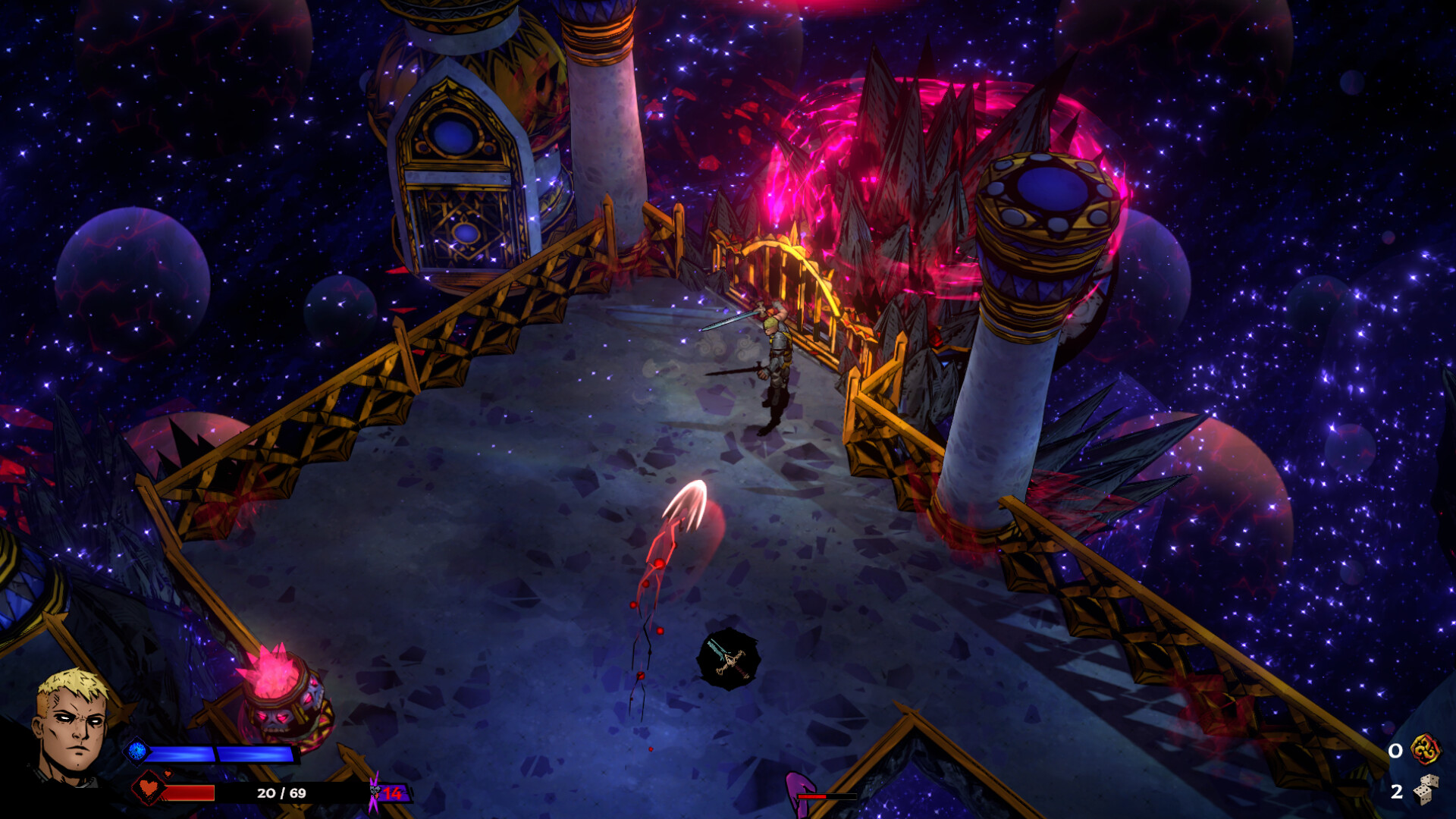
Official materials position SWORN as a 1-4 player online co-op roguelike where you reclaim a fallen Camelot from a corrupted Arthur. Player reviews echo that design, treating the online multiplayer as the central hook. Several buyers specifically call co-op the only real reason to own it, and groups that already coordinate nights will feel right at home.
Build experimentation across characters and blessings
SWORN ships with four characters, each with their own weapons and abilities, and over 200 blessings pulled from Fae Lords like Titania and Oberon, which lets you combine weapon, ability, and boon choices into wildly different runs. The Beacon of Avalore adds long-term meta upgrades for your squire. Players describe genuinely fun moments testing unconventional combos, which is the strongest replay driver.
Challenging boss fights and punishing mastery
The endgame is framed as a true test against Arthur himself after you cut through the Knights of the Round Table, and several player accounts confirm bosses feel demanding rather than pushovers. Difficulty scales with your blessing choices, so off-meta or low-tier boons can leave you undergeared on harder settings. Expect repeated failures as part of progression, not as a bug.
Mike Mignola-style comic art and Arthurian flavor
The visual direction leans on a Mignola-inspired comic look that gives the knights, foes, and story encounters a distinctive identity compared with more realistic takes on the legend. Familiar Arthurian figures like Merlin and Nimue show up as NPCs, anchoring the run flavor. Players consistently single out the art as a highlight even when other systems disappoint.
Roguelike structure without run-save
Each run is meant to be played in a single sitting against escalating Camelot battlegrounds, with new blessings and weapons reshaping the next attempt. There is no mid-run save or quit, which the developer presents as part of the run-based design. That choice directly affects how and when you sit down to play, as multiple reviewers emphasize.
What players are saying
What keeps coming up positively
- The Mignola-inspired comic art style gives the Arthurian setting a strong, distinctive identity that players keep calling out as a highlight.
- Four characters with separate weapons and abilities create noticeable variety between runs, especially when mixing Fae blessings.
- Boss fights feel genuinely challenging and rewarding for groups that coordinate and learn attack patterns together.
- Online co-op with up to four players is widely cited as the main reason to buy, and it works well when sessions run smoothly.
Where the friction shows
- Multiplayer networking is frequently criticized: drops happen often and there is no rejoin system, so a single disconnect can wipe an hour-long run.
- There is no save-and-quit for solo runs, forcing long uninterrupted sessions and making short play bursts impractical.
- Damage stacking and blessing balance are uneven, so off-meta or low-tier boon routes feel far weaker on harder difficulties.
- No couch co-op support despite the gamepad-friendly design, which frustrates families or local groups who expected split-screen play.
Is it worth buying?
At $13.59 against a $39.99 regular price (66% off) in USD, SWORN lands in impulse-buy territory, especially with a co-op group ready to go. If you mostly play solo, want short sessions, or have been burned by Hades clones before, the discount is not enough to fix the missing run-save and the recurring reconnect complaints. Wait for a deeper discount if those issues sound like dealbreakers.
Price checked 2026-09-02:$13.59,down from $39.99(66% off)。Player-fit tags
Good fit
- Friend groups of two to four who already schedule regular online co-op nights and want a shared roguelike project.
- Players who enjoy boons-driven runs in the Hades mold and want a cheaper, slightly rougher alternative to experiment in.
- Build hunters who like mixing four characters, multiple weapons, and Fae blessings to chase unusual combinations.
- Gamepad players, since the title officially recommends controllers and supports DualShock and DualSense hardware.
- Players who appreciate stylized, comic-book art direction and Arthurian flavor more than narrative-heavy storytelling.
Probably not for you
- Solo-only players without a reliable co-op group, since the multiplayer hook is widely seen as the main draw.
- Anyone expecting polished, stable netcode with rejoin, given the repeated complaints about random disconnects and lost runs.
- Couch co-op households or families hoping to share one screen with multiple controllers, which the game does not support.
- Short-session players, because runs cannot be paused or saved mid-attempt and runs can easily stretch beyond an hour.
02Core Keeper: shared underground sandbox for friends who enjoy building, exploring, and automating bases together
STEAM DEAL · 40% OFF
Core Keeper
Core Keeper is a relaxed-feeling 1-8 player mining sandbox that clicks hardest in co-op, especially with players who want to dig, decorate, and slowly automate a shared base. Solo players and anyone allergic to repeating the same resource loop will hit friction once the mid-game biome gate opens.
Game highlights
1-8 player drop-in co-op underground sandbox
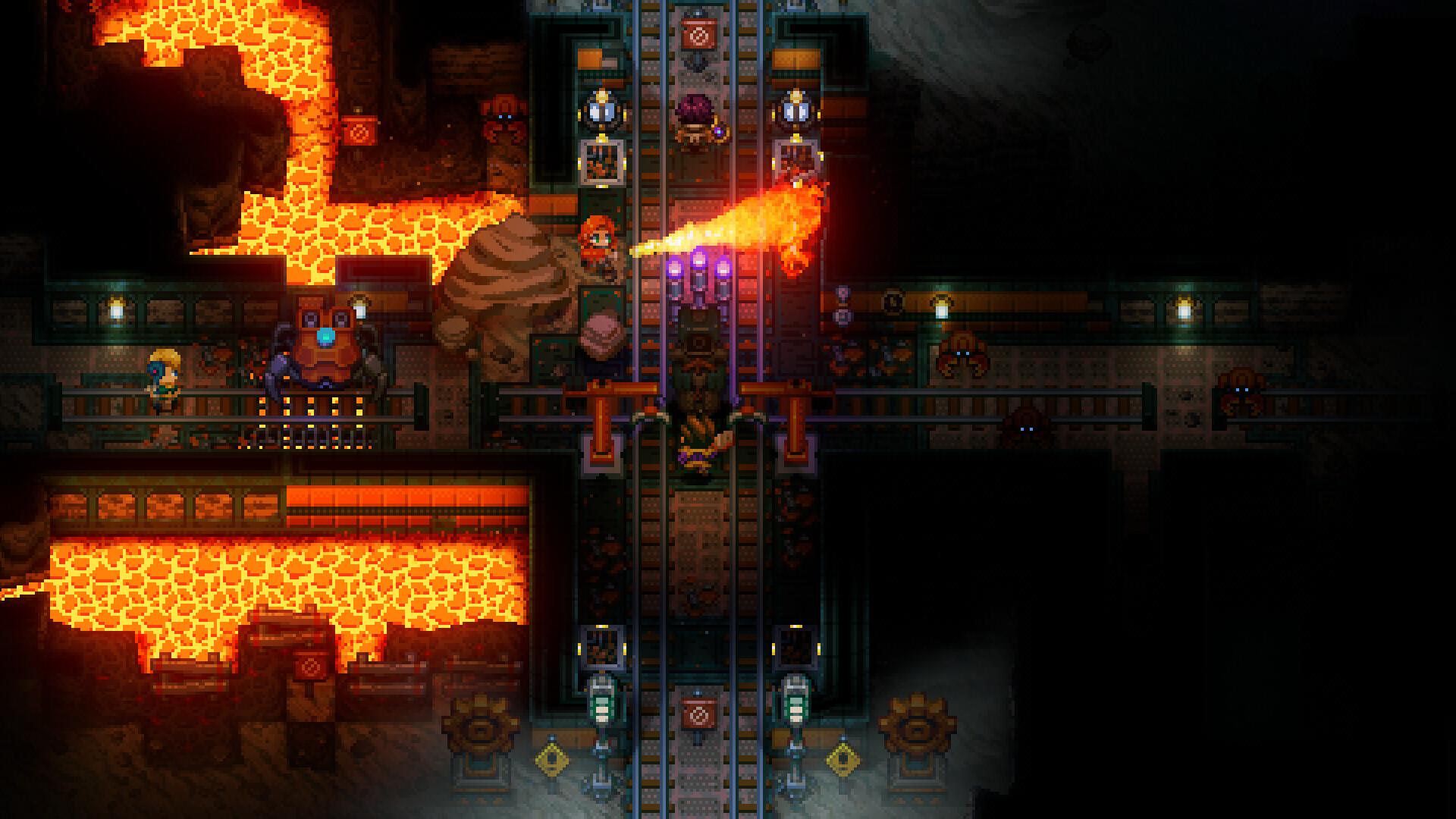
Official features and Steam categories confirm online co-op for 2-8 players with drop-in/drop-out, plus dedicated server hosting, family sharing, and full controller support. Reviewers repeatedly describe loading in with a friend, dividing tasks like mining and building, and trading loot through chests. The shared base becomes the social anchor that keeps sessions going back night after night.
Biome-by-biome progression with boss gating
The official description and player evidence point to a structure where new biomes like the Clay Caves, Shimmering Frontier, Sunken Sea, and Desert of Beginnings unlock harder ores, tougher enemies, and Titan bosses. Several reviewers describe the first 15-20 hours as the strongest stretch, with momentum slowing once each biome demands upgraded gear before letting you move on.
Automation and base-building tooling
Players highlight conveyor belts, automated smelters, storage, farming plots, animal husbandry, and customizable bases as the long-term hook. Helpful inventory quality-of-life such as stacking into nearby chests and crafting from nearby chests comes up in reviews as a reason late-game bases stay manageable. The result is a sandbox that rewards designing tidy production lines rather than fighting the UI.
Cozy framing with occasional surprise difficulty
Steam tags and the official tone lean cozy, and many players describe fishing, farming, decorating, and laying railroads as the wind-down activities they come back for. At the same time, multiple reviews warn that Desert and Ice biomes spike enemy damage, that a single mistake can chunk half your health bar, and that potion farming becomes a chore. The contrast is part of why solo players in particular feel whiplash between relaxing base sessions and sudden lethal caves.
Linux support and dedicated server hosting
Platform data lists Windows and Linux support with no macOS build, and the store page explicitly advertises dedicated server hosting. That makes Core Keeper appealing for friend groups that want a persistent world running between sessions or want to host on a home Linux box without renting a server. It also means sessions can survive any single player logging off.
What players are saying
What keeps coming up positively
- Co-op sessions with friends are consistently called out as the best way to play, with task-sharing making mining, building, and boss runs feel lighter.
- Inventory quality-of-life features like chest stacking and crafting from nearby chests are praised for keeping late-game bases organized.
- The art style, lighting, and biome-specific music earn frequent compliments for making exploration feel rewarding even before any progression kicks in.
- Automation through conveyors, smelters, and farming is described as a satisfying long-term goal that rewards tinkering with base layout.
Where the friction shows
- Mid-to-late biomes, especially Desert and Ice, are repeatedly flagged for sudden difficulty spikes where enemies delete players in two hits while grinding materials for potions becomes tedious.
- Several long-time players feel end-game content is thin, with shallow weapon variety, small enemy rosters, and gear upgrades that feel cosmetic rather than meaningful.
- The user interface, particularly inventory and item management, draws repeated complaints for being clunky and unfriendly once chests and crafting lists pile up.
- Solo players without a steady group often describe the loop as a repetitive grind where each biome asks for the same gather-craft-fight cycle before unlocking the next area.
Is it worth buying?
At $11.99 against a $19.99 regular price for a 40% discount, Core Keeper sits in comfortable impulse-buy territory, especially for a friend group that can fill the 2-8 player co-op slots. The sale price lines up with what reviewers describe as a fair entry cost for roughly 30-40 hours of content, but the mid-game grind complaints mean buying on sale rather than full price is the smarter move. Solo buyers who are only casually curious should treat the discount as the nudge rather than a guarantee.
Price checked 2026-09-02:$11.99,down from $19.99(40% off)。Player-fit tags
Good fit
- Friend groups who want to divide roles like builder, miner, and farmer across a shared base over many sessions.
- Players who enjoy designing automation and storage layouts more than chasing difficult combat encounters.
- Casual co-op nights where dropping in and out for 60-90 minute chunks is more common than marathon sessions.
- Linux users or anyone planning to run a persistent dedicated server for a recurring group.
- Creatively minded players who treat base decoration, railroad routing, and lighting as the actual endgame.
Probably not for you
- Solo players without a regular group, since the grind loop and biome walls feel lonelier and longer alone.
- Anyone who dislikes repeating the same gather-craft-upgrade cycle for every new biome.
- Players sensitive to sudden difficulty spikes in the Desert and Ice biomes, where one mistake can burn through potions.
- Anyone expecting Terraria- or Stardew-level weapon and armor variety in the late game.
037 Days to Die — deep zombie survival sandbox best enjoyed with a co-op group who can handle grind
STEAM DEAL · 45% OFF
7 Days to Die
At the discounted price it is a fair pickup for a group that already plans to play together, especially if you like shared base-building and weekly horde nights. Solo players who dislike grinding, designer-imposed progression, or repeated restarts should look elsewhere.
Game highlights
Large, fully destructible open world
Official features describe five biomes across worlds up to 100 square kilometers, with terrain and buildings that can collapse from structural damage or poor design. This creates a believable post-apocalyptic sandbox where clearing out a poi or accidentally over-mining a foundation has real consequences.
Deep crafting and modular gear
The store description lists over 500 recipes for weapons, armor, tools, vehicles, and base defenses, with thousands of item permutations across six quality tiers and a mod system. Learning new recipes by finding schematics and books gives long-term progression goals beyond simple resource gathering.
Cooperative and competitive multiplayer
Steam tags include online co-op, LAN co-op, online PvP, LAN PvP, and cross-platform multiplayer, and the official copy explicitly supports both cooperative settlements and raiding other players' bases. Review evidence repeatedly describes the strongest experiences as happening in small private groups of friends.
Horde night as the core tension loop
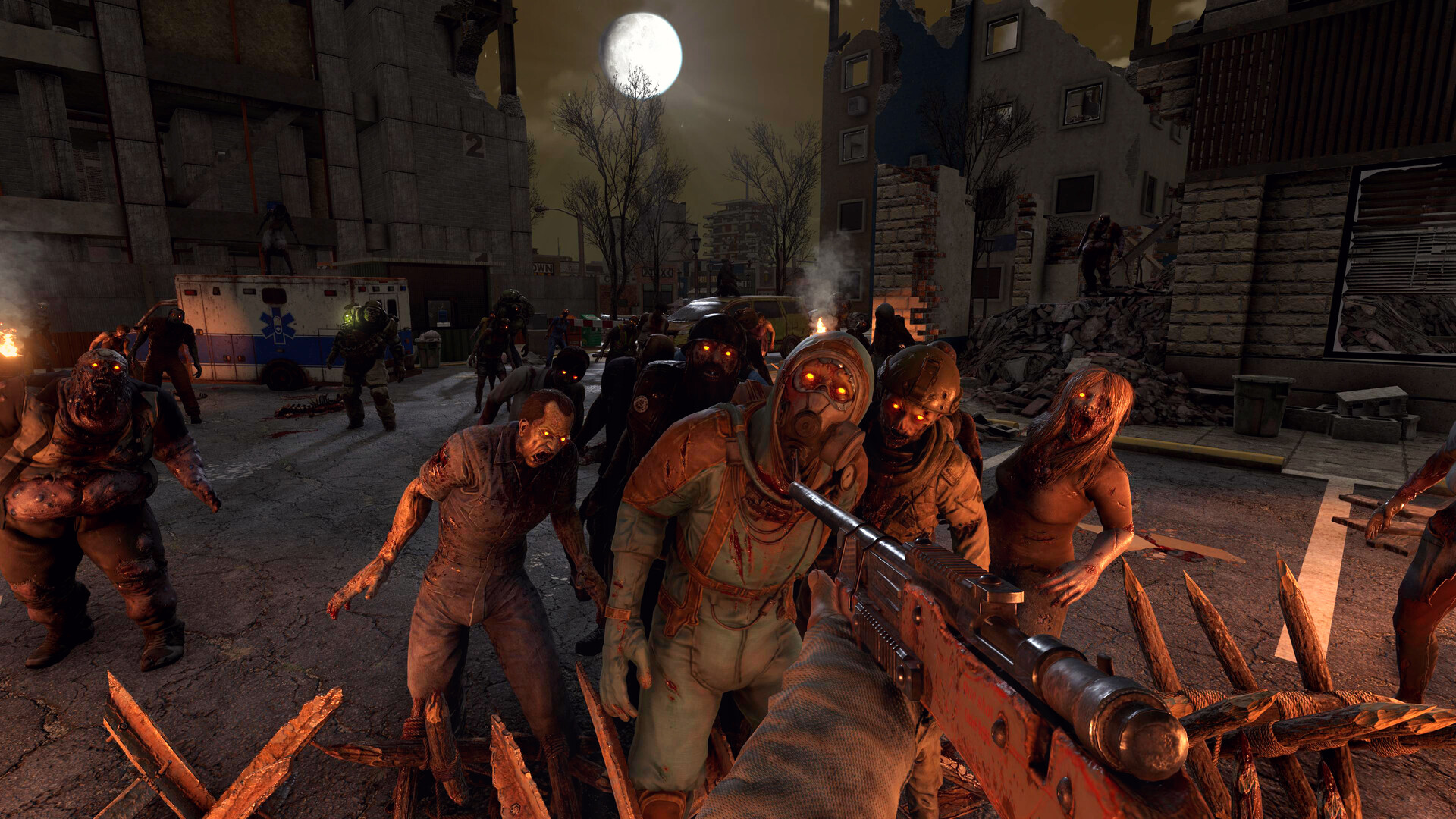
The premise is a tower-defense-style weekly zombie assault where players design forts with traps, electric power, auto turrets, and automated doors, then defend them against nearly 60 zombie archetypes. Players report that successful horde nights, especially in co-op, are the main memorable moments.
Vehicles, farming, and trader quests
The official description documents a modular vehicle system (bicycle, minibike, motorcycle, 4x4, gyrocopter), hunting over a dozen wild animals, gardening for sustainability, and Trader NPCs offering quests tied to over 700 locations.
What players are saying
What keeps coming up positively
- Private co-op sessions with small groups of friends remain the most commonly praised experience
- Base engineering around the weekly horde night is repeatedly described as the most satisfying activity
- Long-tenured players often cite deep crafting, vehicle building, and fort design as worth the time investment
- Many returning players report hundreds or thousands of hours, treating it as a long-term hobby sandbox rather than a short campaign
Where the friction shows
- Long-time players frequently describe a shift away from open sandbox survival toward directed progression via magazine grinding and trader quest loops
- Horde-base design has been repeatedly reworked, with players saying effective designs change every update and feel patched around rather than emergent
- Water, biome, and zombie-AI mechanics are repeatedly cited as being tweaked to discourage strategies players had already invested in, forcing re-learns
- Several reviewers call the post-release price increase hard to justify, saying the current build does not match what longtime fans paid for years ago
Is it worth buying?
At $24.74 against a $44.99 regular price in this snapshot, the 45% discount softens the long-running complaint about value, but only if you actually have a co-op group ready. Solo buyers frustrated by grind or by designer-imposed progression should wait for a deeper discount or more patches.
Price checked 2026-09-02:$24.74,down from $44.99(45% off)。Player-fit tags
Good fit
- Friends who want a long-running shared survival project with weekly horde-night goals
- Players who enjoy planning, defending, and rebuilding fortified bases together
- Groups comfortable with magazine, schematic, and trader-quest progression loops
- Players who want deep crafting, modular vehicles, and hundreds of hours of sandbox content
- Veterans returning for co-op horde defense rather than their first survival sandbox
Probably not for you
- Solo players who dislike repeating resource and magazine grinds
- Players who want a stable meta, since horde-base designs and zombie AI are repeatedly reworked
- Anyone put off by frequent patches that invalidate previously working survival strategies
- Newcomers expecting a short or casual campaign rather than a long-term sandbox commitment
- Players who strongly prefer purely open sandbox survival over directed quest and trader loops
04Abiotic Factor: A Deep Survival Crafting Co-op Set In An Underground Research Lab Full Of Interdimensional Threats
STEAM DEAL · 20% OFF
Abiotic Factor
If you want a survival crafter that punishes and rewards in equal measure, and you have a group lined up, the 20% off price is worth grabbing; playing solo is supported but the grind complaints get louder without teammates sharing the workload.
Game highlights
Six-player subterranean survival sandbox
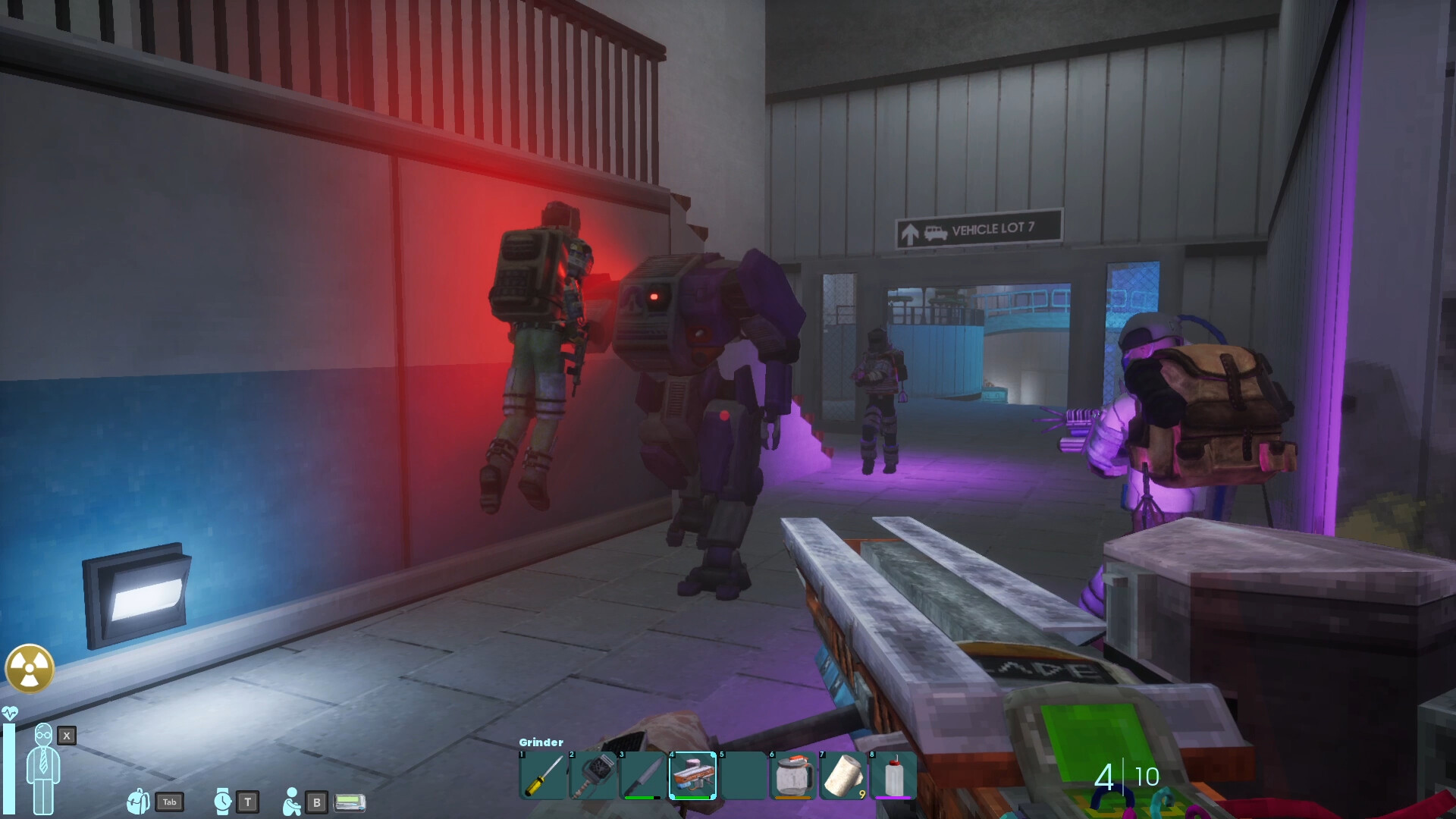
Abiotic Factor ships with online co-op for up to six players through Steam and supports cross-platform multiplayer, making it a straightforward pick for groups who already use Discord or scheduled sessions. The official description frames the whole experience as stranded scientists improvising their way out of a containment breach, which works best when people specialize into roles like scavenger, cook, or base builder. Reviewers who played it solo also completed campaigns, though several noted the solo pace is noticeably slower and rougher around combat encounters.
Science-driven crafting instead of chopping trees
Instead of standard wood-and-stone gathering, the game leans on disassembling office supplies, lab gear, and paranormal artifacts to unlock recipes. Perks are tied to PhD tracks such as Phytogenetic Botanist and Archotechnic Consultant, so character progression has more branches than the typical tier ladder. The systems depth is the main reason several players called it the best survival crafter they have played.
Portal-pocketed metroidvania-style facility
The GATE complex is split into themed departments, with portals opening into alien dimensions that double as new biomes and late-game resources. Multiple reviewers highlighted the level layout as a highlight, saying backtracking to previously locked zones with new tools feels closer to a 3D metroidvania than a flat survival map. Getting used to fast travel and remembering where each portal lands takes time early on.
Quality-of-life touches for survival-craft fatigue
Death does not strand your bag at a glitched coordinate; it respawns at the nearest accessible spot, which reviewers flagged as a thoughtful developer choice. Save Anytime and full controller support lower the friction of dipping in for a short session. These touches do not eliminate the grind, but they cut the worst punishment loops.
What players are saying
What keeps coming up positively
- The PhD perk system and crafting depth reward players who enjoy planning builds rather than spam-clicking the next tier.
- Group play splits responsibilities like foraging versus cooking so sessions feel collaborative instead of every player repeating the same chore.
- The portal worlds and themed facility departments keep exploration surprising well past the first dozen hours, with reviewers logging hundreds to thousands of hours.
- Death-pity item recovery and generous saving reduce the punishment that pushes people away from other survival crafters.
Where the friction shows
- Several players describe a repetitive gathering and progression grind once mid-game recipes start requiring back-to-back resource runs.
- Late-game difficulty spikes catch solo players off guard, with encounters tuned around having multiple teammates to draw aggro or revive.
- Inventory management becomes a chore during long expeditions, since the bag fills quickly with components and cooking ingredients.
- Some co-op sessions stall when players are at different progression tiers, forcing the group to grind or wait for the slowest member to catch up.
Is it worth buying?
At $27.99 USD versus a $34.99 USD regular price, the 20% discount is a reasonable but not dramatic cut for a game that demands dozens of hours and a reliable group. If your friend group is ready to commit, this is a fair price for the content depth; if you are buying solo to test the waters, waiting for a deeper Steam sale would hedge the risk against the solo grind complaints.
Price checked 2026-09-02:$27.99,down from $34.99(20% off)。Player-fit tags
Good fit
- Friend groups of three to six who want scheduled co-op sessions with role specialization
- Players who like crafting systems with branching perk trees instead of linear tier ladders
- Exploration-focused players who enjoy backtracking through metroidvania-style maps with portal shortcuts
- Survival-craft fans who want controller support and save-anytime QoL for shorter play sessions
Probably not for you
- Solo-only players without patience for a slower, more grind-heavy campaign
- Anyone who dislikes inventory juggling during long scavenging runs
- Players looking for a short or casual survival experience rather than a long progression commitment
- Groups with mismatched schedules, since progression gating can leave faster players waiting on slower teammates
05Scrap Mechanic: creative vehicle-building sandbox best enjoyed with friends in co-op Survival or Creative Mode
STEAM DEAL · 33% OFF
Scrap Mechanic
Buy now at the 33% discount if you have a regular co-op group ready to tinker together; solo players or anyone put off by opaque physics and a long survival grind should probably wait or pass.
Game highlights
Multiplayer co-op is central
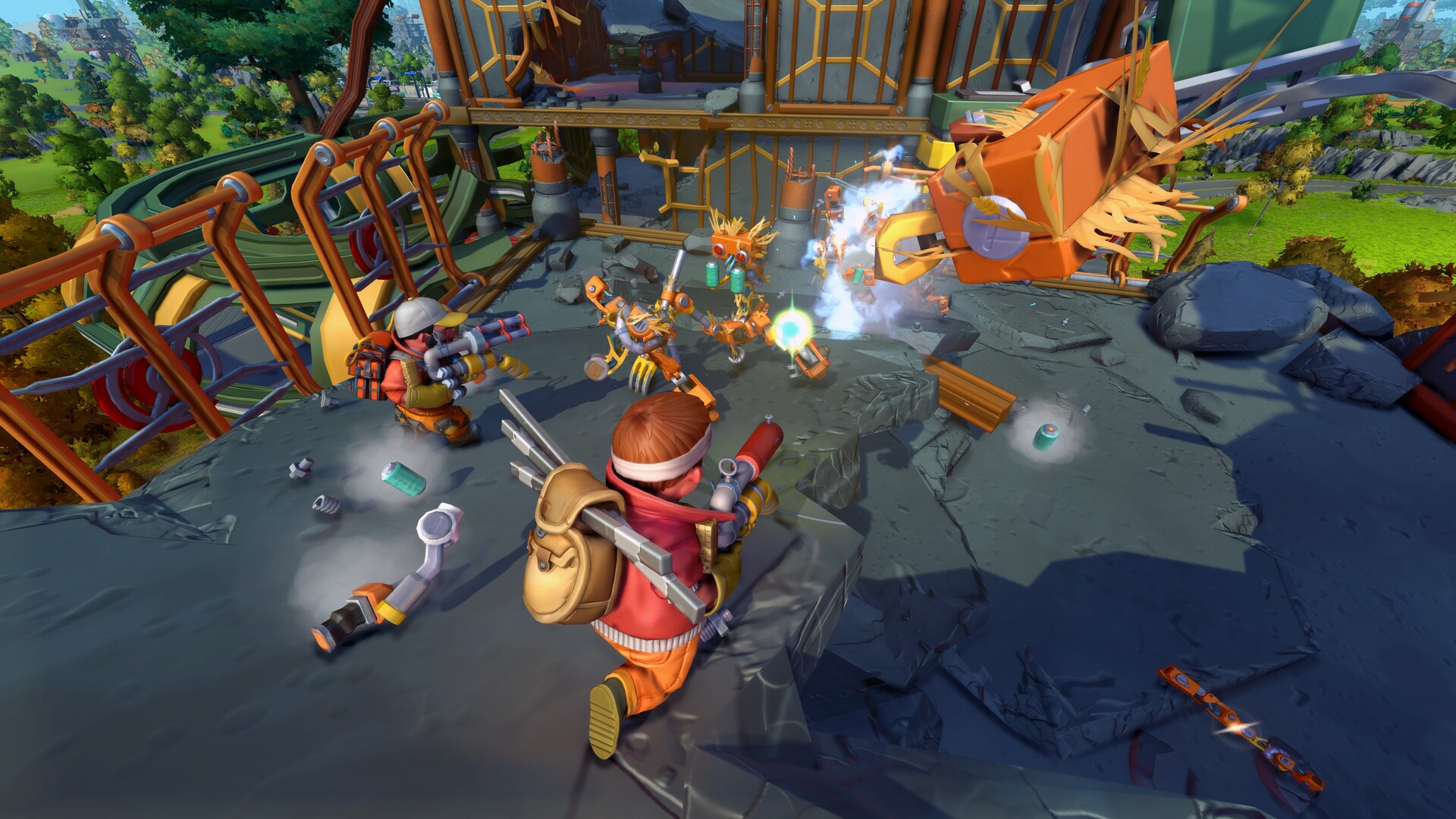
Official features list single-player, multiplayer, co-op, online co-op, Steam Workshop support, an included level editor, and family sharing. Survival Mode explicitly calls out teaming up with friends to build vehicles and bases, and the Challenge Mode lets you author and share custom challenges with the same group. Player reviews repeatedly describe the game as far more fun with a friend than alone, so plan to bring at least one buddy.
Physics-driven building sandbox
The detailed description leans hard on a groundbreaking building system with 400+ building parts in Creative Mode, plus Steam Workshop support for over 1,000 additional player-made parts. You can weld together transforming vehicles, walking houses, drills, automated machines, and combat platforms, and the Spudgun is the signature weapon for testing them on haywire Farmbots. The trade-off is that Scrap Mechanic's physics are messy, which players say is part of the charm once you stop fighting them.
Survival Mode with farming and progression
Survival drops you on a procedurally generated planet full of crazed Farmbots, and the official pitch ties exploration to digging toward the planet's core, cultivating and defending crops, and crafting ammo from your harvest. Quests, hidden garment boxes, and vendor unlocks drive a story that takes many hours to move through. Multiple reviewers warn that mistakes are expensive because progression feels slow and Chapter 2 in particular is a slog without the right expectations.
Creative Mode and Challenge Mode for low-pressure play
If survival tension is not your thing, Creative Mode drops the threats and lets you and friends prototype absurd machines with the full parts catalog. Challenge Mode ships 40 Master Mechanic Trials that the developer bills as a training ground for new mechanics, and you can publish your own challenges to share with friends. This is the cleanest entry point for groups whose idea of fun is laughing at failed contraptions.
Mod-friendly and expandable
Steam Workshop support is an official feature, and Axolot Games advertises more than 1,000 player-made building parts already available through it. Combined with the included level editor and Community Challenges, there is a steady stream of user content to keep the sandbox feeling fresh between developer updates. Just remember that the pace of official updates has itself been a recurring complaint from long-term players.
What players are saying
What keeps coming up positively
- Vehicle-building and contraption tinkering with friends is consistently called out as the highlight, especially the laugh-out-loud moment when a homemade machine finally works or spectacularly fails.
- Creative Mode with its huge parts list and Workshop support keeps sandbox fans occupied for hundreds of hours outside the survival loop.
- Long-time Early Access players feel Axolot Games eventually delivered on the original promise, and the launch price-to-content ratio is viewed as solid value.
- The hand-built physics and farming-combat hybrid give the world a charm that more polished survival games lack.
Where the friction shows
- Survival Mode's progression, crop management, and resource grind are repeatedly described as slow, repetitive, and punishing when builds fail, which can push solo players past the refund window before the fun starts.
- The 1.0 launch drew sharp criticism for performance and lighting issues, and many veterans feel Chapter 2 in particular is a poorly tuned slog that does not reward the time invested.
- The game's own physics make building harder than it needs to be, with several reviews saying the title does very little to teach you how to work around its quirks.
- A persistent theme across years of reviews is frustration with the long Early Access stretch and a perceived lack of meaningful content updates between major drops.
Is it worth buying?
At $19.42 versus a $28.99 regular price (33% off in USD at the snapshot), Scrap Mechanic is reasonable for a friend group already on board, especially if you plan to spend most of your time in Creative or Challenge Mode. Solo buyers who are sensitive to grind, opaque tutorials, or patchy performance should think twice, and anyone expecting a deeply reworked 1.0 may want to wait for a bigger content drop.
Price checked 2026-09-02:$19.42,down from $28.99(33% off)。Player-fit tags
Good fit
- Friends who already have a regular co-op group and want a shared vehicle-building sandbox
- Players who love Creative Mode-style tinkering with hundreds of parts and Workshop mods
- Groups who enjoy laughing at janky physics experiments as much as polished gameplay
- Survival fans willing to push through a slow early game for late-base automation and farming
- Tinkerers who want to design and share their own Challenge Mode courses
Probably not for you
- Solo players without a co-op group, since the experience is widely considered flatter alone
- Anyone who dislikes opaque physics, punishing progression, or trial-and-error building with little hand-holding
- Players put off by long Early Access development cycles and patchy post-launch performance
- Survival fans expecting deep combat systems, since combat is basic and turret-based
- Anyone with a short attention span for survival-mode crop tending and resource grinding
06Gray Zone Warfare is a tactical open-world shooter best enjoyed with a squad of friends on co-op
STEAM DEAL · 30% OFF
Gray Zone Warfare
Worth picking up if you plan to play in a 3+ squad and don't mind early-access roughness; the solo PvE experience runs into heavy friction and missing quests or loot is common.
Game highlights
Large-scale open-world ops
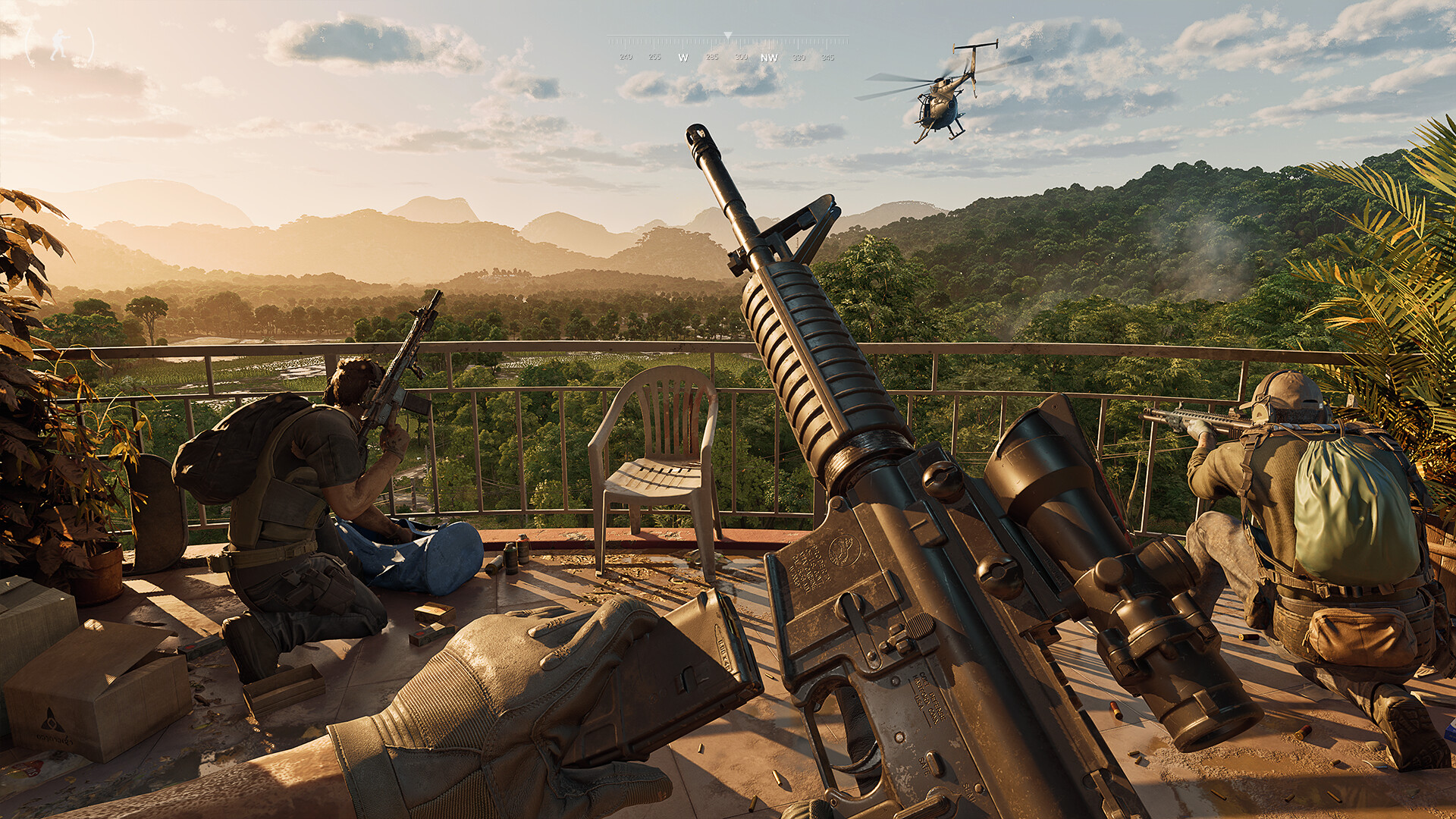
The game ships as a tactical shooter set on a quarantined Southeast Asian island with faction warfare and missions you can take solo or with a squad. The map is a contiguous sandbox with 25+ new locations added under update 0.4, so it rewards route-planning and intel-gathering more than tight corridor play.
Massive weapons and gear sandbox
Update 0.4 added 8 new weapons, 380+ weapon parts, and 150+ gear pieces on top of already broad loadouts, paired with rebalanced ballistics and revamped loot. Players spend a lot of time kitting out their operator and chasing quest-specific keys, so the inventory chase is a core loop, not a side activity.
Quest-driven progression
There are now more than 250 tasks and contracts, with a redesigned task system that aims for a replayable progression loop. The onboarding got a new tutorial area and Field Manual, yet many quest steps still depend on finding AI bosses, specific keys, or rare loot that other operators can wipe out before you arrive.
Squad-first multiplayer design
Official tags include Co-op, Online Co-op, MMO, and both PvP and Online PvP, meaning the social layer is baked in and not bolted on. Players repeatedly call out that running things with a coordinated team is where the game starts to click, especially compared with going it alone.
Early-access expectations apply
Developer labeling calls this a pre-Alpha build despite the April 2024 early-access launch, and the studio is also selling DLCs during this period. That means ongoing reworks like a revamped Tactical Map, lighting pass, and movement reanimation can change balance between patches.
What players are saying
What keeps coming up positively
- Gunplay and traversal feel weighty and rewarding when a squad is moving together
- The pace supports a quick nightly session of one or two missions before bed
- The new tactical map and onboarding area make the game more approachable than at launch
- Players who jump in with friends describe it as exactly the milsim-style co-op they wanted
Where the friction shows
- On PvE servers, quest locations, bosses, keys, and loot caches are frequently already cleared by other players
- Cheating and moderation complaints are widespread, with some accounts suspended over alleged macro use
- AI accuracy and damage feel inconsistent, with soldiers landing long-range headshots while absorbing many center-mass hits
- Dying mid-quest can wipe quest progress, which stretches simple objectives into multi-day grinds
Is it worth buying?
At $27.99 against a $39.99 regular price (30% off in the supplied snapshot), it's a reasonable early-access buy if your group is already lined up and expects patch-to-patch change. Solo buyers or anyone sensitive to cheater-heavy PvP should wait for another sale or until PvE server population issues are addressed.
Price checked 2026-09-02:$27.99,down from $39.99(30% off)。Player-fit tags
Good fit
- Coordinating extraction runs in a 3+ squad over voice chat
- Knocking out one or two missions per session without a strict time limit
- Milsim and tactical shooter fans who enjoy kit-building and loadout tuning
- Players who like replayable quest loops across a large open-world map
- Groups who want a sandbox where the social layer is the main draw
Probably not for you
- Solo PvE-first players who need guaranteed access to quest targets and loot
- Anyone uncomfortable with the early-access pre-Alpha label and ongoing rebalancing
- Players who want a chill or low-pressure co-op session
- Buyers who expect finished progression systems and stable AI behavior from day one
- Fans who dislike extraction-shooter grind and the risk of losing quest progress on death
Share this article