01R.I.P. - Reincarnation Insurance Program: a Survivors-style roguelite for players who accept failure as part of mastery

STEAM DEAL · 30% OFF
R.I.P. - Reincarnation Insurance Program
Worth a look at the discounted price if you want a Diablo-flavored twist on Vampire Survivors and don't mind short content runs and grindy character unlocks.
Game highlights
Diablo-style loot layered onto survivor hordes
The official description makes the core pitch clear: gear drops, recasting at master artisans, and Legend Contracts granting set bonuses sit on top of screen-filling zombie swarms. Weapons range from rapid SMGs to heavy rocket launchers, with elemental effects like Burn, Freeze, and Shock offering varied build angles. Reviews backing the Diablo framing describe gear affixes and the satisfaction of stacking damage. Players who like seeing big numbers and experimenting with affixes should feel at home here.
Build crafting and permanent meta-progression
The official page describes combining passive blessings with active skills, then carrying saved builds into the dedicated Void Spire mode to push rising floors. Contribution Points persist across deaths and feed a talent tree for stat upgrades and new abilities. Several reviews frame it as the kind of roguelike where repeated failure eventually snowballs into a one-button clear. This is the loop for players who enjoy planning a build across many short runs.
Readable, high-density action rather than pure bullet hell
Official text pitches overwhelming firepower, but in practice the game is positioned as a survivor-style bullet-heaven rather than a screen-blanking mess. Reviewers explicitly call out strong readability, a useful dodge roll, and tight enemy density with balanced VFX. That readability matters in a horde game because it keeps positioning and evasion possible even when the screen is packed.
Boss encounters framed as gear checks
The detailed description states each mission ends with colossal mutant lords that demand agile movement and evasion, while also stating that over-geared builds let you face-tank them. Review evidence backs this up: players report that once gear and builds come online, late bosses stop feeling threatening. That makes boss design more of a build-validation moment than a hard execution wall.
What players are saying
What keeps coming up positively
- The Diablo-style loot and crafting loop is repeatedly called out as a refreshing fit for the survivors genre, with one reviewer explicitly comparing it favorably to Vampire Survivors clones.
- Many players highlight readable combat, a strong dodge roll, and VFX density that does not obscure what is happening on screen.
- Runs feel meaningfully progressive, with reviewers noting consistent inter-run gains rather than pure grind.
- Void Spire mode and saved builds give late-game players a place to push optimized setups against rising difficulty.
Where the friction shows
- Multiple reviewers describe severe content shortness, finishing everything and maxing characters in roughly 20 to 40 hours, then running out of reasons to keep playing.
- The loot and build pool is repeatedly called narrow, with several players noting only a handful of viable builds and gear sets.
- Onboarding is weak: reviewers report that skills, weapons, throwables, and synergies are barely explained, leaving new players guessing at priorities.
- Performance and controller friction appear in reviews, including memory leaks causing crashes, freezing at load, and the right stick acting like a mouse rather than radial aiming.
Is it worth buying?
At $10.49 USD against a $14.99 regular price (30% off as observed), this is cheaper than many genre entries, but the discount is modest and does not approach an all-time low. The price feels right if you want the Diablo-flavored take on survivors and accept the risk of burning through content in under 40 hours. If you prefer denser, longer-lasting roguelites, waiting for a deeper sale once more content and patches land is reasonable.
Price checked 2026-09-26:$10.49,down from $14.99(30% off)。Player-fit tags
Good fit
- Players who want to push a single build across many short runs and accept frequent wipes as learning.
- Players who enjoy experimenting with gear affixes, elemental effects, and set bonuses rather than pure passive stacking.
- Solo players who like screen-filling horde combat with strong readability and a usable dodge roll.
- Players who want a clear progression ramp through Void Spire floors using saved builds.
- Players who plan to come back periodically as the developer adds content rather than expecting a fully stocked launch.
Probably not for you
- Players expecting deep onboarding, because multiple reviewers say the game barely explains its skills, weapons, or synergies.
- Anyone sensitive to unstable performance, since reviews cite memory leaks and load-screen freezes.
- Players who want long, content-heavy roguelites, because reviewers report finishing most of what is available in roughly 20 to 40 hours.
- Controller-first players on PC until the right-stick aiming issue is addressed.
02Duo Quest review: co-op roguelite deck builder for couples and friends who answer relationship questions together
STEAM DEAL · 20% OFF
Duo Quest
A charming co-op roguelite that genuinely rewards playing with a partner or close friend, but expect to wrestle with rough edges, recurring controller and sync bugs, and a question pool that some players find bland.
Game highlights
Two-player co-op is mandatory
The game's official pitch and store categories make local and online co-op the only intended way to play, with Remote Play Together and shared-screen support. Multiple reviewers note that the experience feels empty solo, while a single copy via Steam Remote Play or same-couch split screen is enough to bring in a non-gamer partner.
Duo Energy turns answers into combat fuel
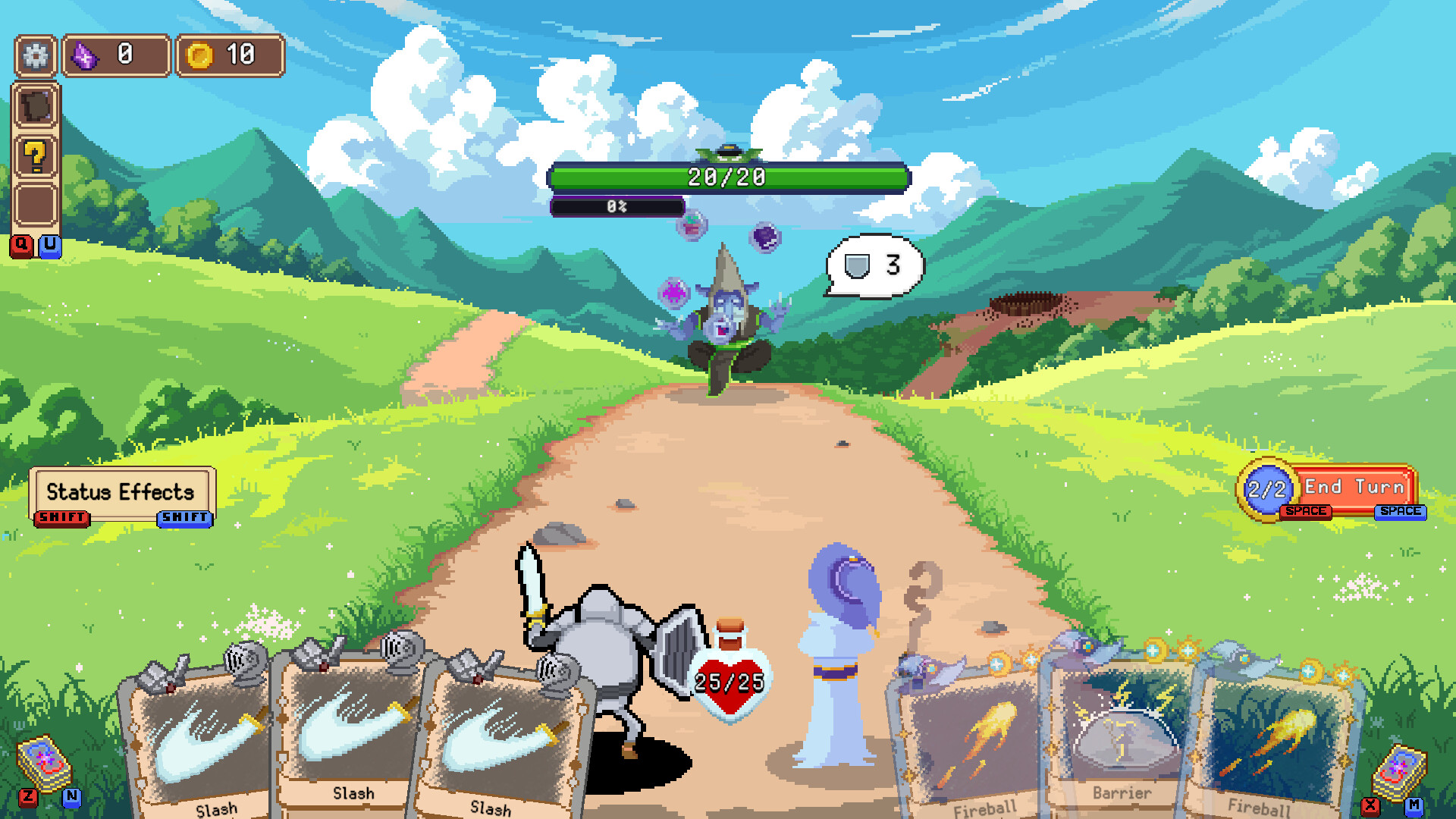
Matching answers to the 1000+ quirky relationship questions charges a shared Duo Energy meter, which then unlocks combo cards in the roguelite deck combat. Players describe this as the hook that ties conversation to strategy, giving the game a flavor that pure Slay the Spire-style deck builders lack.
Procedural runs with roguelite deck building
Levels are randomly generated with branching routes leading to boss fights, and hundreds of cards unlock across runs to customize each player's deck. Five classes and Mysterious Artifacts add build variety, though several reviewers warn that early-run deck options funnel into one dominant archetype.
Eight-bit charm and character work
The pixel art style, themed enemy designs, and quirky character writing drew repeated praise from players who called the game charming and a great date-night pick. Reviewers highlight memorable touches like the alligator sound effects and the FROAGIE as the kind of personality that makes sessions feel warm.
Onboarding sits between easy entry and unclear UI
The store explicitly markets Duo Quest as approachable for non-gamers, and several reviews confirm newcomers can pick it up quickly, with one player even crediting it for sparking interest in deck builders. That said, multiple players ran into confusing menu navigation, unclear mechanics, and softlocks around tutorial selection and reconnect screens.
What players are saying
What keeps coming up positively
- Players repeatedly describe Duo Quest as a charming date-night or friend-bonding experience, with the answer-matching mechanic producing real moments of surprise about how well partners know each other.
- The 8-bit art, themed enemies, and quirky voice work draw consistent affection, and several reviewers call it a strong first deck-builder for someone who has never played the genre.
- Solo-friendly entry via Remote Play Together or local split screen on one copy is repeatedly highlighted as a low-friction way to bring in a non-gamer partner.
- Chains of funny question responses, unlocks, and character variety keep runs feeling fresh for many players, who compare the loop favorably to a board game night.
Where the friction shows
- Multiple reviewers report controller and keyboard conflicts, sync issues between players, and softlocks at the tutorial and reconnect screens that can end a run.
- A recurring complaint is that the default question pool feels generic and tabletop-party-game bland, with several players requesting user-submitted questions and more variety to keep the late game engaging.
- Several runs funnel early deck building into one dominant archetype, limiting strategic expression in the first few hours.
- Bugs range from card upgrades not registering to one whole character's card set failing to appear in battle, which frustrated players who wanted to use every unlockable class.
Is it worth buying?
At $11.99 on a 20% discount off the $14.99 regular price, Duo Quest is not the cheapest indie on sale, and the launch build's bug roster means a patient player gets more value. The current discount lines up with a standard launch promotion rather than anything resembling a deep cut, so waiting for a steeper cut only makes sense if controller and sync issues would be dealbreakers for your setup.
Price checked 2026-09-26:$11.99,down from $14.99(20% off)。Player-fit tags
Good fit
- Couples or close friends who want a co-op game that doubles as a conversation starter.
- Players curious about deck builders who learn best by playing with a more experienced partner in the same room.
- Anyone hosting a low-stakes game night who wants something quirkier than a standard party game.
- Players with a stable online or local co-op setup willing to report bugs and ride out patches.
- Non-gamers being introduced to roguelike combat through a partnership-driven wrapper.
Probably not for you
- Solo players who do not have a partner or friend available, since the game has no meaningful single-player mode.
- Players who want a polished, Steam Deck-verified experience, given unresolved controller, sync, and softlock bugs at launch.
- Deck-builder veterans looking for deep strategic expression, since early runs feel archetype-locked and lighter than Slay the Spire.
- Anyone hoping for a large, witty user-generated question library, since the bundled question pool repeats and some players find it generic.
- Players who dislike troubleshooting UI confusion or scrolling through patch notes between runs.
03Fright Train: tactical inventory-driven survival horror roguelike for players who accept failure as part of mastery
STEAM DEAL · 10% OFF
Fright Train
Fright Train is a demanding, atmosphere-heavy single-player roguelike that rewards learning its item-slot system, enemy weak points, and resource loop. If you enjoy being beaten down, then slowly mastering each car, it earns its price; if you want progression carryovers or co-op, look elsewhere.
Game highlights
Tactical on-body inventory
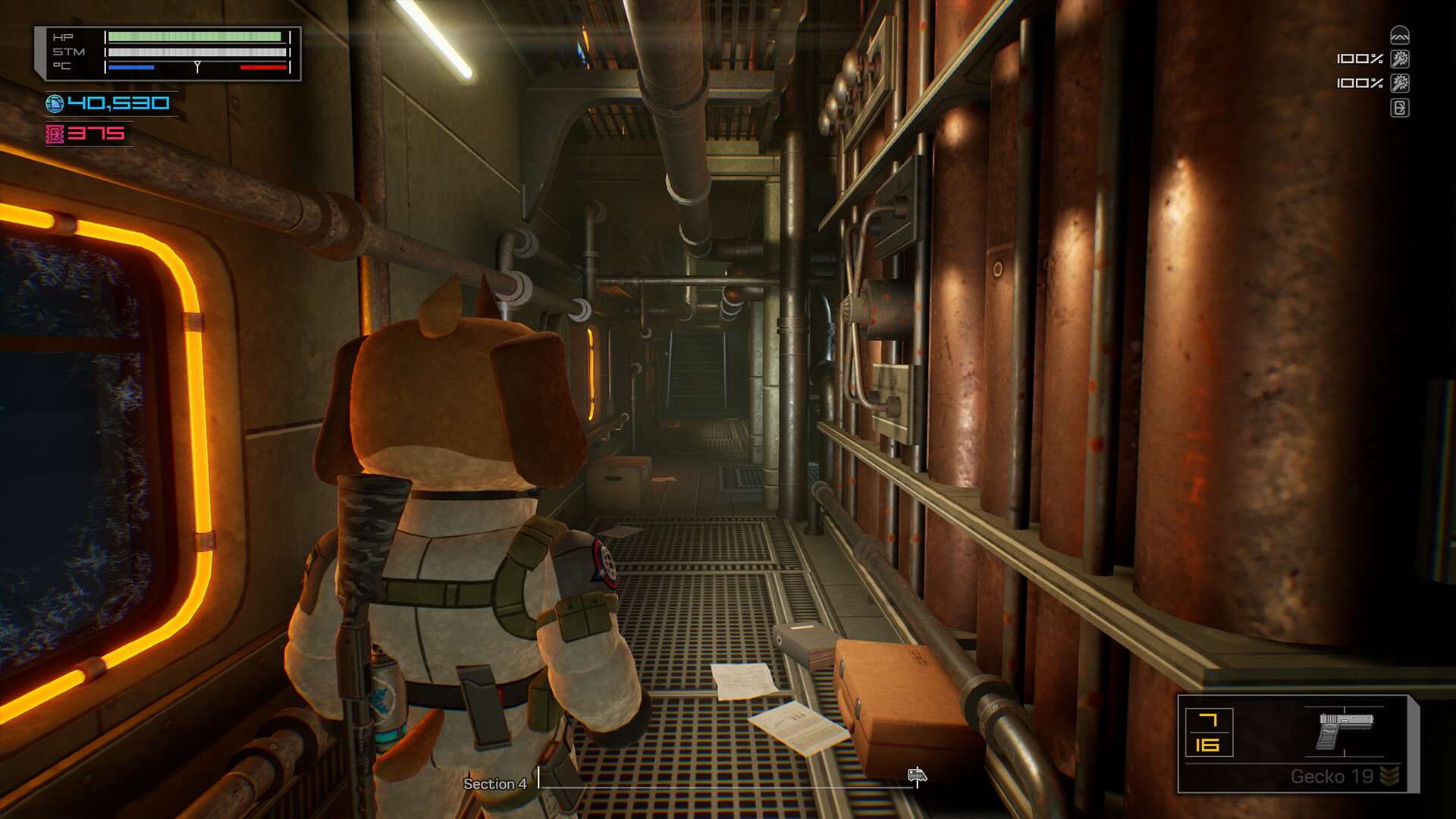
Items physically render on the character and each slot has a draw-speed percentage, so a magazine stored on the chest is faster to insert than one kept on the lower back. Players repeatedly say this forces deliberate prep between rooms and punishes panic, but it also makes early runs feel clumsy while you memorize item sizes and slot rules.
Train maintenance as survival pressure
You monitor and repair train parts, unlock new cars with collected credits, and keep the locomotive moving through an Antarctic storm. If the train stops, harsh cold or external creatures close in, so resource runs are always weighed against repair duties, turning routine scavenging into tension.
Enemy weak-point combat
Enemies have armor and vulnerabilities you must learn, and behaviors intertwine so some monsters support or sabotage others. Reviewers describe aiming higher than feels natural because projectile-style gunplay rewards precise weak-point shots rather than spray.
B-movie horror presentation
A research train plowing through a blizzard, a SHARK corporation conspiracy, and a stylised semi-realistic look are paired with an adaptive soundtrack and cinematics. The atmosphere gets strong praise, while players note that combat and traversal can feel repetitive across long runs.
Pure roguelike resets between runs
Every run restarts with nothing carried over, including weapons, credits, and inventory upgrades. Cosmetic unlocks from small objectives exist, but power progression does not, which is the defining friction players either embrace or reject.
What players are saying
What keeps coming up positively
- Atmosphere and horror presentation on the moving train are repeatedly singled out as excellent, with the Antarctic blizzard setting building constant dread.
- The slot-based inventory system and draw-speed mechanics give survival gameplay unusual tactical depth once learned.
- Combat against enemies with armor and weak points feels rewarding after practice, and the difficulty is described as demanding but fair.
- Visual style, B-movie storytelling, and character design draw strong praise from the community.
Where the friction shows
- There is no permanent progression between runs, which frustrates players expecting rogueLITE-style carryovers.
- Enemy variety is limited and combat becomes repetitive on longer sessions, with reviewers asking for more monster types and tools like landmines.
- Gunplay uses projectile-style aiming that feels unintuitive at first, especially when targeting small exposed weak points.
- Traversal leans heavily on kicking interactables, and early inventory sorting causes players to drop or leave items behind due to unclear size rules.
Is it worth buying?
At the current 10% discount in USD ($14.39 from a $15.99 base), the price is reasonable for a single-player roguelike of this scope, but not aggressive enough to feel urgent. Wait for a deeper discount unless the tactical inventory and harsh restart loop clearly match what you want.
Price checked 2026-09-26:$14.39,down from $15.99(10% off)。Player-fit tags
Good fit
- Players who enjoy learning demanding systems through repeated failure rather than carried power
- Solo players who want self-paced single-player runs with clear run-based goals
- Horror fans who value atmosphere and weak-point combat over co-op or story branching
- Inventory-management enthusiasts who like physically modelled item slots and load-out planning
Probably not for you
- Players expecting permanent unlocks or rogueLITE-style carryover progression between runs
- Anyone wanting co-op multiplayer, since the game ships as single-player only
- Cozy or low-pressure sessions, since storm waves and train upkeep create constant tension,Players uncomfortable with a steep opening learning curve for inventory, aiming, and weak points
04Ved: Recure — a parry-heavy action roguelite for players who like fast runs and forgiving windows
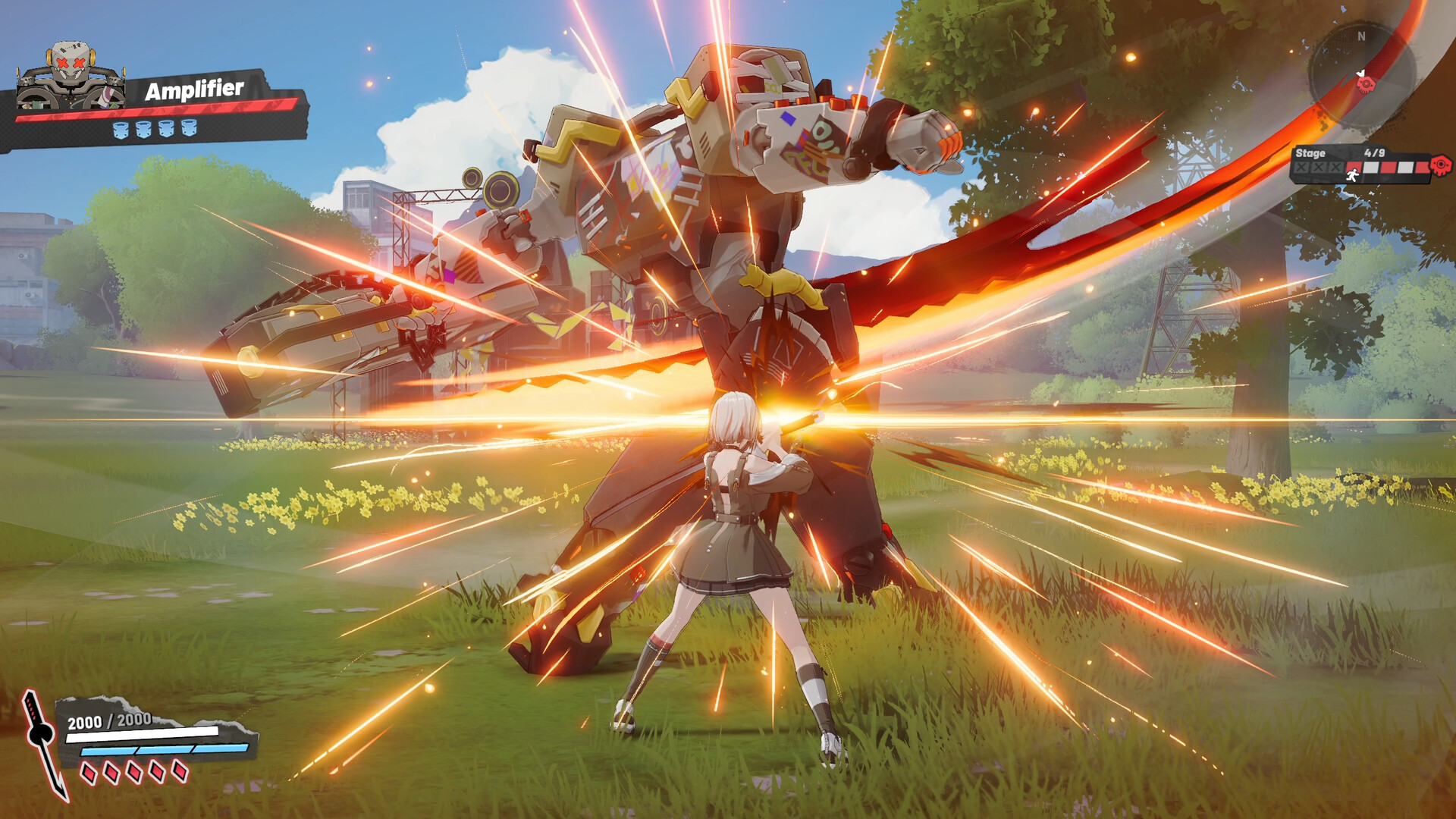
STEAM DEAL · 15% OFF
Ved: Recure
A snappy, parry-driven roguelite that feels great in short bursts, but its shallow buff system, repetitive encounter structure, and a serious long-session memory leak make it hard to fully endorse at full price. Worth grabbing on the current discount if you love flashy parry combat and don't plan marathon sessions.
Game highlights
Seven characters, one hidden MC
Ved: Recure ships with seven playable characters, each with distinct abilities and upgrade paths that change how runs feel. Players discovered late in progression that the main character himself becomes playable as a hidden unlock, which multiple reviewers called a satisfying surprise for pushing through to the end. Characters must generally be unlocked by progressing through the story rather than appearing from the start.
Fully customizable buff chains
The game touts over 150 buffs spread across nine core attributes that you can slot onto normal attacks, dodges, or parries, with more than 50 pieces of equipment adding hidden traits. The system is designed so buffs trigger on specific actions, letting you tailor a build to your preferred combat rhythm. Encounters are built around timing your inputs to fire off the chain you've assembled.
Four stages and sixteen bosses
Runs move through four large, visually distinct stages culminating in sixteen boss fights that test blocking, dodging, and striking under pressure. The official pitch positions these boss duels as the skill check where mastery is proven. Difficulty tiers, including an Extreme mode, scale the challenge for players who want to push further.
Short-session roguelite pacing
With no mid-run save, runs are designed to be completed in one sitting, and many players report finishing content in roughly two hours of continuous play. Full controller support, Steam Cloud, achievements, and leaderboards round out the package. The structure suits busy players who want a complete run in an evening rather than a sprawling campaign.
What players are saying
What keeps coming up positively
- Parry and dodge combat feels responsive and flashy, rewarding well-timed inputs
- Jumping straight into action with minimal tutorial downtime appeals to players short on time
- Hiding the playable main character behind progression is widely seen as a clever reward
- Soundtrack and anime-style presentation land well with fans of gacha-adjacent aesthetics
Where the friction shows
- Severe memory leak during long sessions crashes the game and can wipe two-hour runs with no resume option
- Buff chains read as number tweaks rather than meaningful mechanical interactions, dulling build experimentation
- Encounter variety drops off quickly, with the same arenas and enemy types repeating across runs
- Dodge and parry timing can feel desynced from enemy telegraphs, causing hits on inputs players swear they pressed correctly
Is it worth buying?
Priced at $15.29 on a 15% discount against a $17.99 regular, Ved: Recure sits in impulse-buy territory, but the memory leak reports are concrete enough that waiting for a patch is reasonable. If you're on a high-RAM machine and play in short bursts, the current sale is a fair entry point. Otherwise, it's worth keeping on the watchlist until stability issues are addressed.
Price checked 2026-09-26:$15.29,down from $17.99(15% off)。Player-fit tags
Good fit
- Players who enjoy parry-focused action games with generous timing windows
- Busy gamers who want complete roguelite runs in roughly two hours
- Fans of anime-style character art and gacha-adjacent presentation
- Experimenters who like tinkering with buff loadouts attached to specific inputs
- Controller players looking for a responsive, low-setup action roguelite
Probably not for you
- Players who plan marathon sessions, since the memory leak crashes long runs
- Anyone expecting deep build crafting with buff interactions beyond stat boosts
- Players seeking high enemy and biome variety across runs
- Those who want mid-run save or resume functionality for interrupted play
- Action game fans who prefer punishing precision over forgiving parry windows
Share this article