Catch up on the essentials
- Players who like blending colony sims with FPS roguelites and do not mind Early Access roughness will likely find the core loop compelling, especially while discounted.
- A charming physics-based automation sandbox with satisfying conveyor chaos and exploration, though Early Access friction and a steep building grind may frustrate some players.
- Players who want a polished, feature-complete campaign or steady post-launch content drops will find the current update cadence and progression gaps frustrating, so waiting for a deeper discount during a larger content patch is also defensible.
Selected from this article · 2026-10-01
Read on for the full picture01Pax Autocratica colony sim roguelite FPS hybrid for players who enjoy expressive authoritarian base building and chaotic bullet hell expeditions
STEAM DEAL · 80% OFF
Pax Autocratica
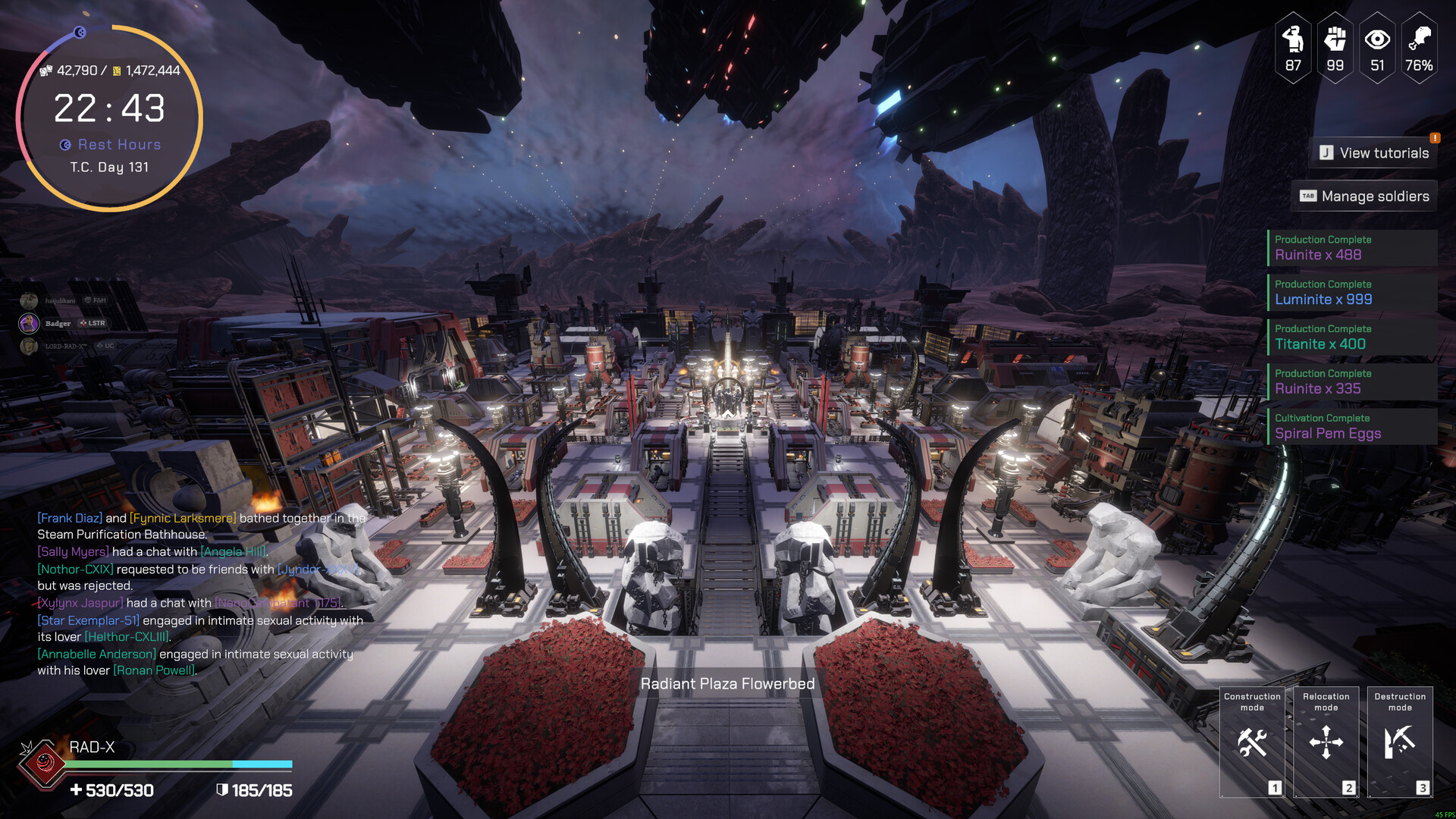
Players who like blending colony sims with FPS roguelites and do not mind Early Access roughness will likely find the core loop compelling, especially while discounted. Anyone wanting a finished, tightly connected experience should wait for further updates.
Game highlights
Dual-approach leadership system
The game officially supports both benevolent and tyrannical rule paths. Citizens respond to fear, propaganda, comfort, and prosperity, with loyalties and feuds shifting based on player policy. This branching mood system gives every colony a distinct social texture rather than a single optimal strategy, and reviews note that both styles meaningfully change morale and production outcomes.
First-person roguelite combat with squad commands
Combat is played from a first-person perspective on roguelite battlefields that scale from ship skirmishes to mechanized infantry, tank, and mecha engagements. Players issue orders to their troops, use them as shields, or rely on Weapon, Combination, and buff cores that mutate each run. Bosses and elite enemies flood arenas with bullets, missiles, and overlapping projectile patterns, which several reviews describe as a genuine bullet hell challenge.
Captured enemies become citizens or tools
Weakened foes can be dragged back to base and processed through prison systems covering fear, indoctrination, execution, or conversion. Converted prisoners turn into loyal workers, cautionary examples, or even useful regime assets, which directly ties battlefield results to colony growth and reinforces the darkly satirical tone.
Colony management with shelter, food, and research loops
Citizens are assigned to mining, hauling, research, and manufacturing, turning fragile shelters into industrial infrastructure. Save Anytime, adjustable difficulty, and full controller support make the base phase low-pressure and self-paced, which several reviews highlight as the relaxed counterweight to the chaotic expeditions.
Expressive base building with current placement limits
The official description and reviews frame building and decoration as expressive, player-directed activities with intuitive snap placement. However, multiple players report grid restrictions that block logical placements, missing railing pieces, and limited decoration options, so creativity is real but constrained during Early Access.
What players are saying
What keeps coming up positively
- Players consistently praise the addictive core loop of shooting, capturing, researching, and expanding, with many reporting dozens of hours sunk in short windows
- The combination of colony sim, FPS, and roguelite is repeatedly called surprisingly intuitive rather than overwhelming, with controller support working well
- Gunplay, sound design, and visuals are frequently described as punchy and satisfying for an indie Early Access title
- Developers are repeatedly cited as responsive, acknowledging feedback and pushing quick balance patches like earlier food consumption issues
Where the friction shows
- Several players describe an identity crisis where colony sim, roguelite FPS, and story systems feel underdeveloped and loosely connected rather than reinforcing each other
- Base building is often criticized for restrictive grid placement, missing pieces like railings, and limited decoration freedom that block intuitive designs
- Roguelite blueprint grinding is a recurring complaint, with players feeling undergeared against sector bosses because unwanted drops dominate RNG
- Character variety, soldier individuality, and visual customization are called out as weak for a game built around collecting and assigning personnel
Is it worth buying?
At $5.99 against a $29.99 regular price, the 80% discount meaningfully lowers the risk of an Early Access bet on a still-unpolished hybrid. Buyers should expect unconnected systems, blueprint grind friction, and base building limits that need patches, while getting a responsive dev team and a genuinely absorbing loop. Anyone uninterested in Early Access scope creep should wait; curious hybrid fans get fair value at this price.
Price checked 2026-10-01:$5.99,down from $29.99(80% off)。Player-fit tags
Good fit
- Players who enjoy mixing colony management with first-person roguelite runs in a single session
- Builders who want expressive decoration and layout decisions even when placement is currently constrained
- Gamers who like self-paced solo play with Save Anytime and adjustable difficulty between high-intensity combat bursts
- Bullet hell enthusiasts who want squad commands layered on top of dense projectile patterns and mecha boss fights
- Players who appreciate satirical totalitarian themes and moral choice consequences like fear versus prosperity paths
Probably not for you
- Players expecting a finished, tightly interconnected colony sim and FPS rather than Early Access scope
- Anyone who dislikes roguelite RNG grind for blueprints and gear before boss encounters
- Creators who want deep, unrestricted decoration systems with free placement and full architectural pieces
- Buyers uncomfortable with the developers' prior NFT history or the satirical dark content themes
- Players looking for co-op or multiplayer, since the game is single-player only
02Whiskerwood: a vertical mouse city builder for patient production-chain tinkerers who enjoy cosmetic decoration on top of oppressive cat taxes
STEAM DEAL · 50% OFF
Whiskerwood
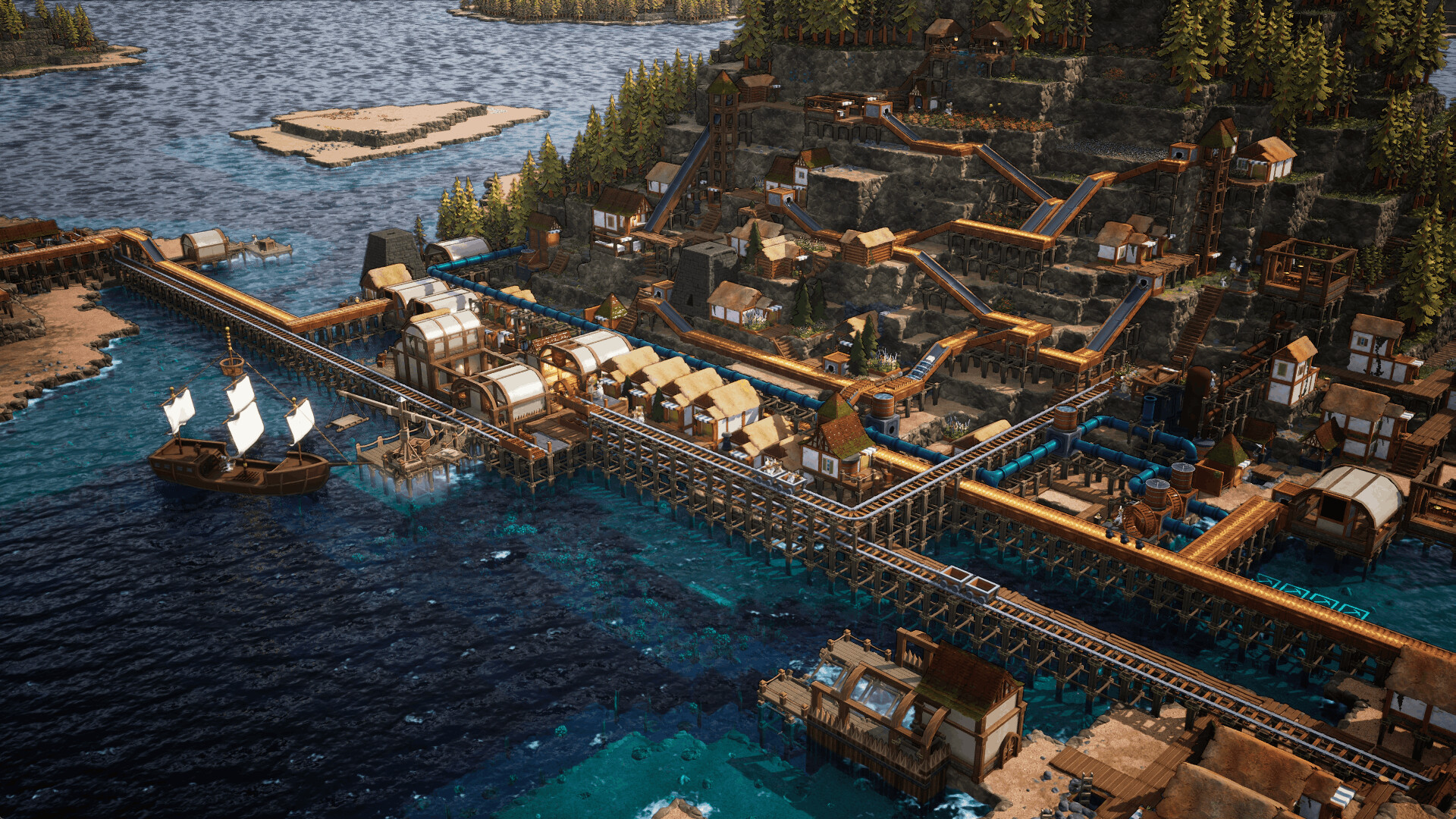
Whiskerwood is a stylish, vertically-stacked city builder that rewards players who enjoy tuning production chains and decorating colonies, but the relentless cat tax, short day cycle, and pirate interruptions push it toward simulation stress rather than cozy building.
Game highlights
Full vertical construction
Colonies can be built upward into stacked skyscrapers or downward into mountain burrows, with elevators described by reviewers as the single most important tech for shaping infrastructure. The vertical-slice camera is highlighted as essential for inspecting tall builds, making the game appealing to anyone who enjoys 3D spatial planning rather than flat grids.
Complex production chains and automation
Players lay pipes for heated water and steam climate control, run conveyor belts across long distances, and set up trains to keep goods flowing across procedurally generated islands. Tech research is organized into eras similar to Civilization, so progression feels organic rather than arbitrary, though several reviewers note every run converges on a single optimal path.
Individually-attributed colonists
Each mouse belongs to a guild that shapes task efficiency and has personal traits such as preferring underground housing or tolerating pollution, giving managers meaningful assignment decisions. Colonists will abandon the colony if daily needs for food, rest, healthcare, and warmth are not met, so logistics planning matters as much as raw construction.
Cat overlord pressure system
Cat taxes scale with wealth and production output, forcing players to balance profitability against morale by choosing between ominous feline statues that boost output or parks and fountains that raise happiness. Pirate ships and smugglers periodically demand attention, with some reviewers comparing the interruptions to raids several times per in-game day.
Workshop modding and quality-of-life settings
The game ships with Steam Workshop integration, Steam Cloud saves, adjustable difficulty, save-anytime access, and mouse-only controls, making it accessible for players who prefer slow, untimed sessions. Reviewers also credit the developers with an unusually aggressive patch cadence during Early Access, pushing balance and UI fixes within days of community feedback.
What players are saying
What keeps coming up positively
- Production chains and elevator-based vertical logistics are widely described as deeply satisfying to optimize, especially when supply lines finally click into place.
- The art direction and decorative freedom earn repeat praise from builders who treat the game more as a creative outlet than an economy sim, with players running hundreds of hours on cosmetic projects.
- Developer responsiveness during Early Access draws consistent positive mentions, with multiple reviewers noting frequent, substantial patches shortly after launch.
Where the friction shows
- The 7-minute in-game day cycle is too short for larger colonies, forcing players to keep every service immediately adjacent or watch mouse happiness collapse.
- Cat taxes, passing ship events, and pirate attacks create constant pressure that many reviewers describe as stressful rather than engaging, especially in the early game.
- Several players report UE5 GPU strain, random fatal launch errors, and UI/UX friction that complicate the opening hours before systems click together.
- Buildings like claw statues or rafts are flagged as traps for new players, and there is little alternate research routing beyond the dominant optimal path.
Is it worth buying?
At $14.99 against a $29.99 regular price, Whiskerwood is a fair entry point for players already interested in production-chain sims, but it is not a deep discount and the game is still flagged as Early Access with ongoing balance work.
Price checked 2026-10-01:$14.99,down from $29.99(50% off)。Player-fit tags
Good fit
- Players who enjoy repeatedly tuning conveyor belts, pipe networks, and elevator layouts until bottlenecks disappear
- Builders who want to terraform islands vertically and decorate colonies as their primary goal rather than chase a victory condition
- Simulation fans comfortable with a steep early-game learning curve and dense UI
- Single-player managers who like pausing to plan without timed-input pressure
- Players willing to engage with Early Access patches and provide feedback through Steam Workshop
Probably not for you
- Anyone seeking a cozy, low-pressure city builder without aggressive tax and pirate deadlines
- Players who dislike the Timberborn or Anno-style repetition of gathering, building, and paying tribute each cycle
- Those unwilling to tolerate UE5 GPU demands or occasional crash-on-launch bugs
- Multiplayer-only players, since the game is single-player only
03MineMogul review: a physics-driven underground factory builder for cozy automation fans who love iterative tinkering
STEAM DEAL · 20% OFF
MineMogul
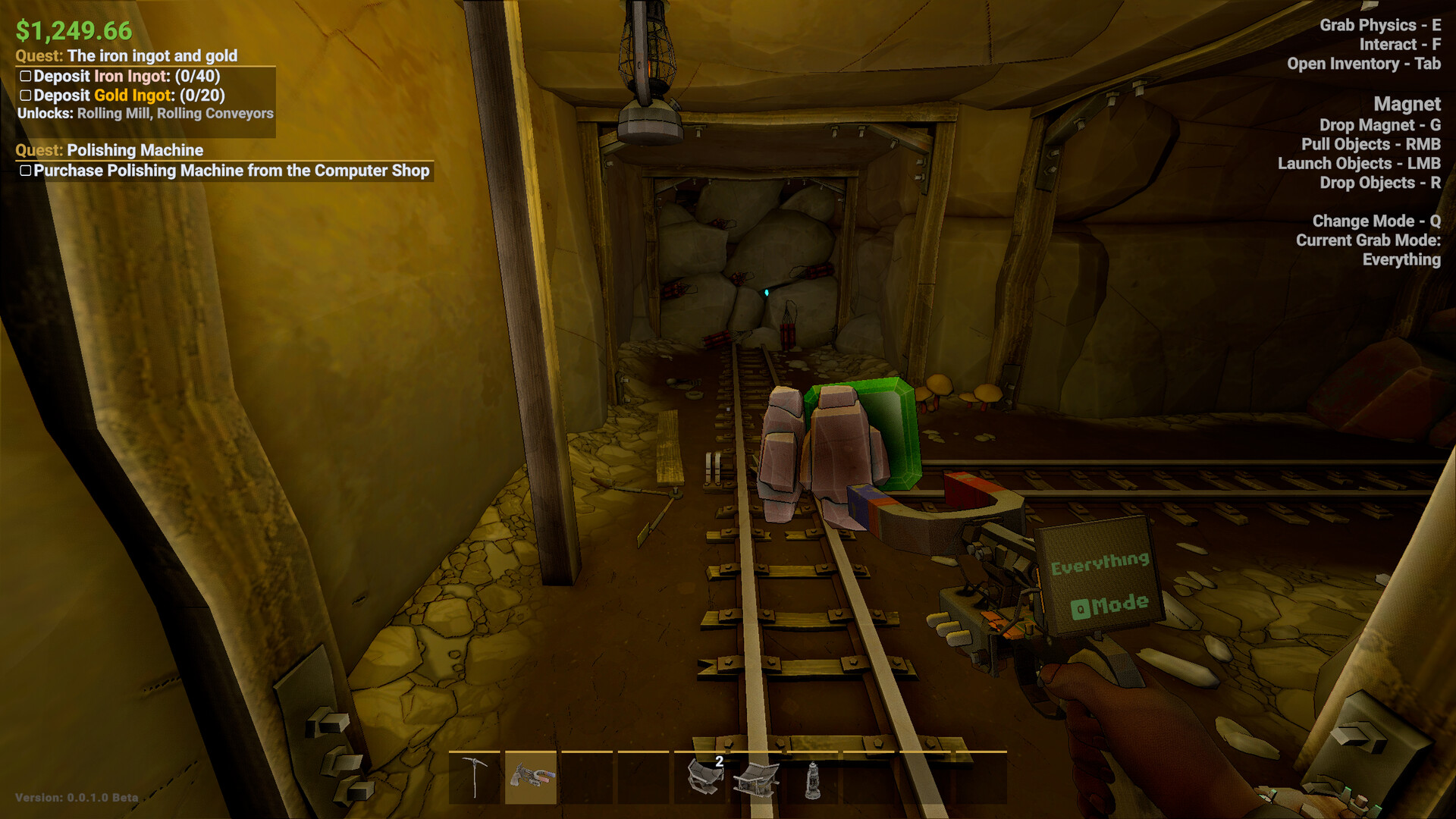
A charming physics-based automation sandbox with satisfying conveyor chaos and exploration, though Early Access friction and a steep building grind may frustrate some players. Worth a look if you enjoy tight, puzzle-like factory tinkering more than sprawling megabases.
Game highlights
Physics-driven automation in tight caves
MineMogul distinguishes itself from typical factory games by rendering every resource as a physics object that piles, spills, and clogs. Items physically tumble down shafts and shad into bins rather than teleporting through belts, so overflows and backups create natural bottlenecks. Players repeatedly describe the simulation as oddly satisfying, with reviewers likening the experience to Hydroneer with modern refinements. This single design choice turns every layout into a small physics puzzle instead of a spreadsheet balancing exercise.
Iterative optimization as the main gameplay loop
Once conveyors are running, the loop quickly shifts to constant tweaking. In-game quests ratchet up total requirements, pushing players to disassemble and rebuild sections of their factory rather than extend it indefinitely. Multiple players frame this iterative cycle as the core appeal, with one noting they spent around forty hours optimizing the current level alone. Reaching the final in-game trophy reportedly demands a long grind, which is a consideration for anyone who prefers short, session-based play.
Cozy presentation with a low-stress pace
Positioned as a casual construction sandbox, MineMogul offers a chill atmosphere compared to combat-heavy automation games. There is no enemy pressure, and the soundtrack and lighting encourage relaxed tinkering, which several players specifically praised. The small map footprint also reinforces a focused, almost diorama-like feel rather than a sprawling megabase. It reads as a comfort-food entry point for players curious about automation but wary of overwhelming complexity.
Exploration woven into factory growth
Beyond belt work, the underground cave system hides nooks, crannies, and forgotten mining ruins that reward exploration. Discovery is a recurring secondary loop, with reviewers enjoying stumbling onto new resource pockets that justify further building. The constrained space, while occasionally frustrating, also forces creative routing through twisting mineshafts. Venturing outward to expand capacity feels meaningfully tied to progressing your factory rather than tacked on as a side activity.
Active developer engagement on the Steam forums
NoodleForge maintains an active presence in community discussions, a detail multiple Early Access buyers called out when deciding whether to buy in. Players feel their feedback reaches the roadmap, which softens the typical Early Access uncertainty. That responsiveness pairs with a clear pitch as a long-term project rather than a polished one-shot release. For patient automation fans, the developer relationship is part of the package.
What players are saying
What keeps coming up positively
- The physics-based resource handling turns ordinary conveyor work into a quirky, satisfying puzzle that feels distinct from Factorio and Satisfactory
- Iterative optimization of tight factories gives the core loop strong replay value and encourages creative layouts
- The cozy, low-pressure atmosphere with no combat makes it approachable for players who find other automation games overwhelming
- Exploration of hidden cave areas adds variety and rewards players who venture beyond their starter mineshaft
Where the friction shows
- Placement of belts and slopes is clunky, with snapping issues that make rebuilding sections slower and more tedious than in comparable factory games
- The cramped mine layout forces one or two conveyors per shaft, and some players find the tight crouch tunnels irritating rather than charming
- The grind toward the final in-game trophy feels excessive in current Early Access, with progression stalling once optimization hits a ceiling
- Several players report bugs and performance hiccups, including occasional physics interference that requires reloading or workarounds
Is it worth buying?
At $11.99 (down from $14.99, a 20 percent discount), MineMogul is reasonably priced for an Early Access automation game with a novel physics twist. The discount makes it easier to justify trying despite the placement friction and grind concerns, especially for automation fans curious about the Hydroneer-style approach. Players hesitant about Early Access bugs or who prefer sprawling megabases should wait for additional content updates before committing at full price.
Price checked 2026-10-01:$11.99,down from $14.99(20% off)。Player-fit tags
Good fit
- Players who enjoy Hydroneer-style physics-based automation and want a more modern take
- Automation fans who prefer tight, iterative optimization over sprawling megabase building
- Single-player tinkering sessions that prioritize cozy, low-pressure pacing
- Players who like discovering hidden nooks and resource pockets while expanding a small footprint
- Automation newcomers who want an approachable entry point without combat or hostile pressure
Probably not for you
- Players expecting Factorio or Satisfactory-scale building speed and copy-paste friendly conveyor tools
- Anyone who dislikes rebuilding layouts manually due to clunky placement and a steep, trophy-driven grind
- Players who want multi-hour sessions of nonstop expansion rather than iterative rework within a compact map
04Manor Lords: expressive gridless medieval city building for patient builders who enjoy slow early access progression
STEAM DEAL · 35% OFF
Manor Lords
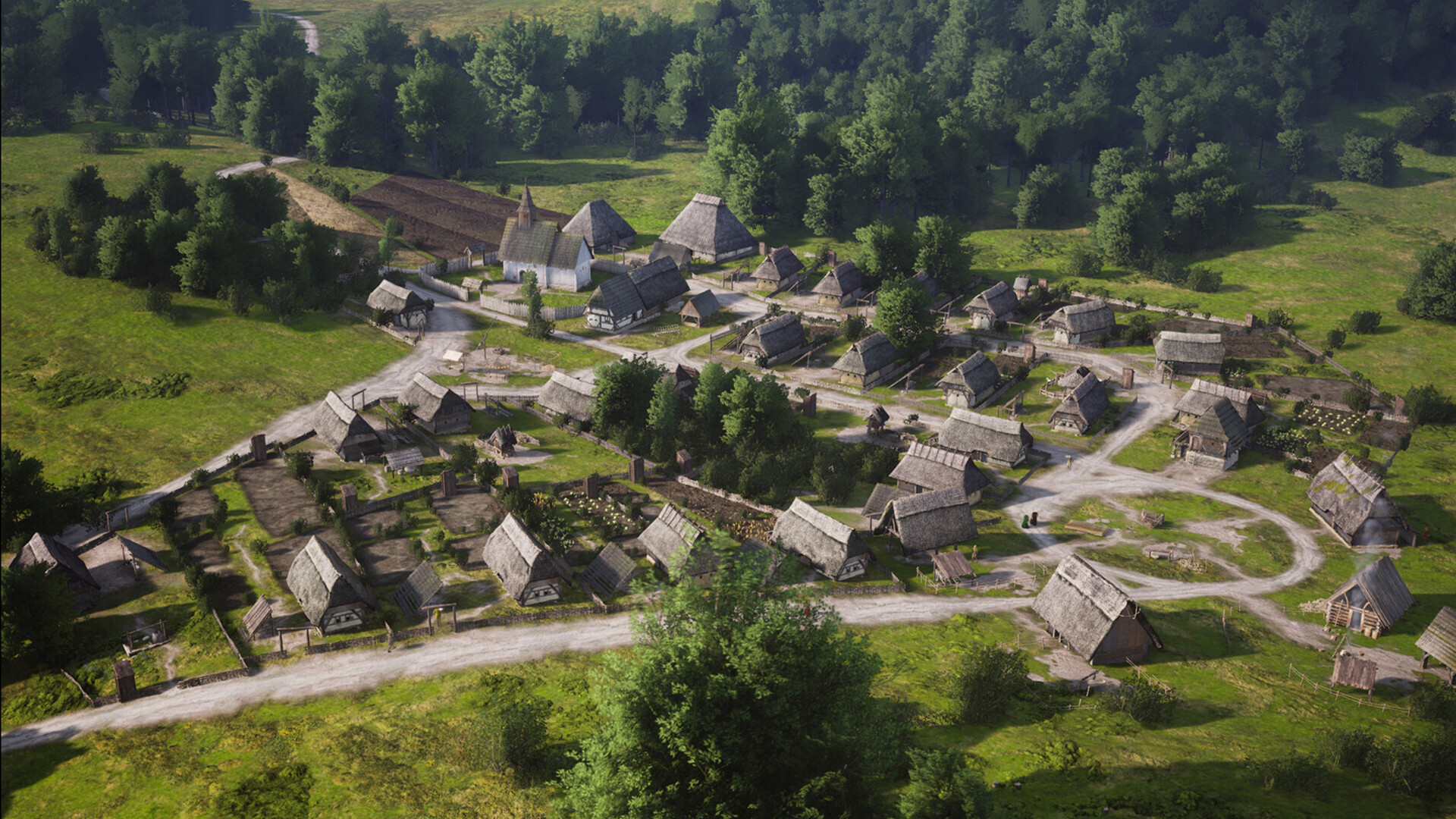
Worth picking up for the building and burgage plot depth if you can tolerate Early Access pacing, but expect a steep opening, repetitive late-game loops, and an unfinished progression tree.
Game highlights
Gridless city building with historical flavor
Manor Lords drops the usual zoning grid and lets you plot roads, homes, and industries freely across the map, with building mechanics and visuals modeled on late 14th-century Franconian towns. Settlements grow outward from a central marketplace, and homes subdivide into burgage plots that scale with the space you give them.
Burgage plots as the core economic engine
Each residential plot can host extensions like vegetable patches, goat pens, and small craft workshops, so households actively supply food and goods instead of just paying tax. Players repeatedly highlight this system as the most satisfying part of the loop, because planning a tailor or brewer family changes how a whole neighborhood functions.
Seasonal production chains and regional specialization
Spring, summer, fall, and winter each shift priorities, and resources like barley, hides, iron, and honey flow through multi-step production chains that you balance against food and housing. Because raw materials are scattered across the map, the official design pushes you toward multiple specialized settlements rather than one mega-town.
Real-time tactical battles with real costs
Combat is fought by the same villagers who staff your economy, so every casualty is also a lost worker or soldier at home. Smaller forces can beat larger ones with good positioning, weather, and fatigue management, and mercenaries exist as a costly option when you would rather not raise the militia.
Environmental consequences and trade
Over-hunting pushes deer away, lack of crop rotation degrades soil, and clear-cutting deforests nearby woods, so growth has visible trade-offs. Surplus goods can be sold to traveling merchants for regional wealth, taxes, and upgrades, tying your export choices back to home construction.
What players are saying
What keeps coming up positively
- Burgage plot upgrades and backyard extensions give city building a real sense of identity and reward careful layout planning.
- The art direction, atmosphere, and Franconian-inspired architecture make towns feel alive and distinct from typical medieval city builders.
- Custom difficulty and scenario settings let players tune raids and AI pressure into a more relaxed sandbox experience.
- Production chains around food, fuel, and craft goods offer satisfying optimization puzzles when the early-game survival hump is past.
Where the friction shows
- The development tree stalls at Small Village, with higher tiers listed as coming soon for long stretches, leaving late-game progression feeling empty.
- Enemy raids, rival lord claims, and basic AI behavior are widely described as spammy and braindead rather than challenging or interesting.
- Expanding into a new region feels like starting over, since adjacent territories do not share infrastructure, workers, or trade routes smoothly.
- Onboarding is steep, with many new players bouncing off survival pressure, oxen pathfinding issues, and unclear economic feedback in the first hours.
Is it worth buying?
At $25.99 against a $39.99 regular price (35% off), Manor Lords is a reasonable buy for builders who specifically want the burgage system and can live with Early Access pacing. Players who want a polished, feature-complete campaign or steady post-launch content drops will find the current update cadence and progression gaps frustrating, so waiting for a deeper discount during a larger content patch is also defensible.
Price checked 2026-10-01:$25.99,down from $39.99(35% off)。Player-fit tags
Good fit
- Players who enjoy planning organic, road-driven town layouts and decorating burgage plots with craft and food extensions.
- Strategy fans comfortable reading patch notes and adapting to Early Access balance changes over months rather than weeks.
- Builders who like juggling seasonal food, fuel, and craft chains across multiple specialized settlements.
- Tactics players who want small, decisive real-time battles where positioning and fatigue matter more than unit spam.
- Tinkerers who use custom difficulty and scenario settings to strip out raids and design their own sandbox.
Probably not for you
- Players who want a fully released, content-complete strategy game with a clear 1.0 roadmap.
- Anyone looking for deep diplomacy, trade, or post-tutorial progression, since the development tree currently tops out early.
- Strategy fans who dislike Early Access rework cycles, where systems can be pulled for rewrites and old content removed.
Share this article