Catch up on the essentials
- Planet Coaster 2 is a strong pick for solo players who enjoy creative park-building and slow management loops, and the current 60% discount softens the sting of its thin base-game roster and paid DLC pattern.
- If you want a self-paced dinosaur park builder you can tinker with for hours, this delivers the most expressive tools the series has offered.
- Players confident they will sink dozens of hours get strong value; casual buyers tempted by the discount should wait for a larger sale since the learning curve already demands commitment.
Selected from this article · 2026-10-02
Read on for the full picture01Planet Coaster 2 review: deep solo park-building sandbox for creative management players at a discount
STEAM DEAL · 60% OFF
Planet Coaster 2
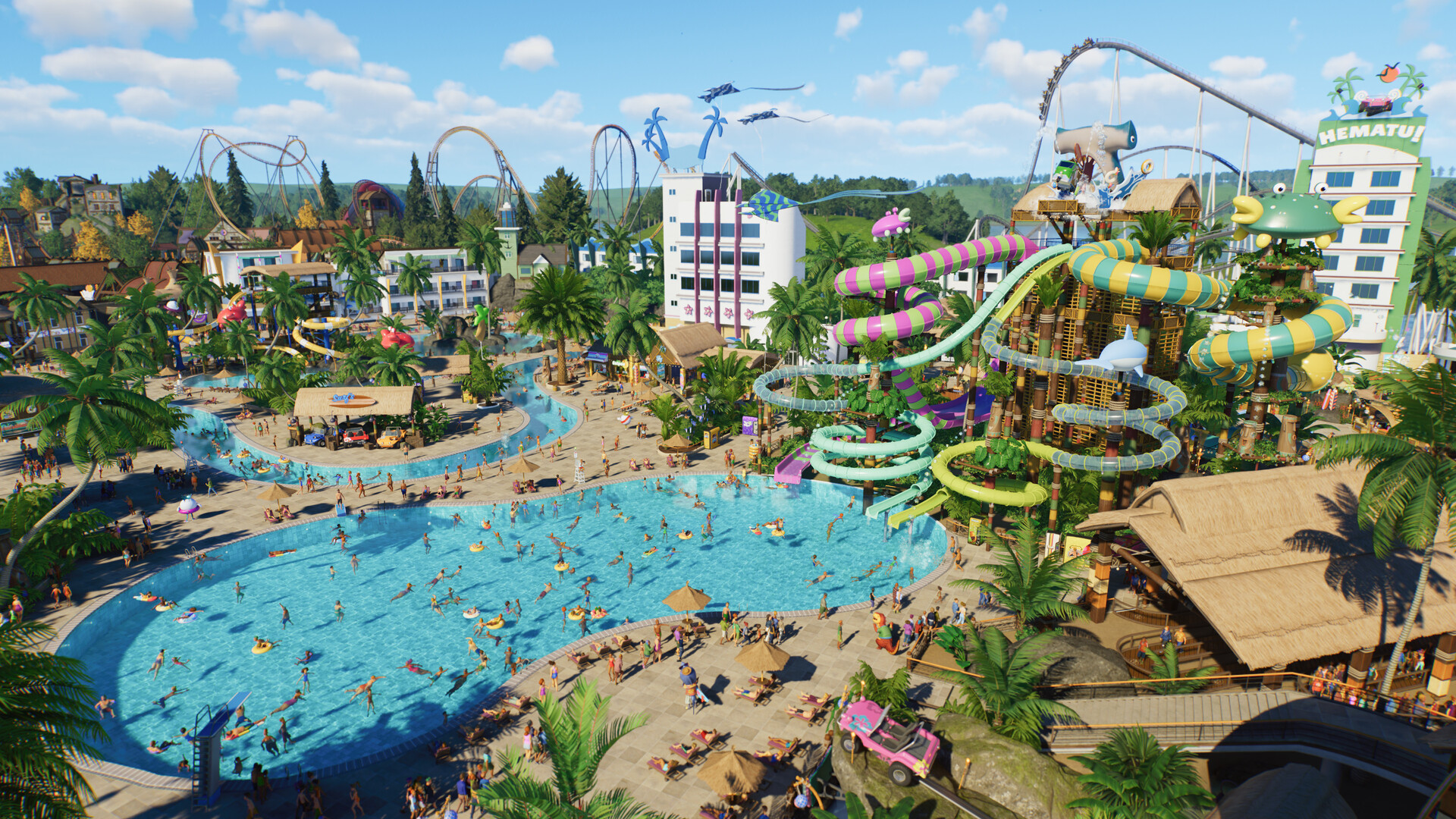
Planet Coaster 2 is a strong pick for solo players who enjoy creative park-building and slow management loops, and the current 60% discount softens the sting of its thin base-game roster and paid DLC pattern. Skip it if you mainly want a polished water park sim or a complete out-of-the-box ride catalog.
Game highlights
Sandbox and Franchise with shared cross-platform saves
Official details confirm Sandbox Mode supports a shared cross-platform save for collaborative building, while Franchise Mode adds leaderboard competition for the first time. Players can visit other creators' parks in first person as a guest, which adds a social browsing layer on top of the solo build loop. Together these modes give slow-paced solo managers both a private canvas and an optional audience.
Water park tools and guest care systems
Planet Coaster 2 introduces pools, water slides, lazy rivers, and lifeguards, plus shade and sunscreen requirements for guests. Official info also adds an event sequencer, heat maps for diagnosing guest needs, and globally illuminated lighting for presentation. These features extend the management layer beyond the original game into pool logistics and weather-driven guest comfort.
Ride and scenery customization depth
The store page emphasizes piece-by-piece coaster and water-ride construction with scalable scenery attachable to individual rides. Nine themes, including new Viking and Mythology sets, sit alongside thousands of themed custom pieces. For players who treat a park as a personal art project, the toolset is the main draw.
Solo-friendly pacing and difficulty options
Official categories include single-player, playable at your own pace, save anytime, and adjustable difficulty. Cross-platform Workshop access lets players download and remix other creators' coasters, rides, and full parks, which lowers the empty-park problem when you just want to tinker. That structure matches a slow, self-directed management style rather than a guided campaign.
What players are saying
What keeps coming up positively
- Players consistently call the building tools and piece-by-piece scenery the strongest reason to stick with the game
- Long solo playtime reports describe it as a worthy successor once post-launch patches landed
- Workshop sharing and being able to tour other players' parks in first person is repeatedly cited as a highlight
- The visual presentation and lighting get frequent positive mentions for theme-park atmosphere
Where the friction shows
- Multiple reviewers describe the base-game ride selection as thin, with many classic rides moved into paid DLC packs
- Water park features, especially lazy rivers and pool guest behavior, are repeatedly called buggy or broken
- Staff pathing and guest navigation issues are mentioned across many negative reviews, leading to constant delete-and-rebuild loops
- Several players warn that earlier DLC purchasers were not granted later DLC, leaving premium buyers feeling short-changed
Is it worth buying?
At $19.99 versus a $49.99 regular price, the discount meaningfully reduces the risk of trying Planet Coaster 2, and the saving helps offset the cost of any ride packs you may want later. If you mainly want a finished water park sim or a complete base roster without DLC, keep waiting; if you are a builder who enjoys sandbox tinkering and downloading community creations, this price is a reasonable entry point.
Price checked 2026-10-02:$19.99,down from $49.99(60% off)。Player-fit tags
Good fit
- Players who enjoy slow, self-directed solo park management
- Creative builders who want deep piece-by-piece customization
- Sandbox tinkerers who like downloading and remixing community parks
- Fans of theme-park sims willing to work around bugs and patches
- Players who prefer adjusting difficulty and playing at their own pace
Probably not for you
- Players expecting a fully functional water park simulator out of the box
- Buyers who dislike paid ride and scenery DLC layered on top of the base game
- Anyone wanting a complete ride catalog without buying expansion packs
- Simulation-focused players frustrated by staff pathing and guest navigation glitches
- Players on macOS or Linux, since only Windows is supported
02Jurassic World Evolution 3: A slow-paced solo park builder with modular scenery, breeding, and modular terrain for creative players
STEAM DEAL · 33% OFF
Jurassic World Evolution 3
If you want a self-paced dinosaur park builder you can tinker with for hours, this delivers the most expressive tools the series has offered. Returning JWE2 veterans, however, should wait for a deeper sale, because several claim it is largely a re-skin of the prior game with added grind.
Game highlights
Modular scenery and building tools
The official store page highlights modular scenery pieces, naturalistic terrain editing, and customizable enclosures. Reviewers echo that the building side of the game feels closer to a creative sandbox than earlier entries, with elevation, paths, and decoration shaped freely. Players who liked expressing themselves visually in Planet Coaster or Zoo will find the most familiar-feeling toolset here.
Generational breeding and social dinosaurs
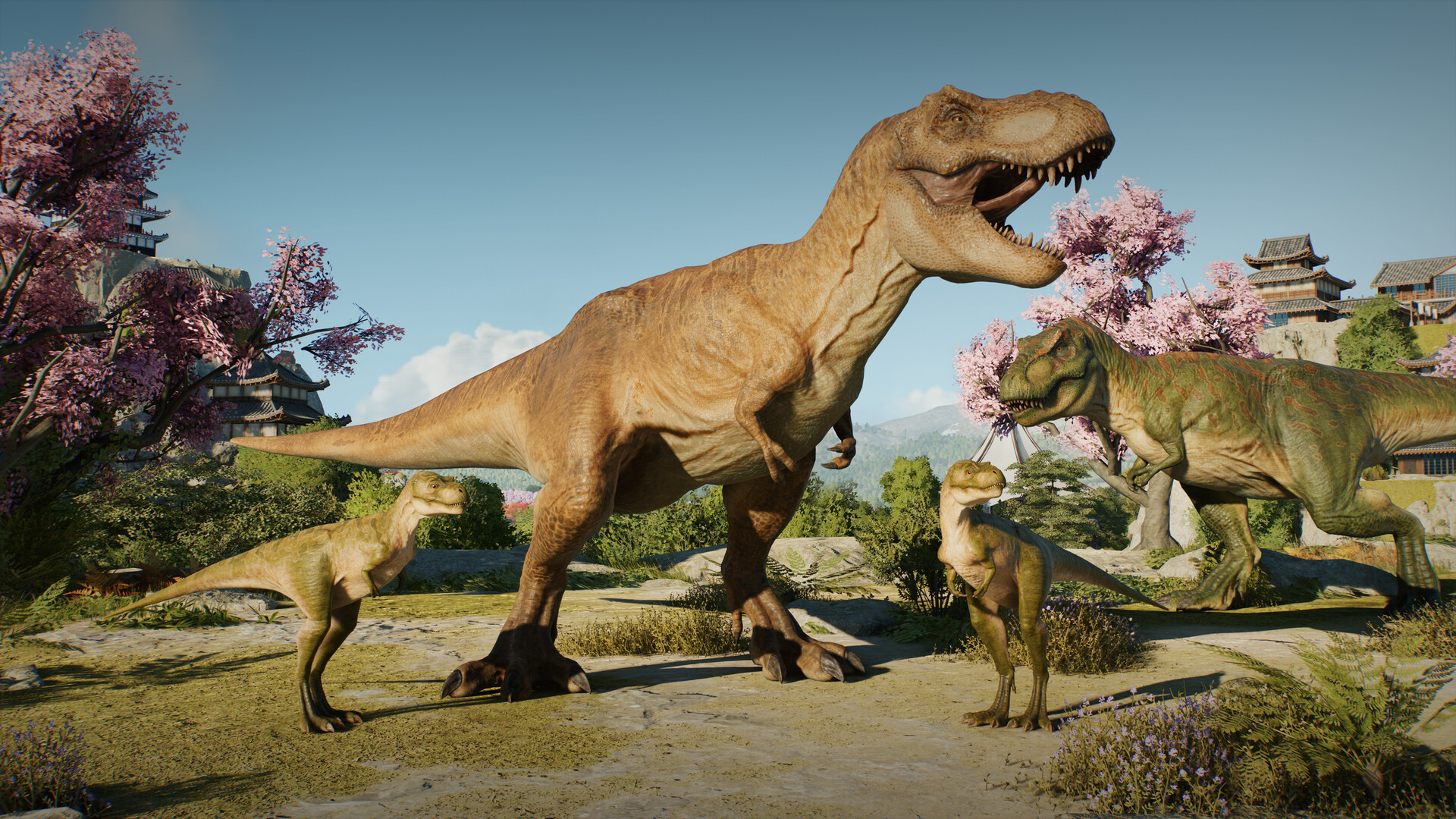
Frontier advertises 75 manageable species with male, female, and juvenile variants, plus new behaviors like semi-aquatic dinosaurs entering deep water and pterosaurs walking on land. The breeding loop is positioned as the headline feature, with dinosaurs raising families that pass to future generations. Long-tenured reviewers describe parks that genuinely feel alive because juveniles roam alongside adults.
Non-linear campaign across multiple biomes
The campaign sends players across a world map including Montana Badlands and Japan, balancing reputation with three industry sectors and client demands. It is framed as a meaningful campaign rather than the extended tutorial JWE2 shipped with, voiced in part by Jeff Goldblum as Dr. Ian Malcolm. Several reviewers explicitly call it more complete than the previous game.
Quality-of-life upgrades over JWE2
Official features include security cameras for escape response, modular maintenance teams, the Balloon Tour, Dinosaur Encounter, and Cretaceous Cruise attractions, plus an Island Generator for random maps. Returning players single out free resting scientists, delivery zones that avoid helicopter congestion, and improved terrain tools as concrete fixes. Cross-platform Frontier Workshop sharing is also integrated.
Accessibility and pacing options
Steam categories list full controller support, playable at your own pace, save anytime, subtitle options, and custom volume controls. There is no multiplayer pressure, so the design suits players who want to pause, decorate, and resume. Single-player park management is the sole supported mode.
What players are saying
What keeps coming up positively
- Modular building and terrain tools give returning players more creative freedom than JWE2 offered.
- Juvenile dinosaurs add personality and make enclosures feel populated rather than static.
- The campaign is more substantial and better structured than JWE2's tutorial-length story.
Where the friction shows
- Several returning JWE2 owners describe the core management loop as nearly identical to the previous entry, calling it closer to an expansion than a sequel.
- Veteran players report a new grind layered on progression, with map sections gated behind milestones that used to be accessible earlier.
- Many reviewers, including those who enjoyed the game, say the launch price felt steep given the overlap with prior content and DLC.
Is it worth buying?
At $40.19 against a $59.99 regular price (33% off), the discount is real but modest. If you have not played JWE1 or JWE2, this is the easiest entry point to own and the current price is a fair entry. If you already own JWE2, the same reviewers suggest holding for a deeper discount, and several explicitly refund at full price and wait.
Price checked 2026-10-02:$40.19,down from $59.99(33% off)。Player-fit tags
Good fit
- Players who want a slow, solo park builder they can pause and decorate at their own pace
- Creative builders who enjoy shaping terrain, enclosures, and modular scenery piece by piece
- Dinosaur fans who want generational breeding and want to observe juveniles growing into adults
- Returning JWE franchise buyers who skipped it at launch and now want the most polished entry
- Controller players who prefer self-directed single-player sessions over competitive or co-op modes
Probably not for you
- JWE2 veterans expecting a large mechanical leap rather than iterative refinements
- Players who dislike unlocking previously free map sections through new milestone gates
- Anyone who prefers online co-op or competitive modes, since this is single-player only
- Players sensitive to launch EULA terms regarding shared accounts and external links
03RimWorld colony sim for slow-paced solo managers who love emergent storytelling and steep learning curves

STEAM DEAL · 20% OFF
RimWorld
Pick up RimWorld at its current 20% discount if you want a deep, self-paced colony builder that turns each playthrough into an unfolding story. Skip it if you want quick, low-pressure sessions or built-in multiplayer.
Game highlights
AI Storyteller shapes every run
Official features confirm three storytellers: Randy Random for chaos, Cassandra Classic for escalating tension, and Phoebe Chillax for a relaxed pace. Each one controls the cadence of events, raids, and visitors, so two colonies on the same world can feel completely different. The storyteller system is the reason one reviewer described their wife snapping and burning down the base after losing her husband, while another told a story of rescuing pack animals near a mountain fortress. It is the core mechanic that turns ordinary management into narrative.
Deep simulation of colonists, not workers
Each colonist tracks mood, needs, wounds on individual body parts, addictions, and relationships with specific other colonists. Official details list organs like hands, brain, liver, and feet, all with logical in-game effects. Backgrounds matter too: a nobleman handles social tasks but refuses manual labor, a farm oaf knows crops but cannot research. Multiple reviewers highlighted how watching colonists develop romances, fall into breakdowns, or spiral after a death creates emergent drama no scripted event could match.
Generated planet and biomes
The official description confirms a procedurally generated world from pole to equator, with forests, deserts, jungles, and tundras, each carrying distinct animals, diseases, temperatures, and growing seasons. Colonies can relocate via caravan or transport pods, so a struggling start in one biome can become a migration story rather than a failed save. This procedural backbone is what supports the thousands of hours players report, since the setting keeps changing even when the systems stay familiar.
Caravans, trade, and diplomacy
Official features include forming caravans for quests, trade, faction attacks, or full migration, plus trading with passing ships. Players can rescue kidnapped allies from raider camps, negotiate peace, or sell prisoners. Several reviewers cited quest-driven expeditions and faction wars as the moment RimWorld stopped feeling like a base builder and started feeling like a strategy campaign.
Steam Workshop and extensive mod support
Official description points to hundreds of wild mods on the Steam Workshop, and RimWorld supports save-anywhere, adjustable difficulty, adjustable text size, and Steam Cloud. Workshop integration is repeatedly mentioned by reviewers as the reason the game keeps feeling fresh years after release, since the base game can be reshaped into anything from a near-vanilla run to a total conversion.
What players are saying
What keeps coming up positively
- Colossal replay value, with multiple reviewers reporting playtimes ranging from around 2,600 hours to nearly 500,000 minutes and describing the game as the kind of 'virtual crack' that consumes free time
- Strong emergent storytelling where colonists form relationships, fall into breakdowns, or trigger chain reactions that players remember and retell as personal anecdotes
- Freedom of playstyle, with players describing everything from cozy farming colonies to deliberately brutal playthroughs, all within the same base game
- Long-term developer support without battle passes or seasonal content, which multiple reviewers praised as rare in modern PC gaming
Where the friction shows
- Steep onboarding that overwhelms new players, since the game does not hand-hold and systems like research, defense, and mood stack quickly
- Repetitive early-game resource gathering and construction grind before defenses and amenities come online, which several players flagged as a chore
- Pressure from raids, mental breaks, and event timers that conflicts with relaxing or low-stakes play, especially under Randy Random or Cassandra
- Performance and stability can degrade heavily with large mod lists or late-game colonies, depending on hardware
Is it worth buying?
At $27.99 USD (down from $34.99, a 20% discount), this is a fair price for a game with this much depth, but it is not a deep cut. Players confident they will sink dozens of hours get strong value; casual buyers tempted by the discount should wait for a larger sale since the learning curve already demands commitment.
Price checked 2026-10-02:$27.99,down from $34.99(20% off)。Player-fit tags
Good fit
- Solo players who enjoy self-paced colony management and long campaigns
- Players who like emergent storytelling driven by simulation rather than scripted quests
- Tinkerers who plan to install Steam Workshop mods and overhaul the experience
- Strategy players comfortable with punishing failure and learning through repeated restarts
Probably not for you
- Players looking for built-in co-op or multiplayer, since RimWorld is a single-player experience
- Anyone wanting short, low-pressure sessions, because raids, breaks, and recovery demand sustained attention
- Players who dislike steep learning curves or who expect a guided tutorial for every system
- Those who avoid resource grinding, since early bases require repetitive hauling, mining, and construction
04ReStory: Chill Electronics Repairs — a cozy solo shop sim for tinkerers who like branching customer stories

STEAM DEAL · 20% OFF
ReStory: Chill Electronics Repairs
ReStory: Chill Electronics Repairs is a soothing single-player shop sim about taking apart mid-2000s gadgets and chatting with customers, and at the discounted price it is worth a look for anyone whose ideal evening is soldering fictional Atari boards. It is best approached as a short, narrative-led experience with a tangible repair loop rather than an endless tycoon.
Game highlights
Hands-on device restoration
Each job walks you through opening a console, phone, music player or appliance, brushing it down, swapping parts, and reassembling it with a small toolset. Officially licensed Atari hardware sits alongside nostalgic handhelds and cameras, and the official description leans into a careful, meditative restoration flow rather than quick click-to-fix busywork.
A branching customer storyline
Customers bring their devices in with personal problems attached, and the official pitch is that your choices ripple into their lives and even shift the ending. Players describe it as the main reason to keep playing once the repair novelty fades, with multiple decisions per character and replayable routes that make a second run feel different.
Self-paced solo shop management
It is a single-player only release with Steam Cloud, achievements, and partial controller support on Windows and Mac. Players who ignored the to-do list for a session say they could upgrade tools and the shop without running out of content, which keeps the pressure low for slow evenings.
Y2K-era web browsing for parts
Sourcing spare parts is handled through an in-game period web browser, reinforcing the mid-2000s Tokyo atmosphere. The hunt for specific components gives each repair a small logistical step beyond just cleaning and clicking.
Short, digestible play sessions
With a small install size and a campaign that reviewers finished quickly, ReStory is built for one-or-two-hour sits rather than long grinds. That fits the chill tag, but also means anyone expecting a deep management tycoon may find the economy lighter than it first appears.
What players are saying
What keeps coming up positively
- Players who grew up tearing apart their own consoles and phones say the device layouts feel authentic and the act of cleaning and reassembling old gadgets is genuinely relaxing.
- Many describe the customer dialogue and branching choices as the strongest hook, with several wanting an endless repair mode once the story winds down.
- Reviewers repeatedly call out the chill pacing and low-pressure loop as a great way to unwind, especially when they ignored story objectives and just tinkered.
Where the friction shows
- A large block of negative reviews focuses on undisclosed generative AI use in Steam assets and in-game art, with players citing clipped paperclips, floating sidewalks, and garbled Japanese signage as evidence.
- Several reviewers flag an ambiguous privacy policy covering IP, hardware, and gameplay recording, which they read as overly broad data collection.
- Players with hand and wrist strain report that holding the mouse button during cleaning sessions causes fatigue and ask for an accessibility toggle.
- Some note that upgrades arrive in an awkward order, making early tools feel obsolete before they are really used, and shop customization is described as thin.
Is it worth buying?
At 15.99 USD versus a 19.99 USD regular price, the 20 percent discount is modest and does not change the fundamentals. The core loop is genuinely relaxing and the story has charm, but the unresolved questions around generative AI disclosure, the broad data policy, and the lack of an accessibility option for long repair sessions are real frictions. Worth considering if those issues do not bother you, otherwise it is a safe title to put on a wishlist until the studio clarifies its asset pipeline.
Price checked 2026-10-02:$15.99,down from $19.99(20% off)。Player-fit tags
Good fit
- Players who enjoy slowly disassembling and reassembling virtual gadgets as a wind-down activity
- Solo players who want a short, story-driven management sim with branching dialogue choices
- Fans of mid-2000s Japan aesthetics who enjoy browsing a period in-game web for parts
- Tinkerers with real-world electronics experience looking for a nostalgia-driven repair fantasy
- Anyone who prefers short, one-or-two-hour play sessions over long tycoon grinds
Probably not for you
- Buyers who require clear disclosure about generative AI in store assets and in-game art
- Players sensitive to broad data collection or who prefer minimal telemetry policies
- People with carpal tunnel or hand fatigue who need accessibility toggles for hold-to-clean inputs
- Anyone expecting deep, long-term shop management and progression systems
- Multiplayer-focused players, since the game is single-player only on Windows and Mac
05Survival Log: a slow, solo zombie-prep loop for hoarders who learn from every failed run
STEAM DEAL · 15% OFF
Survival Log
If you enjoy slow, methodical survival prep and don't mind restarting to apply lessons learned, Survival Log delivers a satisfying hoarding-and-fortifying loop with real bite. If repetition or rough edges wear you down quickly, the current state may frustrate more than it charms.
Game highlights
Two-phase survival with a learning-focused time loop
Official details describe a 10-hour prep window of scavenging and fortifying, followed by long-term stronghold management after the dead rise. Reviews repeatedly call out that death and failed runs are baked in as a feature, with retained knowledge shaping the next attempt, which appeals to players who enjoy roguelike-style progression rather than one perfect playthrough.
Deep base-building and resource juggling
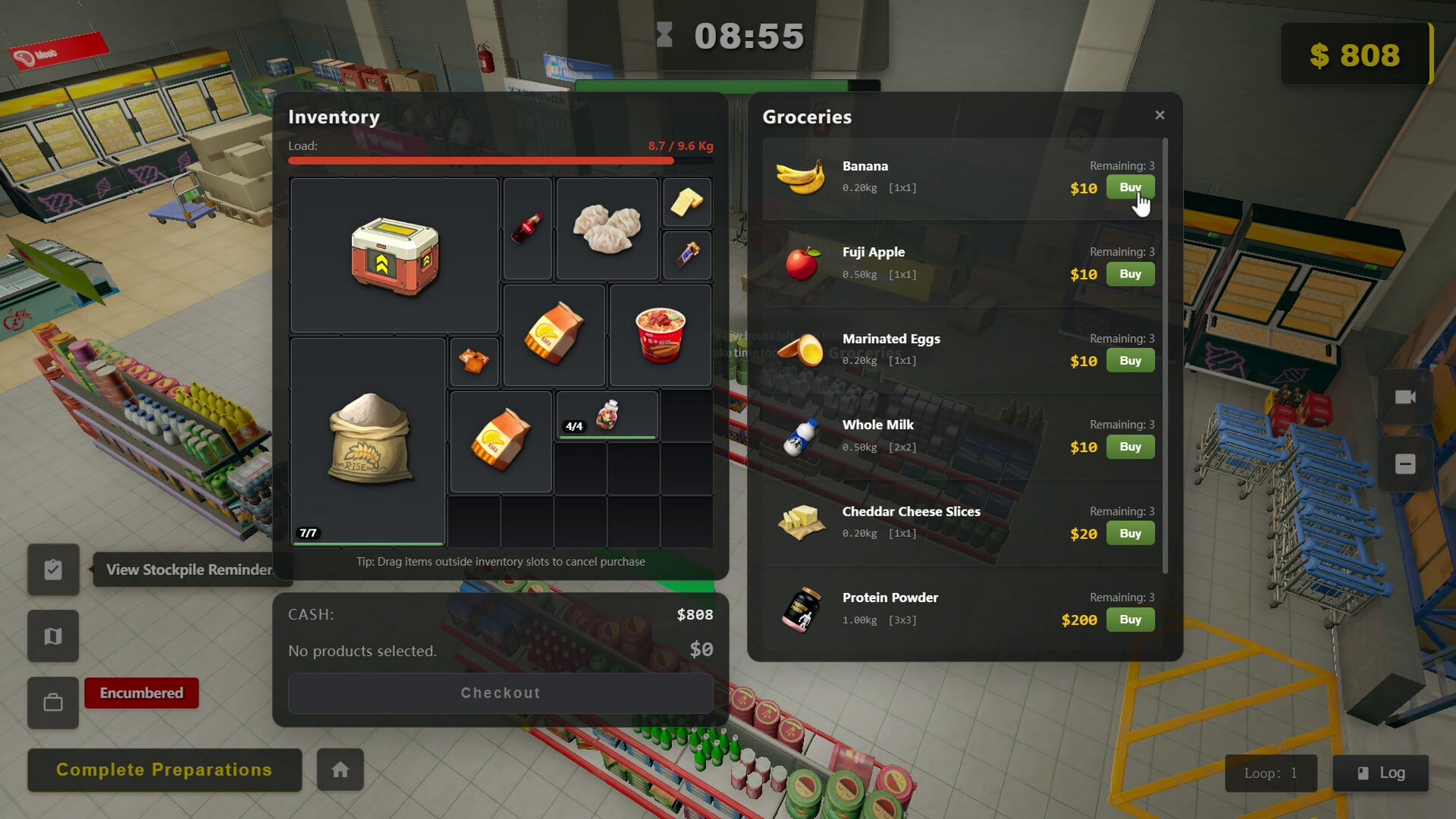
The store page outlines expanding your safe house floor by floor, installing furniture, and choosing between diesel, manual, or solar power for every watt. Players who appreciate inventory management and layout planning have sunk dozens of hours into balancing food, water, fuel, and crafting chains.
Meaningful identity choices
According to official text, you pick a backstory — worker, student, or warehouse clerk — and each identity changes the run. Reviewers describe this as a strong hook, with at least one player noting they hadn't even unlocked the second character after 60 hours, which signals substantial replay variety for the curious.
Light tower defense layered on survival sim
Official features include fortifying your refuge, setting traps, and holding off endless zombie hordes, plus exploring abandoned supermarkets, schools, and ruins. Players describe the early game as genuinely tense, with limited stamina making trips out of the house feel risky and rewarding.
What players are saying
What keeps coming up positively
- Players who enjoy hands-on inventory work praise the resource-management depth and the feeling of abundance once a stockpile is established.
- The loop of dying, retaining knowledge, and trying again is repeatedly highlighted as motivating rather than punishing.
- Several reviewers call out strong replay value, with dozens of hours logged while still unlocking new characters and systems.
Where the friction shows
- Late-game pacing is a recurring complaint: once food is stable, the loop collapses into repetitive crop tending, cooking, and click-heavy inventory shuffling.
- Quality-of-life friction appears often, including tedious material-moving, confusing item descriptions, leftover untranslated text, and a camera that fights players during exploration.
- Many reviewers feel the shipped product behaves like Early Access, noting missing content, shallow defense options, and story told mostly through phone messages that lose impact.
- AI-generated art in the UI is called out repeatedly as a reason to dock their recommendation.
Is it worth buying?
At $9.34 with a 15% discount off the $10.99 regular price, the savings are modest and the asking price already sits low for the genre. Given how many reviewers describe the current build as feeling unfinished and how quickly the loop can flatten, holding for a steeper sale or a more polished patch makes more sense than jumping in today.
Price checked 2026-10-02:$9.34,down from $10.99(15% off)。Player-fit tags
Good fit
- Players who enjoy slow, methodical solo base-building and inventory management
- Fans of roguelike-style learning loops where failed runs feed into better next attempts
- Hoarding and prep sim enthusiasts who like setting up a fortified safehouse before chaos
- Players who don't mind rough edges, untranslated text, and daily patches while a game finds its feet
Probably not for you
- Anyone sensitive to repetitive farming, cooking, and click-heavy inventory chores past the early game
- Players looking for a finished, fully polished experience with deep combat and defense variety
- Buyers who dislike AI-generated art in UI elements
- Anyone unwilling to restart runs or replay long stretches to chase the ending
- Co-op players, since the game is single-player only
Share this article