Catch up on the essentials
- At $7.99 USD against a $9.99 regular price, you are paying a modest 20% discount for a short-to-medium length cozy management sim.
- Deep Rock Galactic: Survivor is a slick single-player auto-shooter with strong Hoxxes flavor, but the meta-progression wall and punishing late-game difficulty make it a slow-burn buy that only pays off if you genuinely enjoy grinding the same biomes for tiny percentage gains.
- If you want a short, atmospheric solo RPG Maker horror with a real heart, this is an easy pickup, especially at the current discount.
Selected from this article · 2026-10-03
Read on for the full picture01Night Rolls Cozy Store: a chill single-player store sim where you craft sushi, restock shelves, and manage late-night shifts at your own pace
STEAM DEAL · 20% OFF
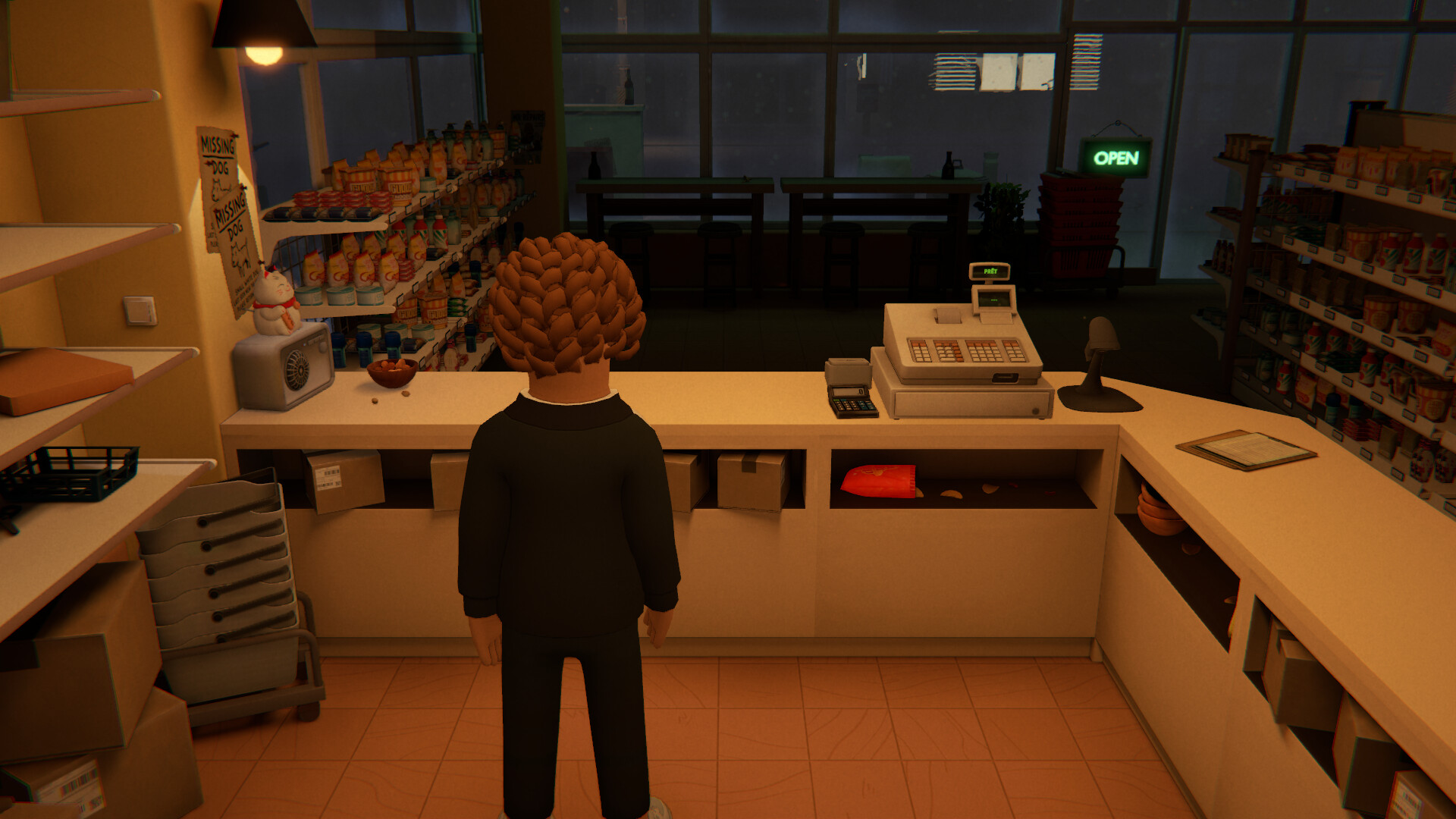
Night Rolls Cozy Store
A relaxing but occasionally tense single-player convenience store sim that rewards methodical players who enjoy repeating tidy loops of ordering, crafting, and ringing up customers; grab it at the discounted price if the cozy management loop sounds like your kind of wind-down, otherwise wait for a deeper discount.
Game highlights
Late-night convenience store loop
Official descriptions outline a focused single-player run from 11 PM to 6 AM where you operate a small store, order stock via the in-game computer, unpack drone deliveries, and restock shelves. Pricing, trending products, and customer reviews are all surfaced through that same interface. There is no bankruptcy screen, so a rough night just informs your plan for the next shift rather than ending the run.
Hands-on sushi crafting
Sushi, nigiri, and maki are made by hand in the kitchen rather than auto-resolved. You pick a recipe from the cookbook, place each ingredient yourself, unlock more recipes as you progress, and try to sell dishes before they expire. Fresh items take more effort than simply stocking cans, but they offer higher returns for the careful player.
Customization and personal touches
You can recolor the storefront and kitchen, customize your character, and curate what plays on the in-game radio. Customers leave written reviews about stock, cleanliness, and variety, and those reviews gradually unlock new products as reputation grows. Quiet moments let you browse local posts, watch the street, or pet the cat.
Money management with optional depth
Beyond the till, you juggle rent, bills, ingredient costs, and inventory while adjusting prices and watching trends. The same loop also exposes optional investing mechanics like ETFs and stocks that you can engage with or ignore. The eventual goal is saving enough to buy the store outright.
Fully solo, controller-friendly experience
The package lists single-player only, full controller support including DualShock and DualSense, save-anywhere functionality, and adjustable volume controls. There is no co-op or hireable coworker in the official feature set, so every stocking run and checkout queue is handled by one player.
What players are saying
What keeps coming up positively
- The simple loop of restocking, crafting sushi, and ringing up customers feels oddly satisfying and easy to slip into.
- The quirky character customization, silly customer costumes, and expressive facial animations give the shift a lot of personality.
- The dev actively responded to launch feedback by replacing previously disclosed AI-generated assets with paid or sourced replacements.
- Banking and investment side mechanics offer surprising depth for players who want them, while remaining skippable for a pure management run.
Where the friction shows
- During busy nights the register queue can snowball, leaving no time to clean or restock shelves.
- Fridge and shelf space feels cramped relative to the number of sushi recipes and products you are expected to keep stocked.
- Several recent reviewers say the moment-to-moment actions, like pressing E at the register, feel thin and zone-out material rather than mentally engaging.
- The 3rd-person camera and character placement can get in the way, and some players feel the balance assumes a co-op helper that does not exist.
Is it worth buying?
At $7.99 USD against a $9.99 regular price, you are paying a modest 20% discount for a short-to-medium length cozy management sim. If the loop of ordering, sushi crafting, and ringing up customers already sounds appealing, that price makes a try easy to justify; if you are on the fence, waiting for a deeper sale is reasonable given how thin some players find the core actions.
Price checked 2026-10-03:$7.99,down from $9.99(20% off)。Player-fit tags
Good fit
- Players who enjoy self-paced solo management with no co-op pressure.
- Listeners who like zoning out with a podcast while handling repetitive shop chores.
- Tinkerers who want optional banking, pricing, and inventory experiments layered onto a simple core loop.
- Anyone who enjoys quiet late-night atmospheres with rain, radio, and pet-the-cat downtime.
- Players who like short shift-style sessions they can pause and resume freely via save-anywhere.
Probably not for you
- Players looking for co-op or hireable AI coworkers to split register and stocking duties.
- Anyone sensitive to cramped fridge and shelf space during recipe progression.
- Players who want deeper mechanical complexity beyond click-and-drag sushi crafting and register button presses.
- Buyers who want a long, content-heavy simulation rather than a short, repeatable shift loop.
- Gamers put off by reports of thin moment-to-moment actions even after recent patches.
02Deep Rock Galactic: Survivor review — a polished but grind-heavy solo auto-shooter for patient dwarf miners
STEAM DEAL · 40% OFF
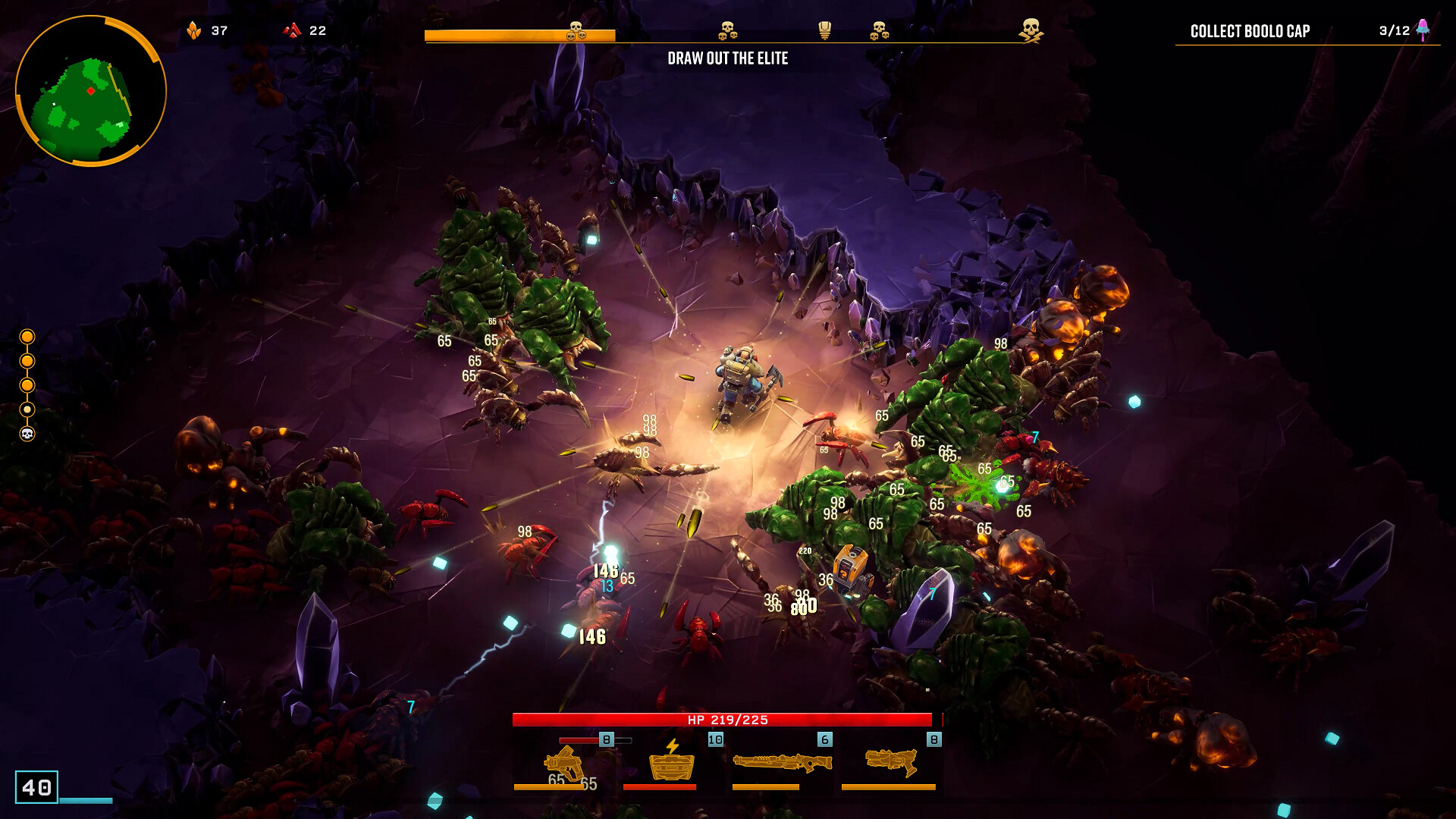
Deep Rock Galactic: Survivor
Deep Rock Galactic: Survivor is a slick single-player auto-shooter with strong Hoxxes flavor, but the meta-progression wall and punishing late-game difficulty make it a slow-burn buy that only pays off if you genuinely enjoy grinding the same biomes for tiny percentage gains.
Game highlights
Auto-shooting lets you focus on mining and movement
Weapons fire on their own while you tunnel, dodge swarms, and chase mineral veins, which is the core fantasy the game leans into. The top-down camera and procedural caves translate the Deep Rock Galactic setting into a survivors-style format without forcing you to manage aim. It feels great in the first several hours when enemies are still threatening and gold/nitra pickups shape your route decisions.
Mission variety and objective structure add some run-to-run flavor
Each drop has its own procedural layout, biome, and a Company-assigned objective that pushes you toward extraction rather than survival-on-a-fixed-map. Different mission types across the five biomes keep early runs from feeling identical. The variety is real but shallow; the same handful of secondary goals rotate, and the underlying enemy spam stays largely the same regardless of which biome you pick.
Meta progression is the long game, not the quick one
The official pitch and player evidence both make clear that getting strong means replaying missions to bump per-weapon, per-class, and per-biome stats by fractions of a percent at a time. With 42 weapons, 12 classes, and 5 biomes each carrying their own progression track, full mastery is measured in hundreds of hours. Unlocking Overclocks, gear quality rolls, and Artifact upgrades all layer on top of the base grind, and reviews consistently note that one good run barely moves the needle.
Difficulty curve is steep and reads as adversarial to many players
Hazard 4 and especially Hazard 5 introduce heavy swarms, explosive spawns chained after boss kills, and unavoidable chip damage that multiple reviewers described as cheap rather than challenging. Aiming is automatic but not smart — several players report shots getting diverted to the nearest bug instead of the clump you're trying to clear, which pushes you toward a small set of AoE and explosive weapons. Visibility behind terrain and the escort vehicle is a recurring complaint, and many frustrated players quit before unlocking the gear that makes late dives manageable.
Presentation and Steam Deck performance are genuine strengths
The art, lighting, sound, and controller feel are repeatedly called out as best-in-class for the genre, and verified Steam Deck play up through Hazard 4 is smooth. Hazard 5 dips into performance problems on Deck, which pushes completionists back to a desktop. Even reviewers who bounced off the progression praised the polish, which matters if you care about how a survivors-like looks and handles in your hands.
What players are saying
What keeps coming up positively
- The mining-and-shooting combo, Hoxxes atmosphere, and overall polish make the first dozens of hours genuinely fun.
- Runs feel snappy, the soundtrack and gun feel land well, and controller support is excellent.
- It runs cleanly on Steam Deck at most difficulty tiers, which is rare for the genre.
- Many players report well over 100 hours before the grind really starts to bite.
Where the friction shows
- Meta progression is structured as a multi-axis grind with tiny percentage gains that can take hundreds of repeats to feel.
- Late-game difficulty spikes rely on stacked stats rather than skill, and high-Hazard runs introduce cheap-feeling chip damage and chained explosive spawns.
- Build variety is shallow: most weapons feel similar, synergies are thin, and only a few AoE or explosive options are actually viable.
- The isometric camera hides enemies behind terrain, rocks, and the escort, creating frustrating moments where you are shot by bugs you cannot see.
Is it worth buying?
At $7.79 against a $12.99 regular price (40% off), the dollar-per-hour ratio is strong if the grind described above sounds like your kind of loop. If you only want a casual survivors-like for a dozen hours, the late-game stat treadmill and Hazard 5 punishment will feel like a chore, so waiting for an even deeper discount is reasonable. If you specifically enjoy Deep Rock Galactic and don't mind farming the same biomes to slowly empower one weapon at a time, this price is a fair entry point.
Price checked 2026-10-03:$7.79,down from $12.99(40% off)。Player-fit tags
Good fit
- Players who enjoy slow-burn meta-progression and don't mind replaying the same biomes dozens of times for incremental power.
- Solo players who want a single-player, controller-friendly survivors-like they can pause and resume at their own pace.
- Deep Rock Galactic fans who care more about the setting, mining, and gun feel than about build-crafting depth.
- Steam Deck owners who primarily play at Hazard 3 or Hazard 4 and prioritize polish and performance over endgame content.
- Completionists who are explicitly aiming to chase every Overclock, weapon, and biome mastery track.
Probably not for you
- Players who want meaningful run-to-run build experimentation, synergies, or game-changing upgrades in the Vampire Survivors mold.
- Anyone who dislikes multi-layered stat grinds measured in hundreds of repeated missions per axis of progression.
- Casual survivors-like fans who plan to stop after 10–20 hours, since the real grind begins after the midpoint.
- Players sensitive to unfair-feeling difficulty spikes, hidden enemies behind terrain, and chip damage that punishes positioning rather than rewards it.
03Look Outside: a haunting 10–12 hour solo horror RPG for players who love weird, empathetic body-horror stories
STEAM DEAL · 40% OFF
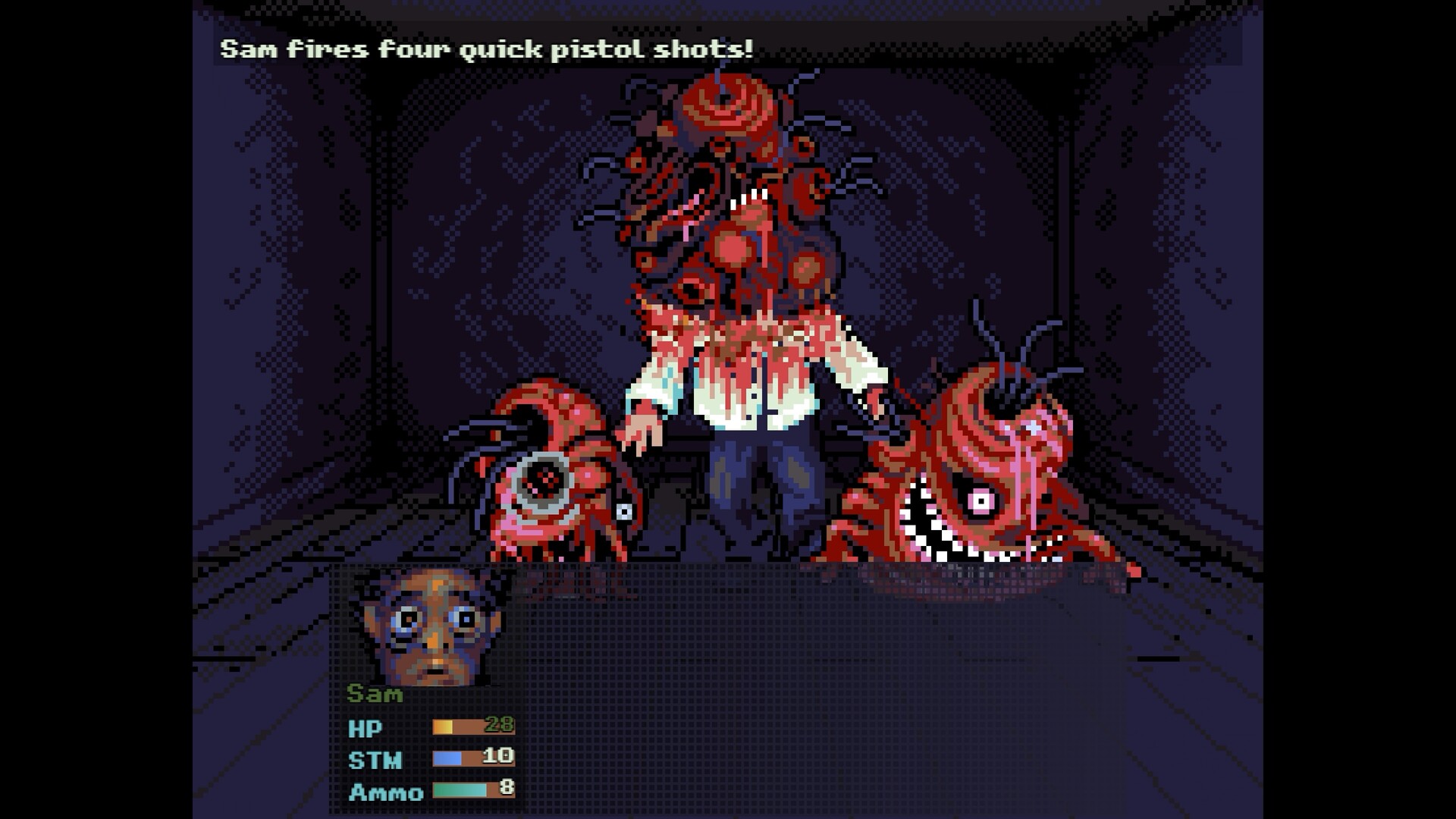
Look Outside
If you want a short, atmospheric solo RPG Maker horror with a real heart, this is an easy pickup, especially at the current discount. Skip it if you hate body horror or want a relaxing, grind-free sandbox, because timers and resource pressure creep in late.
Game highlights
Tight single-sitting campaign
Look Outside is built around a 10–12 hour playthrough set in one apartment building, with a dozen boss fights and multiple outcomes to chase. The official pitch frames the apartment as a hub where you cook, craft, and talk to neighbors between tense scavenging runs. That scoped length makes it a natural fit for one or two focused evenings rather than a months-long project.
Turn-based combat with positioning
Combat is turn-based and officially accounts for the space between you and your targets, with makeshift weapons and gathered items. The official description cites over 150 hand-crafted creatures to clash with, and players confirm the encounters feel weighty without being as RNG-heavy as comparable horror RPGs.
Body horror with surprising warmth
The setup is bleak: anyone who looks out the window mutates. The official pitch leans hard into grotesque, psychotic designs, yet the same description frames the cast as people you can recruit and shelter. Reviewers repeatedly highlight how attached they grew to neighbors and strangers, with one describing it as Earthbound directed by David Cronenberg.
Resource loops and a real apartment hub
Expeditions feed back into cooking, crafting tools, and side activities like a playable mini-game. Official copy calls this recuperation loop a core pillar, and players confirm the apartment becomes a small community you manage between outings. The trade-off, repeatedly mentioned, is that the gathering can feel repetitive on longer runs.
Multiple endings and hard mode changes things
The store description points to several different endings, and players note there are many recruitables and choices that meaningfully affect outcomes. A second reviewer specifically credits hard mode with actually altering encounters rather than only inflating stats, which rewards replay for anyone who finishes once.
What players are saying
What keeps coming up positively
- Players consistently praise the writing and atmosphere, calling the cosmic horror emotionally grounded rather than nihilistic.
- Reviewers highlight how attached they get to the recruitable neighbors, often describing the apartment as a found family rather than a horror set piece.
- The soundtrack and pixel art earn repeated mention, with several players comparing the vibe favorably to other RPG Maker classics.
- Players coming from Fear and Hunger consistently call it more approachable, noting combat feels intentional rather than RNG-dependent.
Where the friction shows
- Several reviewers flag a repetitive gathering and resource grind on longer playthroughs, especially when stocking up between expeditions.
- A few players warn of pressure from timers or punishing recovery moments that work poorly with relaxed play.
- Some mention the save structure and session pacing make short bursts inconvenient, pushing you toward longer sits.
Is it worth buying?
At $5.99 against a $9.99 list price (40% off in USD), this is a fair price for a 10–12 hour solo horror RPG with multiple endings, and the discount meaningfully lowers the risk on a niche genre pick. It is not flagged as a historical low, so patient bargain hunters can wait, but anyone who already knows they like cosmic or body horror should not hesitate at this tier.
Price checked 2026-10-03:$5.99,down from $9.99(40% off)。Player-fit tags
Good fit
- Players who want a self-paced solo RPG they can finish in 10–12 hours across a few evenings.
- Horror fans who enjoy cosmic and Lovecraftian themes but want empathy and humor alongside the dread.
- Fans of Fear and Hunger who want a more approachable, less RNG-heavy turn-based alternative.
- Readers who enjoy managing a small hub of neighbors between expeditions and care about writing and character moments.
- Players who like replaying short RPGs to chase different endings and recruit everyone.
Probably not for you
- Anyone uncomfortable with grotesque body horror, frequent gore, or horror violence.
- Players who hate resource grinding or want a frictionless, low-pressure sandbox.
- Anyone looking for co-op or multiplayer, since the game is single-player only.
- Players who want very short pick-up-and-play sessions, because runs and saves favor longer sits.
Share this article