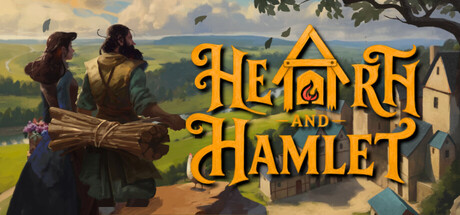
NEW ON STEAM
Hearth and Hamlet
At a glance
Hearth and Hamlet game facts
Steam store information checked 2026-09-02。- Studio
- Phorust Studios Published by Runic Forge
- Release
- Aug 19, 2026 Released
- Official genres
- Casual · Simulation · Strategy
- Play mode
- Single-player
- Desktop platforms
- Windows · Linux
- Steam Deck
- Playable Some controller prompts do not match Steam Deck controls.
- Controller
- Not listed
- Steam features
- Achievements · Family Sharing
- Languages
- 7 listed languages English, Simplified Chinese, German, Japanese
What that means for your setupHearth and Hamlet is developed by Phorust Studios and published by Runic Forge, with Gamersky Games also credited on Steam, and it released on August 19, 2026 as a single-player Casual, Simulation, and Strategy title. It runs on Windows and Linux, with full audio support across a generous language lineup including English, Simplified Chinese, German, Japanese, Russian, Korean, and Traditional Chinese. Steam Deck is listed as Playable rather than Verified, and you should know going in that some controller prompts do not match the Deck's controls, so a quick rebind or a mouse session is worth budgeting for. The store page lists Achievements and Family Sharing as supported features, and there is no official mention of controller support, cloud saves, or mod tools at this time. Pricing is a flat 7.99 USD with no active discount, which lines up with how most reviewers describe it as a small, fair-priced indie.
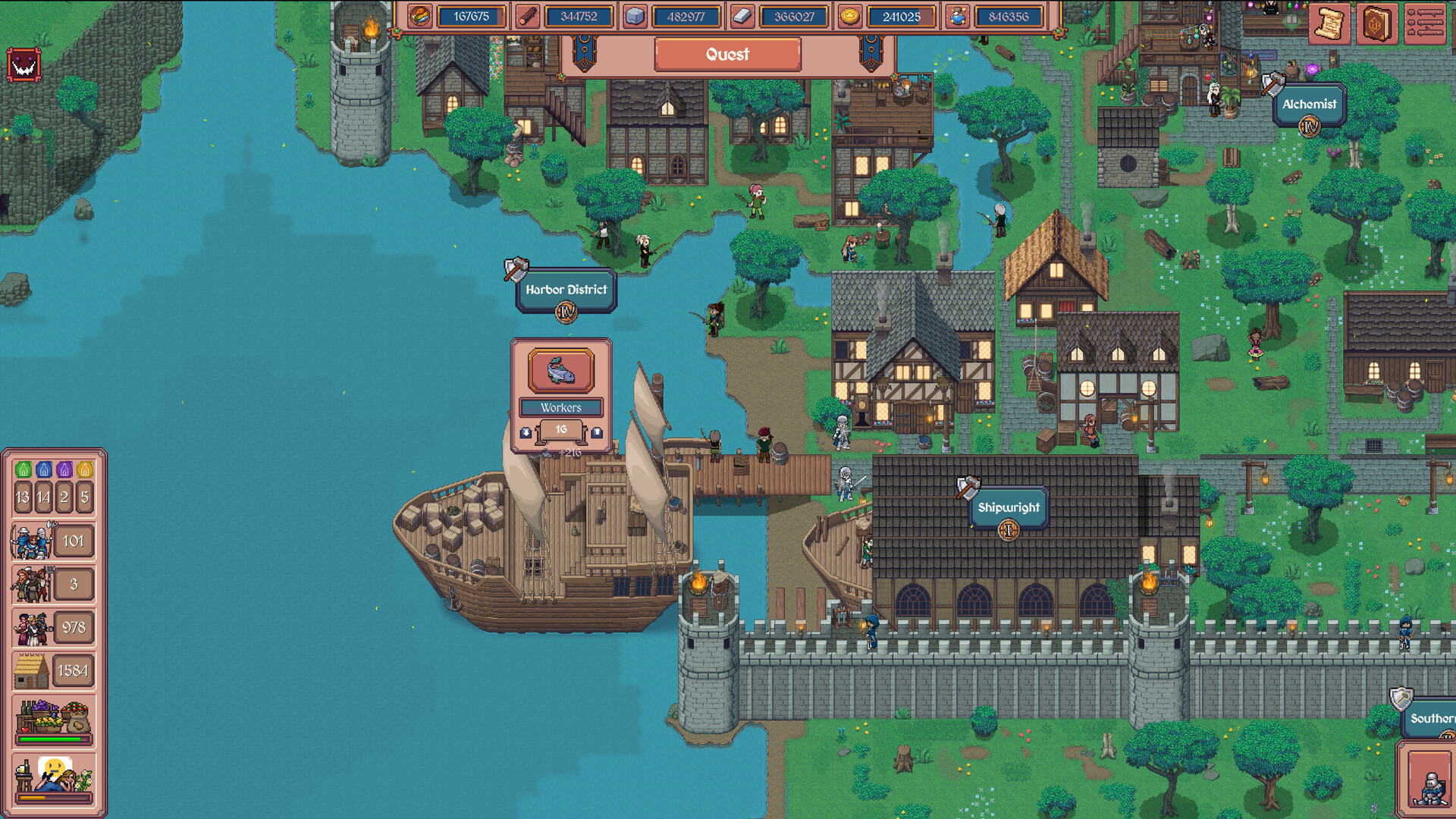
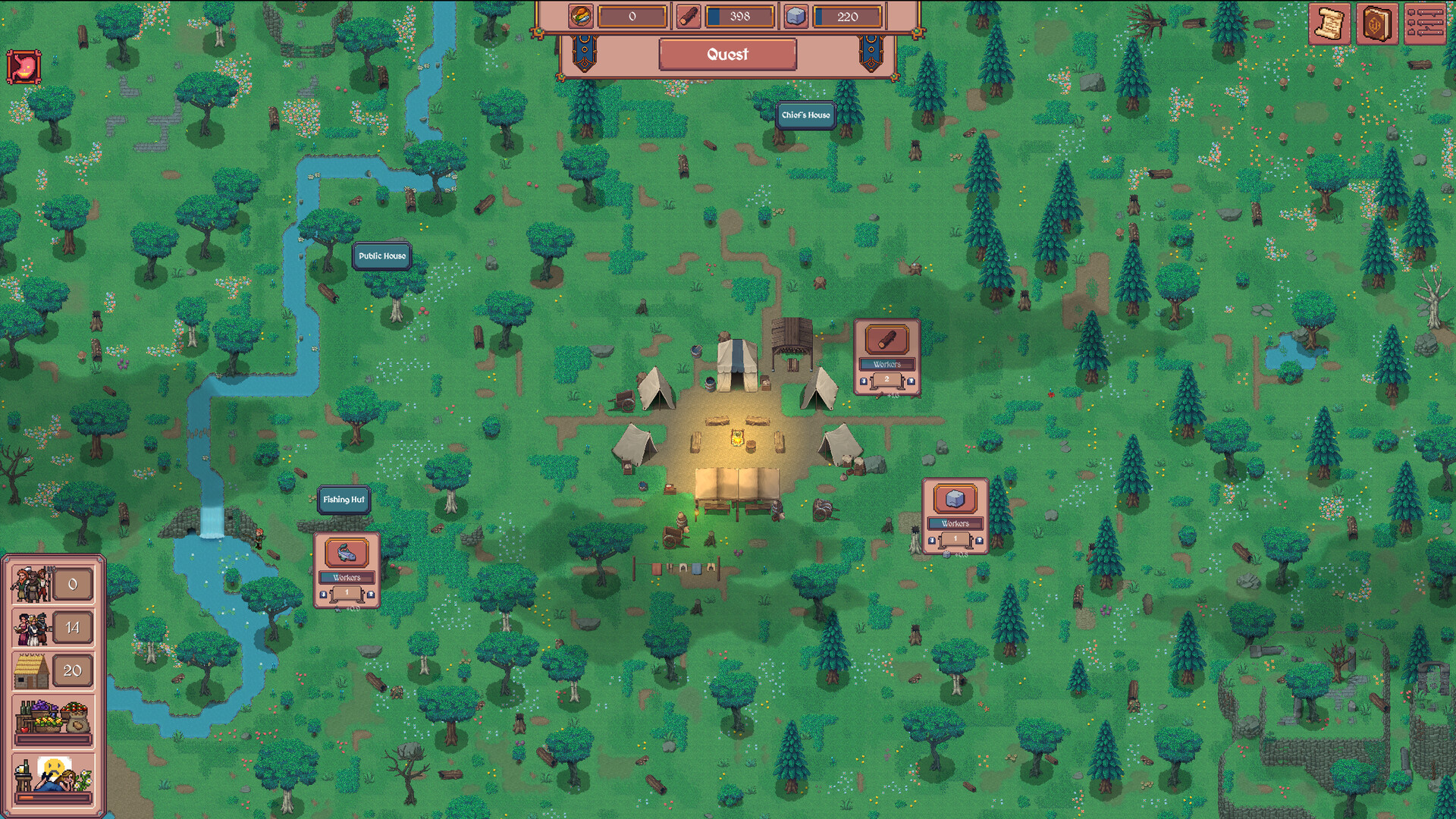
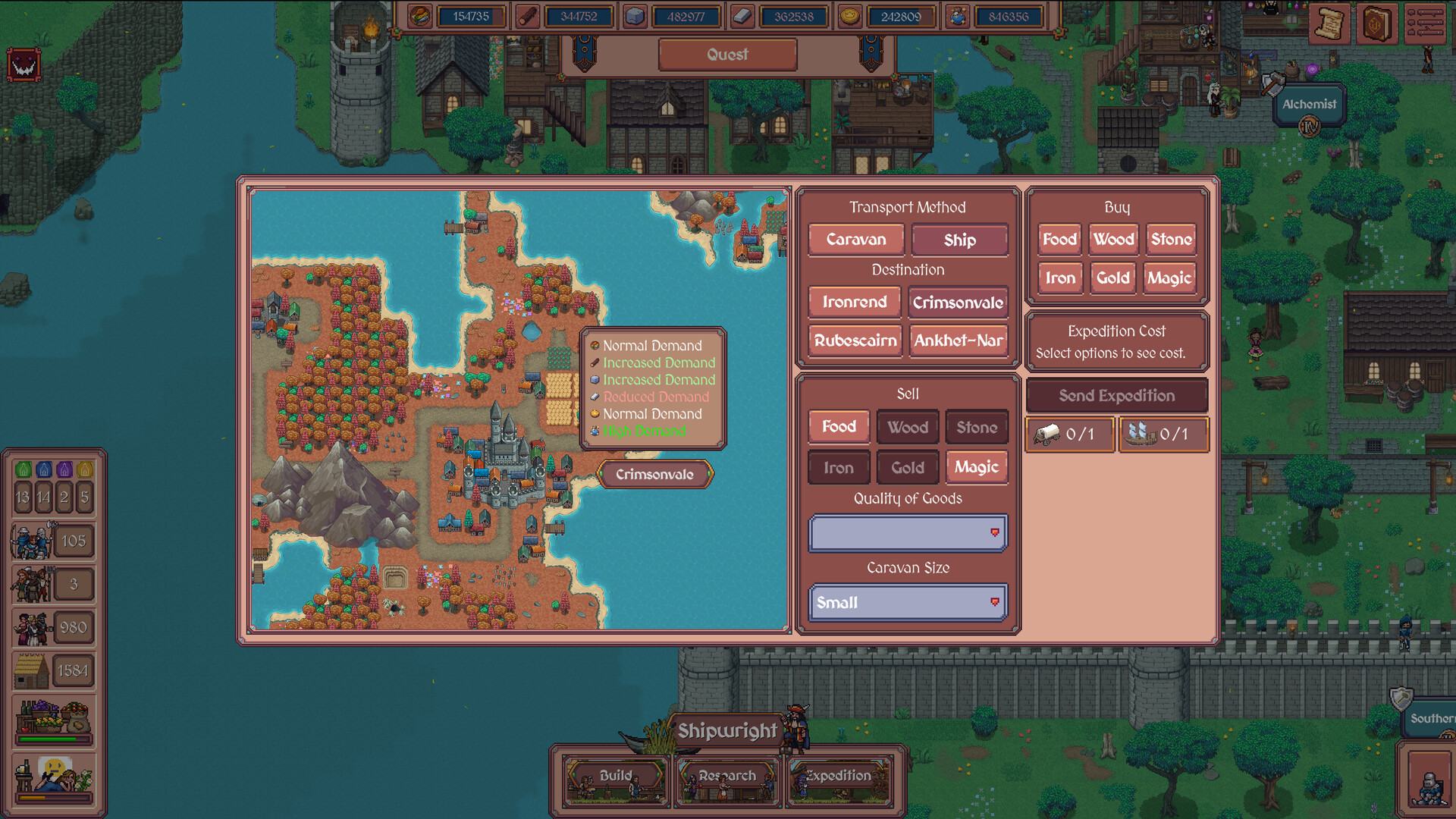
Hearth and Hamlet is one of those rare incremental games that treats relaxation as a feature, not a bug. You start with a single campfire on a quiet frontier, click to gather the first sticks of wood, assign a worker or two, and then watch your little camp breathe. Over the next dozen or so hours, tents become taverns, taverns become castles, and before you know it you are passing laws, signing trade deals with weird far-off kingdoms, and unlocking your first magical academy. The whole thing hums along on its own pace, which is exactly the point. If you have ever wished Banished had a sleep mode, or that Anno would stop yelling at you about wool, this is the soft, pixel-art cousin you have been waiting for.
What the game actually feels like
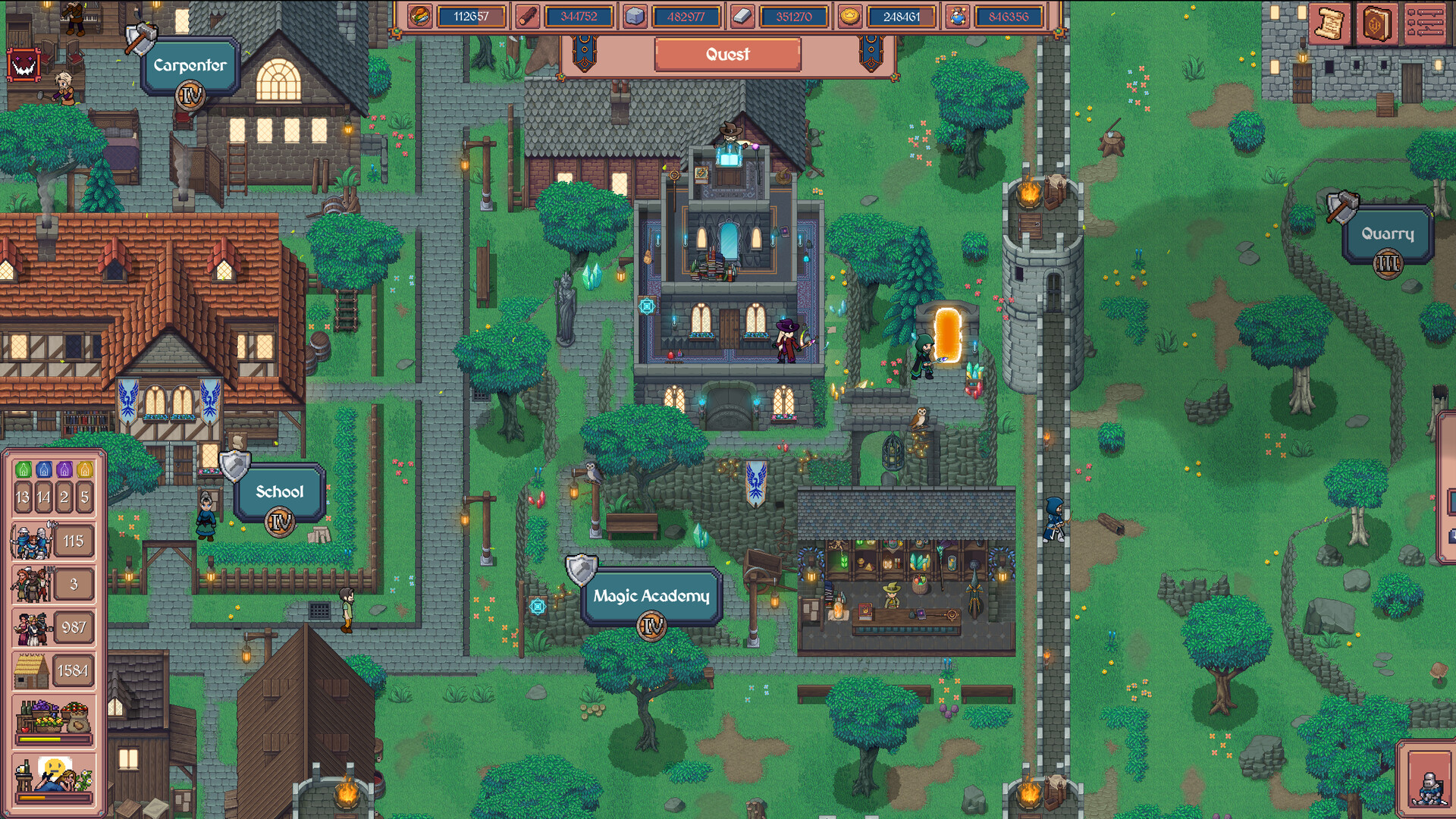
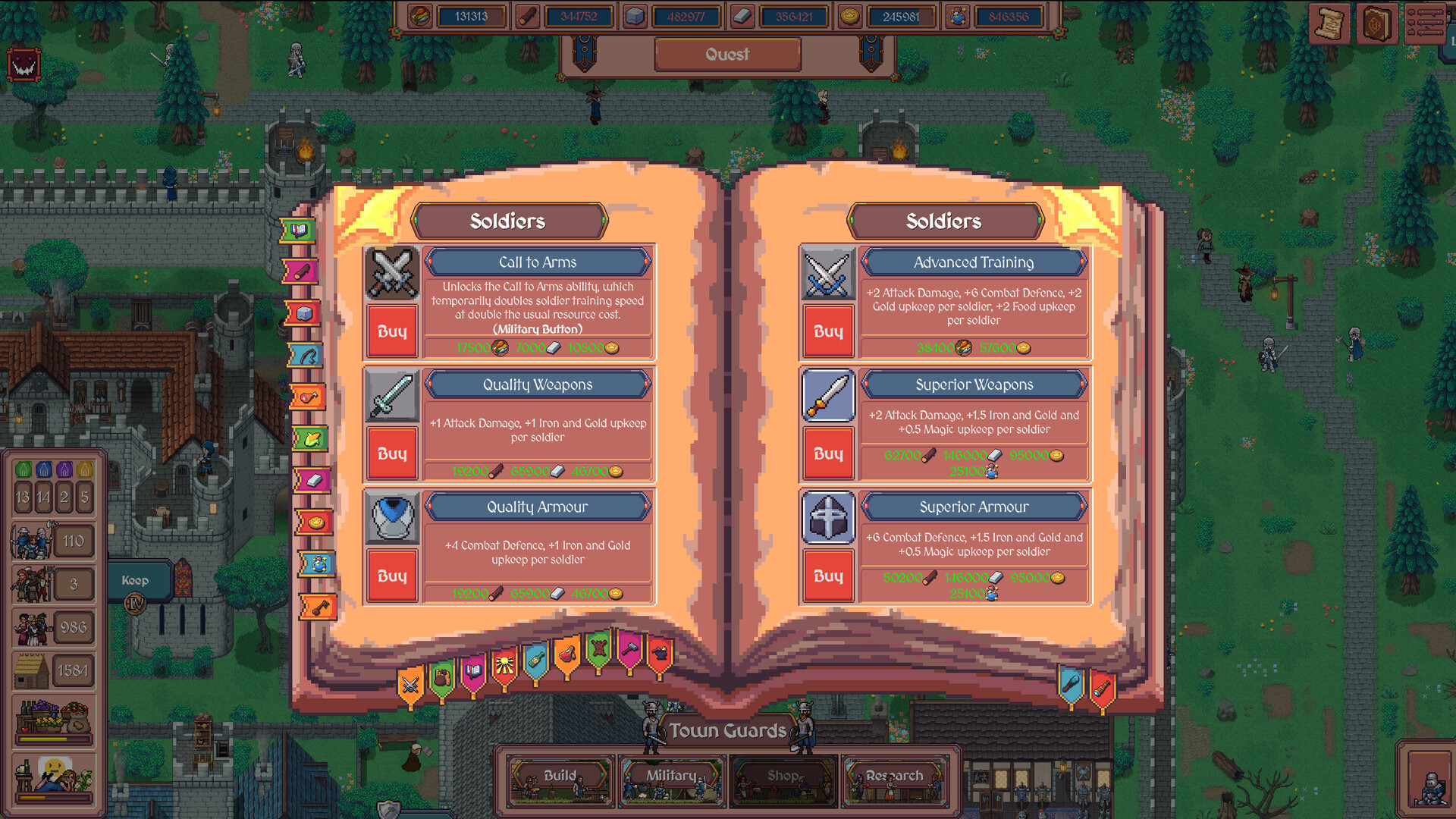
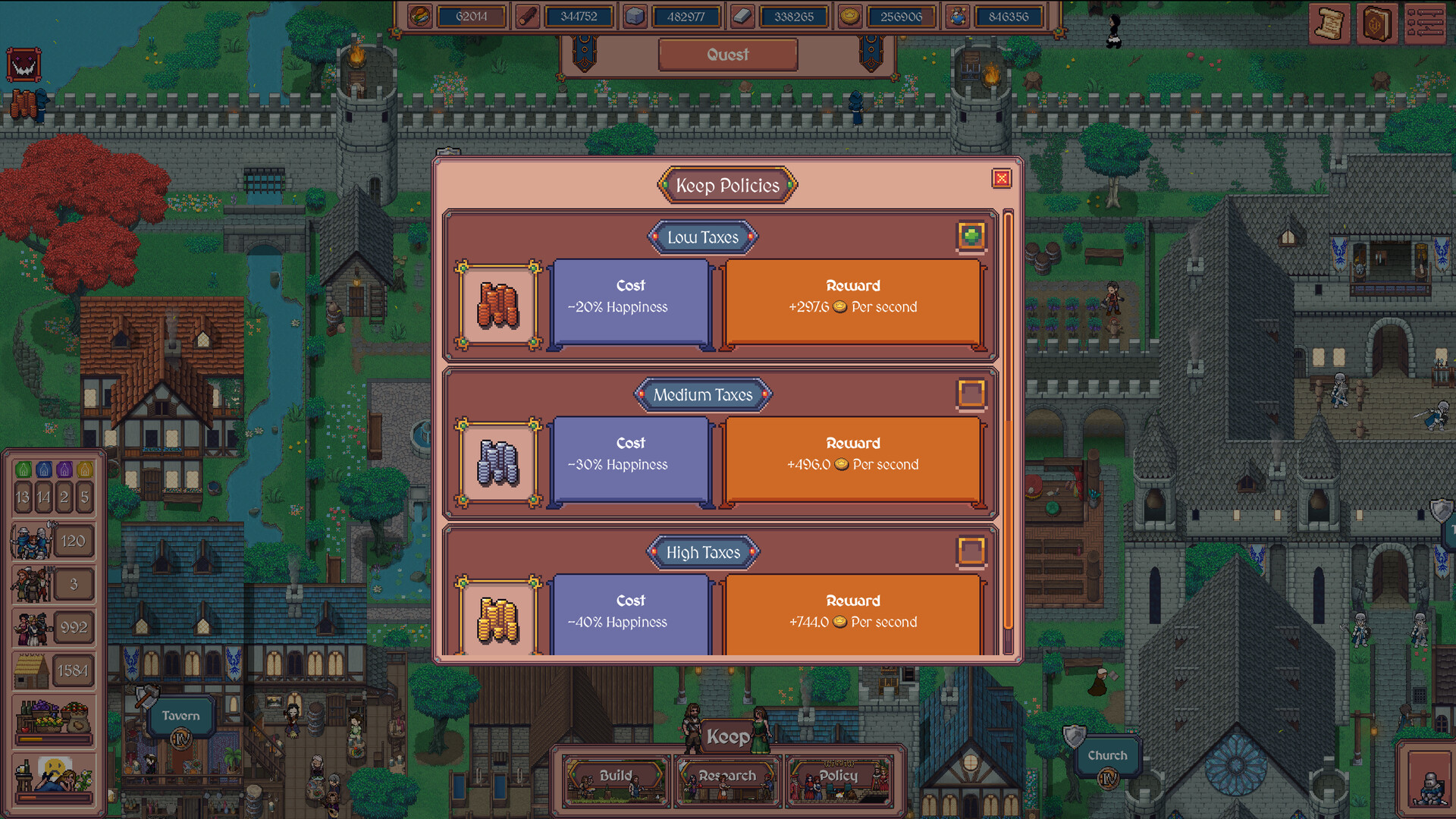
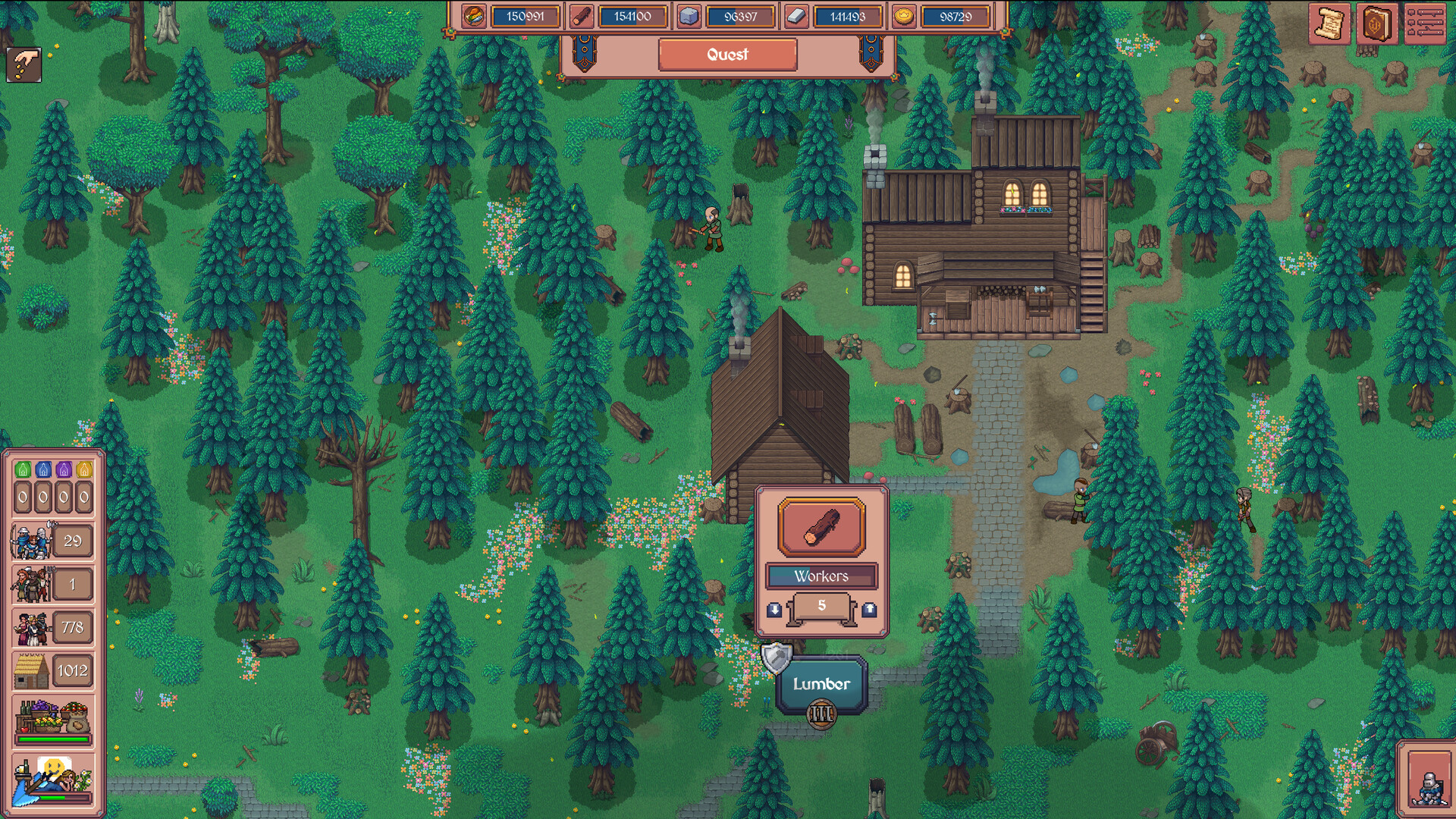
The core loop is a slow, satisfying climb from a campfire to a kingdom, where every upgrade tree, law, and trade route feeds the next milestone. One reviewer put it well: workers feed resource production, resources fund construction, construction enables expansion, research unlocks magic and policies, and trade and defense slowly widen your responsibilities without ever demanding frantic input.
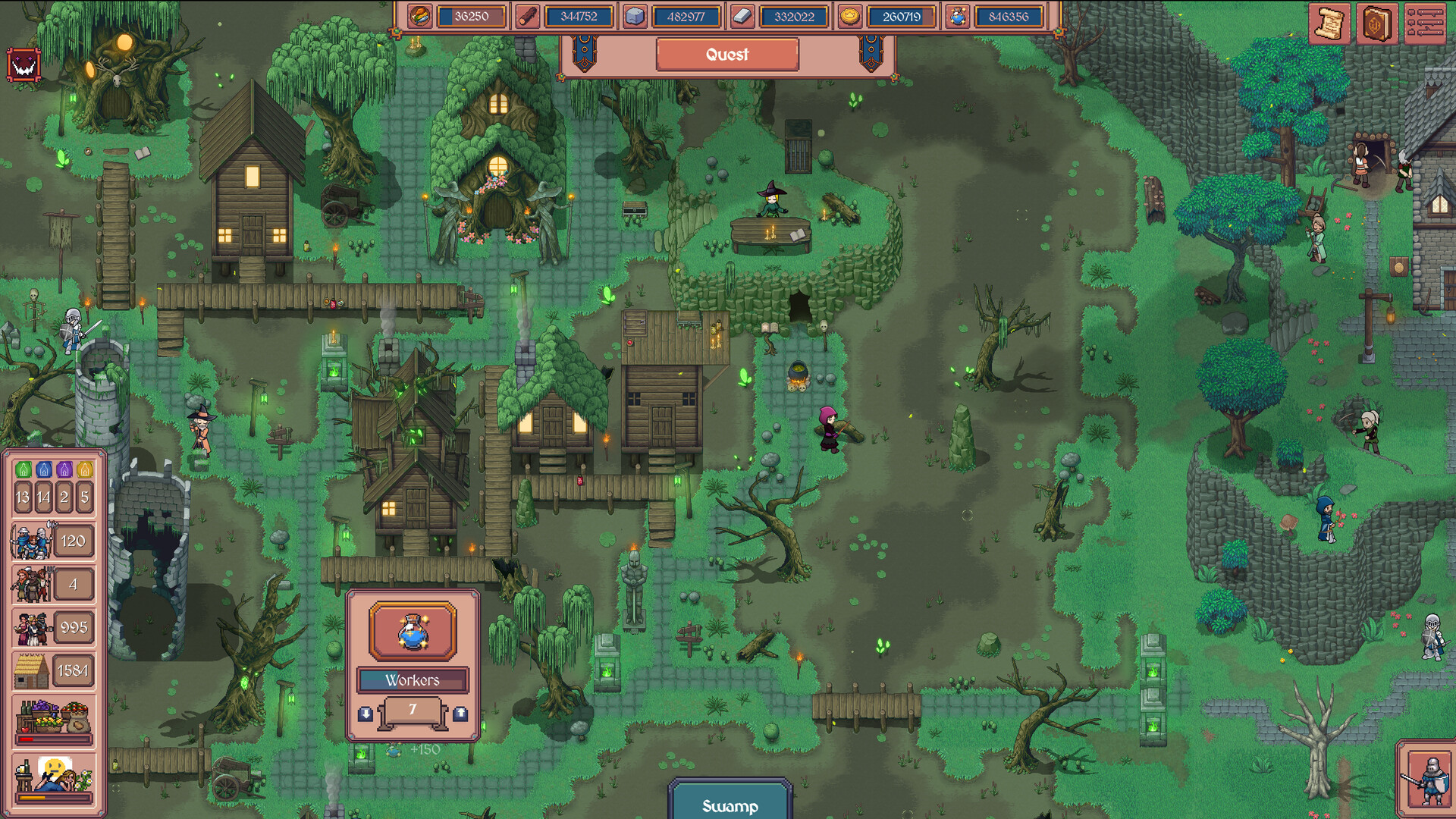
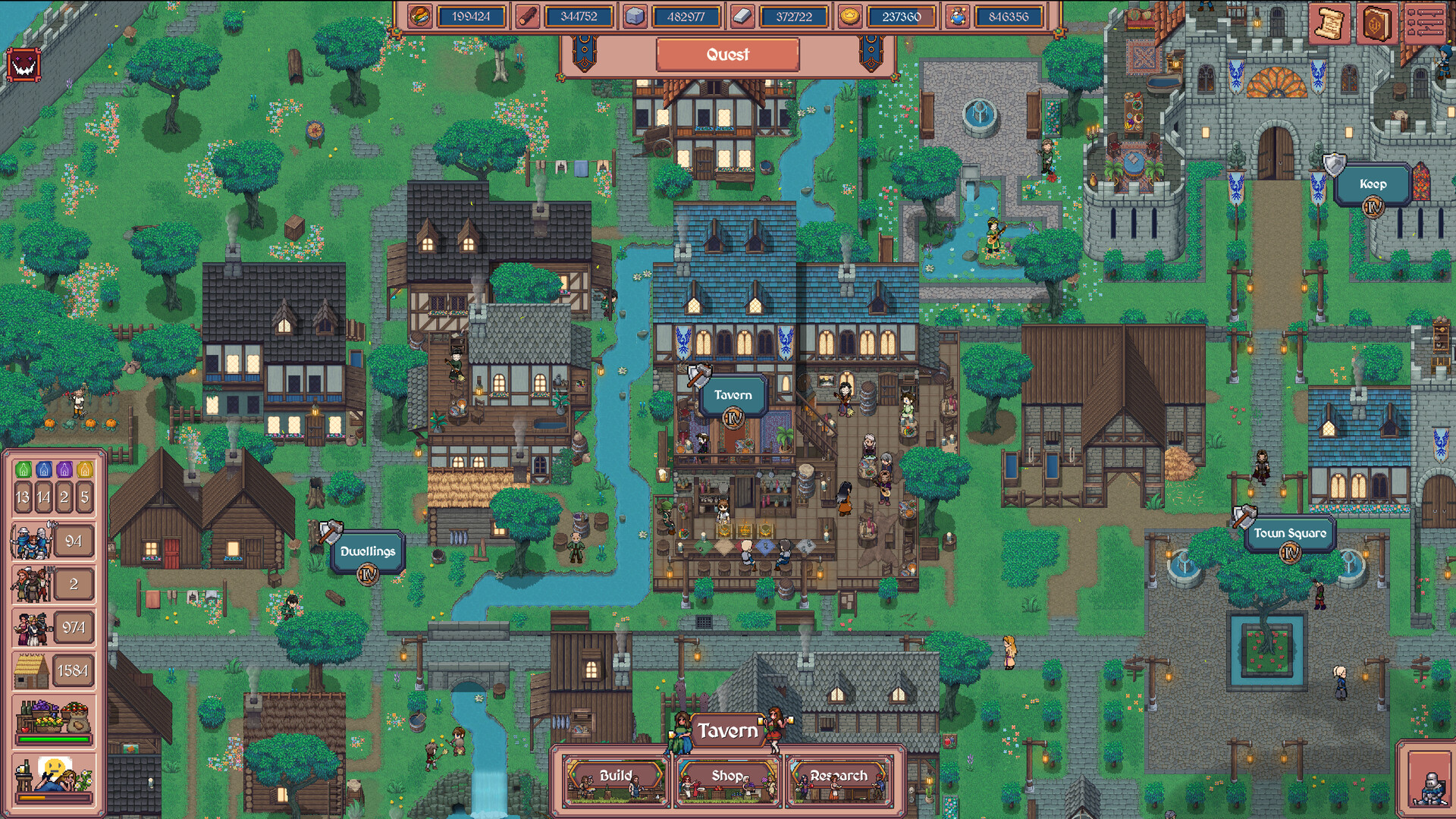
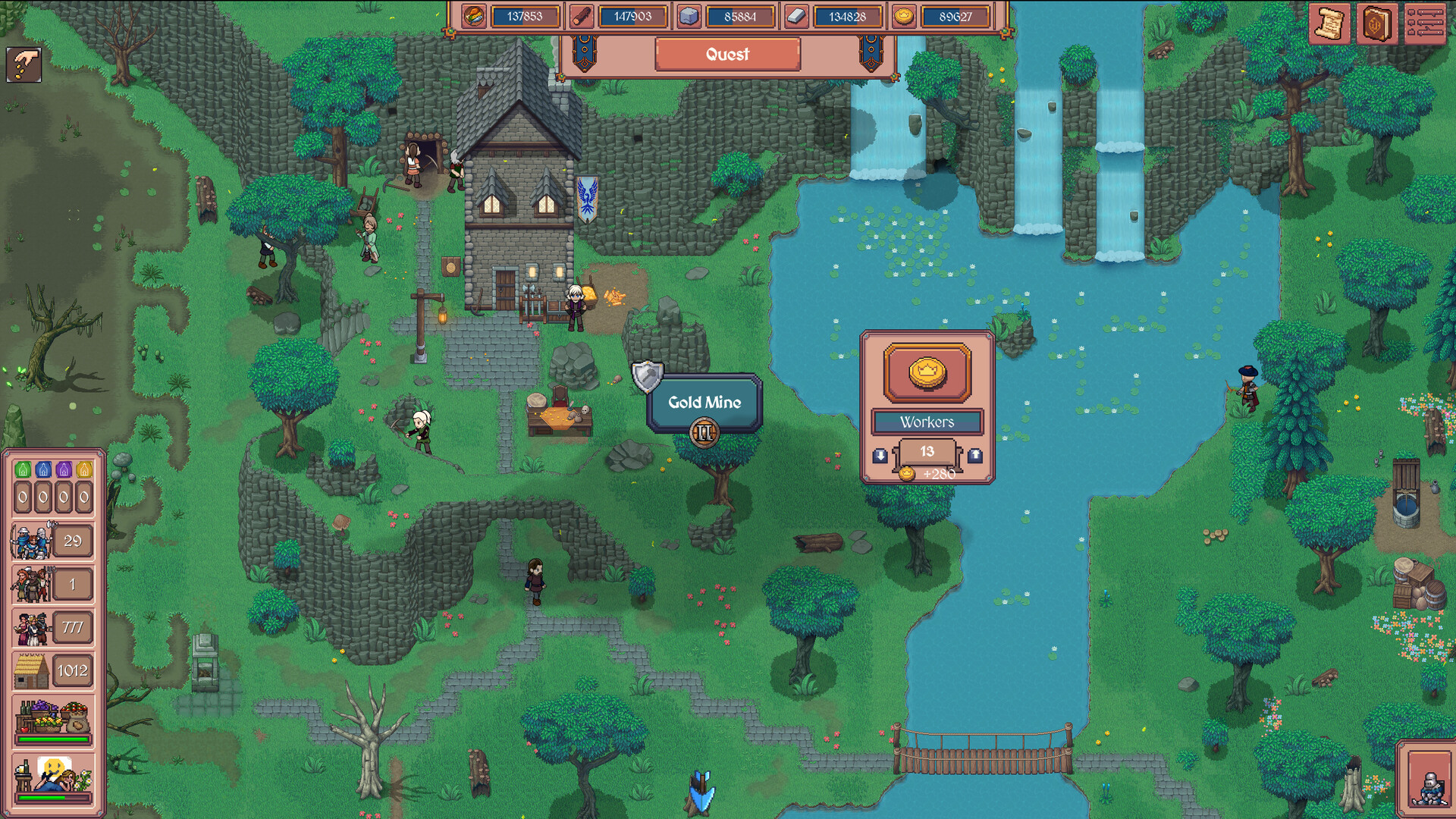
Visually, the medieval pixel-art world is doing real work. Lakes, rivers, magical swamps, and distant lands render in a charming top-down style that makes it genuinely fun to watch your settlement fill out. Several players called out the soundtrack and ambience specifically, and one detailed review noted that something interesting is almost always happening on screen, which is a quietly important quality for an idle-leaning game.
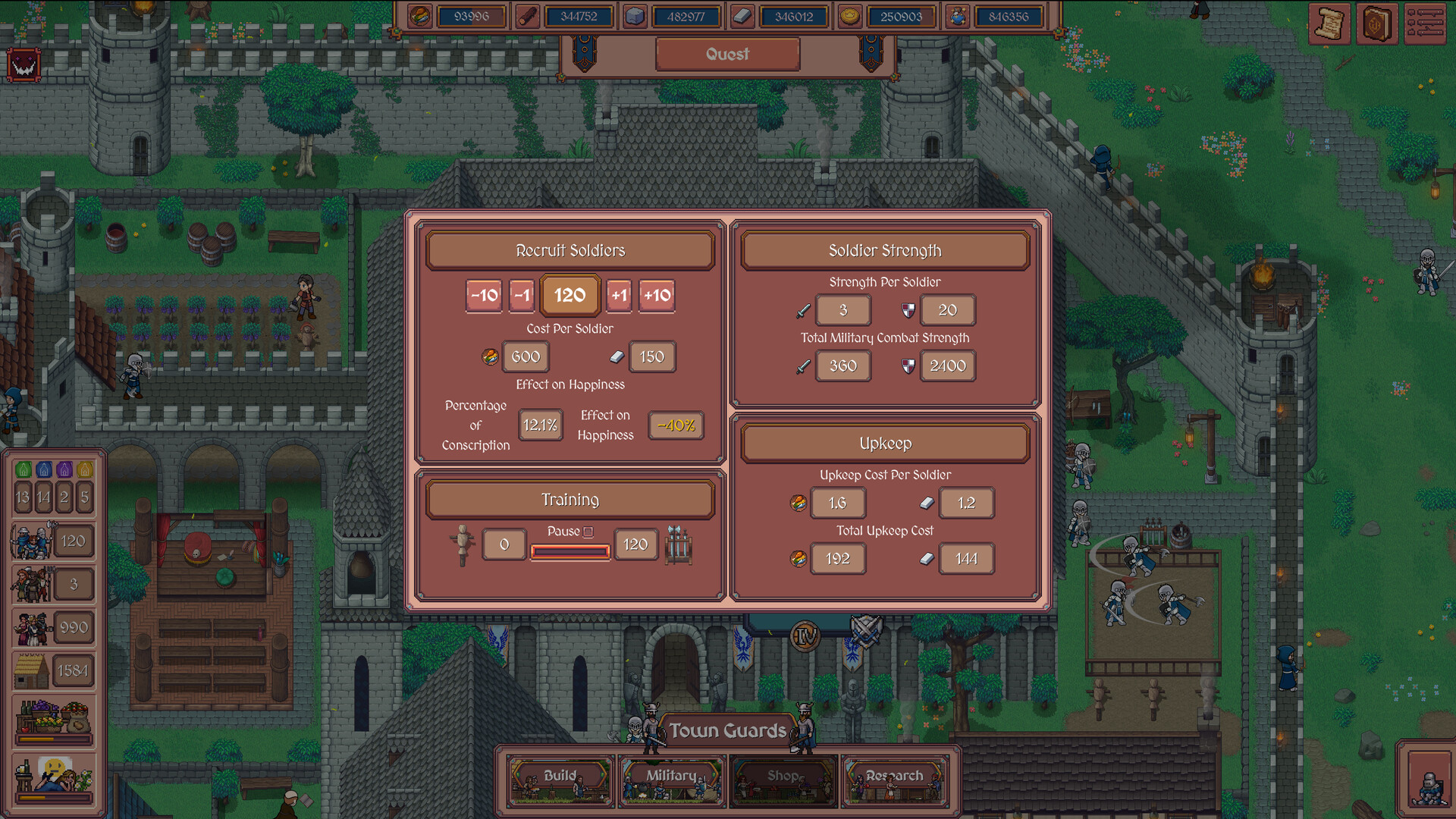
The management has more bite than a pure idle thanks to laws, taxation, worker morale, and the military upkeep system that kicks in once your population grows. On higher difficulties enemy waves scale with your progress, so you are constantly weighing soldier upkeep against expansion. That tension keeps the cozy presentation from sliding into autopilot, even though you can absolutely run it in the background on the easiest mode.
Replayability comes mostly from the difficulty ladder and achievement hunts. Multiple players reported finishing Normal in roughly nine to sixteen hours, with two harder tiers above it for the patient. Achievements like 'Have no defeats in battle' or 'Never trade with Ashenholt' give you a reason to start a fresh kingdom with different rules.
What early players are seeing
What is landing
- Across more than 800 player reviews, the warm consensus is that this is one of the better-crafted incremental games in recent memory, with an 84 percent positive score on Steam. Reviewers consistently single out the art, the soundtrack, the pacing, and the feeling of watching a small camp slowly turn into a thriving city, with one player calling it the best incremental game they had bought in a long time and worth far more than the asking price.
- The coziness is the headline praise. Multiple players described it as a relaxing way to grow a little village and help it thrive, with one reviewer noting they could happily ignore real-world responsibilities to build their hamlet, and another calling it exactly the kind of cozy game they love because there is always something to work toward without ever feeling rushed.
What still needs watching
- You do not actually lay out your city tile by tile. Buildings are placed on set slots, and a detailed review explicitly flagged that if designing the visual layout of a city is your main draw, this may not be the game for you. Edge scrolling is also called out as pointlessly slow even at maximum speed, and upgrade manual bookmarks behave strangely.
- Late game pacing drags for some players. One longer review with around ten hours of playtime noted that late game feels like waiting for resources to slowly come in, and another described the overall length as 'only a few hours to complete' for their preferred pace, which is worth knowing if you are expecting a 50-hour epic.
- Steam Deck compatibility is Playable but not Verified, and the deck note warns that some controller prompts do not match Deck controls, so plan for some on-the-fly input adjustment if you mainly play handheld.
Is Hearth and Hamlet worth buying now?
Current decision
Worth tryingFor 7.99 USD you get a charming, well-paced incremental citybuilder with strong art, a thoughtful management layer, and difficulty options that let you dial the chill up or down. The 84 percent positive review score and recurring praise for pacing, ambience, and value outweigh the genuine flaws around limited city layout control, some late-game waiting, and unverified Steam Deck polish. It is an easy recommendation for the cozy management audience and a fair risk for curious onlookers.
Who this is for
A good fit if you…
- Players who want a cozy, low-pressure management game to wind down with after work
- Fans of incremental and idle clickers who like watching numbers turn into visible buildings
- Solo single-player players who enjoy self-paced progression without timers or competitive pressure
- Anyone who likes light kingdom simulation with laws, trade routes, and a touch of magical flavor
- Players on a tight budget looking for a fair-priced indie that can absorb ten to twenty relaxing hours
Wait if you…
- You primarily want a true city builder where you hand-place every road, wall, and house on a free-form map
- You need Steam Deck Verified status and dislike fiddling with controller prompts that do not match the device
- You expect a 30+ hour campaign, since most players finish Normal in roughly nine to sixteen hours
- You dislike any kind of military upkeep or enemy pressure, since even Easy can introduce rising militia costs once your population grows
If Hearth and Hamlet is not quite your game

SIMILAR OPTION · 20% OFF
Big Ambitions
Choose it ifChoose Hearth and Hamlet if you want a relaxed medieval fantasy vibe with idle-friendly pacing; choose Big Ambitions if you want hands-on modern entrepreneurship with deeper simulation.
How it comparesBusiness and city management loop Big Ambitions is a role-playing business sim focused on running shops and corporations in a modern New York city with direct placement and detailed logistics, while Hearth and Hamlet is a medieval pixel-art incremental where you mostly upgrade set buildings and watch the kingdom grow.

SIMILAR OPTION
Gemporium: A Cute Mining Sim
Choose it ifChoose Hearth and Hamlet if you want a slow-burn kingdom builder you can leave running; choose Gemporium if you want a tight, fast-paced cozy loop focused on a single shop.
How it comparesCozy shop and resource management Gemporium is a cute mining and gem-selling shop sim with short, active loops around digging, polishing, and daily store rhythm, whereas Hearth and Hamlet leans idle and long-form, with kingdom-wide laws, research trees, and slow visual growth over many hours.

SIMILAR OPTION
Doloc Town
Choose it ifChoose Hearth and Hamlet for a chill, idle-leaning medieval progression; choose Doloc Town if you want active, hands-on farming and creative vertical construction.
How it comparesSettlement building with a fantasy twist Doloc Town is a vertical farming and scavenging sim with platform-based building and climate transformation mechanics, while Hearth and Hamlet is a top-down incremental citybuilder where you upgrade buildings and pass laws rather than physically stacking platforms.
Share this article