NEW ON STEAM
Bering Tonnage


At a glance
Bering Tonnage game facts
Steam store information checked 2026-10-13。- Studio
- Antimuon Studios Published by Antimuon Studios
- Release
- Oct 5, 2026 Released
- Official genres
- Simulation · Strategy
- Play mode
- Single-player
- Native online multiplayer
- Not listed by Steam
- Local multiplayer
- Not listed by Steam
- Shared/split screen
- Not listed by Steam
- Desktop platforms
- Windows · Linux
- Steam Deck
- Unknown No additional compatibility detail
- Controller
- Not listed
- Steam features
- Achievements · Workshop · Family Sharing
- Languages
- 5 listed languages English, German, Japanese, Russian
| Language | Interface | Full audio | Subtitles |
|---|---|---|---|
| English | Supported | Not listed | Not listed |
| German | Supported | Not listed | Not listed |
| Japanese | Supported | Not listed | Not listed |
| Russian | Supported | Not listed | Not listed |
| Simplified Chinese | Supported | Not listed | Not listed |
What that means for your setupBering Tonnage comes from Antimuon Studios, who also publish it themselves, and it landed on Steam on October 5, 2026, marketed as a single-player Simulation and Strategy title for Windows and Linux. There is no native online play, no shared-screen co-op, and controller support is not listed on the store page, so plan on keyboard and mouse. Steam Deck compatibility is officially listed as Unknown, so do not assume a clean handheld experience until verified. Language support is broad in text: English, German, Japanese, Russian and Simplified Chinese all have interface translation, but none of them carry full audio or subtitles on the store page. The feature list is lean and friendly to tinkering fans, with Achievements, Workshop support and Family Sharing enabled.
If you have ever loaded a freighter in your imagination and wondered what it would feel like to scale that into a global logistics empire, Bering Tonnage finally gives you the spreadsheet-friendly sandbox to try. The pitch is unusually literal: start small in one region, then string together depots, licenses and ships into a network that crosses canals, dodges cyclones and absorbs geopolitical friction. It is the rare maritime strategy game that takes paperwork as seriously as it takes wind and waves.
What the game actually feels like
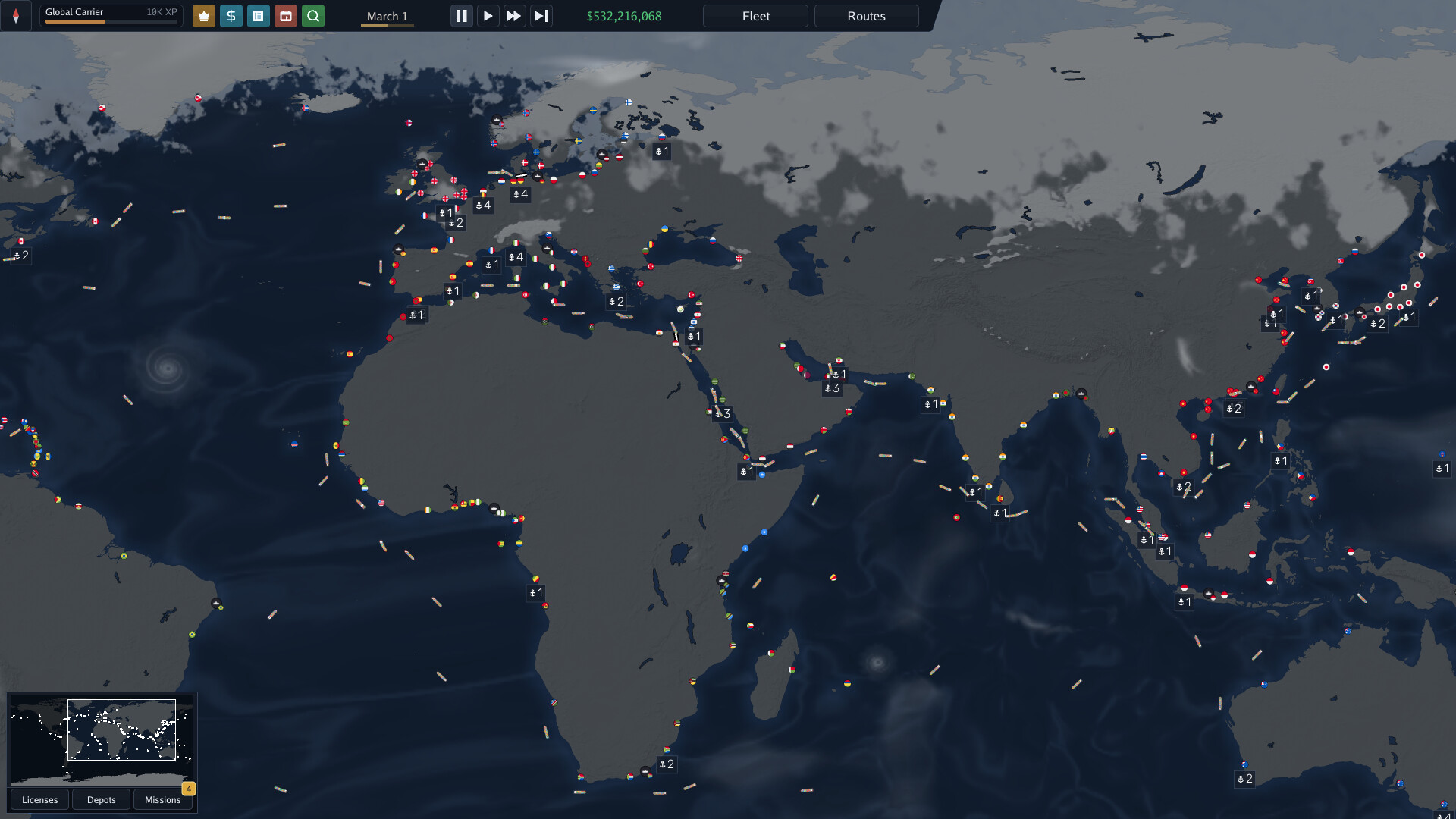
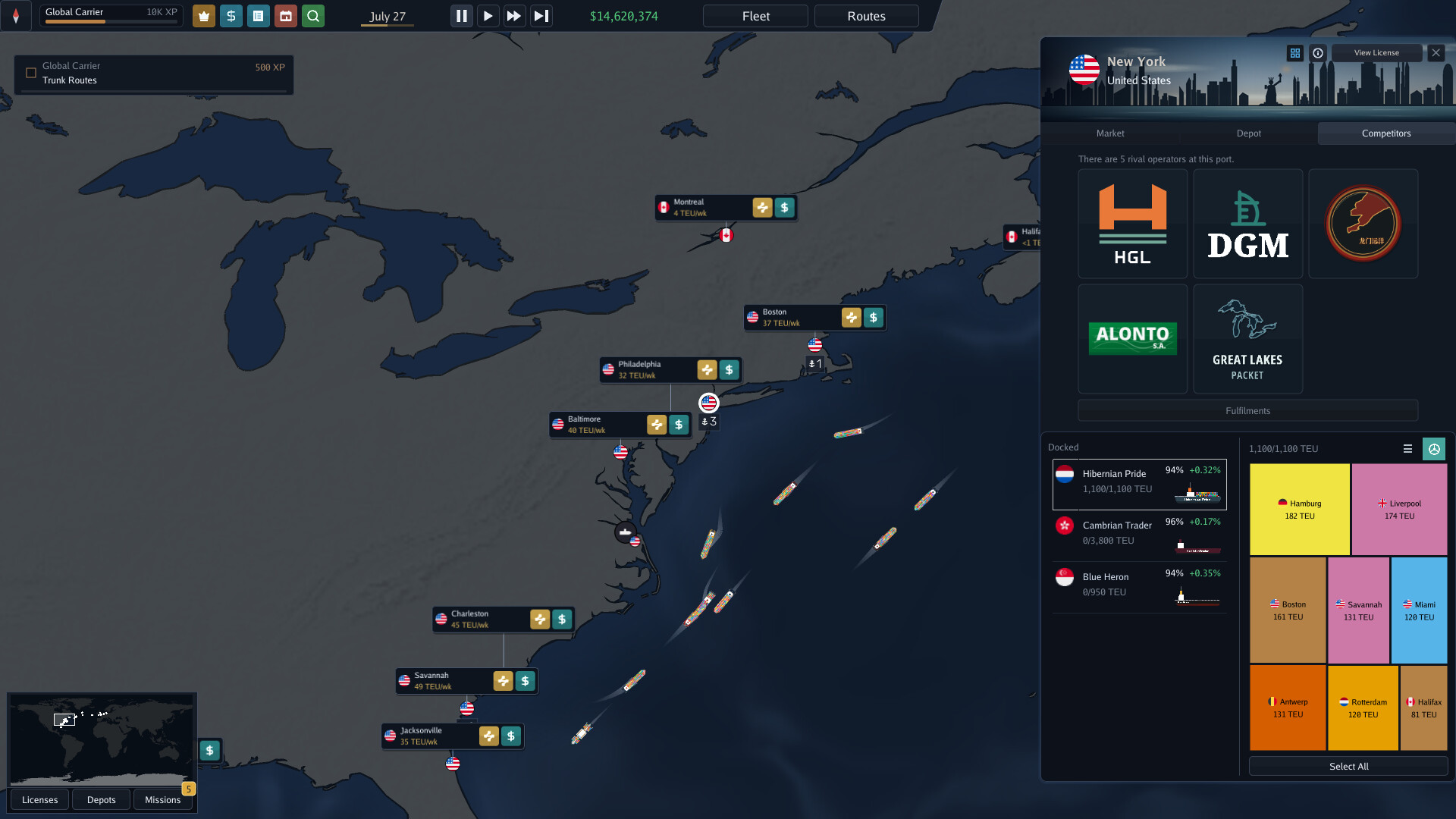
Route planning across a genuinely large world. The official description advertises over 250 real-world ports with more than 314 trade connections, so the map is not a token backdrop; it is the puzzle. You decide whether to spend a week learning the Baltic or jump straight to the Panama Canal.
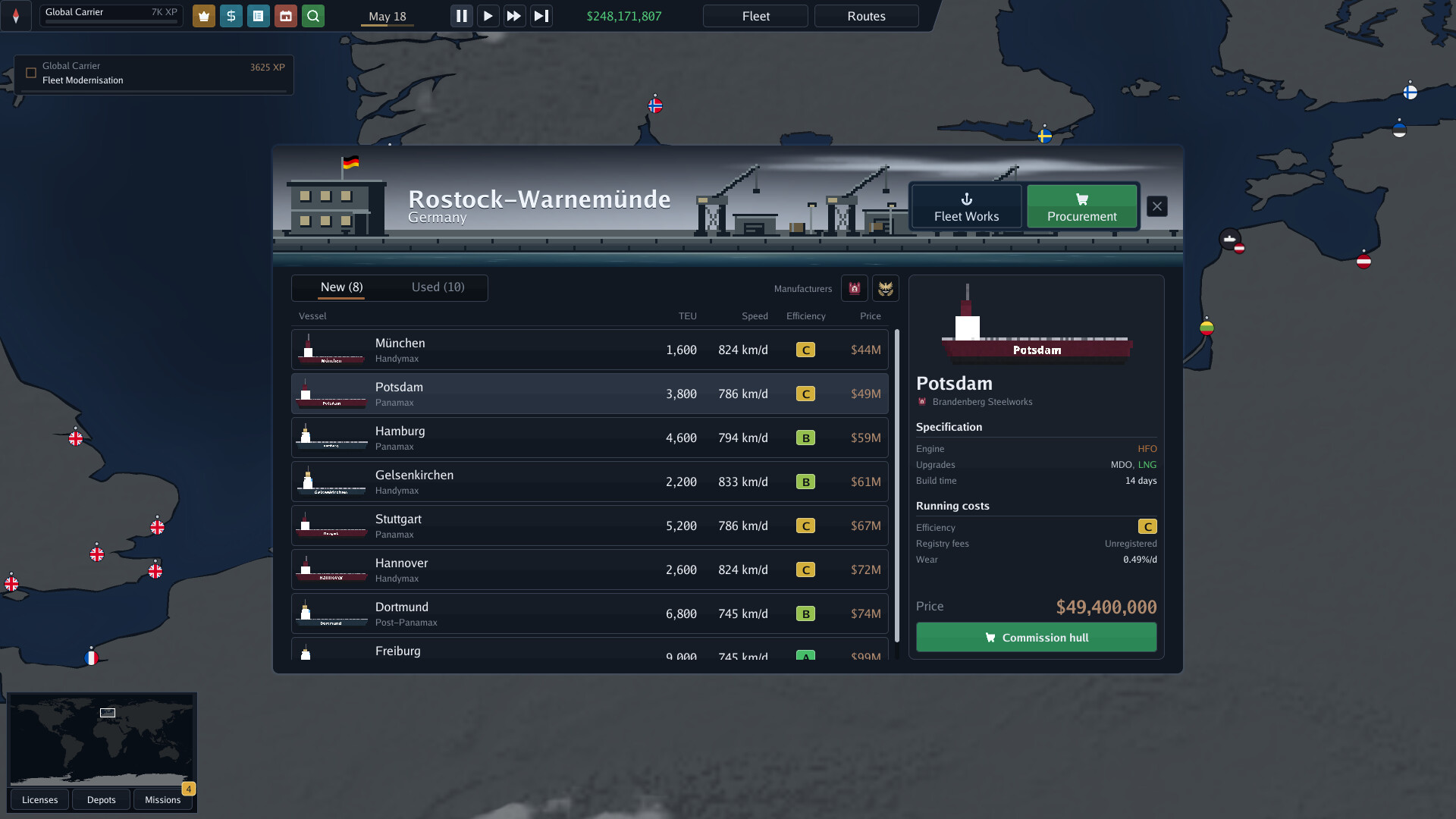
A fleet that you can actually grow. There are 167 ship variants from 34 manufacturers, with used buys, new-build orders and charters available at 20 shipyards. Players describe engines, icebreaker fittings and liveries as meaningful choices rather than cosmetic fluff.
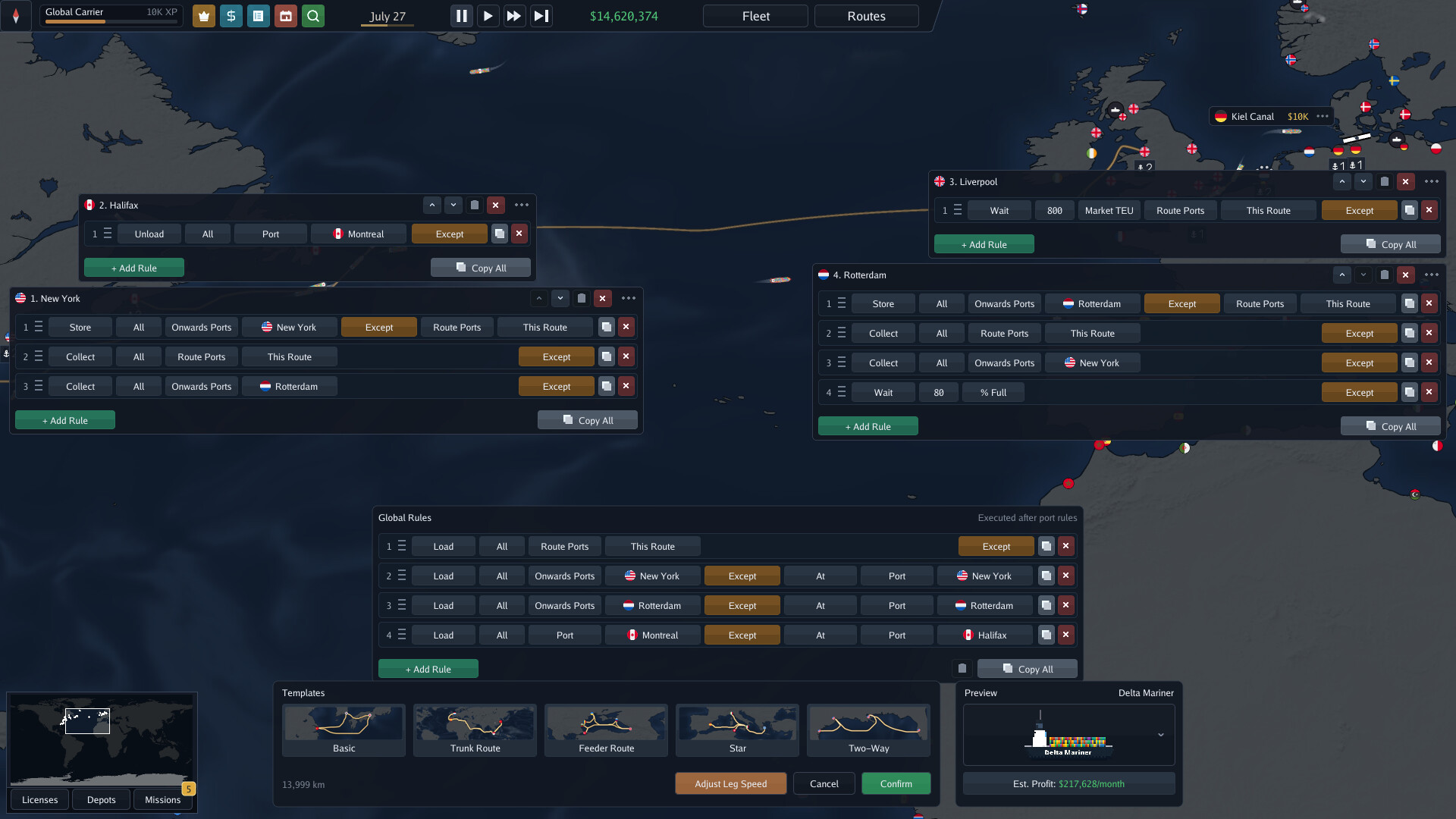
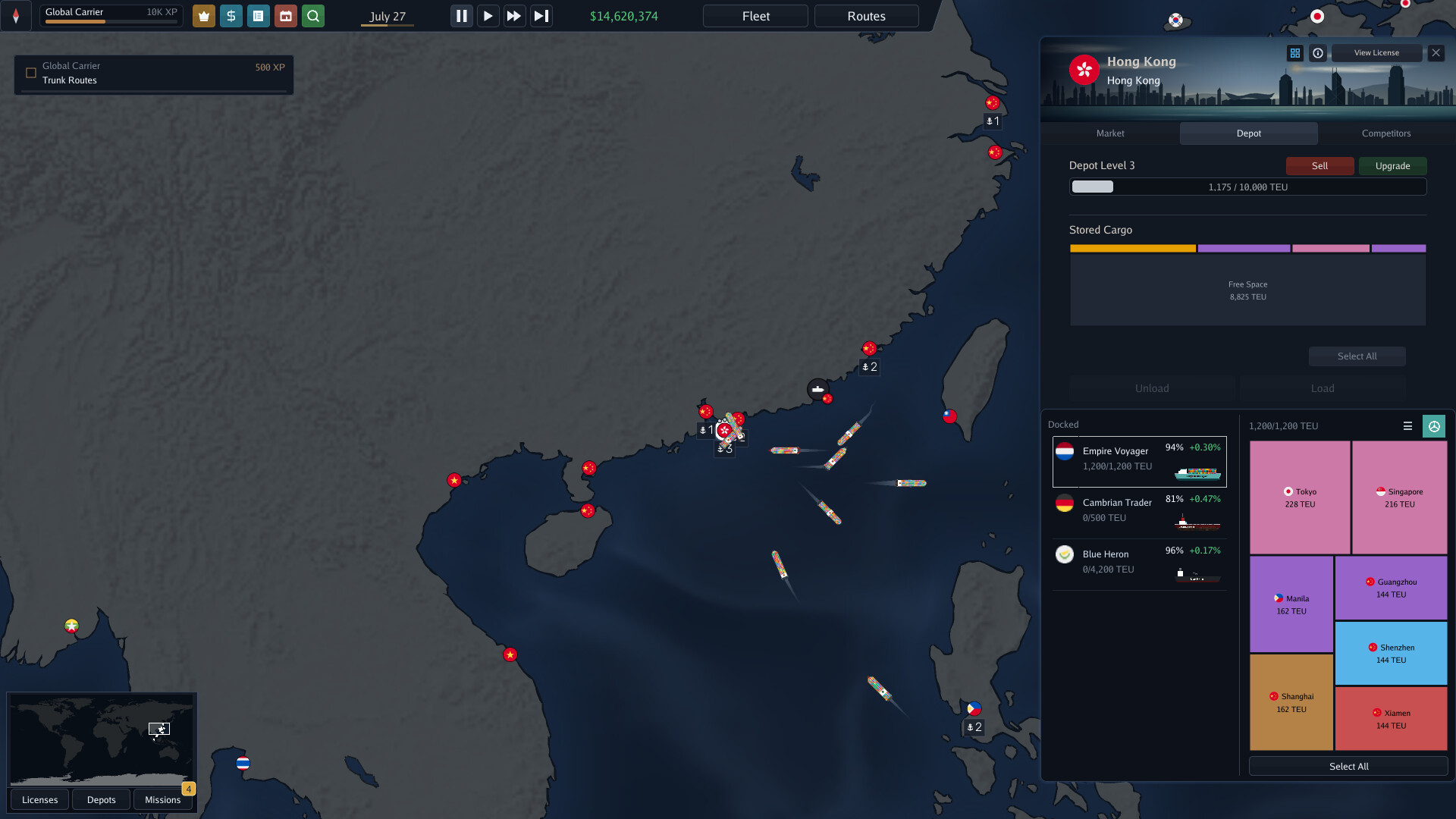
Automation and hub-building as the late game. You build depots to funnel Caribbean cargo into Miami, then push it onward, while setting rules for loading, deliveries, departure timing and fuel trade-offs. Several reviewers describe this layer as both the deepest part of the game and the most frustrating UI surface, which is worth knowing before you buy.
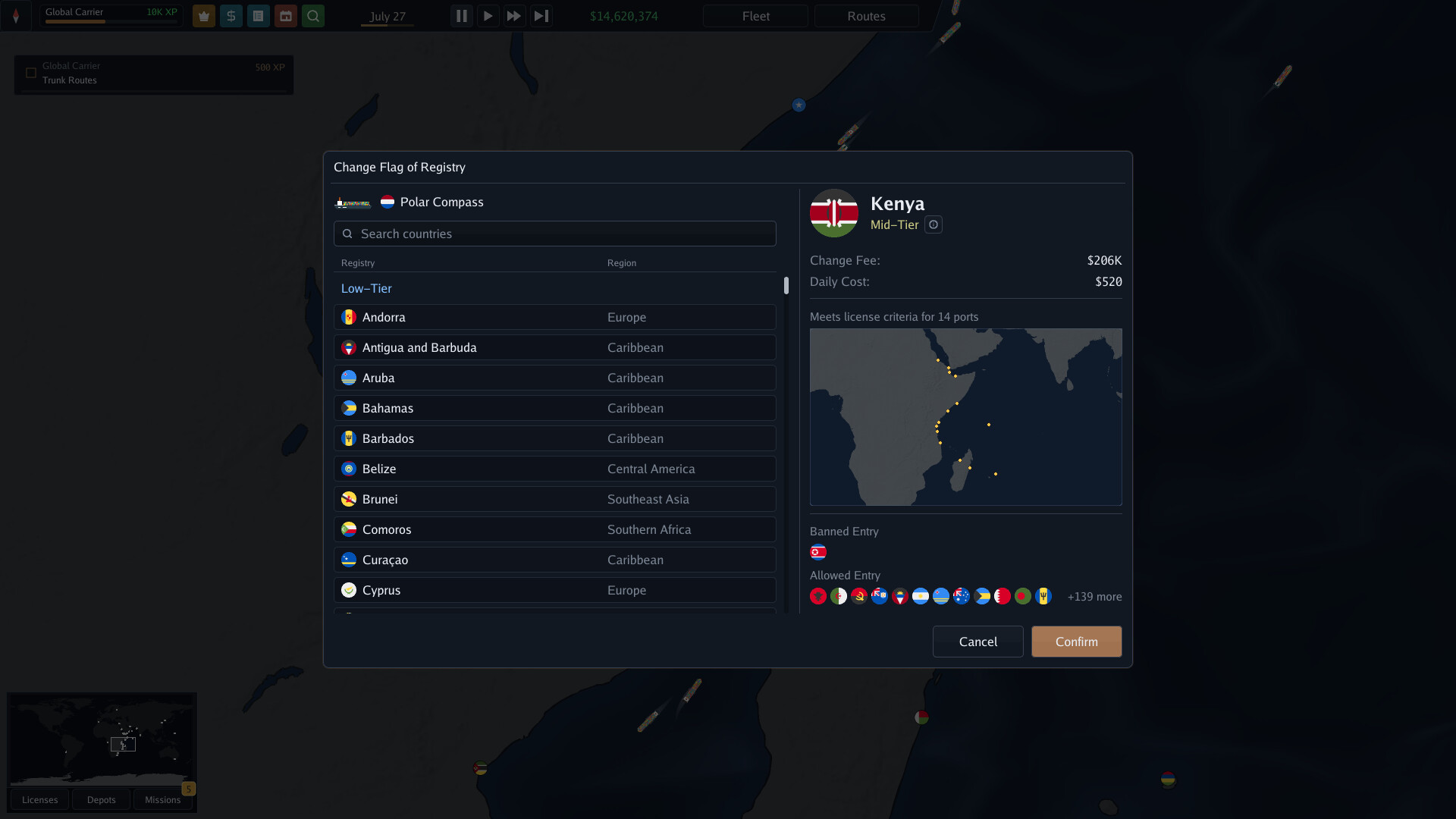
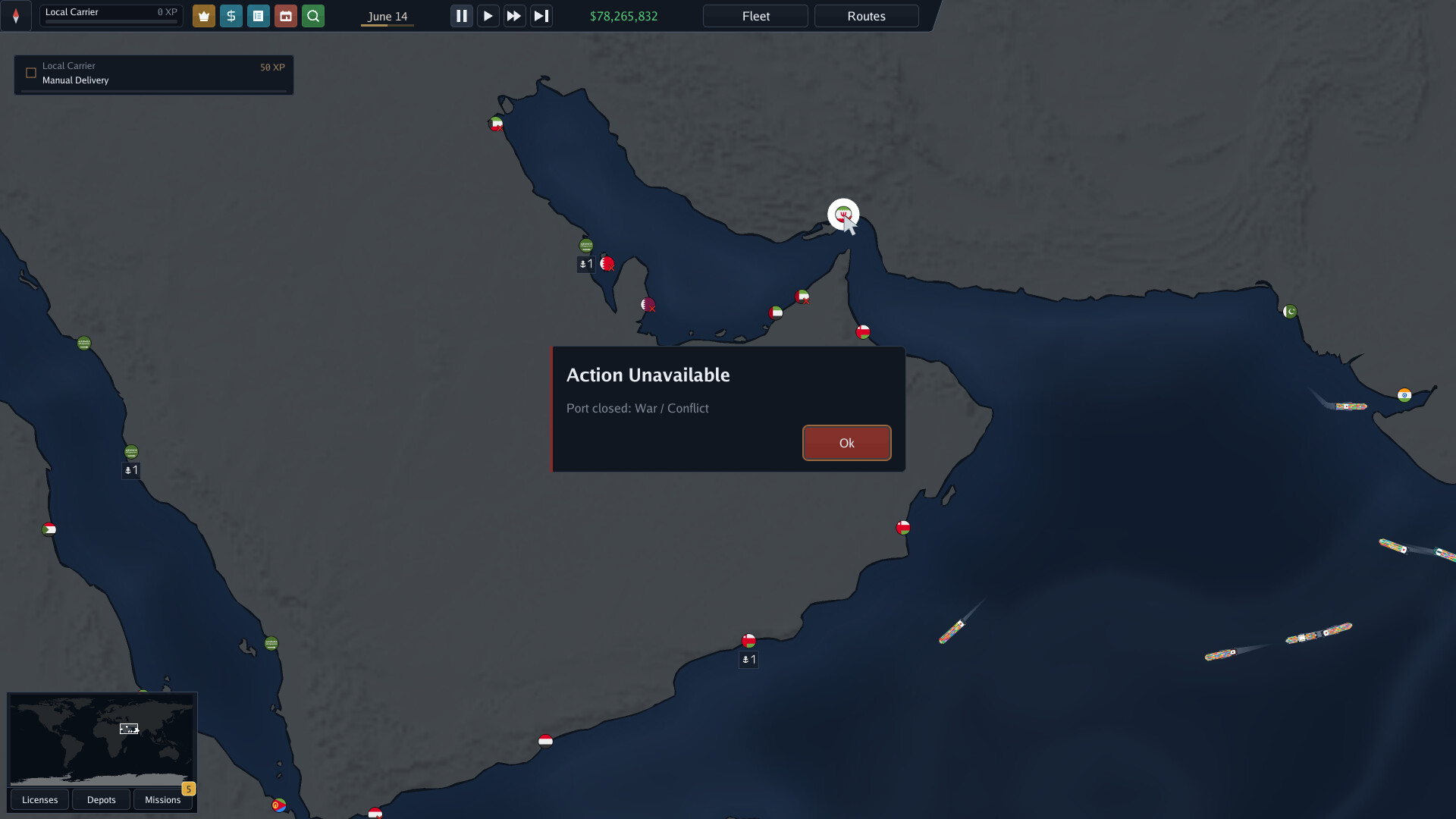
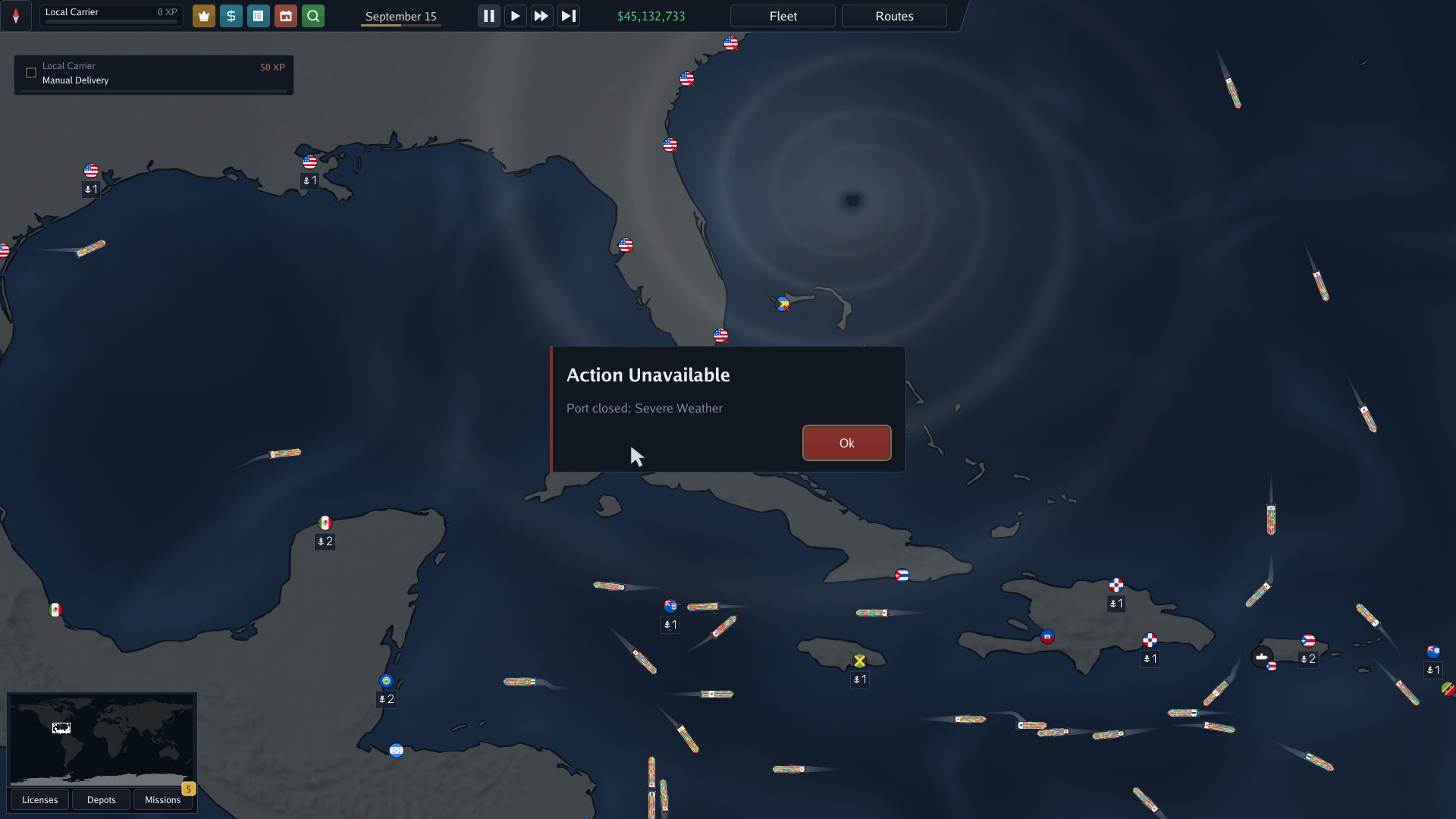
Weather, politics and paperwork as difficulty knobs. Tropical cyclones, earthquakes, ice-blocked ports, worker strikes, war, fuel spikes, flag costs and over 150 shipping licenses with nationality requirements can all wreck a tidy network. The official pitch calls it an enjoyable nightmare, and players echo that tone.
What early players are seeing
What is landing
- One player with 12.5 hours in a single day called the developer and Discord extremely helpful, noted a first patch already shipped, and rated the experience 11 out of 10 for the genre. That kind of same-day engagement from a small studio is a real signal about post-launch support.
- A reviewer who logged hundreds of hours described the port-balancing as solidly grounded in real-world statistics, with hubs like Hong Kong and Singapore naturally drawing heavier traffic. They expect hundreds more hours as the network scales exponentially with each added port.
- A long-time playtester with 100+ hours during testing said the game still had unlocks they had not reached, praised the seasonal weather and event dynamics, and singled out Antimuon Studios for being responsive to feedback rather than abandoning the project after launch.
- Multiple positive voices frame Bering Tonnage as filling a criminally neglected corner of the market, with one player calling it easily a top-three shipping game they have ever played at this price point.
What still needs watching
- UI and quality-of-life complaints are consistent across reviews. Players report that tutorials feel like chores, that the routing UI struggles once you exceed roughly 20 ships, and that automation rules can be confusing to the point of missing cargo in 200k storage depots.
- Performance and stability issues show up in early feedback, including reports of frame-rate drops to around 10 fps after running for a while, automation rules that did not trigger reliably, and storms that close ports for long stretches. At least one of these reviewers noted a quick patch that addressed their concerns, which softens but does not erase the risk.
- Long-term depth is openly questioned. A reviewer who enjoyed the game still estimated roughly 8 to 12 hours of fresh content before the loop turns into pure number-go-up, and wished AI competitors were fiercer. If you burn through systems quickly, this may feel thin before a sale.
Is Bering Tonnage worth buying now?
Current decision
Worth tryingThe strongest supported appeal is the depth of the maritime simulation itself: real ports, real licenses, real weather, real automation, wrapped around a single-player sandbox that finally treats this genre with respect. Antimuon Studios is small but visibly active, shipping a patch within a day of launch and engaging on Discord. At the same time, the UI friction, automation learning curve and post-launch performance hiccups are real enough that I would not call this a safe day-one buy for everyone. If the shipping tycoon itch has been bugging you, this is the most ambitious recent attempt to scratch it, and the developer track record makes the rough edges feel addressable rather than permanent.
Who this is for
A good fit if you…
- Single-player tycoon fans who want a slow-burn logistics sandbox rather than a flashy arcade game
- Players who enjoy building automation rules, depot networks and shipping chains and who do not mind a learning curve
- Maritime and geography enthusiasts who like seeing real ports, canals and weather patterns represented as gameplay
- Patient strategy players who appreciate developer responsiveness and can tolerate rough UI in exchange for depth
- Anyone who has been waiting for a serious spiritual successor to classic port-and-shipping management games
Wait if you…
- You prefer your tycoon games to have a polished, tutorialized onboarding rather than a self-teach phase
- You primarily play on Steam Deck or laptop, where compatibility and performance are not officially confirmed
- You want strong late-game challenge, since multiple players note AI rivals and end-game content feel thin right now
- You are sensitive to day-one performance and UI bugs, even if patches are likely
If Bering Tonnage is not quite your game

SIMILAR OPTION
Schedule I
Choose it ifChoose Schedule I if you want a narrative-leaning empire game with a grungy modern-city vibe. Choose Bering Tonnage if you want a quieter, more systemic logistics sandbox with real-world geography.
How it comparesSingle-player tycoon progression with an empire-building loop Schedule I is a crime-driven production and distribution sim where you grow from a small-time dealer into a kingpin across a fictional city, with employees and properties. Bering Tonnage sits in a very different setting, using real ports, licenses and weather instead of contraband, and leans heavily on automation rules rather than hands-on product crafting.

SIMILAR OPTION
RimWorld
Choose it ifPick RimWorld if you want emergent characters, combat and a deep narrative simulation. Pick Bering Tonnage if you specifically want a maritime empire-builder with automation and real-world trade routes.
How it comparesColony and management simulation depth in a single-player sandbox RimWorld is a sci-fi colony sim driven by an AI storyteller where you manage colonists, relationships and survival, while Bering Tonnage is a modern-era shipping tycoon focused on cargo, ships, depots and real-world ports. RimWorld has a much longer polish history and far more systemic storytelling; Bering Tonnage offers a more grounded, spreadsheet-friendly logistics loop with real geography.
Share this article