Preview rollout of DeepSeek-V4

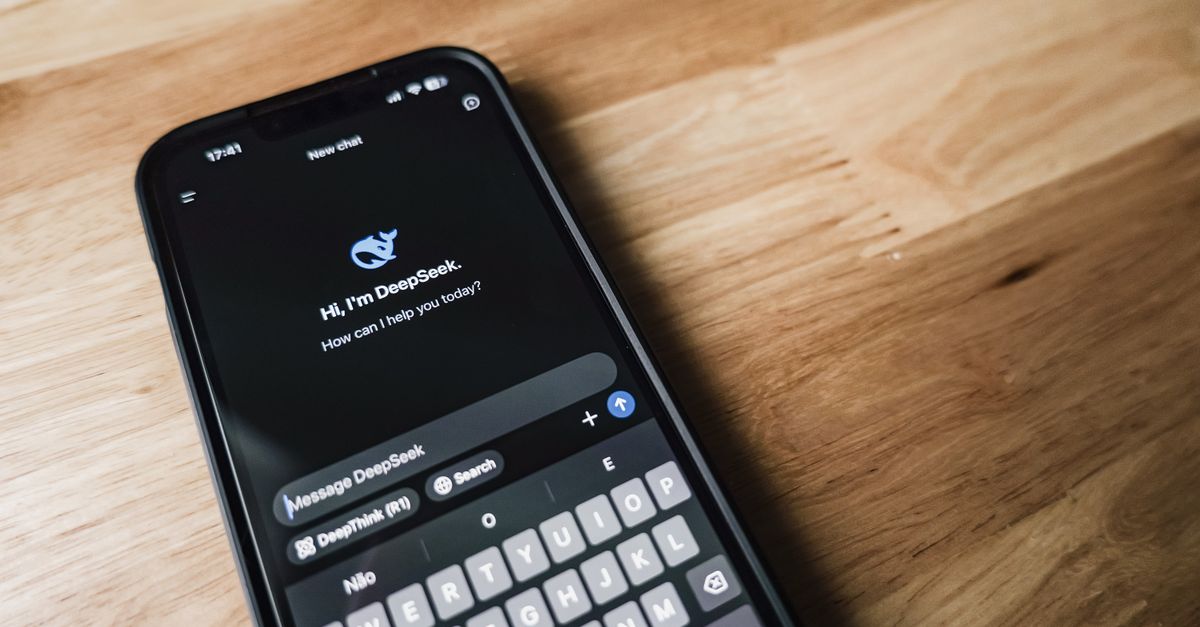
DeepSeek, the Chinese artificial intelligence startup, released "preview" versions of its long-awaited V4 model on Friday, April 24, 2026, more than a year after its low-cost reasoning model R1 surprised global markets in January 2025. The company announced the release on social media, positioning V4 as a successor to its V3 model released in late 2024 and making preview versions of the new system available to users.
Two-tier model lineup
The V4 family ships in two variants, DeepSeek-V4-Pro and DeepSeek-V4-Flash. The company describes the Flash version as "a more efficient and economical choice" because of its smaller parameter count. Both versions are positioned as open source, allowing developers to access, modify and build on the underlying technology — a posture that distinguishes DeepSeek from closed systems fielded by Anthropic, Google and OpenAI. DeepSeek also continues to offer a free-to-use web and mobile chatbot.
Specifications and benchmark claims
According to DeepSeek's announcement, V4 features an ultra-long context of one million words and, in the company's assessment, achieves leadership among domestic and open-source models across agent capabilities, world knowledge, and reasoning performance. On world knowledge benchmarks, the company said V4-Pro significantly leads other open-source models and is "only slightly outperformed" by Google's Gemini-Pro-3.1 among closed-source systems. Separately, the company said a "V4 Pro Max" variant has "superior performance" in standard reasoning benchmarks relative to OpenAI's GPT-5.2 and Google's Gemini 3.0-Pro, while falling "marginally" short of GPT-5.4 and Gemini 3.1-Pro.
For agentic capabilities — the ability to perform complex tasks autonomously — DeepSeek said V4-Pro could outperform Anthropic's Claude Sonnet 4.5 and approach the level of Claude's Opus 4.5 based on its own evaluation. The Flash variant is said to perform on a par with the Pro version on simple agent tasks and to closely approach it on reasoning.
Context window expansion
Both V4 versions carry a one-million-token context window, a measure of how much information the model can process and recall. That is a substantial jump from V3, which supported a 128,000-token context window, and brings DeepSeek closer to the input sizes offered by leading U.S. systems.
Analyst reactions and unresolved questions
Analyst views on the rollout were mixed. Lian Jye Su, chief analyst at Omdia, said benchmark results suggested V4 would be "very competitive against its U.S. rivals." Marina Zhang, an associate professor at the University of Technology Sydney, called the rollout a "pivotal milestone for China's AI industry" amid intensifying competition for technological self-reliance. Ivan Su, a senior equity analyst at Morningstar, was more cautious, calling V4 a "competent" follow-up but not as large a breakthrough as R1, and noting that domestic competition in China has intensified significantly since R1's release. Both analysts stressed that independent evaluations are needed before final conclusions about V4's capabilities can be drawn.
Distillation allegations from U.S. rivals
The release comes against the backdrop of accusations from U.S. competitors. Anthropic in February accused DeepSeek and two other China-based AI laboratories of running "industrial-scale campaigns" to "illicitly extract Claude's capabilities to improve their own models" using a technique called distillation, in which a less capable model is trained on the outputs of a stronger one. OpenAI has made similar allegations in a letter to U.S. lawmakers. A Microsoft report in January indicated that use of DeepSeek has been gaining ground in many developing nations.
Share this article