Catch up on the essentials
- Nvidia’s GR00T 2 launch points toward reducing the task-specific demonstrations needed to train robots for manipulation.
- Alongside GR00T 2, Nvidia released Isaac Lab 3.0, an open-source robot-learning framework with tighter integration between the PhysX and Newton physics solvers.
- Nvidia introduced an open Video to Data workflow intended to turn human video into simulated robot demonstrations and presented EgoHand, a model for reconstructing three-dimensional hand motion from monocular egocentric video.
Selected from this article · 2026-11-10
Read on for the full pictureNvidia shifts focus toward transferable robot skills
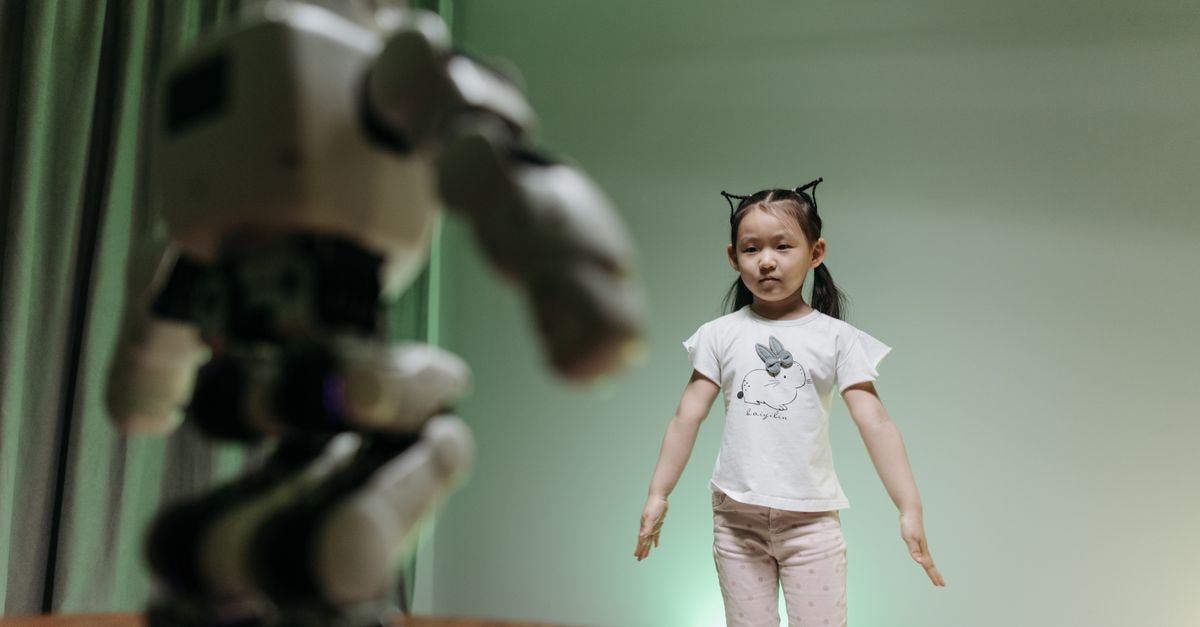
Nvidia’s GR00T 2 launch points toward reducing the task-specific demonstrations needed to train robots for manipulation. The company said the model completed 40 of 50 evaluated tasks at least once without task-specific demonstrations and averaged 71% success across those tasks with one demonstration per task, rising to 95% with five. These are Nvidia-reported benchmark results rather than independently established performance across deployed systems.
The model was introduced at the Conference on Robot Learning in Austin, Texas. Unlike earlier vision-language-action models, GR00T 2 is a world action model that predicts future video frames together with robot actions before executing an action chunk. It was built on Nvidia Cosmos and trained on robot and human data, including 100,000 hours of Nvidia open-source human egocentric video.
Simulation throughput addresses training bottlenecks
Alongside GR00T 2, Nvidia released Isaac Lab 3.0, an open-source robot-learning framework with tighter integration between the PhysX and Newton physics solvers. In Nvidia’s vision-based dexterous-manipulation benchmarks, Isaac Lab 3.0 with Newton achieved up to 2.5 times the training throughput of Isaac Lab 2.3 with PhysX.
The framework also supports simulated robots, perception-oriented renderers and reinforcement-learning post-training for models such as GR00T. Its practical significance is a potential reduction in the simulation work required to train and refine manipulation policies, although the throughput comparison is limited to the cited benchmarks.
On the newly introduced AlphaNIST benchmark, a single policy covering 20 tasks achieved 98% training success, compared with 81% for separate per-task policies, while using roughly 39 times less GPU time. Nvidia also introduced DexBench, covering 15 tasks across four industrial scenes, and VABAR, which evaluates six industrial tasks with standardized variations. These figures describe training performance on Nvidia’s benchmarks and do not establish commercial adoption.
Open tools extend beyond the model
Nvidia introduced an open Video to Data workflow intended to turn human video into simulated robot demonstrations and presented EgoHand, a model for reconstructing three-dimensional hand motion from monocular egocentric video. Noitom Robotics said its HiPHI-Hand dataset—11 hours of synchronized dual-fisheye video, headset-referenced camera extrinsics and optical-motion-capture joint positions—had been processed into Nvidia’s SOMA-Hand representation for use in EgoHand’s training corpus.
Noitom planned a live EgoHand demonstration at CoRL and has integrated the model into one of its egocentric-data pipelines for evaluation as a hand-annotation stage. The distinction matters: HiPHI-Hand was released openly, while EgoHand’s broader training corpus and the reported 14 million-image training set do not represent unrestricted access to every underlying asset.
Deployment remains at testing and evaluation stages
Nvidia identified Foxconn as applying GR00T 2 to factory automation for server manufacturing, Siemens as evaluating it across industrial use cases, Nexuni as testing robotic laundry handling and MicroAGI as using a post-trained model for Ethernet-cable swapping. These disclosures show active technical evaluation, not confirmed orders, production deployments or guaranteed procurement.
GR00T 2 and a lighter Turbo variant are planned for open-source release in December, according to Humanoids Daily’s report of Nvidia’s CoRL presentation. The reviewed reporting conflicts over what was already open: some tools and datasets were available at the conference, but the principal model weights and cross-embodiment training recipe were still scheduled for December. The next material checkpoint is therefore that planned release, followed by broader reproducibility and real-world performance testing.
Industry and product implications
Industry / product | Disclosed fact | Interpretation & stage | Verification signal | Main risk |
|---|---|---|---|---|
GR00T 2 (enabling) | Nvidia introduced GR00T 2 at CoRL 2026 and reported that it completed 40 of 50 evaluated tasks at least once without task-specific demonstrations, averaging 71% success with one demonstration per task and 95% with five. [1] | Disclosed fact; planned. Nvidia positions the world action model for learning manipulation skills from human and robot data, including cross-embodiment transfer and few-shot adaptation. | Observe the planned December open-source release and subsequent independent benchmark and deployment results. | The reported figures come from Nvidia-selected benchmarks and do not establish performance on all robot bodies or production workloads. |
Isaac Lab 3.0 (enabling) | Nvidia released Isaac Lab 3.0 alongside GR00T 2; in cited vision-based dexterous-manipulation benchmarks, its Newton configuration achieved up to 2.5 times the training throughput of Isaac Lab 2.3 with PhysX. [1] | Disclosed fact; operating. Simulation and reinforcement-learning tooling allows robot policies to be trained and post-trained before deployment on physical systems. | Observe independent throughput comparisons and successful transfer from simulation to physical robot tasks. | The 2.5-times comparison applies to the company-cited benchmark and may not transfer to every simulation workload. |
Newton (enabling) | Isaac Lab 3.0 provides tighter integration with the open-source Newton physics engine, including simulation of deformable objects such as cables and cloth and complex articulated robotic hands. [3] | Disclosed fact; operating. More accurate simulation of deformable and articulated systems supports training of manipulation policies intended for transfer to physical robots. | Observe benchmark results and real-world policy-transfer performance for cables, cloth and articulated hands. | Simulation improvements do not by themselves guarantee successful transfer from simulated to physical robots. |
EgoHand (upstream) | Nvidia released EgoHand under the OpenMDW license, which permits free commercial use; Noitom Robotics captured HiPHI-Hand data and NVIDIA processed it into the SOMA-Hand representation as one real-world source in EgoHand’s training corpus. [2] | Disclosed fact; operating. Precise egocentric hand captures supply training and annotation data for monocular three-dimensional hand reconstruction. | Observe accuracy and latency on independent egocentric datasets and additional operational use of the annotation pipeline. | Availability of EgoHand does not make every underlying training asset openly licensed, and reported benchmark accuracy does not establish universal performance. |
HiPHI-Hand (upstream) | Noitom Robotics released HiPHI-Hand on Hugging Face with 11 hours of synchronized dual-fisheye egocentric video, headset-IMU-referenced camera extrinsics and three-dimensional hand joint positions from optical motion capture. [2] | Disclosed fact; operating. The dataset supplies synchronized first-person imagery and precision hand ground truth for hand-model training and annotation. | Observe adoption in additional model-training and annotation projects and disclosure of dataset usage results. | Commercial use of HiPHI-Hand requires licensing separately from Noitom Robotics, so open research access does not equal unrestricted commercial use. |
PLACES IN THIS STORY
Explore the destinations behind this report
United States
Austin
Browse travel guides, places to stay, attractions and local food in Austin.
Explore Austin →Austin Travel Guide: Planning Tips, Costs and Things to DoShare this article
Table sources
- [1] Nvidia Unveils GR00T 2 Robotics Foundation Model at CoRL, Hits 71% One-Shot Success on 50 Tasks
- [2] Noitom Robotics Releases HiPHI-Hand, Precision Hand Capture Data Used to Train NVIDIA EgoHand, and Demonstrates Real-Time Hand Reconstruction at CoRL 2026
- [3] NVIDIA launches GR00T 2 and Isaac Lab 3.0 at CoRL