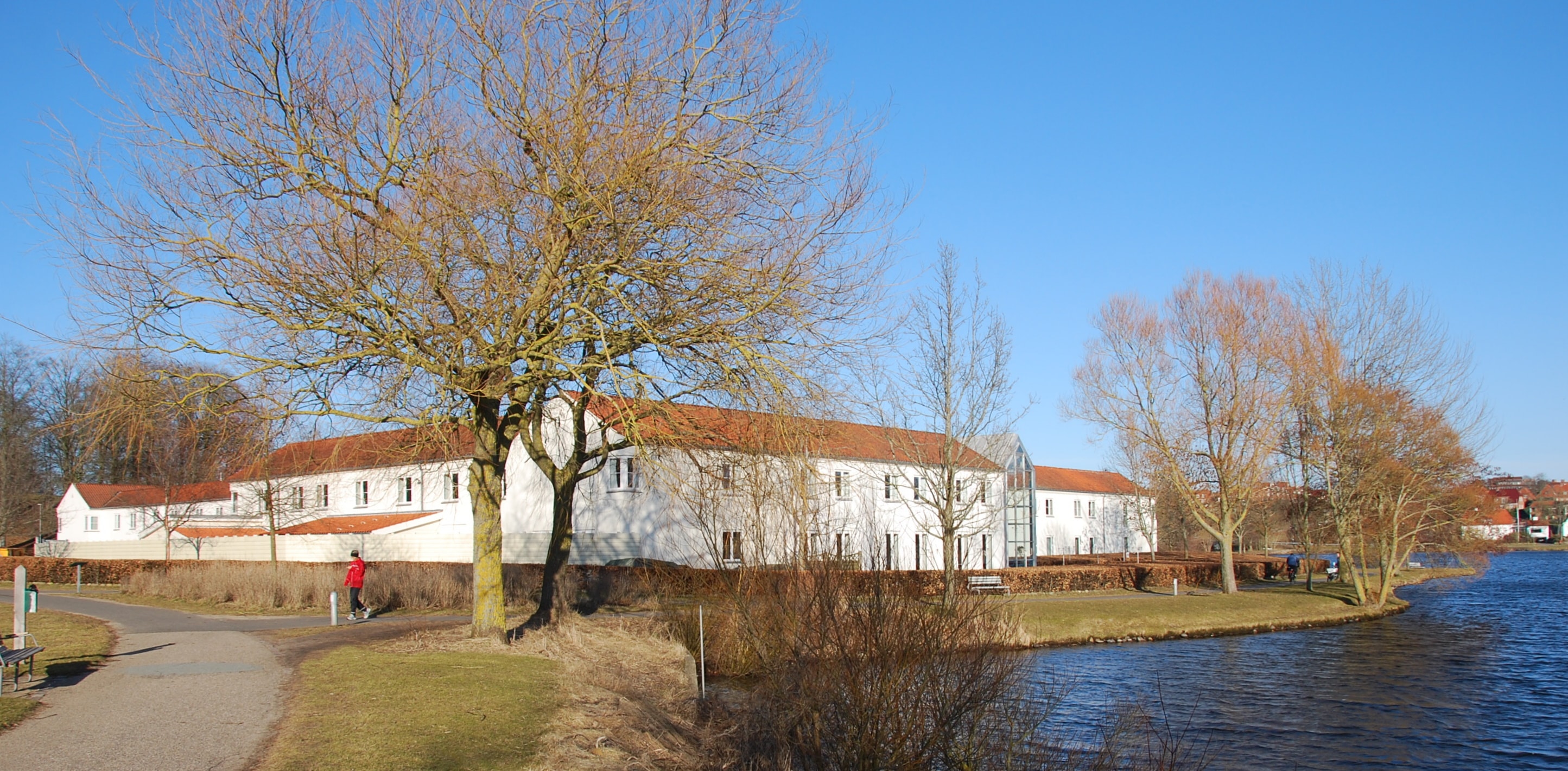
A first look at Aarhus

About 185 km northwest of Copenhagen, on Jutland's eastern coast, Aarhus is Denmark's second city and one of Scandinavia's oldest - founded in the 8th century where a river meets the sea. The central neighbourhoods - the Latin Quarter, Frederiksbjerg, the harbour district at Aarhus Ø, and the red-brick university quarter - sit close enough that you can walk most of the city in twenty minutes. About 350,000 people live in the municipality, and the centre has been a European Capital of Culture since 2017. The city itself holds two stars in the Michelin Travel Guide; that sits alongside a working harbour, a busy university town, and a coastline that pulls locals and visitors onto sandy beaches in summer.
For travellers used to the cost of Copenhagen, Aarhus reads as roughly 25% cheaper. What that means in practice: a long weekend is enough to cover the headline sights, eat well, and enjoy the harbour without feeling rushed.
July in Aarhus: weather and peak-season reality
July is peak. Hotel prices rise, foot traffic thickens, and the city's calendar spreads outdoors - Tivoli Friheden runs its summer concert series, the harbour baths stay busy, and the city reads differently when the sun is still up at 10pm.
Daylight stretches to about 17 hours at the solstice. Aarhus has a temperate oceanic climate; average summer highs are around 16°C with cooler evenings, and rain falls on roughly 10 days a month in any season, so a light waterproof remains useful even in midsummer. Warm beach afternoons happen, but treat them as bonus rather than guarantee.
If peak prices and crowds put you off, the value windows fall in April-May and September, when the weather is brisk, rates drop, and the same core sights are open.
Getting to Aarhus and moving around
The direct intercity train from Copenhagen to Aarhus H takes just under three hours and runs frequently throughout the day; advance tickets can be noticeably cheaper than walk-up fares. Aarhus H is a short walk from the Latin Quarter. Aarhus Airport (AAR) sits about 40 km northeast of town, served by the 925X airport bus, but for most international visitors flying via Copenhagen and taking the train is faster overall.
Inside Aarhus, public transport is run by Midttrafik: yellow city buses, blue regional buses, the Letbanen light rail, and DSB and GoCollective trains. The light rail's L1 line runs between Aarhus H and Grenaa via Lystrup and Ryomgård; L2 runs between Odder and Lisbjergskolen, with stops at Aarhus Central Station, DOKK1, and Aarhus University Hospital in Skejby.
Tickets must be purchased before boarding the city buses and the Letbanen - cash sales are not available on board. The cleanest way to buy and activate tickets is the Rejsebillet app, which takes international Visa, Mastercard, Maestro, Visa Electron, and American Express cards. The Day Ticket Aarhus covers zones 301-313 for DKK 59 (adults and seniors) or DKK 29.50 (children), valid until 23:59 on the day of purchase; the Day Ticket Midtjylland covers Central Denmark Region for DKK 109 (adults and seniors) or DKK 54.50 (children). Neither day ticket covers airport buses, DSB, or GoCollective trains.
Walking is the most efficient way around the centre. The free city-bike scheme has 56 stands across the city and works well for short hops between the harbour and Latin Quarter. The light-rail line has historically run reduced service in parts of July due to track works, so check the live Trafikinfo feed on midttrafik.dk before travel.
Things to do in Aarhus
ARoS Aarhus Art Museum is the headline sight. The contemporary building hosts cutting-edge exhibitions and a permanent James Turrell Skyspace called As Seen Below - The Dome on the rooftop. The Olafur Eliasson work Your Rainbow Panorama is a 360° colour-tinted glass walkway on the roof that frames city views and reads as both sculpture and observation deck.
Den Gamle By (The Old Town) is an open-air museum of around 80 historic buildings relocated here from across Denmark; costumed staff demonstrate blacksmithing, beekeeping, and period crafts.
Moesgaard Museum, on the southern outskirts, holds the Grauballe Man - widely described as the best-preserved bog body, dating from more than 2,000 years ago - alongside broader prehistory and ethnography.
Marselisborg Castle sits about ten minutes by bike south of the centre. It's the Danish royal family's summer residence; the rose gardens are open to the public, and the changing of the guard takes place at noon on days when the monarch is in residence.
Aarhus Øje, on Aarhus Ø, is a newer observation experience on the harbour - a ticket covers the arrivals level, the Byen & Bugten exhibition, and the elevator to a 44th-floor view. Allow 30 minutes to 1.5 hours. Adult tickets are DKK 129 (Mon-Thu) and DKK 149 (Fri-Sun); children 4-12 are DKK 59 (Mon-Thu) or DKK 79 (Fri-Sun); under 4 free. Opening hours: Mon-Thu 11:00-18:00, Fri 11:00-20:00, Sat-Sun 10:00-18:00.
Tivoli Friheden, an amusement park set inside a green park just south of the centre, runs fast rides, attractions, and outdoor concerts in summer.
For a low-cost day, the Botanical Garden near Den Gamle By is open without charge, the harbour baths designed by Bjarke Ingels are free to enter, and the Latin Quarter rewards a slow afternoon of cobbled streets and independent shops. Aarhus Cathedral is typically free outside of special events. Aarhus Street Food, set in former bus garages on Ny Banegårdsgade, has around 30 stalls running Thai, Palestinian, and Nordic kitchens.
Where to stay and when to book
In July, peak demand pushes rates up and squeezes availability, so booking well in advance is worth doing - especially over mid-July weekends and festival dates.
Indicative price ranges for July: dorm beds in hostels around DKK 200-300 per night; budget hotel rooms around DKK 600-900; private rooms on apartment-style platforms around DKK 350-700. Whole apartments run higher. Slightly outlying neighbourhoods such as Trøjborg and Frederiksbjerg typically price 20-30% below the Latin Quarter while keeping a 10-20 minute walk or a short bus ride to the main sights.
For a first visit, the Latin Quarter is the most walkable base; Frederiksbjerg is the strongest value trade for those happy to walk a little further or hop on a yellow city bus.
Eating and drinking in Aarhus
Aarhus's food scene has serious credentials. On the restaurant side, Frederikshøj in Risskov holds two stars, Substans, Domestic, and Gastromé each carry one, and Hærværk has a Green Star for its fermentation-led kitchen. Beyond tasting menus, Aarhus lunch tradition centres on smørrebrød at dedicated lunch counters such as Restaurant Klokken and Vesterlauget, where a single open-faced rye typically runs DKK 80-160. Standard toppings include pickled herring, roast beef, leverpostej (pork liver paté, DKK 70-110 on rye), fried fish, and egg with chives. Pickled herring (Marineret Sild) comes in six preparations - wine-pickled, curry, mustard, dill, tomato, and brine - usually served cold on rye with raw onion and capers (DKK 90-130).
Heartier evening plates include Stegt Flæsk med Persillesovs (crisp pork belly with parsley sauce and boiled potatoes; DKK 130-180) and Frikadeller (pork and veal meatballs fried in butter; DKK 110-160), both common at traditional restaurants like Teater Bodega and Den Lille Kro.
For late-afternoon pastries, look for kanelsnurre (laminated cinnamon swirls, DKK 30-50), kardemommesnegle (cardamom buns, DKK 40-65), and æbleskiver (spherical pancakes; six for DKK 50-80). The specialty-coffee scene was anchored by La Cabra in the Latin Quarter and extended by Stillers Coffee on Klostergade.
Markets worth a stop: Ingerslev Boulevard runs Wednesday and Saturday mornings with about 60 stalls of fish, cheese, and Djursland produce; Aarhus Street Food is open daily in the former bus garages; the Nicolinehus on Aarhus Ø runs a market hall. The annual Food Festival is held in September at Tangkrogen - it does not run in July.
For a budget meal, supermarket groceries at Netto, Rema 1000, or Lidl are good value, and "Dagens Ret" (dish of the day) is a common lunchtime offering across the city.
Staying safe in Aarhus
Aarhus is widely considered one of Europe's safer cities. Violent crime is rare; the main risks for visitors are pickpocketing in busy areas like the train station and festival venues, and counterfeit event tickets sold by street touts around popular venues like VoxHall and Train. Stick to official ticket outlets for concerts.
Neighbourhood note: Frederiksbjerg (south of the centre, a hub for cafés and street food), Østerbro (eastern residential, with parks and beaches), and central Aarhus C are safe day and night. The riverside Åboulevarden is lively but can be noisy on weekend evenings. Gellerupparken in the western outskirts has historically had more crime than the centre and is best visited during daytime if at all.
The Danish emergency number is 112.
Costs, currency, and saving tips
Denmark uses the Danish krone (kr / DKK). Cards - Visa, Mastercard, American Express, and Maestro - are accepted almost everywhere; only a few taxis and small market stalls still rely on cash. Don't over-rely on exchanging foreign notes for everyday spending, since paying by card is typically both cheaper and simpler. Any conversion shown is a reference only; check the live rate on the day of travel.
The Day Ticket Aarhus (DKK 59) is the simplest cost-control lever for getting around and pays for itself after roughly four single rides; the Midtjylland day ticket (DKK 109) is the right call for day trips further into Central Denmark Region.
Other ways to keep costs down: book accommodation early (peak July fills up), stay in Frederiksbjerg or Trøjborg rather than the Latin Quarter, eat smørrebrød at a lunch counter or street food at Aarhus Street Food instead of a tasting-menu restaurant on day one, and use the free city-bike scheme for short hops.
Free of charge in any weather: the Latin Quarter, the Botanical Garden, Aarhus Cathedral (outside of events), the harbour baths, the street-art trail at Godsbanearealerne, and the Aarhus Ø waterfront promenade.
Practicalities before you go
- Public-transport tickets must be in place before boarding Aarhus city buses and the Letbanen; the Rejsebillet app is the simplest option. - The Letbanen has historically run reduced service in parts of July due to track works; check Midttrafik Trafikinfo for live updates before you travel. - Emergency services: dial 112. - Currency: Danish krone (kr). Cards are widely accepted across the city. - Prices, opening times, transport tickets and event schedules can change - always confirm on official websites before departure.
Exchange rates shown are for reference only; check the current live exchange rate before departure.
Share this article
TOOLS FOR THIS PLAN
Make the Aarhus plan measurable
Choose a tool only when it answers the next question in your trip. Your values stay in the browser, and each tool offers a route back to this planning context.