A calm, curious look at Begoua

There is something quietly appealing about visiting a place that sits just outside the more familiar capitals of Central African travel writing. Begoua, located in the Ombella-M'Poko region of the Central African Republic, is one of those urban settlements that rewards visitors who arrive curious rather than rushed. It carries the unhurried rhythm of a regional city whose daily life flows around local markets, family compounds, and the steady movement of people who know their neighborhood by heart.
Because Begoua is positioned within an administrative region rather than at the country's main international crossroads, a visit here tends to feel more like a slow discovery than a checklist of headline sights. The experience is shaped less by a single defining landmark and more by the texture of the streets and the practical realities of moving through a Central African urban setting.
This guide keeps the focus tightly on what the approved sources actually tell us: the city's coordinates and regional placement, its population scale, and the broader geographic orientation that helps visitors make sense of where they are.
Where Begoua sits in the country
Begoua is identified within the Ombella-M'Poko region of the Central African Republic, placing it firmly in the heart of the country's central administrative landscape. The city is noted at a coordinate of approximately 53°E, which orients it within the regional grid of Central African geography. While that kind of detail might sound technical, it matters for travelers who are stitching together maps, regional buses, or conversations with locals about direction.
For visitors, this essentially means that Begoua should be understood as a city defined by its region. It is not presented as a standalone travel capital, but rather as a notable urban settlement within Ombella-M'Poko. That distinction shapes the travel mindset: arrival is less about a single headline attraction and more about understanding how the city fits into the wider region. Visitors who appreciate administrative geography, regional planning, and the way small Central African cities anchor their surrounding countryside will find that framing especially helpful.
Getting around and orientation
Begoua has a recorded population of 264,067, and the city is identified as accounting for roughly 8% of the national population. That figure is not a travel itinerary in itself, but it does give visitors a meaningful sense of scale. Begoua is a substantial urban settlement by the standards of the Central African Republic, large enough to feel like a real city while still carrying the qualities of regional life.
For orientation, the simplest mental map is to remember that Begoua is part of the Ombella-M'Poko region, and that the city's identity is regional rather than national in the sense of being the country's primary destination. Visitors who want to understand where they are can use that regional framing as a reliable anchor.
What a visit actually feels like
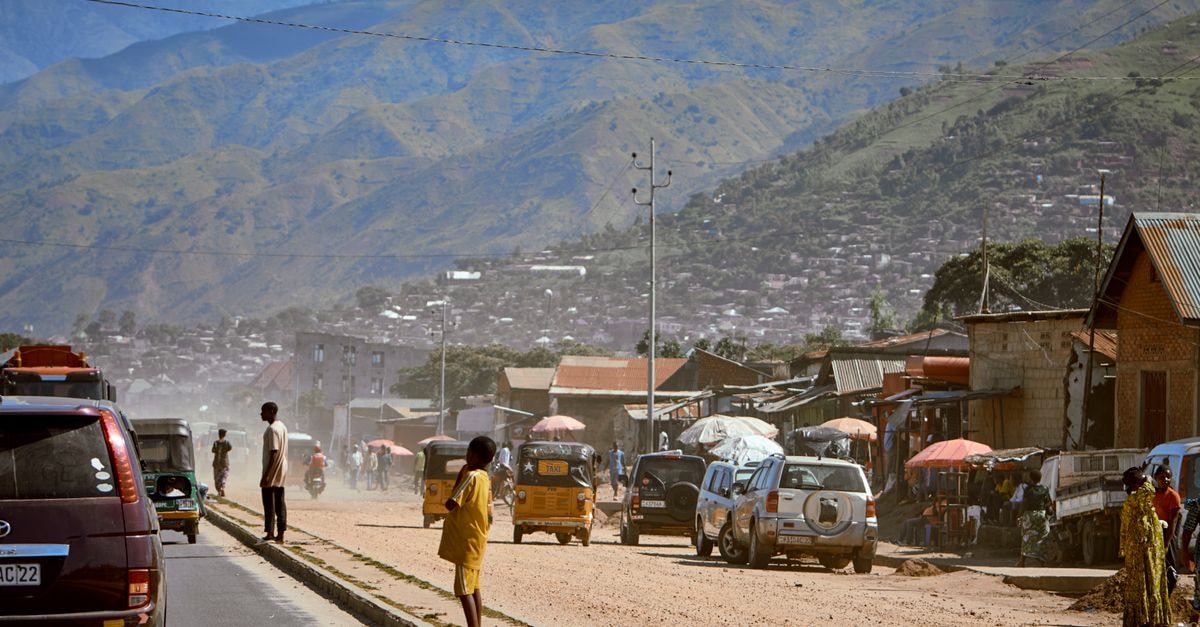
Travel writing can sometimes overpromise a place, but Begoua seems to ask for a different kind of attention. With no specific attractions, restaurants, or itineraries supported in the approved source material, the honest takeaway is that a visit here is more about the texture of regional Central African urban life than a tight list of must-see stops.
That is not a shortcoming. Many travelers find that the most rewarding visits to regional cities come precisely because they are not over-programmed. Watching how a neighborhood wakes up, observing the slow choreography of market days, and noticing how the city's rhythms shift with the light can be just as memorable as any single landmark. Begoua offers that kind of experience, with the caveat that visitors should arrive with patience, curiosity, and a willingness to verify any specific detail on the ground.
If you are the kind of traveler who enjoys cities that reward slow exploration, who likes understanding where a place sits on the map before arriving, and who appreciates grounded context over glossy claims, Begoua fits the bill.
Practical notes before you go
Because this guide is built strictly from the approved factual material, there are a few honest limits worth flagging. There is no verified daily budget range, no currency exchange detail, and no ticketed attractions included here. Any such figures would need to come from a current, authoritative source before being acted upon.
Travelers should also keep in mind that factual conditions around transport, services, opening hours, and local availability can change, and that the safest approach is always to check the most recent official information before departure. This guide's role is to give a stable, evergreen orientation to Begoua and its regional setting, not to substitute for current operational details.
With that in mind, a trip to Begoua becomes an invitation to slow down, look around, and engage with a regional Central African city on its own terms.
A final word on the facts
Every concrete detail in this guide comes directly from the approved factual sources. The city's position within the Ombella-M'Poko region, its coordinate reference, its population scale, and its share of the national population are the only specific figures provided, and they have been used with care. Nothing has been invented, and any detail that a reader would need to verify before acting on it has been intentionally omitted rather than guessed.
If a particular fact here turns out to be different from what a traveler encounters on arrival, treat the on-the-ground reality as the source of truth, and use this guide as a starting point for understanding the geography and scale of Begoua rather than as a final, fixed picture. Safe travels, and enjoy the unhurried discovery of a regional Central African city.
Prices, opening hours, schedules, reservation rules, and local conditions can change; verify them through official channels before departure.
Share this article
TOOLS FOR THIS PLAN
Make the Begoua plan measurable
Choose a tool only when it answers the next question in your trip. Your values stay in the browser, and each tool offers a route back to this planning context.