A First Look at Lucerne

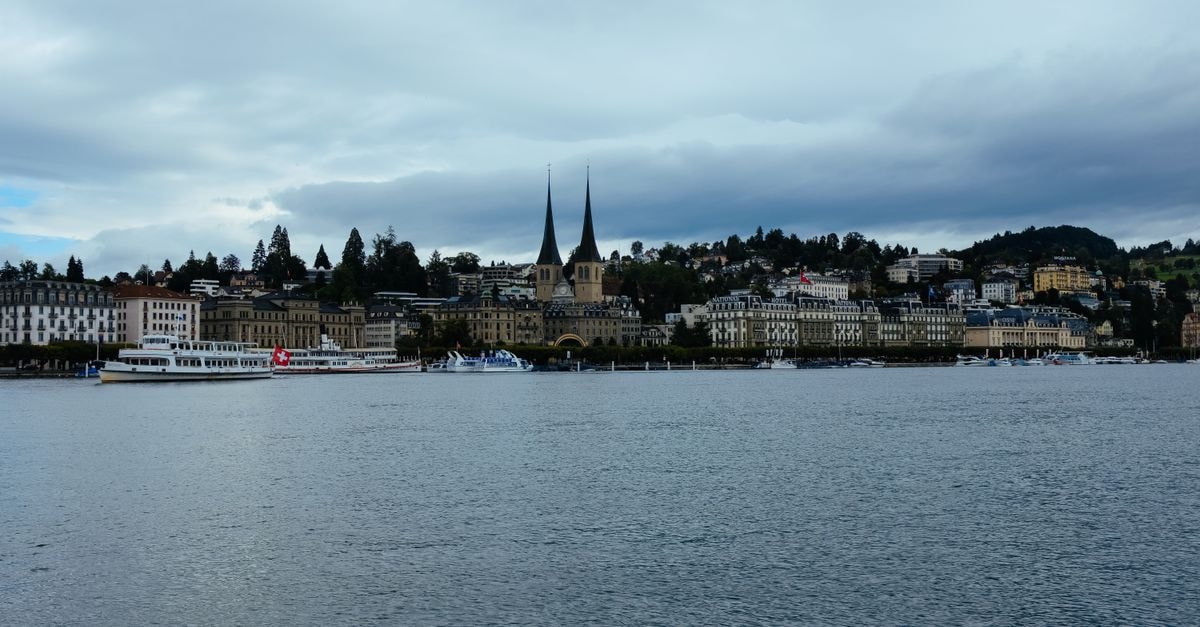
Lucerne sits at the northern tip of Lake Lucerne in central Switzerland, framed by mountains but compact enough that you can walk across the centre in around 20 minutes. The old town runs along the Reuss River between two wooden bridges — the famous Chapel Bridge with its painted cycle of panels, and the Spreuer Bridge. From the waterfront, the KKL (Culture and Convention Centre) marks the lakeside end of the city, while the Musegg Wall's nine towers climb the hillside to the south. Lucerne works as both a sightseeing city and a base for Alpine day trips, with Pilatus, Rigi, Titlis, Stanserhorn, and Stoos all accessible by public transport. The compactness makes it easy to combine a lake morning, an old town lunch, and a summit sunset in the same day.
July Weather and What to Pack
July is one of Lucerne's warmest and wettest months. Average daytime highs are around 24°C (76°F) with overnight lows near 14°C (58°F), and the long-range July 2026 forecast shows daily highs ranging from roughly 22°C to 33°C (70–82°F). Monthly rainfall sits around 165 mm (6.5 in), with humidity near 70%.
The pattern that defines Lucerne in July is the afternoon thunderstorm. Convective storms build over the Alps around 3 PM and roll across the lake on roughly 60% of days, lasting 20 to 40 minutes but often enough to close mountain summits and cancel boat trips. The Föhn wind that frequently precedes storms can make the lake choppy and disrupts paddleboard and kayak rentals. The safety rule is simple: if you hear thunder within 30 seconds of seeing lightning on an exposed ridge, descend immediately.
Pack a proper waterproof jacket rather than a flimsy shell, layered clothing (the summit of Pilatus can be 10°C cooler than town), comfortable walking shoes for cobblestones, and sunglasses. Daylight stretches until after 21:00, giving long evenings for sunset swims and open-air dinners. The lake itself reaches about 20°C (68°F) in July, swimmable at the lakeside lidos and the Tribschen Badi.
Getting There and Getting Around
Lucerne has direct train connections to Zurich, Bern, Basel, and other major Swiss cities, plus motorway links to the same network. Long-distance buses stop at the Landenberg/Alpenquai car park, roughly a 10-minute walk from the centre.
Inside the city and region, the transport system is fully integrated:
- Overnight guests in Lucerne city hotels receive a Lucerne Guest Card that covers all buses and trains within the city zone. - The Lucerne Travel Pass covers trains, buses, boats, and numerous mountain railways across Central Switzerland. - The Swiss Travel Pass (for international visitors) does the same with 2, 3, 4, 5, or 10 days of unrestricted travel. - The Tell Pass covers free public transport across Central Switzerland, including boats and many cable cars.
For specific mountain day trips:
- Pilatus: boat or train to Alpnachstad or bus to Kriens, then cogwheel railway or cable car (about 1 hour 10 minutes each way by bus or train, 1 hour 40 minutes by boat). - Rigi: train to Arth-Goldau or train/boat to Vitznau, then cog railway (1 hour 15 minutes to 1 hour 40 minutes one way). - Titlis: Lucerne–Engelberg Express to Engelberg, then cable car (1 hour 20 minutes). - Stanserhorn: Zentralbahn to Stans, then funicular and convertible cable car. - Stoos: train and bus via Arth-Goldau to Schwyz, then the world's steepest funicular (1 hour 45 minutes each way).
Boats on Lake Lucerne are part of the same public transport network, so your travel pass covers most lake crossings. The Pilatus cogwheel railway runs every 30 minutes in July, with last descents around 7:30 PM, leaving room for both a hike and a sunset at the summit.
Top Attractions and Summer Events
In town, the essentials are the Chapel Bridge, the Lion Monument carved into a sandstone cliff, the Musegg Wall ramparts (most towers open only in summer), the Jesuit Church with its onion domes, and the Swiss Museum of Transport across the lake. The KKL hosts classical concerts year-round, and the waterfront promenade is the easiest walking route between the train station, the old town, and the museum.
July 2026 brings two major events:
- Luzern Live runs 16–25 July 2026, with concerts, national and international music acts, and a festival atmosphere around Lake Lucerne. - The Swiss National Day celebration takes place on 31 July 2026 at Europaplatz in front of the KKL, starting at 14:00 with a children's program, regional food stalls, a folklore program from 16:00, and the official ceremony at 19:15 with a commemorative address by Federal Councilor Elisabeth Baume-Schneider. Admission is free, the event runs regardless of weather, and music continues late into the night.
The Lucerne Festival in Summer begins in August, so July visitors will be on the doorstep of the KKL's classical season but will miss the main festival block. The 5th Lucerne International Organ Festival also gets underway in early July.
Mountain Day Trips from Lucerne
The most popular full-day trip is the Pilatus Golden Round Trip — boat from Lucerne to Alpnachstad, cogwheel railway up, then cable car and panoramic gondola down to Kriens, and bus back to Lucerne. Hiking at the summit takes a couple of hours. The Cog railway's 7:30 PM last descent means you can hike in the morning, return to the lake for a swim, and still be back for dinner.
Rigi is the gentler alternative — Europe's first mountain railway, with sunrise and sunset services from Vitznau or Arth-Goldau. The trail network is wide and well marked, and the views over Lake Lucerne and out to the Alps are the classic Lucerne postcard.
For something different, Stoos is a car-free high plateau reached by the world's steepest funicular, with panoramic trails and quiet Alpine valleys. Titlis adds year-round snow, a glacier cave, and a revolving gondola if you want winter conditions in midsummer. Stanserhorn offers an open-top convertible cable car and a summit revolving restaurant.
Local Dishes and Markets
Lucerne's food scene draws on Central Switzerland's Alpine pantry. Regional signature dishes include Älplermagronen (potatoes, macaroni, cheese, and cream baked with fried onions and apple sauce), aged Alpkäse and Sbrinz hard cheeses, and broader Swiss classics like cheese fondue, raclette, and rösti. For dessert, the Willisau Ringli — a honey-and-lemon biscuit baked in the town of Willisau since 1850 — is the local specialty.
The Lucerne weekly market runs Tuesday and Saturday mornings along the Reuss River, with stalls laid out on the Rathausquai and Unter der Egg on the right bank, and the Jesuitenplatz and Bahnhofstrasse on the left. Local producers sell regional cheeses, meats, bread, flowers, and crafts. The lake boat restaurants run a Summer Menu from 13 July to 6 September 2026 on the main cruise routes, so you can pair a boat ride with a sit-down meal at no extra planning cost. Chocolate-focused options include the Swiss Chocolate Adventure at the Swiss Museum of Transport, plus tastings and workshops at Max Chocolatier and Aeschbach Chocolatier.
Tickets, Reservations, and Booking Tips
Book mountain excursions and food tours ahead in July. The Pilatus Golden Round Trip is best reserved 7–10 days in advance, especially for morning departures before 9 AM that dodge afternoon thunderstorms. Old Town food tours book solid 5–7 days ahead, with group sizes typically capped at 12.
Specific bookable experiences listed on the official portal include the House of Fear virtual reality game from CHF 109, a private Old Town Tour with chocolate tasting from CHF 70, the Museum of Transport's XXL cinema day program from CHF 18, and a beginner photography course from CHF 199. The Swiss National Day celebration on 31 July at Europaplatz is free and needs no reservation. Boat swim tours and licensed operator excursions should be booked 3–4 days ahead.
Travel Costs and Budget
Switzerland is one of Europe's most expensive destinations. Realistic daily budgets for a 2026 trip are:
- Budget: CHF 100–150 per day (hostel dorms, supermarket meals, hiking, free activities). - Mid-range: CHF 200–350 (private room, one restaurant meal a day, a transport pass, one mountain excursion). - Comfort: CHF 400–600 (4-star hotels, restaurant meals, first-class transport). - Luxury: CHF 700+.
The two biggest cost drivers are accommodation and mountain excursions. A 4-star hotel room in larger Swiss cities starts around CHF 280 per night, and a single mountain excursion such as Jungfraujoch typically runs CHF 66–132 per person depending on pass coverage. Buying a Lucerne Travel Pass, Swiss Travel Pass, or Tell Pass before arrival usually pays for itself once you add a boat trip and a mountain railway.
For July specifically, hotel rates in Lucerne often drop 25–30% from the June peak once European school holidays shift south, though the city still feels busy. The lake, the old town, the Musegg Wall, and the Swiss National Day celebration are all free, so the biggest savings come from picking paid experiences selectively rather than trying to skimp on accommodation.
Safety and Practical Tips
Lucerne is a safe city overall, but the weather is the main thing to watch. The thunderstorm risk is real — exposed ridges, summit viewing platforms, and open cable cars are no places to be when lightning is close. Aim for summit ascents in the morning or in the first hour after a storm has cleared. Construction on the Seebrücke bridge is scheduled for July 2026, so expect around 15-minute detours around the old town's southern edge.
For entry, Switzerland is in the Schengen Area. Starting in late 2026, US and UK visitors will need an ETIAS travel authorization (€7, valid for three years) before departure, and a new Entry/Exit System (EES) will require fingerprints and a photo at the Swiss border on first entry. Passports must be valid for at least six months beyond your entry date. UK travelers can use the GHIC for state healthcare, but it does not cover mountain rescue or air ambulance, which is genuinely expensive in the Alps, so separate travel insurance is sensible.
Switzerland uses Type J power sockets at 230V, so bring an adapter. Switzerland uses the Swiss Franc (CHF); card payment is widespread in the city, but some mountain huts, market stalls, and parking machines still prefer cash. Exchange rates fluctuate, so check the live rate before changing money.
Disclaimer
Travel conditions, prices, transport schedules, and event details can change without notice. Always confirm opening times, ticket availability, weather windows, and any late changes through official channels — Lucerne Tourism (luzern.com), SBB (Swiss Federal Railways), the individual mountain railway websites, and the relevant event organizers — before booking or departure.
Share this article
TOOLS FOR THIS PLAN
Make the Lucerne plan measurable
Choose a tool only when it answers the next question in your trip. Your values stay in the browser, and each tool offers a route back to this planning context.