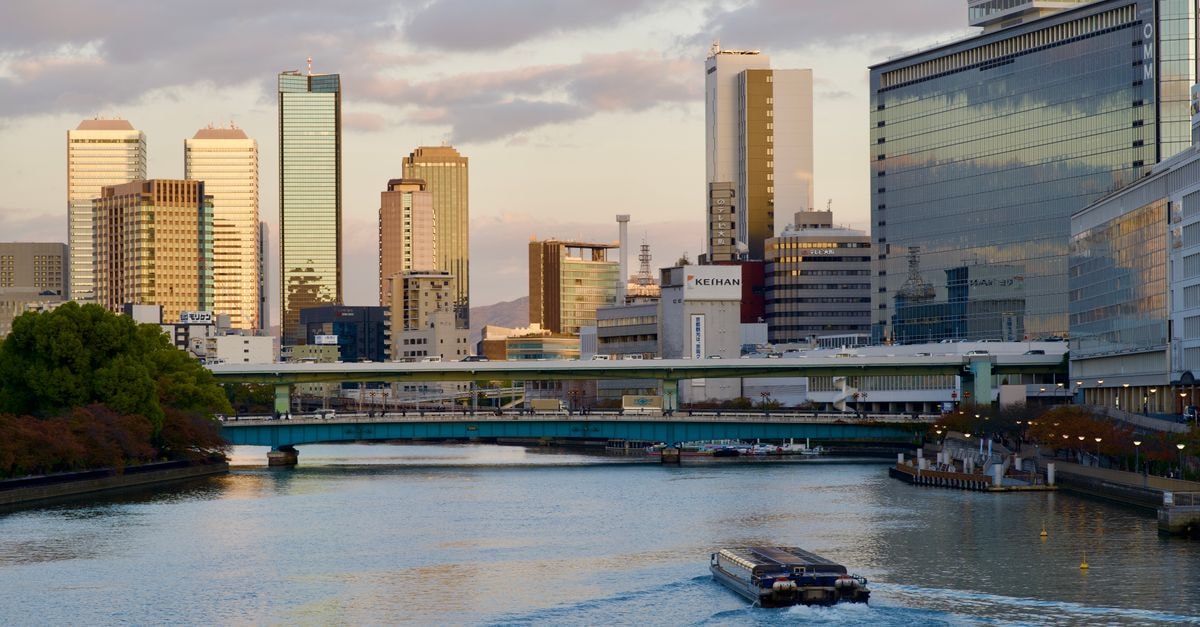
Osaka, Japan's second-largest city, anchors the Kansai region as both a commercial powerhouse and one of the country's most distinctive food cities. The southern Namba district and northern Umeda district form the city's twin retail hubs, and the saying "kuidaore" — eat till you drop — captures the local obsession with good eating. Osaka also functions as a transport gateway to Kyoto and the wider Kansai region, making it a natural base for travelers who want to mix big-city sightseeing with day trips.

Top Attractions and Neighborhoods
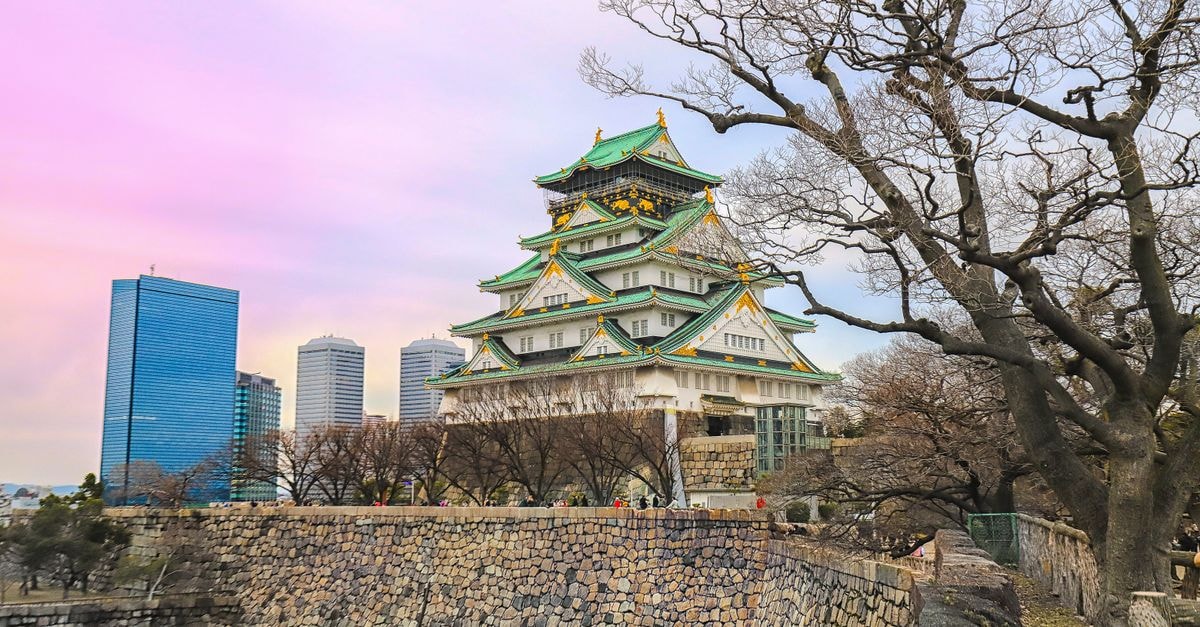
Osaka Castle sits at the heart of the city's identity, with its green-and-white keep rising above the surrounding park. Visitors typically head inside the main tower, where exhibits cover the castle's history, including figures such as Toyotomi Hideyoshi.
For a contrast in scale, the Osaka Aquarium Kaiyukan — described as one of the world's largest aquariums — guides visitors past tank after tank of marine life, while the Umeda Sky Building's rooftop Floating Garden Observatory delivers a panoramic view of the city, especially after dark.
Dotonbori, the canal-side entertainment district at the southern edge of Namba, is where most travelers end up at least once. The strip is famous for its oversized 3D food signs — most recognizable are the running Glico athlete and the giant moving crab of Kani Doraku — and for the density of restaurants, arcades and canal-side photo spots.
Universal Studios Japan, in the bay area, is one of the city's biggest day-trip draws, with themed zones including the Wizarding World of Harry Potter.
For culture and history, several smaller sites sit within easy reach of one another:
- Osaka Museum of Housing and Living, which recreates an Edo-period streetscape and includes detailed miniature models - Osaka Museum of History, covering the city's history - Shitennoji, one of Japan's oldest Buddhist temples - Tsutenkaku tower - Hozenji, a small temple tucked into a Namba side street - The Kamigata Ukiyo-e Museum, dedicated to prints from the historical Osaka-Kyoto region
In the Tennoji area, Tenshiba at Tennoji Park offers an open-air gathering space, and nearby Shinsaibashi's covered shopping arcade stretches roughly 600 meters with clothing shops, gift stores and restaurants packed into one long hall.
Getting Around Osaka
The city's local network is built around Osaka Metro (subway) and city buses, which together cover virtually every major district in the central area.
For trips beyond the city, Osaka functions as a rail gateway to Kyoto and the wider Kansai region, with frequent departures from central stations.
Because fares, schedules and pass options change over time, it is worth checking each operator's official website before travel rather than relying on any single guidebook.
Local Dishes to Try
Osaka runs on street food and casual cooking. Three signatures show up on nearly every food-focused itinerary:
- Takoyaki — batter-coated octopus balls, cooked in special half-sphere molds and served hot from small Dotonbori stands - Okonomiyaki — a savory cabbage-and-batter pancake grilled on a hotplate, with countless topping variations - Yakitori — grilled chicken and other skewers sold from casual counters and izakaya
Other dishes rooted in Osaka's repertoire include kushi-katsu (a deep-fried skewer specialty noted at Osaka restaurants such as Yaekatsu) and boxed sushi (a pressed-sushi style served in the Osaka area).
Dotonbori is the most concentrated place to try takoyaki, okonomiyaki and similar snacks in a single walk, while Kuromon Ichiba — the "Black Gate Market" near Namba — functions as a covered food market with fresh produce, seafood and ready-to-eat stalls.
Sightseeing Route Suggestions
A frequently recommended two-day loop focuses on the south side of the city on the first day and the historic sites on the second.
Day 1 — Southern Osaka: Kuromon Ichiba → Hozenji → Dotonbori → Shinsaibashi → Kamigata Ukiyo-e Museum → Umeda Sky Building (in the evening).
Day 2 — History and northern sites: Osaka Museum of Housing and Living → Osaka Museum of History → Osaka Castle → Shitennoji → Tsutenkaku.
The order can easily be rearranged, and both days pair well with an evening meal in the Dotonbori area or near Tsutenkaku.
Planning Your Trip
A few practical notes before booking:
- Stamp rally booklets. Many major attractions keep souvenir stamps, so bringing a small notebook can add a low-cost layer of fun to the trip. - Side trips. Day trips to Kyoto and the wider Kansai area are all reachable by train from central Osaka, which makes the city an efficient base for a longer Kansai itinerary. - Information changes. Train fares, museum hours and attraction ticketing rules can shift over time, so verify key details on the official sites of each operator before travel.
Factual travel conditions — including transport schedules, attraction hours, prices and reservation requirements — change frequently. Confirm the latest details with official operators and venues before departure.
Share this article
TOOLS FOR THIS PLAN
Make the Osaka plan measurable
Choose a tool only when it answers the next question in your trip. Your values stay in the browser, and each tool offers a route back to this planning context.