Why Rhodes works for a July trip

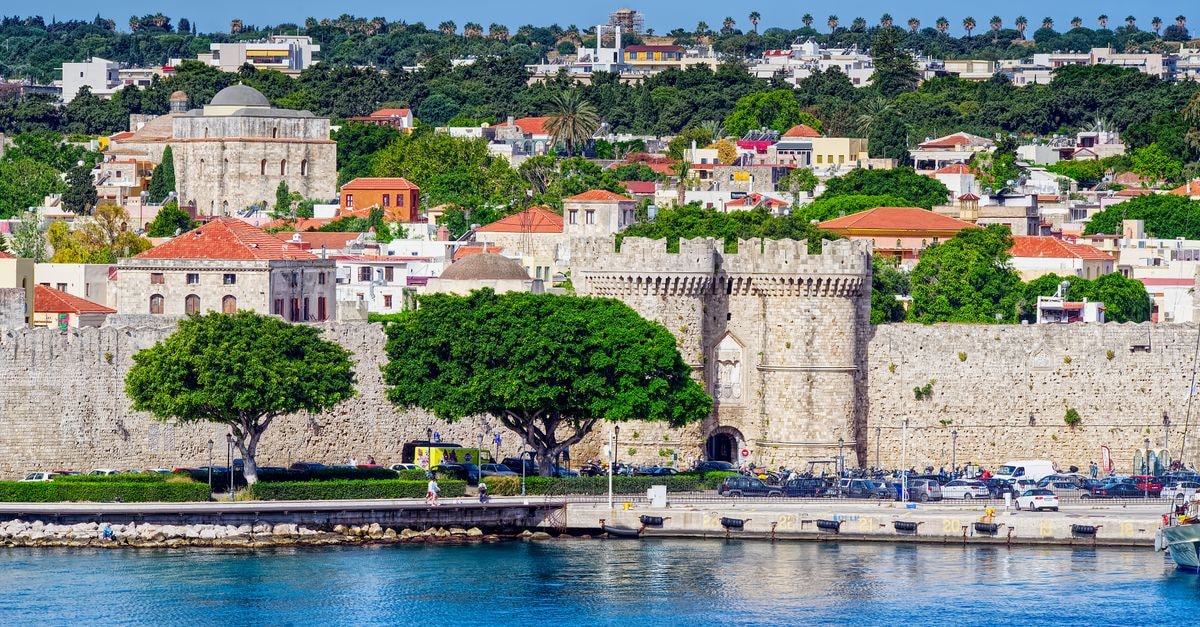
Rhodes is one of the few Greek islands where a single trip delivers both a UNESCO-listed medieval capital and a fully developed beach holiday. The walled Old Town is widely described as Europe's largest continuously inhabited medieval city, layered with the legacy of the Knights of St. John who held the island from 1309 to 1522. Inland, the Acropolis of Lindos is often considered second only to Athens for scale, while the southern tip at Prasonisi is positioned as a European-class windsurfing spot. The island runs a long Mediterranean season, which is exactly why July feels busy: it is when the rest of Europe decamps to the Dodecanese. Travellers who plan around the heat and the cruise timetable — rather than against them — tend to get the best out of a Rhodes July.
July weather and what the conditions actually mean
July sits at the heart of the Rhodes summer. Looneytravels' July guide puts typical daytime temperatures at 30–33°C, with hot spells reaching 34–37°C and evenings holding around 24–26°C. The sea sits at roughly 24–26°C and the island sees about 14 hours of sunshine a day, with rain essentially absent.
AccuWeather's July 2026 monthly outlook for Rhodes aligns with that pattern: daily highs running 85–91°F (29–33°C), overnight lows of 75–78°F (24–26°C), and a monthly average of 88°F high / 76°F low.
Two secondary effects shape how July feels on the ground. The Meltemi wind blows from the north and northwest across the Aegean. On the east coast it is mostly blocked by terrain, leaving beaches like Faliraki and Tsambika calmer and hotter; on the west coast around Ixia and Ialyssos it arrives in full force, which is exactly why that stretch is favoured by windsurfers. The other effect is the heat trap in the Old Town: its narrow stone lanes radiate stored warmth, so Nomado Travel's Rhodes summer guide specifically recommends avoiding the Old Town on foot between roughly noon and 4 PM in July.
Getting to Rhodes and moving around the island
Entry rules for Greece are standard. EU/EEA/Swiss travellers need only a national ID or passport; US, Canadian, Australian, UK and most other nationalities are visa-free for short stays (commonly up to 90 days in 180), with passports expected to be valid for at least three months beyond departure. Always verify your own nationality's specific rules before booking.
Two public bus companies operate on Rhodes. RODA covers the urban Rhodes Town network plus the west coast routes (Ixia, Ialyssos, Kremasti, the airport and inland mountain villages), while KTEL handles the east coast — Faliraki, Lindos, Kolymbia, Archangelos and south to Gennadi and Prasonisi. The central bus terminal for both sits just outside the New Market (Nea Agora) on Averof Street near Mandraki.
KTEL fares were raised by about 10% in March 2026 under a transport ministry decision, on top of a previous 9% increase from early 2024. The new urban-zone fares on Rhodes now start at €1.17 in zone 1, €1.56 in zone 2 and €2.05 in zone C, before VAT and rounding; intercity fares are zonal too. Rhodes is roughly 80 km long, and while Lindos, Faliraki and the airport are reachable by bus, renting a car or scooter is the easiest way to reach outlying beaches like Prasonisi, Tsambika or Anthony Quinn Bay on your own timetable. Pre-book vehicles in July — the best cars go weeks ahead.
For door-to-door arrivals, fixed-price taxi and transfer services are common from the airport. Indicative taxi fares from the city include roughly €10 to Ixia, €20 to Ialyssos, €27 to Faliraki, €46 to Stegna and €70 to Lindos; the longer cross-island runs (such as the airport to Prasonisi area) reach around €120. Agree the price or ensure the meter is running before departure.
Top sights and how to handle the crowds
The medieval Old Town is the headline: walk the Street of the Knights, climb up through the Palace of the Grand Master of the Knights of Rhodes, and step out along the city walls at sunset. The practical issue is volume. Cruise ships dock at Rhodes Port through summer and most passengers flood the Old Town between 10 AM and 3 PM. A common local strategy is to use that window for a beach — Elli Beach is walkable from the New Town — and return to the Old Town after about 5 PM, when the light is better and the lanes thin out.
Lindos needs an early start. The Acropolis of Lindos climb is steep and exposed; aim for before 10 AM to beat heat and tour buses, then come back down for lunch in the whitewashed village below. Outside the Old Town and Lindos, the island offers enough variety to spread the load: the Valley of the Butterflies (Petaloudes), where the Jersey Tiger moths are at their peak in summer; Ancient Kamiros on the west coast; the acropolis on Monte Smith above Rhodes Town; and Kritinia Castle for a quieter Crusader fortress experience. East-coast beaches such as Faliraki and Elli draw the heaviest package-tourism crowds; for more space in July, travellers tend to head to the southeast (Pefkos–Lardos), the southern Prasonisi cape, or the west-coast stretch around Ixia.
What Rhodes food actually looks like
Rhodes food sits in its own regional corner of Greek cooking. The island belongs to the Dodecanese, geographically closer to Turkey than to Athens, and its cuisine carries clear Byzantine, Ottoman and Levantine influences. Chickpeas, legumes, goat and handmade pasta show up far more than on most Greek islands, and cumin is used more heavily here than almost anywhere else in the country — locals sometimes call it "the long smell." Wheat and olives are still the backbone of the daily table.
A few dishes worth looking for:
- Pitaroudia — fried chickpea fritters mixed with onion, tomato, mint and parsley, the closest thing to an island signature snack and easy to find across Rhodes Old Town tavernas. - Lakani (Lacana) — goat slow-baked with chickpeas, trahanas, cumin, tomato and onion in a sealed clay pot for several hours; not every taverna makes it, so ask. - Giaprakia / kamilakia — vine-leaf or cyclamen-leaf rolls with rice, herbs and sometimes minced meat, a classic Rhodian dolma. - Matsi and trachanas — handmade semolina pasta and fermented cracked wheat, used in stews or eaten simply with butter and local cheese. - Melekouni — a honey-and-sesame sweet served at celebrations, often carried home as a food souvenir.
For a fuller Rhodian meal, seek out family-run tavernas one or two streets back from the waterfront and the cruise docks; menus heavy on generic souvlaki near the harbour tend to be aimed at day-trippers rather than the local food culture. Pair dishes with wines from the Embonas hill villages or with thyme honey from inland producers.
Costs, crowds and booking in July
July is the price ceiling for Rhodes. Accommodation in peak summer climbs well above shoulder-season rates, and the best-value guesthouses near the Old Town — and the best-located resorts in Faliraki, Lindos and Ixia — tend to be taken weeks ahead. The east-coast resort belt and the Old Town itself run at their busiest from late June through August, and the Street of the Knights in particular can feel more like a queue than a promenade during the morning cruise window. Setting fixed-price airport transfers in advance, and pre-booking a rental car for at least a few days, are two small steps that materially reduce friction in July.
Prices, opening hours, schedules, reservation rules, and local conditions can change; verify them through official channels before departure.
Share this article
TOOLS FOR THIS PLAN
Make the Rhodes plan measurable
Choose a tool only when it answers the next question in your trip. Your values stay in the browser, and each tool offers a route back to this planning context.