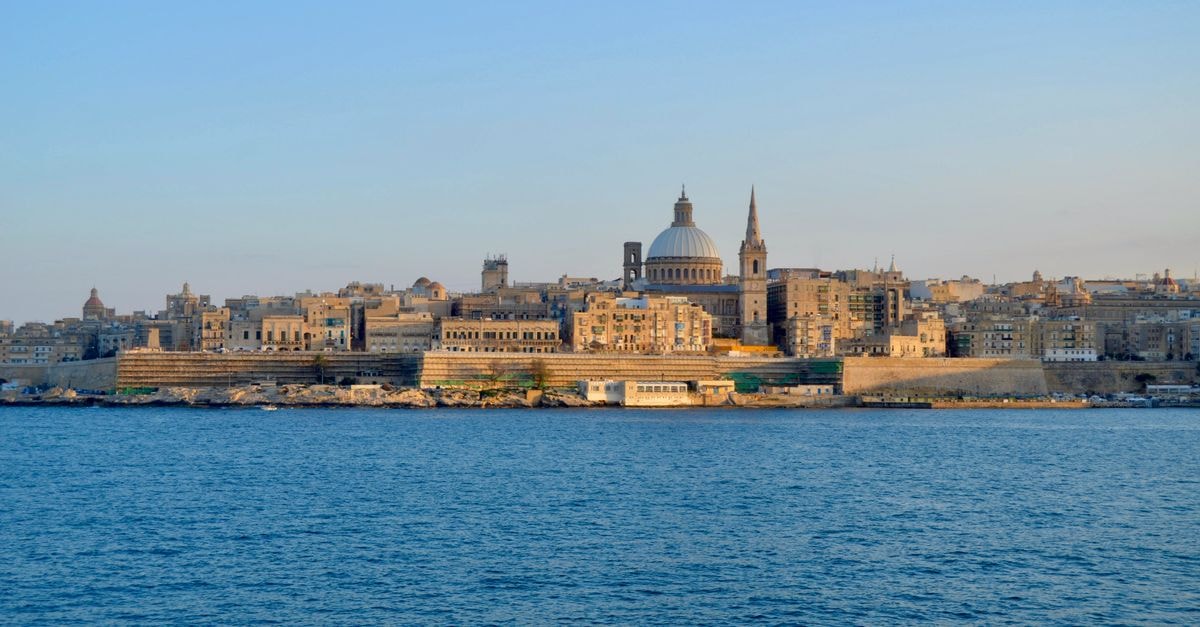
There are cities that announce themselves with skylines and skylines. Valletta does it with a single color — that honey-and-bone limestone that softens every façade until the whole peninsula looks like it was lifted from the seabed and set down to dry in the sun. Built on a narrow spit between two harbors, the Maltese capital rewards travelers who are happy to wander in one direction at a time, who like their food with a sea view, and who don't mind a climb. This guide gathers what is known about Valletta's climate, how to move through it, and how it eats — the three angles a first-time visitor most often asks about.
Weather and seasonal context
Valletta sits at the southern edge of the central Mediterranean, and that single line of geography explains most of what you will feel underfoot and overhead. The city's climate has been recorded reaching an extraordinary peak of 109°F in July — a reminder that, in deep summer, the limestone can hold heat well into the evening and the light can feel almost white against the pale stone.
For most of the year, though, the air carries the freshness of the surrounding sea, and the narrow streets of Valletta provide their own shade as the sun tracks across the sky. Because the city is built on a peninsula with steep edges on both harbor sides, the breeze tends to find its way in no matter which way you face. Travelers who prefer gentler temperatures may want to pace midday explorations with a slow lunch in a covered restaurant terrace rather than chasing every viewpoint at the hottest hour. Strolling is easier at the edges of the day, when the light turns amber on the fortifications and the stone gives back the heat it stored.
It is worth saying out loud: the climate records in any single source cannot predict your specific trip, and conditions shift year to year. Treat any seasonal impression as a guide to the kind of weather that the city is used to, and let the morning sky on the day tell you the rest.
Getting around
Valletta is small — small enough that most visitors never need a car within the city itself — and its transport story is built around a single, very practical hub. Buses fan out from the City Gate terminus to every corner of Malta, which means the area just outside the main city gate is the natural starting point for almost any journey beyond the peninsula, whether you are heading to a coastal village, a harbor town, or an inland site.
Inside the walls, the city is best understood on foot, because the streets were laid out for a different age of transport and the gradients between the upper city and the harbors are genuinely steep in places. Comfortable shoes matter more here than any plan. Travelers who prefer to reduce stair climbing may want to trace a route that lingers along one of the upper terraces for a while before gradually working down, rather than committing to a full descent and climb on the first afternoon. Drivers should be aware that Valletta's street plan is not built around cars, and visitors typically do not bring vehicles into the city at all.
Because bus timetables, fares and night services can change, the practical move is to confirm the latest City Gate schedule at the terminus itself or through the transport authority's current channels before setting out. The hub-and-spoke logic, however, stays the same: from City Gate, Malta opens up in every direction.
Food and local context
Food in Valletta is layered, and not just on the plate. The city is widely described as containing more historic restaurants per square meter than anywhere else in Malta, which means you are almost never more than a short walk from a dining room that has been part of the local story for generations.
What ties those rooms together is the setting. Valletta tastes like limestone dust and sea salt — the flavor of a city built from honey-colored stone where every restaurant terrace faces the Mediterranean. That phrase is less a menu note than an orientation: most of the memorable meals here are as much about the breeze off the harbors and the geometry of the fortifications as they are about what arrives on the plate. Seafood, slow-cooked stews, and bread that arrives warm to nearly every table are the through-lines visitors most often mention, and the long tradition of restaurant culture in Valletta means even a simple lunch can turn into a long, lazy afternoon if you let it.
Outside the city, Malta more broadly has its own well-known dishes — pastizzi, rabbit stew, fresh-bread traditions, and the widespread habit of dining slowly in the early evening — that visitors may encounter on day trips or in neighboring towns. None of those belong to Valletta by default, but the city sits at the center of the islands, so it is easy to find them on a menu the moment you step beyond the walls.
A practical note for travelers who care about pacing: because the dining culture leans toward long, lingering meals on terraces, restaurant time can easily absorb an entire afternoon. If you would rather see more of the city, consider keeping lunches lighter and saving the long table for evening, when the sea light is doing its best work and the streets are softer and cooler.
Choosing what fits your trip
Valletta rewards a particular kind of traveler, and the evidence here quietly points toward one. If you love harbor views, you will find them at almost every turn — the city is ringed by water on three sides, and most restaurant terraces angle toward the sea. If you prefer gardens and quieter courtyards over grand interiors, the upper terraces of Valletta offer shaded pockets where the stone architecture and the planted greenery share the frame. If you dislike heavy stair climbing, the trick is to pick a single elevation for the day and let the bus network from City Gate cover the larger distances across Malta rather than crossing the gradients repeatedly within the city. None of this is a rule; it is simply how the facts line up.
The other honest tradeoff is between depth and reach. Valletta itself can absorb several days of slow walking, and visitors who have only a short window should resist the urge to bolt for the coast on day one. Stay a beat. Let the limestone do its work. The buses will still be fanning out from City Gate when you are ready to leave.
Before you go
Factual travel conditions change: transport timetables, climate patterns, and the operating rhythms of individual restaurants all shift over time. Treat the notes above as a starting frame rather than a guarantee. Check the latest bus information at City Gate before longer journeys, glance at the short-range forecast for the days you will be walking the peninsula, and confirm opening details with any specific venue directly before you set out. A little patience at the planning stage usually buys a much looser, more enjoyable trip on the ground.
Prices, opening hours, schedules, reservation rules, and local conditions can change; verify them through official channels before departure.
Share this article
TOOLS FOR THIS PLAN
Make the Valletta plan measurable
Choose a tool only when it answers the next question in your trip. Your values stay in the browser, and each tool offers a route back to this planning context.