Overview

Wuzhong sits in the central part of Ningxia Province, on the eastern bank of the Yellow River, and is home to one of the largest concentrations of Hui people in China. That mix of river geography and Hui cultural presence gives the city a distinct identity within Ningxia Hui Autonomous Region, and visitors who pause here often find a quieter, more community-oriented feel than in many larger Chinese cities. Travelers passing through Ningxia who want a softer stop between bigger destinations may find Wuzhong a useful place to slow down for a day or two.
This guide focuses on the practical groundwork that helps a first visit run smoothly: how to think about the climate, where the city sits in relation to the Yellow River, what the cultural landscape looks like, and how Chinese food culture more broadly may color the meals you encounter while you are here.
Weather and seasonal context
Wuzhong shares the broad climatic rhythm of much of north-central China, with four clearly defined seasons. The region is generally described as having a summer phase, an autumn phase, and a winter phase, with spring filling in the remainder of the year. Visitors planning around Wuzhong's seasons should think in those broad terms rather than trying to lock in fine-grained temperatures, since conditions can shift year to year.
For most travelers, the gentlest time to be out walking and exploring tends to be the shoulder seasons, when daytime conditions can feel pleasantly mild and the light over the Yellow River can be quite soft. In warmer months, the pace of the day can feel more comfortable if you plan outdoor time for the early morning or later afternoon, leaving the middle of the day for a slower lunch or a rest. In cooler months, layers matter more than a single heavy coat, because indoor spaces and outdoor streets can feel quite different.
If you prefer milder conditions for sightseeing on foot, consider building your outdoor plans around the transitional seasons, when the city tends to feel easier to explore without extreme weather nudging you indoors. Travelers who do not mind cooler air and shorter days may find the off-season quieter and easier to navigate at a relaxed pace.
Getting around
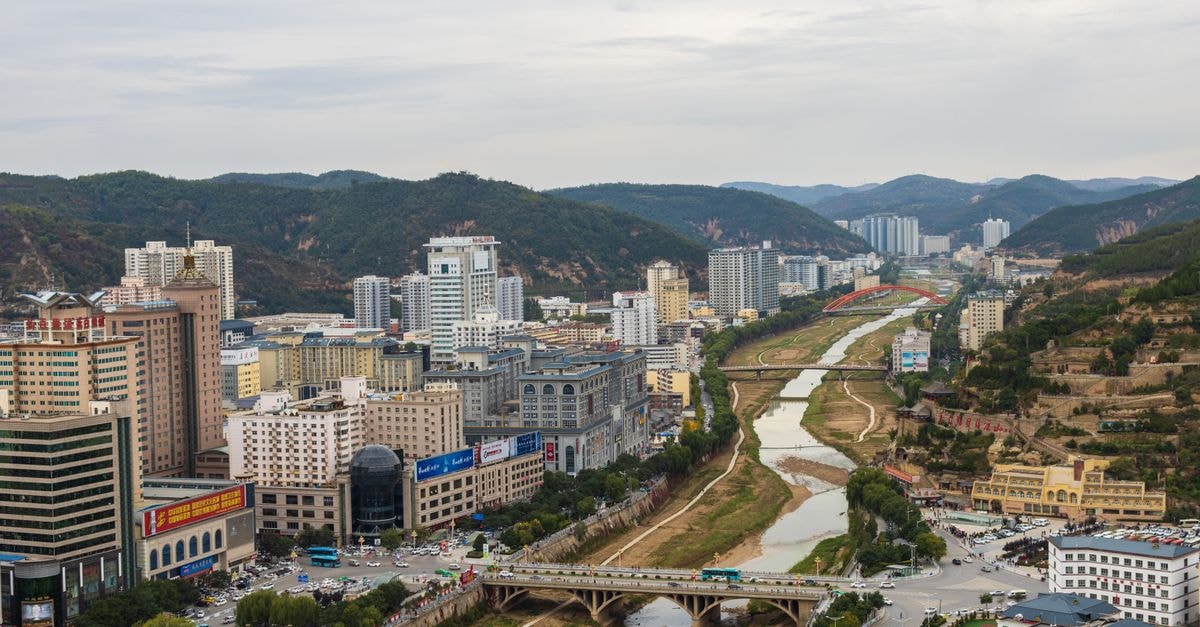
Wuzhong lies in the central region of Ningxia Province, positioned along the eastern bank of the Yellow River, which makes it a natural stopping point for travelers moving through the province. Within Ningxia, the city sits between Yinchuan, the regional capital to the north, and the areas to the south, so it often appears as a waypoint rather than a headline destination on its own.
Because Wuzhong is a mid-sized city along a well-traveled corridor, getting there is usually straightforward by road or rail from other parts of Ningxia. Once in the city, visitors typically move around on foot for the central areas and use local taxis or ride-hailing for longer hops. The river itself is a useful mental landmark: if you are unsure which direction to head, the Yellow River runs along the eastern side of the city, and orienting toward it can help you make sense of street layouts.
If you prefer a slower arrival and time to absorb the city's everyday rhythm rather than rushing through, consider treating Wuzhong as an overnight stop rather than a drive-through. Travelers who like to pair their movements with a clear geographic anchor may appreciate knowing that the river effectively frames the city to the east, which can simplify the mental map while exploring.
Attractions and planning
Wuzhong is presented as a city where visitors are invited to explore local culture and everyday life along the Yellow River banks. Rather than a single headline sight, the city tends to reward visitors who approach it as a place to experience Hui community life, riverside scenery, and the smaller-scale rhythms of a Ningxia city.
Because the city sits on the river, much of the visitor experience ties back to that geography. Walking along or near the riverbank is often the most natural way to get a feel for where you are, and it gives you a sense of how the water shapes the layout of the city. Travelers who enjoy scenic routes paired with cultural texture may find that a slow riverside walk, combined with a few stops in nearby neighborhoods, offers a satisfying picture of Wuzhong without needing a packed schedule.
A useful approach is to leave room for unhurried wandering rather than trying to tick off a long list. Independent travelers who like to combine scenic views with local character may find Wuzhong a comfortable place to do exactly that, especially if they are already interested in the Hui cultural presence that defines the region.
Food and local context
Chinese food culture is famously broad, with eight major cuisines each carrying their own characteristics, and visitors to Wuzhong will sit inside that wider national landscape. The city's position in Ningxia, where Hui culture is strong, means that halal considerations and the dishes associated with northwest Chinese cooking are part of what travelers may encounter while dining here.
Across China, regional cuisines are a testament to the country's culinary diversity, and Wuzhong is part of that story. Rather than expecting a single signature dish, visitors tend to find that meals here reflect the northwest Chinese palate: hearty portions, wheat-based staples such as noodles and flatbreads, lamb appearing more often than in coastal regions, and a strong tea culture. These are patterns visitors may notice while in the city, framed against the much wider context of Chinese food traditions as a whole.
If you have specific dietary needs, especially around halal options, the Hui character of the city generally makes it easier to find clearly labeled halal meals than in many other parts of China. Travelers who enjoy exploring regional flavor differences may appreciate Wuzhong as a chance to taste how northwest Chinese cooking handles lamb, noodles, and bread-based dishes differently from, say, Cantonese or Sichuanese kitchens further afield.
Choosing what fits your trip
A short Wuzhong stop tends to suit travelers who already have a broader Ningxia plan and want a quieter, culturally distinctive overnight rather than a full sightseeing agenda. The city's appeal is less about a checklist of sights and more about riverside atmosphere, Hui cultural presence, and the everyday rhythm of a mid-sized Ningxia city, so visitors who like slow walks, local food stops, and orientation by geography often get more out of the stop than those looking for blockbuster attractions.
If you are traveling mainly for scenery and cultural texture, a relaxed pace with the Yellow River as your anchor tends to work well. If your priority is dense sightseeing, you may want to weigh Wuzhong against spending that time in Yinchuan or another larger city in the region, since Wuzhong rewards a gentler approach.
A note before you go
Travel conditions can change, so it is worth checking current transport options, opening details, and any local notices through official channels as your trip approaches. Treat this guide as a framework rather than a fixed schedule, and let local information shape the final shape of your visit.
Share this article
TOOLS FOR THIS PLAN
Make the Wuzhong plan measurable
Choose a tool only when it answers the next question in your trip. Your values stay in the browser, and each tool offers a route back to this planning context.