Catch up on the essentials
- SpaceX will build cellular base stations while Qualcomm supplies radio silicon, massive MIMO technology, digital-unit accelerators and Layer 1 software for Starlink Mobile’s terrestrial 5G network.
- The risk is that deployment timing, network build-out costs and commercial adoption may differ from Qualcomm’s expectations.
- Qualcomm’s broader execution will depend on whether the SpaceX deployment begins on schedule and develops into the larger revenue contributor the company expects.
Selected from this article · 2026-11-11
Read on for the full pictureQualcomm gains a large terrestrial 5G anchor

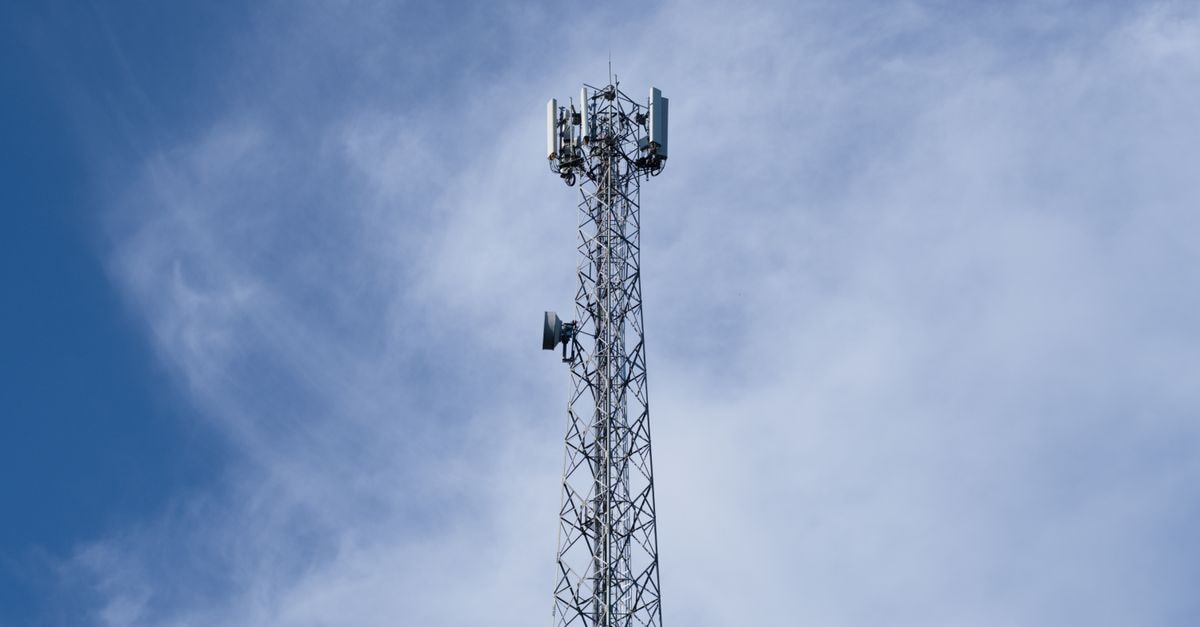
Qualcomm’s multiyear agreement with SpaceX gives its Dragonwing cellular infrastructure technology a high-profile US deployment and expands the chipmaker’s role beyond handsets. SpaceX will build cellular base stations while Qualcomm supplies radio silicon, massive MIMO technology, digital-unit accelerators and Layer 1 software for Starlink Mobile’s terrestrial 5G network. The announcement is a confirmed technology agreement and planned deployment, not evidence that installation or revenue recognition has already occurred.
The scale could be material for Qualcomm’s infrastructure business. Qualcomm CEO Cristiano Amon described the project as probably one of the largest network build-outs and said Starlink Mobile plans to install equipment across tens of thousands of sites. The initial deployment is scheduled for 2027, with the wider system intended to support terrestrial 5G and future AI-native 6G infrastructure.
Revenue recognition remains the critical test
Qualcomm expects the agreement to begin contributing revenue as it exits fiscal 2027 and expects fiscal 2028 to be the more significant contribution period. That timing means the agreement should be treated as a future earnings driver rather than a current-period sales gain or a disclosed purchase order. The reviewed coverage does not disclose the contract value, pricing or unit volumes.
The announcement is nevertheless strategically relevant because it positions Qualcomm inside the radio access layer of a nationwide terrestrial network while SpaceX brings its own base-station and satellite-connectivity capabilities. The transmission path is specific: deployment of Qualcomm components and software can become semiconductor and licensing revenue as installation progresses. The risk is that deployment timing, network build-out costs and commercial adoption may differ from Qualcomm’s expectations.
Hardware softness offsets infrastructure growth
Qualcomm reported fiscal fourth-quarter GAAP revenue of $10.32 billion, down 8% year over year, alongside non-GAAP revenue of $10.44 billion. Its QCT semiconductor segment generated $9.02 billion, down 8%, while handset revenue fell 26% to $5.14 billion. By contrast, automotive revenue rose 89% to $1.99 billion and IoT revenue increased 4% to $1.89 billion; the industrial, networking and robotics category grew 20%.
Against that mixed performance, the SpaceX agreement diversifies Qualcomm’s growth mix toward carrier infrastructure. It does not, however, establish that infrastructure demand alone will offset near-term weakness in handsets. Qualcomm’s broader execution will depend on whether the SpaceX deployment begins on schedule and develops into the larger revenue contributor the company expects.
Verification will come from deployment disclosure
The next observable milestones are the start of installation in 2027, Qualcomm’s confirmation of revenue contribution as fiscal 2027 ends, and evidence during fiscal 2028 that the project is becoming a more significant revenue driver. Until those disclosures, the agreement supports a bounded expectation for Qualcomm’s infrastructure business, not a quantified sales forecast.
Share this article