01Contraband Police: methodical border-inspection sim for slow-paced solo managers who enjoy cold war paperwork puzzles
STEAM DEAL · 61% OFF
Contraband Police
If the idea of stamping documents, scanning cars with a UV flashlight, and slowly upgrading a tiny Cold War checkpoint sounds relaxing, Contraband Police is a surprisingly engaging solo management sim, though its mid-game grind and base attacks can wear thin.
Game highlights
Document control is the core loop
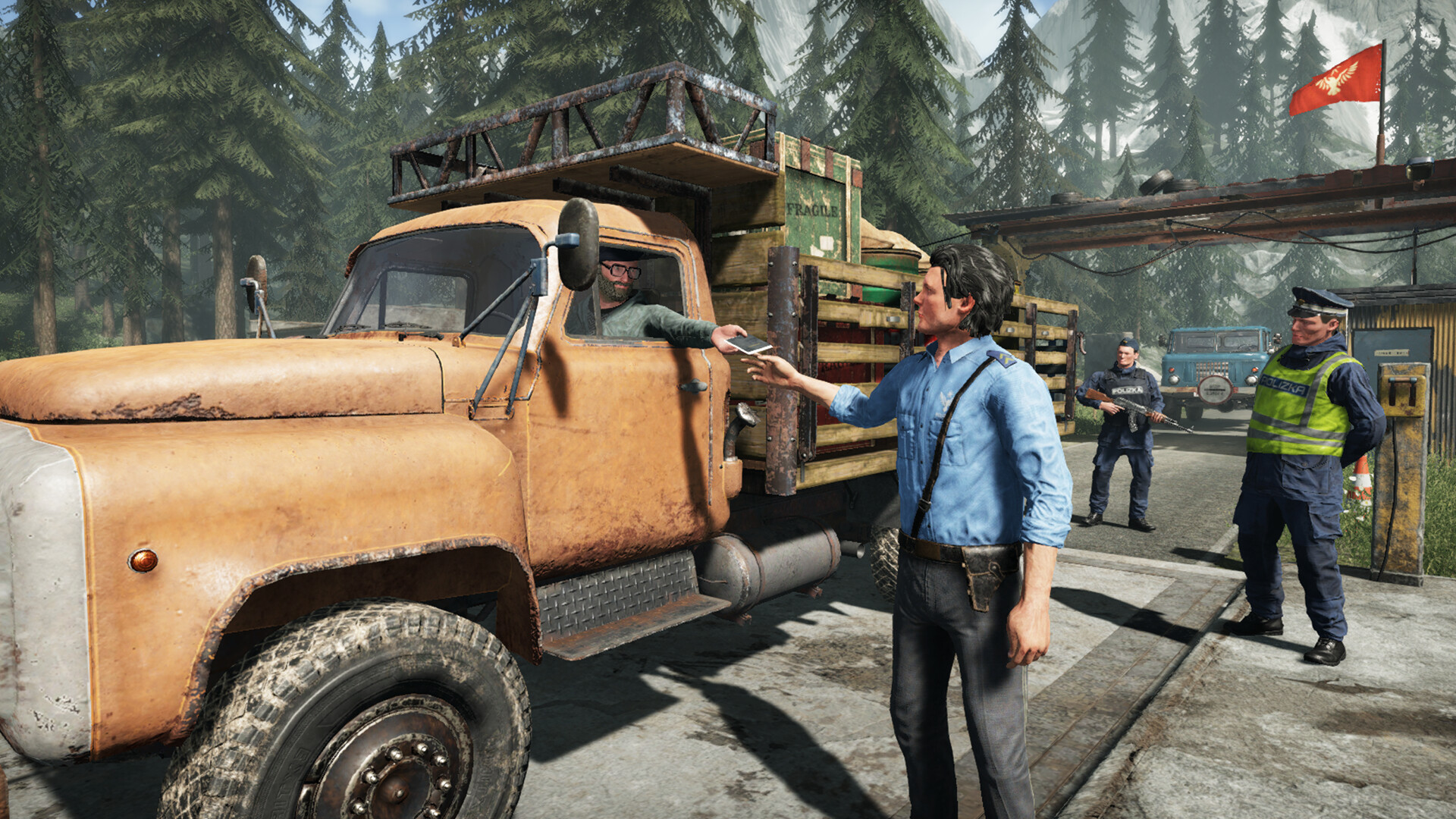
Every vehicle that pulls up requires checking passports, IDs, and other paperwork against tightening rules, with discrepancies ranging from wrong paper shades to expired dates. As the campaign progresses the number of documents expands and the puzzle becomes spotting finer errors, giving a self-paced escalation that mirrors slow-paced management games.
Contraband scanning adds tactile variety
Beyond paperwork, the official loop includes a UV flashlight for searching vehicles and dedicated tools to extract hidden goods, turning each inspection into a layered search task. Reviewers consistently highlight this combination of document checking and physical searching as the game's most compelling hook.
Station management and pursuit systems
Between shifts you upgrade the police station's defenses, buy and improve police cars for chases, and balance rising maintenance costs against income from successful inspections and interventions. Special assignments also pull you into crime puzzles and away missions against the Blood Fist rebels, adding narrative stakes.
Cold War setting with single-player focus
The 1981 Acarist People's Republic setting is delivered through a single-player campaign with full controller support, Steam Cloud, and achievements, plus a freelancer mode for continued play after the main story. Reviews note the gritty atmosphere and soundtrack as a real strength for solo sessions.
Mixed combat and driving interruptions
Armed shootouts and car chases are built into the loop when smugglers resist or station attacks occur, and you can upgrade vehicles to improve pursuit effectiveness. Several reviewers enjoy this break from inspections, while others find the mandatory base attacks and vehicle handling frustrating.
What players are saying
What keeps coming up positively
- Methodical document-checking combined with UV contraband searches stays engaging shift after shift
- Cold War atmosphere, soundtrack, and moral-choice story make the routine feel weighty
- Surprisingly relaxing compared to similar inspection games, while still offering a fair challenge
- Station upgrades, freelancer mode, and self-paced progression suit solo management players
Where the friction shows
- Mandatory base attacks every few days drag players away from the inspection loop they actually enjoy
- Driving between locations for supplies, prisoner drop-offs, and contraband sales feels tedious
- Progression and content run out quickly, with full completion achievable in roughly six to ten in-game days
- Story branches feel surface-level, with faction choices rarely altering the core inspection routine
Is it worth buying?
At $11.69 against a $29.99 regular price (61% off) on Steam, Contraband Police offers a fair entry cost for a roughly 10–20 hour single-player campaign plus freelancer mode, though the mid-game attack grind and quick content burn-off mean waiting for a deeper discount is also reasonable.
Price checked 2026-08-13:$11.69,down from $29.99(61% off)。Player-fit tags
Good fit
- Players who enjoy methodical paperwork and search puzzles as a relaxing routine
- Solo gamers looking for self-paced station management and progression
- Fans of cold war settings who want moral-choice flavor around inspection work
- Players who like combining inspection micro-tasks with occasional car chases and shootouts
Probably not for you
- Anyone who dislikes leaving the inspection booth for mandatory driving or base-defense interruptions
- Players expecting deep branching narratives, since faction choices rarely change the core loop
- Those sensitive to repetitive content, given the campaign's short progression runway
- Gamers seeking cooperative or multiplayer play, as the game is single-player only
02ReStory: Chill Electronics Repairs – cozy mid-2000s Tokyo shop sim for solo players who love tinkering

STEAM DEAL · 10% OFF
ReStory: Chill Electronics Repairs
If you like methodical, low-stress tinkering more than fast-paced management, ReStory delivers a genuinely relaxing solo shop loop, but be aware of the AI art controversy and accessibility friction before buying.
Game highlights
Nostalgic device restoration loop
You dismantle, clean, and reassemble Y2K-era gadgets inspired by consoles, phones, handhelds, and music players, with officially licensed Atari hardware. Multiple repair tools and an in-game web browser for sourcing parts give the loop real texture rather than a single click-to-fix shortcut. Players with hands-on repair backgrounds repeatedly say the layouts mirror the real devices closely enough to feel satisfying.
Mid-2000s Tokyo setting and shop life
The official description leans hard into a chill, mid-2000s Japanese urban vibe with in-person walk-ins, online orders, and a small storefront to upgrade. Reviewers describe losing track of time running the bench, and several explicitly wish for an endless repair mode separate from the story. Steam categories confirm single-player only, so this is firmly a self-paced solo experience.
Customer-driven branching narrative
Conversations with customers feed into multiple endings, with choices like whether to report what you find inside a former gangster's phone. The developer frames dialogue as a meaningful hook, though some players note translation quirks that occasionally muddle intent. Replayability comes from making different moral calls rather than unlocking new mechanics.
Accessibility friction in core controls
Multiple players report that holding the mouse button continuously for cleaning and reassembly causes hand fatigue, with one reviewer limiting sessions to roughly fifteen minutes due to carpal tunnel. There is no mention of a hold-to-toggle option in the official features. This is worth factoring in if you plan long tinkering sessions.
Light footprint, modest price
The game weighs in around 1 GB, runs on Windows and Mac, and supports DualSense and DualShock controllers. At $17.99 on a 10% discount off a $19.99 base, the ask is reasonable for the scope if the core loop clicks with you.
What players are saying
What keeps coming up positively
- Players with real repair experience say the device interiors, including screw placement, closely match the original hardware they grew up with
- Many describe it as one of the best relaxation purchases they have made, losing track of time at the bench
- The slow, self-directed pacing is praised by players who explicitly ignore story items to keep repairing at their own leisure
- Several helpful reviews call the gameplay loop impeccable and the dialogue writing full of effort despite translation hiccups
Where the friction shows
- A recurring negative thread alleges uncredited AI-generated art, including character anatomy errors and garbled Japanese signage, which several reviewers say the developer has denied
- Some players feel the Tokyo setting and characters lean on shallow stereotypes rather than authentic detail
- Tool and shop upgrades are reported as poorly paced, with early unlocks making earlier purchases feel redundant
- Holding the mouse button during cleaning and repairs is a common accessibility complaint that limits session length
Is it worth buying?
At $17.99 with a 10% discount off a $19.99 base on Steam, the price is fair for the scope but not a steal, so wait for a deeper sale if the AI art concerns or accessibility issues are dealbreakers for you.
Price checked 2026-08-13:$17.99,down from $19.99(10% off)。Player-fit tags
Good fit
- Players who enjoy slow, methodical tinkering loops and want a self-paced solo management sim
- Anyone nostalgic for late-90s and early-2000s hardware who likes identifying real-world device references
- Readers who enjoy narrative sidebars branching off from routine shop tasks
- Tinkerers who want a low-pressure experience without timers, fail states, or resource grind
- Players who appreciate a lightweight install around 1 GB and controller support
Probably not for you
- Buyers who require transparent AI-art disclosure and may be put off by the ongoing controversy
- Anyone sensitive to repetitive mouse-hold inputs or needing accessibility toggles for long sessions
- Players seeking co-op, multiplayer, or fast-paced tycoon progression
- Those expecting deep shop customization, since multiple reviewers flag customization as limited
- Players who want a long campaign, as at least one reviewer finished the story in roughly seven hours
03Two Point Museum review: a slow, design-first management sim for solo curators who love decorating

STEAM DEAL · 33% OFF
Two Point Museum
If you enjoy unhurried management games where tinkering with layouts, expeditions, and happy guests is the point, Two Point Museum is a strong pick at its current discounted price, especially for solo players and casual decorators; players craving deep simulation pressure or true sandbox freedom may want to temper expectations.
Game highlights
Expedition-driven exhibit hunting
According to the official description, you send partially trained Experts on Expeditions across five maps with 100+ points of interest, gathering 200+ exhibits across six main types and 30+ sub-categories. Unlocking new locations is tied to campaign progression, so the loop rewards patience and revisiting sites rather than sprinting to an end screen.
Decoration and layout as a core verb
The official store page highlights 350+ decorative items, paint, carpets, and themed zones, with guided tours routed by charismatic Experts. Players describe the design pass as the real hook, repeatedly returning to a museum to tweak walls, benches, and flooring well after meeting its star goals.
Structured campaign plus a sandbox mode
Official materials confirm five main museum locations across Two Point County, three pop-up museums with set tasks, and a sandbox mode explicitly designed for building MEGA MUSEUMS. The campaign clearly carries the experience and sandbox unlocks expand as you progress.
Catering to a varied guest roster
Eighteen guest types are listed, including dino fanatics, botany buffs, and horror seekers, each with personal preferences. Players note that keeping toilets, refreshments, gift shops, and clean exhibits well-staffed turns guest satisfaction into a juggling act rather than a set-and-forget system.
Cross-platform and controller-friendly tools
Store details list Windows, macOS, and Linux support, full controller compatibility, save-anytime, adjustable text size, and Steam Cloud. Mouse-only play and camera comfort settings are also advertised, lowering friction for couch or accessibility setups.
What players are saying
What keeps coming up positively
- Players consistently say the decoration and museum-building is the strongest hook, with many returning to older museums to refine layouts long after earning stars.
- Reviewers describe the tone as quirky, relaxing, and funny, often calling it the most approachable entry in the Two Point series for casual play.
- The slow, self-paced campaign is repeatedly praised as a welcome change from the more hectic pace of Two Point Hospital and Campus.
- Several long-term players note that the dev team responds to feedback with meaningful QoL updates, which keeps the experience feeling supported.
Where the friction shows
- The expedition loop of repeatedly running the same map to grind better-quality or duplicate exhibits is a common friction point that some players never warm to.
- Sandbox mode disappoints players who expect everything unlocked; campaign progression gates what you can build, and in-game currency can feel tight when designing mega museums.
- Staff XP and leveling are often described as slow, nudging players toward DLC potions or console-management workarounds to move training along.
- Several reports describe occasional bugs and balancing pressure that can undermine the relaxed tone, particularly when guest needs spike or thieves target high-value displays.
Is it worth buying?
At $20.09 USD versus a $29.99 regular price (33% off) on Steam, Two Point Museum sits at a reasonable mid-range price for a full-price simulation release, not an aggressive clearance. Solo management fans who prioritize decoration and pacing will get strong value; players expecting deep simulation challenge or a fully unlocked sandbox should wait for a deeper discount or a sale on the DLC bundles.
Price checked 2026-08-13:$20.09,down from $29.99(33% off)。Player-fit tags
Good fit
- Solo players who enjoy slow-paced management and decorating without pressure from multiplayer or competitive timelines.
- Creatives who want a dollhouse-style canvas with hundreds of decorative items and themed exhibit sets.
- Casual tycoon fans who liked Two Point Hospital and want a gentler, funnier follow-up rather than a hardcore sim.
- Long-session players who enjoy iterating on a single museum across many hours rather than rushing through levels.
- Parents and kids sharing a controller, since the official features and save-anytime design make co-piloting accessible.
Probably not for you
- Players seeking deep, planning-heavy simulation challenge, since multiple reviews describe the core loop as light and forgiving.
- Sandbox-first builders who want every exhibit and expedition unlocked from minute one, since campaign gates carry into sandbox mode.
- Anyone allergic to repeat-expedition grinding for higher-quality exhibit duplicates and research progress.
- Hardcore difficulty or failure-pressure fans, as the tone skews cozy and forgiving rather than punishing.
- Players expecting robust co-op, since the store page lists single-player only with no described online multiplayer features.
04Sovereign Tower: a story-rich Round Table management RPG for patient solo rulers who enjoy time-rewind experimentation
STEAM DEAL · 15% OFF
Sovereign Tower
Sovereign Tower is a charming, self-paced single-player kingdom manager whose character writing and rewind mechanic win people over, but expect noticeable manual busywork and a steep time cost on replays. At $16.99 it is a reasonable pickup for story-first readers, yet anyone allergic to repetitive micromanagement should wait for a deeper discount.
Game highlights
Round Table management with stat-driven quests
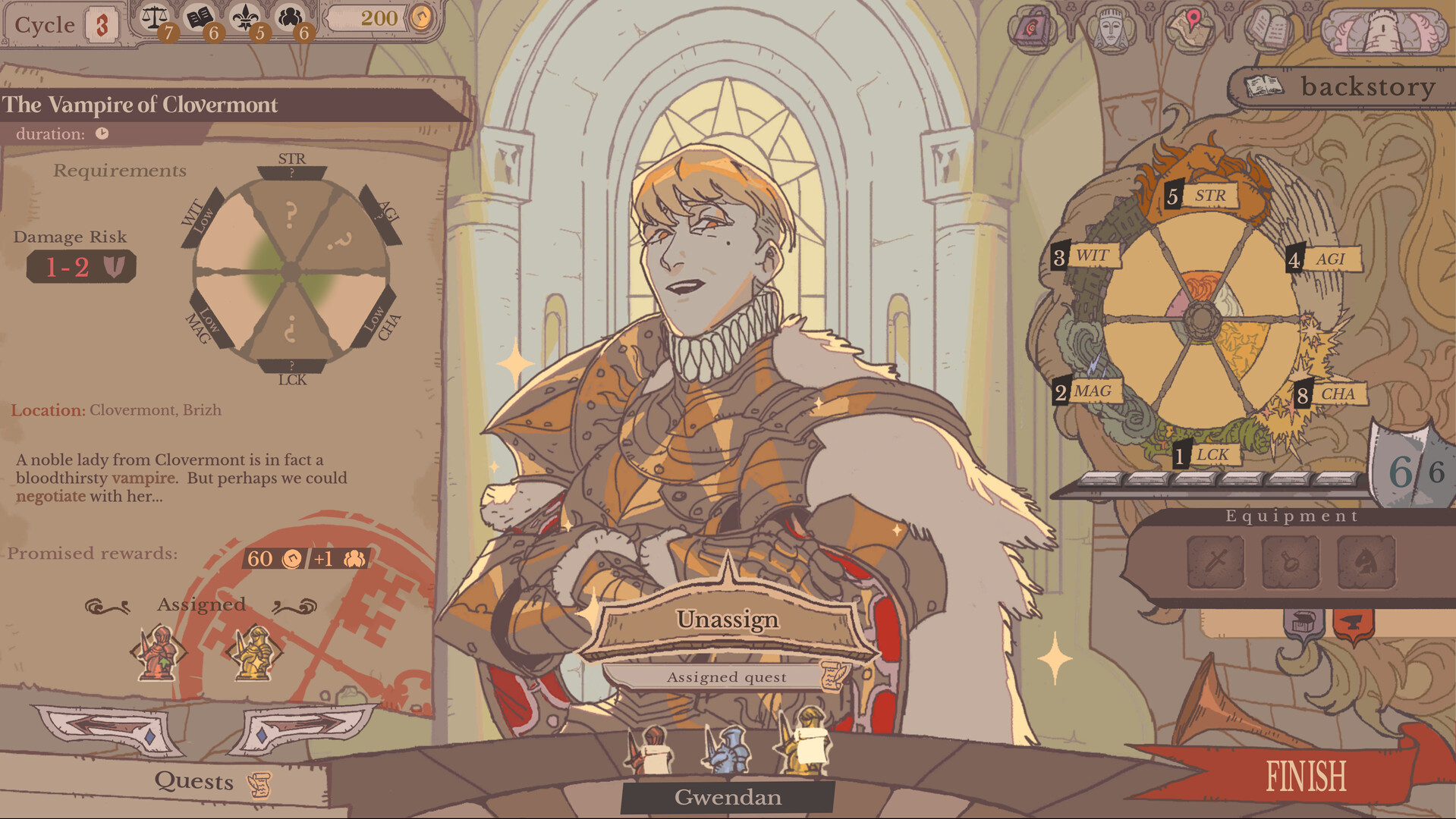
Players hold morning audiences, decide which subjects to help, then assign knights to quests from the Round Table. Each knight has Strength, Agility, Charisma, Magic, and Wit, and matching the right hero to the right task is the core decision. Quests can end in Critical Failure, Critical Success, or an Unexpected Outcome, which keeps even small commissions feeling consequential. It is a deliberately tactile loop that rewards reading character bios before dispatching anyone.
Time-rewind mechanic that doubles as a story device
A Demon in the Crypts can literally turn back time, and the official pitch leans hard into using that knowledge to rewrite fate, pursue forbidden romances, and uncover secrets. Many reviewers describe hugging the feature, treating replays as a way to discover new dialogue and outcomes rather than as a quick retry. The catch, discussed below, is that the rewind does not preload prior decisions, so each loop carries real mechanical cost.
Faction balancing, treasury pressure, and rival rulers
The official description lists five affinities to manage: Merchants, Mystics, Scholars, Nobles, and the People, plus Treasury, and players can either court them or burn it all on backstabbing. Outwitting rival rulers and forging alliances with neighboring counties are pitched as part of the late game. It reads as a softer strategy layer than a full 4X, more about juggling favors than conquering territory.
Tower expansion through annexes and crafting
Annexes like Carina's Forge and the Witch's Alchemy Room open up new court positions and crafting options to better equip knights. This gives the management loop a forward-moving gear: new buildings unlock new items, which translate into better odds on the next quest. Reviewers repeatedly flag the manual gear shuffling that gets unlocked here as the loop's biggest friction point.
What players are saying
What keeps coming up positively
- The cast of knights, advisors, and petitioners is repeatedly described as charming, funny, and unusually well-written for the genre.
- The time-rewind system is praised as a genuinely clever narrative tool that rewards learning from prior runs and chasing new dialogue and romances.
- Presentation, including art, music, and a whimsical low-fantasy tone, is consistently called out as a strength that pulls players into the world.
- Multiple reviewers say the slow solo pace, save-anytime design, and controller-friendly flow make it a relaxing, no-pressure management game.
Where the friction shows
- The rewind mechanic forces players to redo manual management, gear equipping, armor repair, and dialogue from scratch rather than carrying prior decisions forward, which multiple negative reviews call punishing.
- Combat-adjacent prep is described as tedious screen-switching to strip and reassign weapons and horses across the roster before each quest.
- Several reviewers report that writing and motivation drop in the late acts, with character storylines easy to miss and the ending feeling abrupt.
- At least one review warns about flashing colors and bright glitch effects that can trigger eye strain during certain scenes.
Is it worth buying?
At $16.99, a 15% discount off the $19.99 regular price, Sovereign Tower is fairly priced for the genre but not a must-buy impulse. The launch is only a week old, so the historical-low question is moot; patient players who want a calmer price should simply wait for the next sale. If you are a clear fit for the fit tags below, the current discount is a defensible entry point.
Price checked 2026-08-13:$16.99,down from $19.99(15% off)。Player-fit tags
Good fit
- Players who enjoy slow, self-paced solo management games like Yes Your Grace or Reigns-style audience decisions
- Story-first readers who want to chase multiple character arcs, romances, and a true ending through replayed runs
- Anyone who likes experimenting with a time-rewind mechanic and accepts heavier manual loops as part of the trade
- Couch or controller players who want a play-at-your-own-pace RPG that can be saved at any moment
- Faction-balancing fans who like juggling reputation meters rather than executing complex combat tactics
Probably not for you
- Players who want fast-twitch combat or deep tactical battles rather than audience-and-assignment management
- Anyone who hates redoing repetitive gear, armor, and quest prep from scratch across multiple runs
- Impatient players who dislike dialogue-heavy visual novel stretches or visible text walls between decisions
- Completionists who cannot tolerate missing character storylines locked behind specific actions they did not know to take
- Anyone sensitive to flashing colors or bright visual glitch effects during cutscenes
Share this article