01Loddlenaut: A cozy ocean cleanup adventure with charming axolotl aliens and zero stressful timers for relaxed players

STEAM DEAL · 70% OFF
Loddlenaut
Loddlenaut is a genuinely calming cleanup sandbox where you suck up pollution and raise little axolotl-like creatures at your own pace. The current 70% discount brings it to a sub-coffee price, making it an easy pick for anyone craving low-pressure play.
Game highlights
Chilled cleanup without timers or punishment
There are no leaderboards, score chases, or time limits in Loddlenaut, so you can wander murky biomes and scrub oil spills whenever the mood strikes. The official description emphasizes removing trash with a bubble gun and reviving ecosystems, and the controls stay approachable throughout. Reviewers consistently describe the loop as therapeutic, saying cleaning is genuinely satisfying rather than an obligation. The only mild consequence is a slowly draining oxygen meter, which is easy to top up with nearby air bubbles or upgrades.
Loddles that evolve through what you feed them
The signature mechanic is a roster of axolotl-style aliens called loddles that develop different traits and visuals depending on the aquatic fruits they consume. You can release strengthened loddles back into the wild once habitats are healthy, or keep a breeding population on hand. Recent updates added new evolutions, rare cosmetic mutations, and the Loddlepedia to catalog what you have found. Players describe carefully experimenting with diets, and the system rewards curiosity without ever punishing mistakes.
Open-world exploration of underwater corporate ruins
GUP-14 is a small but dense ocean planet dotted with sunken megacorp facilities, wrecks, and machinery that tell a story about who came before you. Gadgets like the Pollution Tracker and cleaning upgrades gradually expand how deeply you can dive, including a recently added sixth biome with mythical creatures. Players note that the pacing feels just right, with new toys appearing often enough to keep exploration fresh without overwhelming anyone who just wants to drift and clean.
Tinkering with gadgets and crafting from salvage
Trash you vacuum up can be recycled into useful items, inventory expansions, and gold-tier tool variants that unlock a modified ending cutscene. A gardening system added in the Goddles Update lets you grow local flora to improve each biome's resistance to pollution. Reviewers say upgrades feel earned and the overall arc is short enough to finish but long enough to feel meaningful, with side content such as building toys and snacks for your loddles.
What players are saying
What keeps coming up positively
- The cleanup loop feels genuinely soothing, with many players describing it as therapeutic or helpful during tough stretches and praising the total absence of timers or failure states.
- The loddle creatures spark real attachment, with players celebrating first hatches, making spreadsheets to chase rare evolutions, and happily spending hours just decorating their habitats.
- Pacing and length hit a sweet spot that most reviewers appreciate, with upgrades unlocking at a satisfying rhythm and the game staying fresh across roughly 8 to 40 hours depending on how completionist you get.
- The world looks and feels vibrant, and newcomers picking it up without prior cleanup-sim experience find the controls intuitive and the PSX-leaning visuals charming.
Where the friction shows
- Trash and pollution slowly respawn in areas you have already cleared, including fully clean zones, which frustrates players who prefer the one-and-done satisfaction of completing an area permanently.
- Early-game onboarding is thin, with multiple reviewers admitting confusion about the bubble-based oxygen system, loddle breeding, and dirt removal until they looked things up online.
- The main story campaign ends quickly for experienced players, leaving some wishing for more biomes or post-launch content, and others worrying about replay value once the pollution tracker hits 100%.
- Repetitive gathering for upgrades and loddle diets wears thin for a meaningful share of players, who describe it as a noticeable grind when chasing specific evolutions.
Is it worth buying?
At $5.99 on a 70% discount (regular $19.99), Loddlenaut is a noticeably cheaper pickup and pays off comfortably if you would enjoy a few cozy evenings of cleaning and creature care. It is cheap enough that waiting for a deeper sale is not really necessary, especially since playtime scales with how completionist you want to be. Just know that the meat of the game runs short for some players, so the value depends on whether the calm loop is the main attraction.
Price checked 2026-08-14:$5.99,down from $19.99(70% off)。Player-fit tags
Good fit
- Players who want to decompress after long days with a controller-friendly game that never threatens failure.
- Creative types who enjoy tinkering with breeding routes, crafting, and experimenting with loddle diets.
- Curious explorers who like wandering a small but charming open world for a handful of hours at a time.
- Cleanup-sim fans who like the satisfaction of scrubbing areas spotless and watching ecosystems come back to life.
- Parents or older siblings looking for a wholesome, low-frustration game to share with a kid.
Probably not for you
- Completionists frustrated by pollution slowly returning to fully cleaned biomes and demanding permanent progress.
- Players hunting dozens of hours of new content, since the main campaign wraps faster than some expect.
- Anyone sensitive to low-grade motion sickness from sustained underwater movement, which a few reviewers flagged after long sessions.
- Tactics-heavy gamers who thrive on stress, timers, or fail states, since Loddlenaut deliberately strips all of that away.
02Tribe: Primitive Builder offers a relaxed tribal village-building experience with low-pressure experimentation and gentle survival mechanics
STEAM DEAL · 80% OFF
Tribe: Primitive Builder
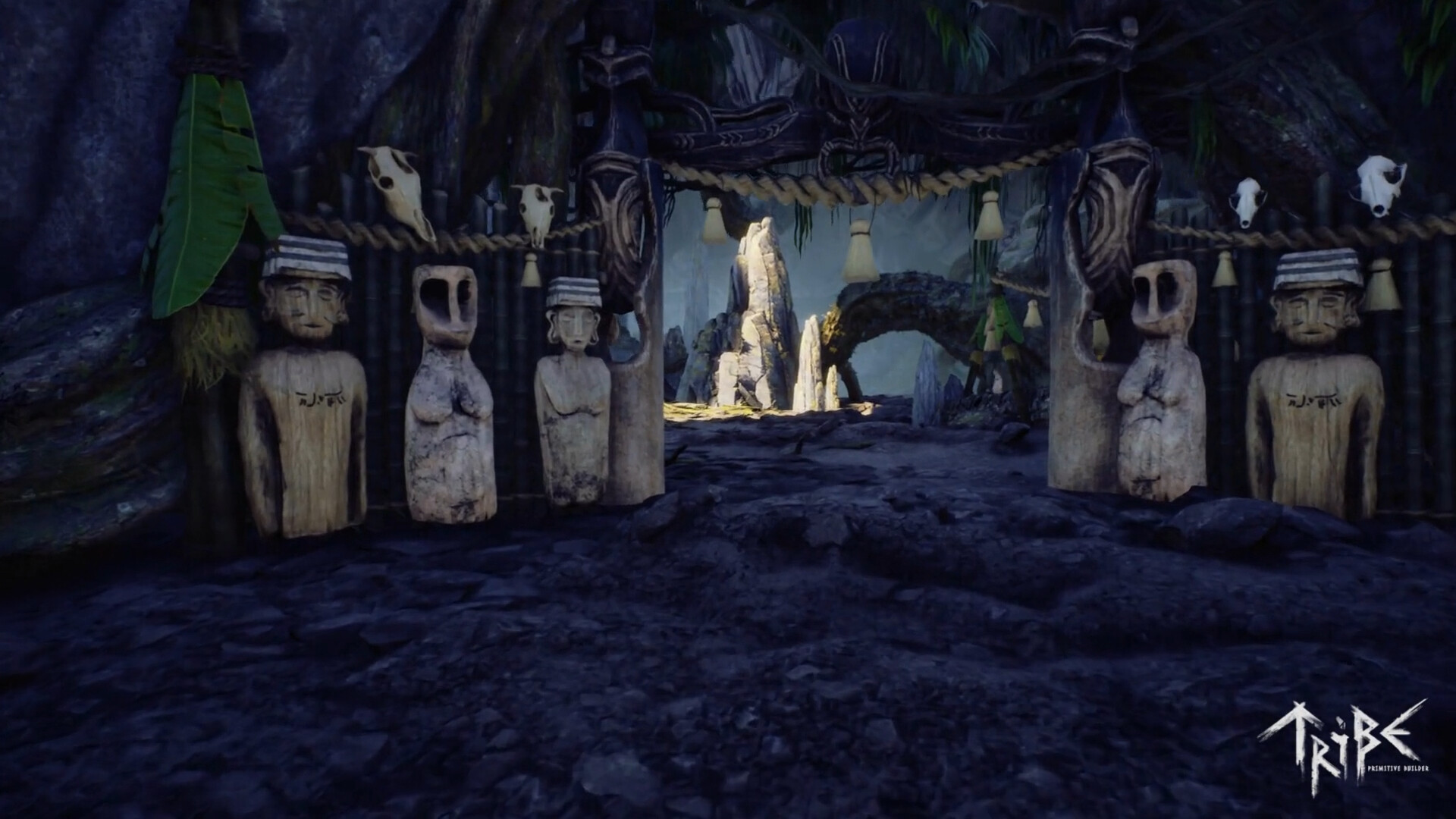
Tribe: Primitive Builder is a calm, story-led tribal village builder best suited to players who want a relaxing, automation-heavy take on survival rather than a tense challenge. At $3.99 against a $19.99 regular price, it is a low-risk pick if you know what you are getting.
Game highlights
Low-stress survival loop
Survival needs like food, drink, and sleep exist but stay in the background, so sessions feel more like tending a village than fighting for your life. Water sources are forgiving, no predators attack, and enemy humans are absent, which keeps the tone calm and approachable for casual play.
Assign villagers to automate gathering and crafting
You recruit natives and place them into production buildings so they gather resources and craft items for you. This lets you step back from manual clicking and focus on layout, upgrades, and exploration, and you can grow the tribe at a pace that matches your appetite for micromanagement.
Hand-holding start that loosens over time
The first area leans heavily on Elder quests and guided tasks, but later regions leave more room for personal planning. Save-before-endgame warnings and a defined finale give the campaign a clear arc if you want a finite experience.
Four lands, rituals, and blueprint unlocks
Progress is tied to performing rituals that unlock new, sturdier building blueprints and open access to new parts of the island. Each area introduces fresh resources, so moving forward feels meaningful rather than purely cosmetic.
Pre-form building and forgiving editing tools
Structures snap into place with hold-to-build placement, and you get three free repair hits before demolition kicks in, making redesigns cheap. Combined with the first-person survival feel layered onto a city-builder skeleton, editing your settlement stays low-friction.
What players are saying
What keeps coming up positively
- Players repeatedly describe Tribe: Primitive Builder as a relaxing, low-blood-pressure way to spend an evening, especially when sick or unwinding.
- The hold-to-build placement, pre-form snapping, and forgiving three-hit repair system are called out as unusually smooth for the genre.
- Assigning villagers to gather and craft so you can focus on layout and exploration is consistently praised as the core satisfying loop.
- The primitive, pre-metal tool aesthetic and progressive area unlocks give a sense of steady, readable advancement.
Where the friction shows
- Multiple reviewers describe the opening as overly guided and on rails, with Elder missions feeling endless and farming or clicking heavy.
- Tribe management is called rough: gathering huts and villagers require tools, tools do not stack well, and it can be faster to gather resources yourself than to manage workers.
- Several players finished the campaign in only a few days and report little to do after the story ends, with no return option to watch villagers idle.
- Update pace has stalled, and the absence of predators, enemy humans, or real fall damage makes the survival framing feel vestigial to many.
Is it worth buying?
At $3.99 versus the $19.99 regular price, this is a fair impulse pick for anyone drawn to calm village building rather than tense survival. If you specifically want automation, rituals, and a finite story, the price softens the short runtime; if you came for deep survival challenge, even heavy discounts will not add it.
Price checked 2026-08-14:$3.99,down from $19.99(80% off)。Player-fit tags
Good fit
- Players who want a relaxing, automation-first village builder they can run in the background while sick, tired, or winding down.
- Fans of low-stakes survival who prefer managing villagers and blueprints over dodging predators or hostile NPCs.
- Anyone who enjoys hand-holding early on and is comfortable with a defined, story-led ending rather than open-ended sandbox play.
- Builders who like pre-form placement, hold-to-build controls, and forgiving edit tools that make redesign painless.
- Players who enjoy short, completable campaigns measured in days rather than dozens of hours.
Probably not for you
- Players looking for a tense survival challenge, since there are no predators, hostile humans, or meaningful fall damage.
- Anyone who wants deep creative building, because the campaign is linear and the blueprint set is limited.
- Players expecting ongoing updates or a long post-story sandbox, given reports of stalled development and no return-to-island idle mode.
- Fans of complex colony sims who want granular tribe AI rather than a simplified, sometimes clunky villager assignment loop.
03Lucid Blocks — surreal voxel sandbox for explorers who love wandering dreamlike worlds and discovering strange critters

STEAM DEAL · 25% OFF
Lucid Blocks
Lucid Blocks is a mood-first sandbox that rewards players who enjoy aimless wandering more than structured progression. At $7.49 on a 25% discount, it is a reasonable pick for explorers curious about its surreal aesthetic, but expect to teach yourself most systems.
Game highlights
Surreal exploration across infinite vertical worlds
Official details confirm infinite procedural generation both vertically and horizontally, with surreal, ethereal, and liminal environments including cities made of plastic, serene grass fields, and massive abandoned warehouses. Players report traveling thousands of blocks in a single direction and still finding new terrain to discover. The discovery loop is the central draw rather than a side activity.
Unrestricted voxel crafting with hidden recipes
The apotheosis system is described officially as an unrestricted crafting sandbox using hundreds of blocks and dynamic lights, allowing players to summon bubblebears, noots, and fruit femmes to populate builds. Reviews consistently note that nearly any block can be combined with any other, and the game never explicitly logs recipes. Several players describe the lack of guidance as part of the appeal, though others find it obtuse.
Esoteric enemies and gear for creative traversal
Official descriptions list manikins, squishy gels, higher-dimensional beings, and colossal spiders as recurring foes. Players wield grappling hooks, bee gliders, bombs, ball wands, blades, haze hands, and cute accessories to navigate and survive. Combat appears secondary to exploration, and the gear is largely about how you move through the world.
Personal pocket dimension for safe building
Players gain access to a personal qualia, a pocket dimension reachable through a qualia cube earned by leveling up. This space functions as a protected home base separate from the wandering-focused overworld, letting builders experiment without losing work to hostile biomes. It is a deliberate split between the exploratory main world and a calmer building sandbox.
What players are saying
What keeps coming up positively
- Exploration feels genuinely fresh and endlessly surprising, with many players comparing the first hours to discovering a new voxel game for the first time
- Vertical world generation produces striking, varied biomes that reward long descents and ascents without obvious repetition
- The whimsical, surreal aesthetic and odd creatures create memorable moments that players describe as worth the price alone
Where the friction shows
- Crafting lacks any recipe log or clear output preview, so players must repeatedly experiment with no reliable feedback
- World generation becomes repetitive far from the starting plane, with endless empty layers and mirrored terrain reducing later exploration
- Tool durability on the apotheosis system frustrates builders who want to construct freely without frequent replacement
Is it worth buying?
At $7.49 (down from $9.99, a 25% discount), Lucid Blocks is a fair price for players who value atmosphere and self-directed discovery, though it lacks the long-term content of larger sandbox games. Expect a focused first playthrough rather than indefinite replayability at current scope.
Price checked 2026-08-14:$7.49,down from $9.99(25% off)。Player-fit tags
Good fit
- Players who enjoy wandering aimlessly through strange, atmospheric worlds without urgent objectives
- Builders who like figuring out crafting systems through experimentation rather than reading menus
- Surreal-horror and liminal-space fans looking for a voxel setting with an unsettling tone
- Short-session explorers who want a sandbox they can dip into for a few hours at a time
Probably not for you
- Players who want clear progression goals, structured tutorials, or logged crafting recipes
- Long-term sandbox builders expecting hundreds of block types and deep decoration systems
- Anyone averse to grinding for tool durability or chasing resource respawns
04Dragonkin: The Banished delivers an ARPG for co-op friends who want grid-based build experimentation without constant inventory grind

STEAM DEAL · 30% OFF
Dragonkin: The Banished
Worth picking up if you want a punchy, co-op-friendly ARPG that respects your time, especially with the current 30% discount. The Ancestral Grid is a genuine build toy, combat lands well, and you can respec freely. The catch is late-game grind, a slow first few hours, and some repetitive objectives; patient players score the real payoff.
Game highlights
Ancestral Grid as a build sandbox
The Ancestral Grid is the headline system, where you slot skills gained as loot onto a spatial puzzle and stack keyword modifiers for compounding effects. Each hero has a separate grid, so the number of meaningful combinations is substantial. Respecs are free, so you can experiment without sunk-cost anxiety, which fits the experimentation buyer even though that depth takes hours to actually appear in tough content.
Four classes with distinct roles
You pick between Knight, Barbarian, Oracle, and Archer, with the first two leaning into close combat and the latter two covering ranged play. Each hero levels, gear, and a tamed Wyrmling companion that evolves alongside you. The Wyrmling reads more like a familiar with procs and gear slots than a deep pet system, but it adds a second customization layer to every build.
Full co-op campaign and city
The campaign, from arrival in the City of Montescail through endgame, supports up to 4-player online co-op, with shared progression that unlocks new city services. Reviews suggest the actual city supports up to 16 players hanging out together, which makes the hub feel inhabited. Multiplayer is consistently called out as the best way to experience the game, though solo play is fully supported.
City building alongside combat
Montescail is a hub that grows with your decisions, letting you choose development priorities, upgrade buildings, recruit residents, and unlock services that feed back into character, gear, and crafting power. It gives you a satisfying meta loop between dungeon runs and is one of the more unusual features for a budget-priced ARPG. Veterans do warn that maxing the city demands serious hour investment.
Accessibility and quality-of-life features
The game ships with full controller support, Steam Cloud, Remote Play Together, a Last Epoch-style loot filter, separate inventory pages for gear and crafting, and no microtransactions. Desolation difficulty lets you self-tune loot density without a seasonal grind. For a low-pressure experimentation buyer, that means no FOMO pressure when you walk away.
What players are saying
What keeps coming up positively
- Combat feels punchy and responsive, with strong knockback feedback that makes fights satisfying moment to moment.
- The Ancestral Grid plus free respecs gives real build-making freedom without punishing experimentation.
- Co-op is widely praised as the best way to play, with shared city progression and a lively hub that feels alive with other players.
- No microtransactions, clean inventory, and a loot filter make routine play feel low-friction compared to bloated ARPGs.
Where the friction shows
- Late-game and city upgrades lean on heavy, repetitive farming that can feel like artificial padding, especially after recent nerfs to the best farming spots.
- The first several hours are slow before the build systems actually matter, and objectives often repeat the same defend or hold patterns.
- Maps are large relative to their content density, so traversal can feel like walking corridors between identical enemy packs.
- Some players find the campaign generic, with unimpactful loot, weak voice acting, and objectives that stop motivating before endgame.
Is it worth buying?
At a 30% discount bringing the price to $17.49 from a $24.99 regular in USD, this sits well below most premium ARPGs and offers a substantial campaign plus co-op endgame. It is a fair price for the build depth and co-op value, but the grind complaints mean waiting for an even deeper sale is reasonable if you dislike farming.
Price checked 2026-08-14:$17.49,down from $24.99(30% off)。Player-fit tags
Good fit
- Co-op groups of up to four who want a shared ARPG to play sessions together
- Players who enjoy spatial puzzle-style skill grids and free respecs for build tinkering
- ARPG fans who want premium content without seasonal FOMO or microtransactions
- Solo players who like a hub city that grows between dungeon runs
Probably not for you
- Players who dislike long farming grinds or late-game repetition
- Anyone expecting a tight, fast-paced first few hours before systems click
- ARPG players who want dense, varied end-of-run mapping instead of padding
- Those looking for macOS or Linux support, since the game is Windows-only
Share this article