01Flowers and Deities — a blood-fueled lizardkin autobattler roguelite where losing is half the fun
STEAM DEAL · 10% OFF
Flowers and Deities
A genuinely generous autobattler roguelite that earns its asking price through build variety, but expect to fail a lot before the systems click. If you like learning by watching waves of units collide, the blood economy makes every defeat feel productive.
Game highlights
Blood as a dual-purpose resource
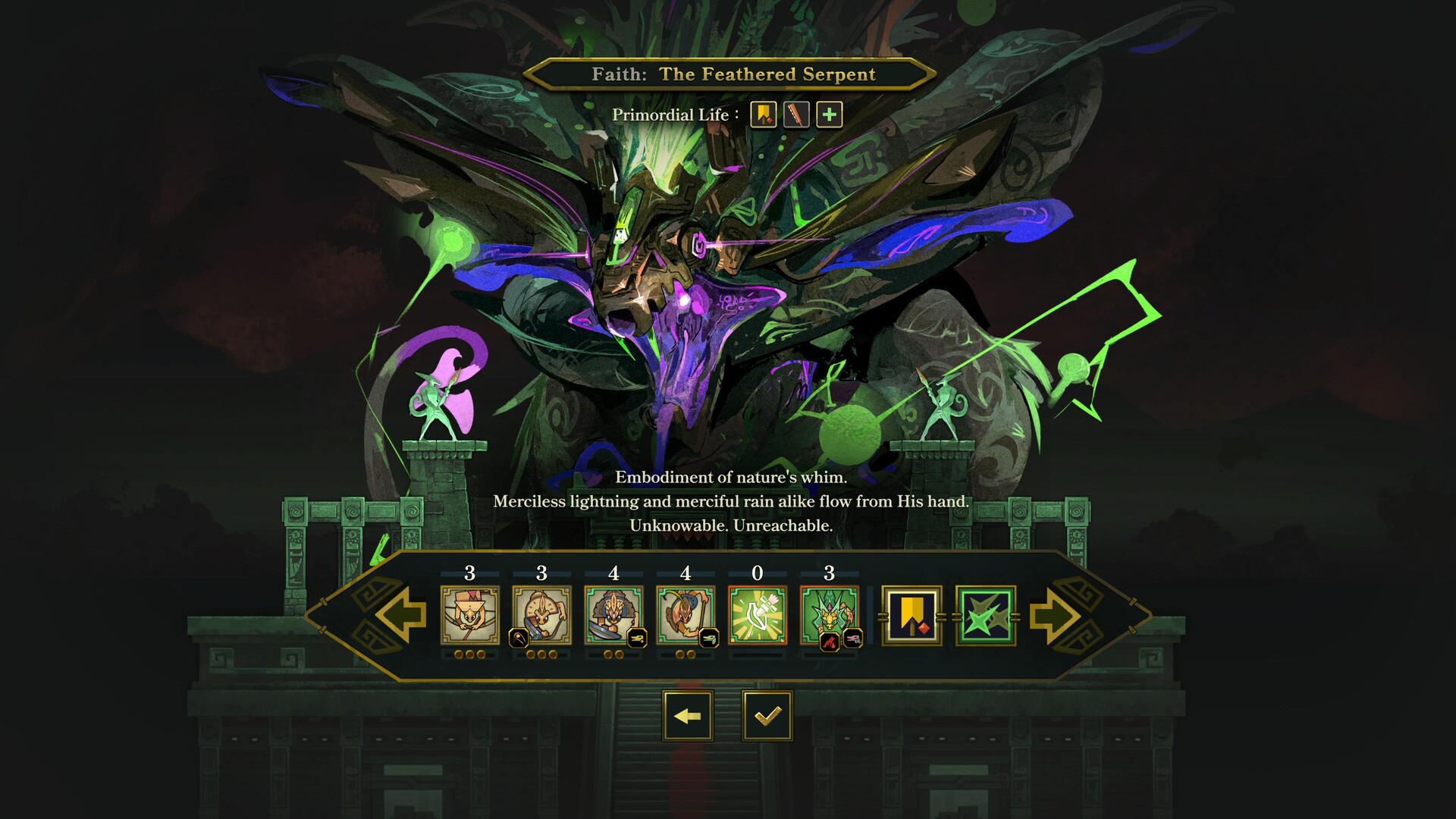
Every unit death — yours and theirs — pours into a shared blood pool that fuels your spells and summons. Run dry and the developer description literally tells you to start sacrificing your own kin to claw out a win, so tight losses snowball into comeback turns when you lean into the sacrifice loop. This single rule threads through the whole arena, so managing losses is just as important as managing wins.
Four origins, six arenas, massive roster
You pick one of four lizardkin faiths at the start of a run, and the developer page lists 125+ units across 15+ races plus six escalating arenas, including barbarian tribes, underworld horrors, and alien visitors. Defeated enemies can be conscripted, so your army literally grows from whatever just killed you. The faction choice shapes your opening archetype, which keeps the first few runs feeling distinct.
Build space that rewards tinkering
The store page advertises 12 archetypes, 300+ items, 100+ divine blessings, and 50+ status effects layered on a flexible equipment and slot system. One player who put 50 hours into the demo said builds cross over and interact in crunchy ways, and another praised the replayability because each run can feel fundamentally different rather than samey. There is real combinatorial depth if you like swapping gear mid-run to counter a specific enemy.
Easy to learn, hard to master onboarding
Several reviewers describe the early hours as approachable: a run lasts roughly the length of a short session, and speed-up buttons in the corner let impatient players skip the animation grind. A campaign playthrough takes you to a final boss, but the same players warn that actually executing your desired build requires juggling many factors at once. Keyword and tooltip clarity is weak at first, so plan on one or two lost runs before the language clicks.
Lean footprint and active dev support
The Steam header confirms Windows and Mac support with no Linux build, and the install sits under 500 MB. Multiple reviewers flagged that the developer is unusually active on Discord and takes suggestions seriously, which is a meaningful signal at this price point for an indie roguelite still receiving tuning.
What players are saying
What keeps coming up positively
- Build variety keeps runs feeling fresh, with origins, blessings, and conscripted enemies opening genuinely different strategies
- The blood-and-sacrifice economy turns losses into fuel, so failed runs rarely feel wasted
- Visual style and crunchy unit combat land well, especially for players drawn to the Aztec-lizard theme
- Approachable first run with speed-up options, then ramps into deeper mastery over later attempts
Where the friction shows
- Unit AI can be simplistic — units tend to lock onto a single target, so mobile or spawning enemies become a headache unless you counter with summons
- Keyword and description clarity is thin early on, forcing a couple of practice runs before tooltips make sense
- Difficulty curve and mastery demands are steep; expect repeated defeats while learning how to spend blood efficiently
- Some players want more variety beyond the lizardkin core, like additional non-lizard races or factions
Is it worth buying?
At $11.69 with a 10% discount off the $12.99 regular price, this sits comfortably in impulse-purchase territory for genre fans, especially given how many hours the demo absorbed. There is no claim of an all-time low, only the currently observed discount. If you usually wait for deeper sales on roguelites, the price is already modest enough that the question is whether the autobattler format hooks you more than the discount size does.
Price checked 2026-08-17:$11.69,down from $12.99(10% off)。Player-fit tags
Good fit
- Players who like learning through repeated failure and treat losses as data for the next build
- Autobattler and roguelite fans who want long runs of experimentation with 12 archetypes and 300+ items
- Anyone drawn to the Aztec-lizard aesthetic and blood-sacrifice thematics
- Players who enjoy conscripting defeated enemies and watching army compositions snowball across a run
- Tinkerers who like swapping equipment mid-fight to counter specific enemy compositions
Probably not for you
- Players who want tight, hands-on unit micro, since combat runs on autopilot with occasionally stubborn unit AI
- Anyone averse to steep learning curves and unexplained keywords during the first few runs
- Multiplayer-only co-op or PvP seekers — the Steam categories list single-player and family sharing only, with no online co-op
- Linux users, since official platform support covers Windows and Mac only
02Montabi: creature-collector roguelike deckbuilder where per-Monstabi decks and 3x3 positioning reward mastery through repeated failure

STEAM DEAL · 10% OFF
Montabi
Montabi is a strong pick if you enjoy roguelike deckbuilders and creature collectors and don't mind taking losses while you learn the grid. The team-deck idea is genuinely fresh, but the current balance gap means you'll probably want a patch or two before committing at full price.
Game highlights
Team-based deckbuilding, not one shared deck
Most roguelike deckbuilders have you shaping a single deck, but Montabi flips that by giving each Montabi its own card pool, and the trainer gets a separate deck on top of that. Building three (or more) Montabi means each new teammate reshapes your plan, and figuring out how one creature's kit complements another's is where the puzzle lives. Players describe the per-creature decks as the hook that keeps them starting new runs.
Positioning matters on a 3x3 grid
Combat happens on a small tactical board, and your trainer is a unit you actually move around rather than a background NPC. If the trainer's HP hits zero, the run ends, so where you stand affects which abilities you can use and which enemies can reach you. Several reviewers specifically call out that calculating movement coordinates and chaining positioning with cards adds a layer you don't get in card-only roguelikes.
Evolution expands your options, not just stats
Montabi evolve as they level up, and evolution unlocks new card abilities rather than purely bumping numbers. That means each level-up changes the kinds of strategies your team can run, and the official feature list calls out over 60 Montabi across evolutionary lines. Players note that this makes team-building feel like ongoing discovery rather than a one-time choice.
Trainers, cafes, and event variety
You pick a trainer whose style shapes your runs, and between fights you can stop at cafes to recover HP. The store description advertises over 30 randomized events, and reviewers consistently say those event nodes offer more interesting choices than what you typically see in the genre. There's also adjustable difficulty, save-anytime support, and playable-at-your-own-pace options in the feature list, which softens the punishment for newcomers.
Solo-only, controller-friendly, on your own clock
Montabi is single-player only with full controller support, mouse-only play, and Steam Cloud, so you can switch between handheld-style and desktop setups. Runs typically land under two hours according to player reports, which makes it easy to slot in attempts between other games. Family Sharing is supported if you want a friend to try your library.
What players are saying
What keeps coming up positively
- Players repeatedly say the per-Montabi deck system is the standout hook, because managing multiple small decks at once creates synergies you don't find in single-deck roguelikes.
- Reviewers consistently praise the art direction and creature designs, noting they feel distinct from Pokémon or Digimon and lean into real-world-object inspiration.
- Several players call the 3x3 positioning and movement-based card play a refreshing layer of tactics on top of standard deckbuilding.
- Event nodes between fights get frequent positive mentions, with players saying the choices feel more meaningful than the usual random pickups in the genre.
Where the friction shows
- Balance is the most common complaint: multiple reviewers report that some Montabi and cards enable near-deterministic turn 1 or 2 kills, while other creatures feel weak in comparison.
- Players repeatedly mention a grind or repetition cost, with several describing sessions that devolve into farming or progression loops rather than fresh decision-making.
- A few reviewers note that movement abilities can target awkward tiles by default, which adds friction to turns that are already calculation-heavy.
- Some players feel the difficulty curve and the gap between top-tier and bottom-tier creatures make early runs feel especially punishing until you learn the strongest options.
Is it worth buying?
At $17.99 (down from $19.99, a 10% discount) the price is reasonable for a fresh single-player roguelike deckbuilder, and the team-deck idea justifies a look. However, the recurring balance complaints and grind comments from multiple reviewers suggest waiting for a patch or two would make the experience smoother, so consider holding for a deeper sale or at least one balance pass.
Price checked 2026-08-17:$17.99,down from $19.99(10% off)。Player-fit tags
Good fit
- Players who like Slay the Spire-style runs and want to add creature collecting and positioning to the formula
- Tactical thinkers who enjoy calculating movement and ability ranges rather than just playing cards
- Creature-collector fans who care about monster design identity and want a fresh take beyond Pokémon-style stat checks
- Roguelike players who appreciate losing runs and rebuilding with new team combinations each attempt
- Single-player players who want controller support, save-anytime, and adjustable difficulty for short, replayable sessions
Probably not for you
- Anyone unwilling to lose multiple runs while learning which Montabi and cards are currently over- or under-tuned
- Players looking for multiplayer or co-op, since the game is single-player only
- People who dislike grinding or repetitive progression loops between fights
- Strategy newcomers who want a gentler onboarding than the current balance spread provides
03Bingle Bingle: a roulette-building roguelike for Balatro fans who accept repeated failure as part of mastery
STEAM DEAL · 20% OFF
Bingle Bingle
Worth a look for roguelike deckbuilder fans who enjoy repeated failure and don't mind opaque systems, but skip if you want a calm, casual roulette experience or clear item descriptions.
Game highlights
Build-your-own roulette wheel
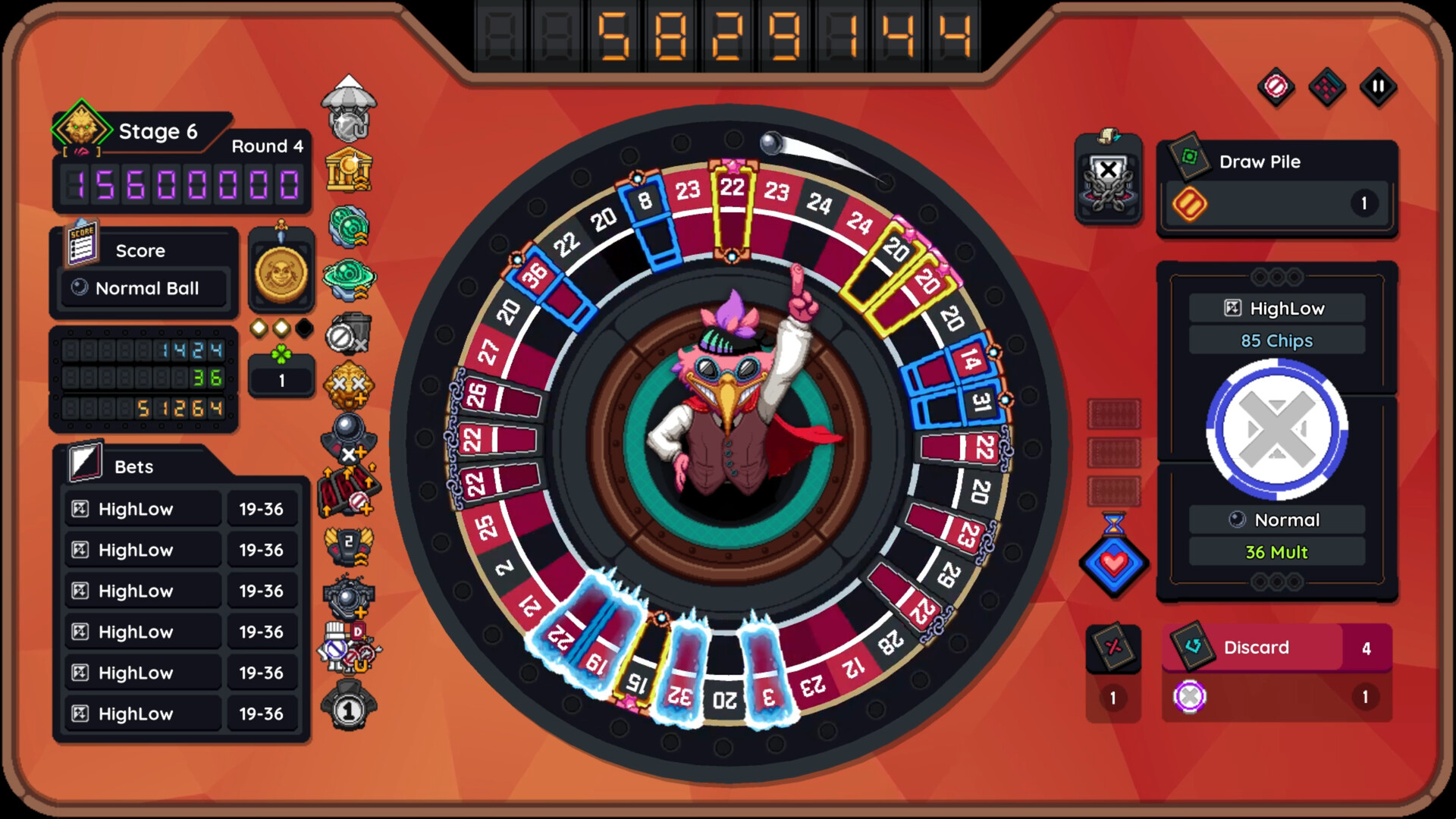
The official description frames Bingle Bingle as a roulette-building game where you customize the wheel itself rather than just placing bets. Pockets can be turned into identical numbers, frozen, linked with portals, or removed entirely, which lets a run change what a roulette spin actually means. Because the wheel is the build, every choice carries more weight than a normal casino sim, and a single pocket edit can ripple across how bets, balls, and tokens all resolve.
Deep badge and quest synergy pool
Over 200 badges combine with 20 quest rewards according to the official feature list, giving the roguelike loop a wide design space to explore. Five distinct classes further shape how those badges and quests interact, so two players running the same casino can take very different routes to the chip goals. Learning which badge combinations actually break a run is presented as the core skill check, which is where the punishing-mastery identity really shows up.
Escalating chip goals and harder modes
Runs start at 300 chips and escalate through 1 million, 10 million, and into billions in Endless Mode, per the store description. After a first clear, House Edge mode throws 18 harsher casino conditions at you, and 14 challenge modes each add their own special rules. That layered structure means the early game feels approachable while later goals push the math of betting and ball management to its limits.
Animal-dealer boss encounters
Casino dealers themed around animals gate progression and reward you with deck-strengthening bonuses when you beat them. Because these bosses stack on top of escalating chip minimums, they act as the run-ending pressure points that define a failed attempt. Defeating them is tied directly to whether your badge and token build can produce enough chips under their rules.
Roguelike restart loop
The store page explicitly calls out a roguelike structure: failing a run sends you back to the start, retesting both skill and luck. That restart loop is reinforced by challenge modes and House Edge conditions, which change the rules between attempts. It is a design that openly frames losing as the cost of learning the system.
What players are saying
What keeps coming up positively
- Players who already enjoy Balatro-style roguelikes say Bingle Bingle turns flat roulette into something they can sink many hours into without spending real money.
- Several reviewers were surprised by how much buildcraft depth sits under the surface once they pushed past early runs and started chaining badges and bets together.
- Fans of the subgenre appreciate that the roulette premise is twisted hard enough to feel distinct, not just a reskin of a card-based roguelike.
Where the friction shows
- Multiple players describe the systems as clunky and confusing, with token, ball, and bet upgrade paths that feel disconnected from how real roulette actually works.
- Several reviewers report item and badge descriptions that are vague or outright wrong, forcing players to guess what bosses and effects actually do during a run.
- A recurring complaint is that late-game bosses, especially the final one, can only be beaten with extreme RNG rather than strategy, making runs feel decided by luck.
- Players have flagged balance changes and nerfs that arrived without warning, alongside long stretches of silence on updates, which hurt trust in the developer.
Is it worth buying?
At $11.99 against a $14.99 regular price, you are paying a modest discount for a single-player roguelike that leans heavily on the Balatro-style restart loop. The price is reasonable for the genre, but the confusing item descriptions and reported RNG-heavy late bosses mean it is smarter to wait for a deeper discount unless the roulette-deckbuilder hook already sounds like your thing.
Price checked 2026-08-17:$11.99,down from $14.99(20% off)。Player-fit tags
Good fit
- Players who repeatedly restart roguelike runs to chase the perfect badge and bet combo
- Balatro fans looking for a fresh theme that still rewards deep buildcraft and math
- Solo players who enjoy escalating chip goals from thousands up to billions across Endless Mode
- Anyone who likes roulette enough to want a version where you can rewrite the wheel itself
- Gamblers-without-the-risk players who want casino flavor without spending real money
Probably not for you
- Players who want a calm, cozy casino sim to wind down with after work
- Anyone who needs item and boss descriptions to be clear and accurate before committing to a run
- Players who dislike roguelikes where late-game bosses feel decided by raw RNG rather than strategy
- Those who want multiplayer or co-op, since the title is single-player only
- Players burned by developers who ship big balance changes or nerfs without much communication
04Defender of the Crown: The Legend Returns – medieval strategy remaster with a punishing roguelike Kingdom Mode for patient retro fans
STEAM DEAL · 15% OFF
Defender of the Crown: The Legend Returns
Buy this if you have a soft spot for the Amiga original and want both a faithful Retro Mode and a punishing roguelike Kingdom Mode in one package, but expect a thin strategy layer and minigames that lean on button-mashing more than skill.
Game highlights
Three games in one launch
The package ships with Retro Mode (the original Amiga build preserved with quality-of-life tweaks), Classic Mode (redrawn art and a streamlined interface), and Kingdom Mode (a procedurally generated roguelike with dice mechanics and unlockable abilities). Each mode uses the same medieval ruleset but applies different pacing and progression layers. Full controller support and Steam Cloud are included so saves follow you between sessions. Family Sharing is enabled for whoever in your household wants to relive the 1986 experience.
Knights, provinces, and sieges as the core loop
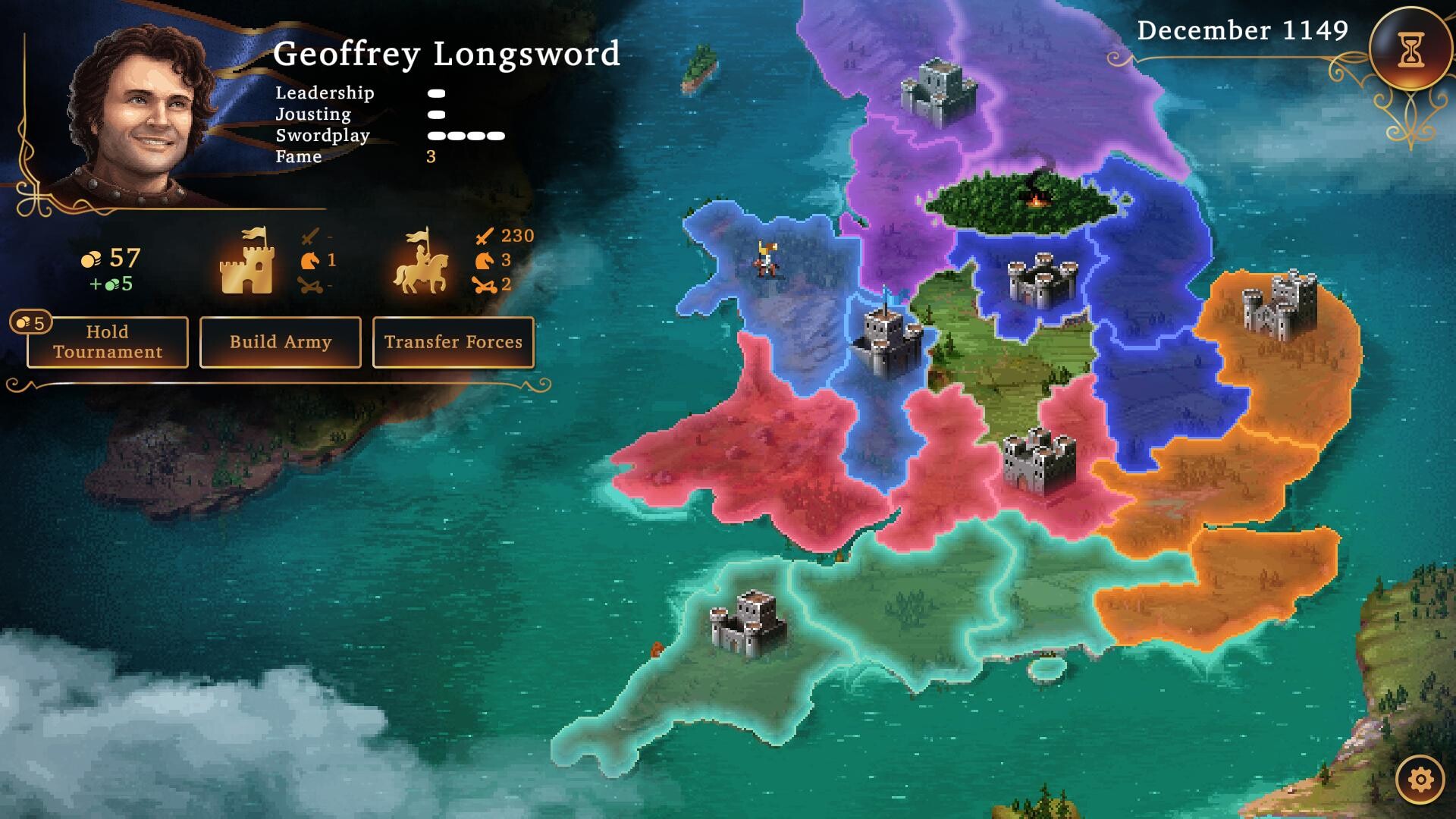
You pick from four lords with different leadership, jousting, and swordplay ratings, then conquer territories, raise armies, and storm castles across England. Leadership drives the effectiveness of your soldiers in both defense and assault, so winning jousts and tournaments feeds straight into your map presence. The pacing mirrors the original — a short campaign of raids, rescues, and tournaments rather than a deep grand strategy sim.
Action moments that decide campaigns
Jousting, raiding, and swordfights are the action beats that swing the strategic layer. Jousting raises leadership, swordfights rescue maidens for political favor, and raids pad out your resources between turns. Success in any of them usually unlocks new choices in the strategy map, so failing an action moment can stall a run just as quickly as a bad siege. Kingdom Mode adds dice rolls and unlockable abilities on top of those same minigames.
Classic Mode is more than a reskin
According to the store page, Classic Mode reimagines the original with refined mechanics, smoother systems, and balance changes that some players describe as harder, not easier. The modernized interface cleans up the famously cryptic menus of the 1986 build. Retro Mode still gives purists the near-authentic Amiga experience for comparison.
Kingdom Mode is the replay hook
Kingdom Mode is the new addition the developers are betting on, with procedurally generated maps, dice mechanics, multiple difficulty levels, and unlockable abilities layered over the original ruleset. Reviewers specifically call out the deckbuilding/dice variant as the standout addition for replay value. Difficulty scales per run, which is where the punishing-mastery framing of the package really lives.
What players are saying
What keeps coming up positively
- Players who grew up on the Amiga or C64 build consistently call the Retro Mode a powerful nostalgia hit, with several getting emotional at the SID music and original loading screens.
- Reviewers highlight the value of getting three distinct modes in a single purchase, especially the roguelike Kingdom Mode with deckbuilding and dice mechanics that adds genuine replayability on top of the original.
- Many buyers appreciate that Classic Mode preserves the original ruleset and pacing while adding cleaner menus and redrawn art, so the retro feel survives the modernization.
Where the friction shows
- Multiple reviewers say jousting offers almost no readable feedback, so losses feel random and learning the timing costs several attempts before you can win consistently.
- Several players describe swordplay as degrading into button mashing, with parries and strong attacks offering little tactical depth compared with the original.
- Battles and sieges are repeatedly called thin: combat strategies are not explained in-game, the encyclopedia does a poor job of clarifying mechanics, and at least one reviewer finished a campaign in around 40 minutes with little opposition.
- Players report bugs and unresponsive controls, especially in swordfights where characters drift backwards unless a direction is held, and criticize the lack of classic PC control options.
Is it worth buying?
At $16.99 USD (15% off the $19.99 regular price in this snapshot), the package is priced for the three-mode spread rather than as a pure strategy game. If the Retro/Classic combo alone justifies the cost for you, that is a defensible buy at this discount. If you are mainly curious about Kingdom Mode and unsure about the legacy mechanics, waiting for a deeper discount makes sense before committing.
Price checked 2026-08-17:$16.99,down from $19.99(15% off)。Player-fit tags
Good fit
- Players who replayed the original on Amiga, C64, or Atari ST and want the retro build preserved alongside modern alternates
- Strategy-curious players who enjoy short campaigns where tournaments, jousts, and sieges all influence the map
- Roguelike fans looking for a Kingdom Mode that layers dice mechanics and unlockable abilities over a 1986 ruleset
- Controller-only players, since the package advertises full controller support across the updated modes
- Patient learners willing to lose several jousting and swordfight attempts before the timing clicks
Probably not for you
- Players expecting a deep grand-strategy sim, because multiple reviewers call the strategic layer paper-thin and finish campaigns quickly
- Anyone who dislikes button-mashing minigames, since swordplay and jousting are widely described as mash-heavy with little skill expression
- Buyers who want polished, bug-free combat, given recurring complaints about unresponsive controls, drifting characters, and missing tutorials
- Strategy fans who need every mechanic explained in-game, since reviewers note the encyclopedia does a poor job of clarifying battle strategies
05Pro Jank Footy review: chaotic arcade Aussie Rules with roguelite power-ups built for mates on the couch

STEAM DEAL · 10% OFF
Pro Jank Footy
If you have a couch co-op circle that thrives on buff-stealing chaos, Pro Jank Footy is a loud, funny good time at its current discount. If you mostly play solo without a willing group, expect to feel the thin single-player content and absent matchmaking quickly.
Game highlights
150+ power-ups turn every goal into a rule change
Each goal lets the opposing side pick from a 150+ list of match-altering modifiers, from doubling team sizes to swapping roles with a seagull. The constant arms-race framing is what reviewers consistently call the funniest, most replayable hook. Power-up stacks can snowball a lead quietly, then flip the score in a single play, which is part of the comedy and part of the frustration.
NBA Jam-style arcade flow with a deliberate Aussie Rules skin
The pixel-art presentation and end-to-end pace borrow openly from classic 90s sports arcade titles, which reviewers flag as a tonal strength. Aussie Rules rules drive the passing, tackling, and scoring logic, so newcomers get a forgiving arcade filter over a genuinely unfamiliar sport. Commentating from Aunty Donna's Broden Kelly layers Aussie humor on top of the action.
Season mode with deck-building for solo runs
Outside versus, the built-in season mode lets you build a deck of abilities across a multi-round run, gaining new effects as you knock off teams. Reviewers describe a satisfying roguelite arc when matches click, then a noticeable wall once the AI starts dominating without a clear difficulty curve. Progress is tied to winning streaks, so an early loss can cut a run short.
Retro presentation is the visual identity, for better or worse
The pixel-art look and CRT filter option are designed to sell the 90s arcade nostalgia, and several reviewers praise the color palette and aesthetic. Others find the default CRT layering washes out the image and the lack of graphical options (saturation, game speed, gameplay-friendly toggles) restricts comfort. It is a fixed stylistic choice, not a settings menu.
What players are saying
What keeps coming up positively
- Chaos from stacking power-ups creates genuinely funny moments, like a 200-point comeback card that wipes a 30-point lead
- Commentary, team names, and Aussie cultural touches land well for fans and create a strong sense of place
- Local and online multiplayer is described as smooth and easy to get running, including verified Steam Deck play
- The core arcade movement and goal-scoring loop feels tight and reactive when matches flow naturally
Where the friction shows
- No quick matchmaking, so solo players depend on self-hosted lobbies with passwords or local mates to fill a room
- Single-player content runs thin fast, with exhibition matches and a season mode that reviewers describe as feeling like a demo
- Difficulty scaling is opaque, with no AI difficulty setting and contested button-mash mechanics that punish players in PvE
- Visual options are limited, with a CRT filter that defaults on and washes out the image, and no saturation or speed sliders
Is it worth buying?
At $13.49 (down from $14.99, a 10% discount) the price is fair for the novelty, but the multiplayer lean means you should only pull the trigger if you can actually round up a group. Solo players waiting for matchmaking or a bigger content drop should sit this one out for now.
Price checked 2026-08-17:$13.49,down from $14.99(10% off)。Player-fit tags
Good fit
- Friend groups running regular couch co-op nights who want a low-stakes party game
- Players who like roguelite deck-building hooks layered onto arcade sports
- Anyone curious about Aussie Rules Footy who wants a forgiving, chaotic intro
- Steam Deck owners who want a verified controller-first title
- Short-session players who enjoy a few matches before bed rather than long ranked grinds
Probably not for you
- Solo players who don't have friends to fill lobbies or who want quick online matchmaking
- Anyone who wants difficulty sliders, remappable controls, or deeper graphical settings
- Players who dislike power-up-driven chaos hijacking base mechanics mid-match
- Completionists looking for a deep progression system beyond the season deck-build
06Cult of PiN roguelike pinball deckbuilder with biopunk flair, tough runs punish every nudge and demand real mastery
STEAM DEAL · 15% OFF
Cult of PiN
Cult of PiN is a stylish roguelike pinball spin on deckbuilding that looks great and challenges you, but the core loop becomes repetitive faster than most runs in the genre. Worth considering on sale if pinball and roguelite buildcraft sound like your kind of mash-up, otherwise wait for more tables and progression.
Game highlights
Roguelike pinball with deckbuilder hooks
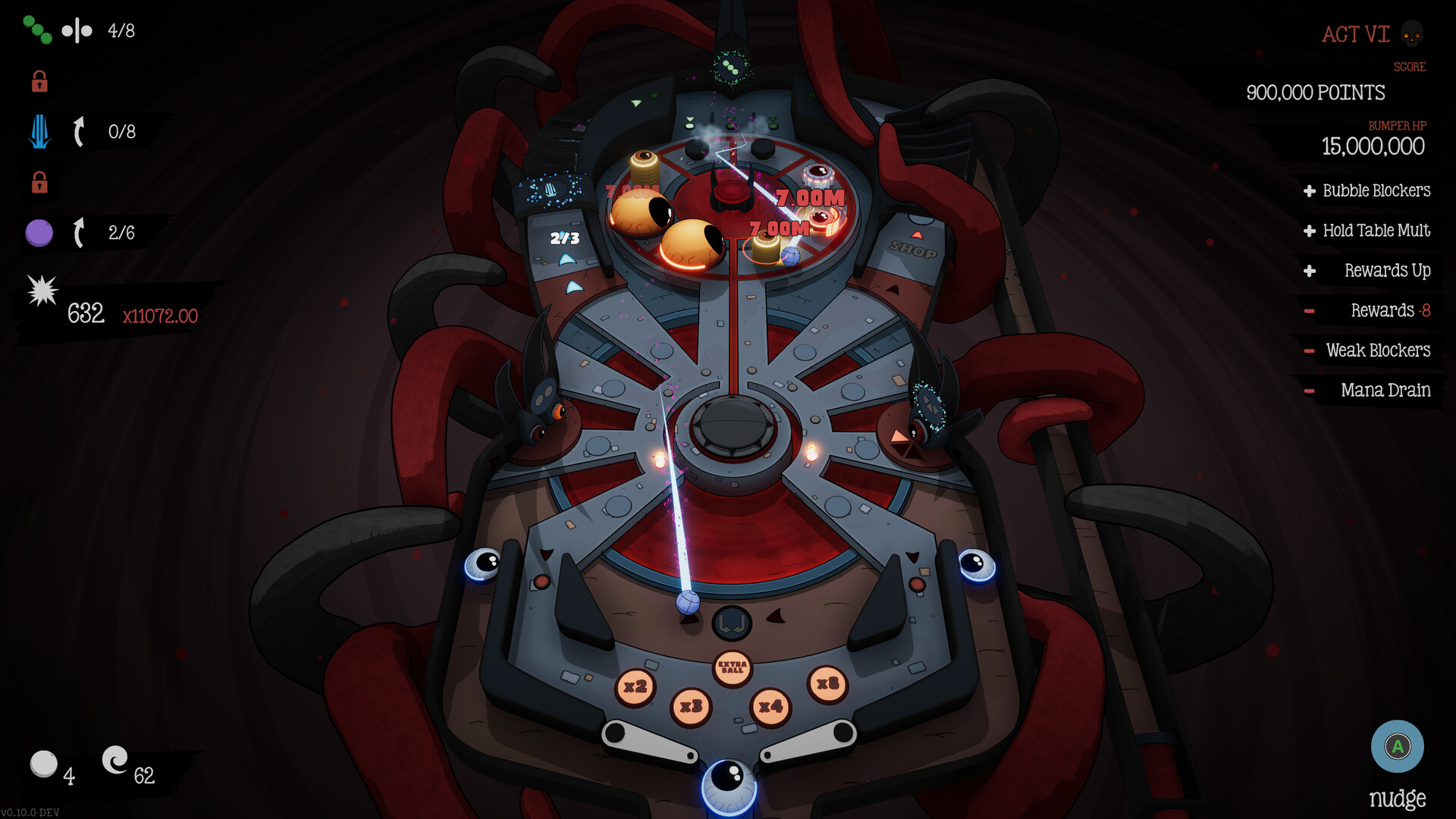
Cult of PiN pairs real pinball mechanics with roguelite progression, awarding Glyphs that stack to alter every run. You clear each table by destroying every bumper, so the victory condition is concrete rather than purely score-based.
Four tables, six difficulty tiers, lots of Glyphs
Official numbers line up well for a niche release: 4 tables, 6 difficulty settings, 100 Glyphs, 8 Ball types, 16 bumper variants, and 8 random table traits that actively subvert rules mid-run. Difficulty escalates by changing bumper behavior and stage rules, which forces real adjustment between attempts.
Missions and explosive table-wide finishers
Hitting bumpers damages them, and finishing in-stage missions triggers special attacks that can tear a whole table apart at once. That means a run alternates between careful aim and crowd-pleasing chain reactions, which is the closest thing to a big pay-off moment.
Leaderboards and endless mode add replay pressure
After Act VI on a table, an endless mode unlocks with separate Monthly and All-Time global leaderboards per table, giving skilled players a long-term score chase. It is the kind of carrot that rewards pure mastery of cradled ramp shots and trick nudges over many attempts.
Fully featured single-player setup, controller-first
The build supports full controller input, Steam Cloud, achievements, stats, keyboard-only and mouse-only play, and runs on Windows, macOS, and Linux. Accessibility options like adjustable difficulty and camera comfort give you sensible knobs before you start learning the tables.
What players are saying
What keeps coming up positively
- The art direction, animations, and overall presentation feel polished and clean from the first run
- It runs very smoothly even when multiball stacks 20+ balls on the table, and it works well on Steam Deck
- The Lovecraftian biopunk theme and living-table atmosphere make the pinball surface feel genuinely fresh
- Some runs feel genuinely game-breaking once strong Glyph combos start chaining together
Where the friction shows
- After roughly one to three hours many players report the loop turns into a rinse-and-repeat grind where decisions stop mattering much
- Players compare the value unfavorably to Pinball FX, which is cheaper and offers more mechanically varied tables
- Several reviewers hit crashes, UI bugs, and progression hiccups that undermine the finished-product feel
- Audio feedback and sound design feel thin, with monotonous music and not enough table-side juice for pinball fans
Is it worth buying?
At the observed 15% discount (USD 12.74 from a regular USD 14.99) the game is cheaper than its base price but still above the threshold where several recent reviewers called the asking price a stretch. If pinball roguelites with short, sharp runs sound appealing, the sale makes dipping in reasonable; if you want long progression or a deep deckbuilder, waiting for a bigger discount or more content is the safer call.
Price checked 2026-08-17:$12.74,down from $14.99(15% off)。Player-fit tags
Good fit
- Players who want quick roguelite runs they can finish in a sitting rather than long campaigns
- Pinball fans willing to learn cradled ramp shots and precise nudges across repeated failures
- Controller and Steam Deck players looking for a smooth, cloud-synced indie to chip away at
- Score-chasers who enjoy monthly leaderboard resets on a small set of well-tuned tables
- Players who enjoy deckbuilder-style synergy hunting, even when the pool of pieces is limited
Probably not for you
- Players expecting a long, slowly unfolding roguelike with meaningful build diversity run-to-run
- Anyone who wants polished, table-rich pinball like Pinball FX, since depth-per-table is shallower here
- Players sensitive to launch-era bugs, crashes, or progression hiccups that may still need patches
07The Severed Gods roguelite RPG review: punishing height-based boss fights for tactical players who learn from repeated runs

STEAM DEAL · 10% OFF
The Severed Gods
The Severed Gods is a turn-based tactical roguelite with an unusually clever Low/Mid/High targeting system that rewards careful planning, but right now it carries meaningful Early Access friction in the form of bugs, onboarding gaps, and balance swings, so players who learn from repeated deaths will get the most out of it.
Game highlights
Height-based combat is the real hook
Official materials describe a battlefield where every enemy has Low, Mid, and High body parts, each with its own shield and weakness. Players break defenses to knock enemies down, then sever limbs to permanently disable abilities. Reviewers specifically call out this altitude system as the standout mechanic, saying it forces you to plan attacks rather than spam skills, and that choosing which body part to target becomes the core decision each turn.
Reincarnation loop carries meaningful progression
The official description and Steam page frame death as a permanent source of strength: relics, unlocked heroes, and upgraded skills persist between runs. Reviewers compare the loop to Slay the Spire, noting that each run encourages a different build rather than repeating one optimized strategy. That permanent meta-progression is what turns a punishing combat system into something that respects your time across many attempts.
Karma choices shape runs in tangible ways
The game presents binary moral forks, such as taking supplies from a dying soldier or escorting them, that shift a Karma meter between Virtue and Sin. The official description ties those branches to different NPC respect and to forbidden powers. Player feedback describes this as one of the more interesting hooks, giving each cycle a slightly different flavor depending on the path you commit to.
Hero Marks add real build variety
Each hero has a unique Mark that defines their role: Thieves steal from NPCs, Scholars expose enemy weaknesses, and Merchants recruit followers. The official text says combining these Marks is part of how teams survive longer and push further. Reviews highlight that experimenting with party composition and inherited NPC skills is a satisfying late-run puzzle, though one reviewer warns the current roster feels thin at three heroes.
Active development is offset by rough Early Access
The publisher has posted a Year One Roadmap promising ongoing updates, and several reviewers praise how quickly the team is patching. That goodwill is tested by recurring complaints about a clunky UI, missing UI elements, occasional crashes, and difficulty spikes that feel unfair before you have the tools to respond. Players who return after a patch cycle will likely see a smoother game than launch-day buyers.
What players are saying
What keeps coming up positively
- The Low/Mid/High targeting system makes boss fights feel like puzzles rather than stat checks.
- Slay the Spire-style meta-progression keeps repeated runs interesting instead of repetitive.
- Visual effects and the Octopath Traveler-style art direction land well with most players.
- Devs respond quickly to feedback and push frequent patches, which builds early trust.
Where the friction shows
- The UI frequently glitches, with mouse clicks, hovers, and text skipping making menus hard to use.
- Onboarding is thin, so new players get hit with mechanics and difficulty spikes before they understand them.
- Several boss matchups feel unwinnable when your party cannot reach the required height layer.
- Event choices can be exploited by leaving and re-entering, which cheapens the Karma system for some players.
Is it worth buying?
At $13.50 with a 10% discount off the $15.00 regular price, this is an Early Access tactical roguelite with a genuinely fresh combat idea but real launch-day friction. The 10% off is a light nudge rather than a meaningful sale, and several reviews explicitly recommend waiting a patch or two for bugs and balance to settle. If you specifically want to follow the game's development and tolerate rough edges, the current price is workable; everyone else should wait for a deeper discount once more content and fixes land.
Price checked 2026-08-17:$13.50,down from $15.00(10% off)。Player-fit tags
Good fit
- Players who enjoy Slay the Spire-style roguelites and want a fresh twist on turn-based combat.
- Tactical players who like planning each action around enemy weak points rather than brute-forcing encounters.
- Players who don't mind Early Access bugs and want to follow an actively patched roadmap.
- Fans of Octopath Traveler-style presentation looking for a darker, run-based RPG.
Probably not for you
- Players who want a polished, fully featured launch experience without UI glitches and crashes.
- Anyone who needs a strong tutorial, since several reviewers report a steep, unexplained difficulty spike in the first hour.
- Players looking for a large character roster, as the current hero pool feels small.
- Anyone expecting a fair shake on every run, since some bosses can feel unwinnable based on your current tools.
08Pegs X Stickers — A satisfying pachinko-roguelite for Balatro fans who love tinkering board layouts
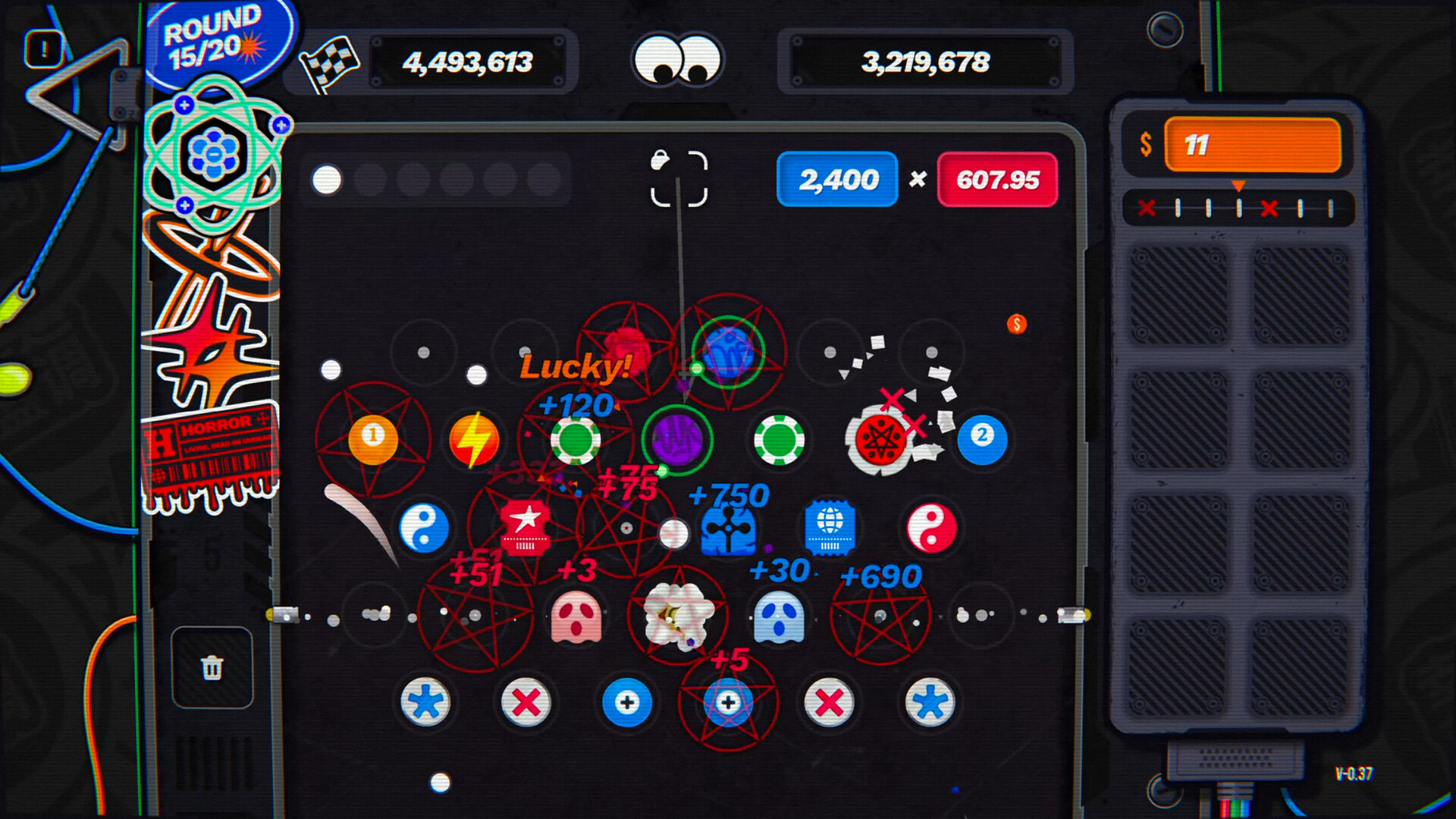
STEAM DEAL · 17% OFF
Pegs X Stickers
A genuinely addictive score-chasing roguelite with surprising depth in its peg-and-sticker synergies, well worth picking up at its current discounted price if you enjoy tinkering with layouts and chasing big numbers, though physics randomness can frustrate.
Game highlights
Custom board building
Players purchase and place pegs to design layouts aimed at maximizing point efficiency, making each run a puzzle in spatial planning. The system rewards experimenting with peg placement to chain scoring paths, and board variety grows as you unlock new peg types. It feels like a Balatro-style engine where your layout decisions are the core strategic lever.
Sticker synergies and supercharges
Stickers attach to pegs and can fundamentally modify scoring rules, producing interaction chains that escalate runs from steady to explosive. Supercharges layer unique abilities onto individual pegs, and the official pitch is about discovering 'game-breaking combos,' which several reviewers echoed when describing satisfying synergies. Learning which stickers complement each other becomes a slow-burn optimization game within the run itself.
The Boss and round modifiers
The mascot introduces mid-round shuffles, challenge rounds, and timing-based interruptions like sneezing, forcing you to adapt a board layout on the fly. This turns what could feel like a passive pachinko loop into something that demands constant recalibration. It is the main source of the run's tension and the reason a comfortable lead can collapse in one bounce.
Polished feel and low hardware cost
Reviewers consistently call out the art, clicky sound design, and overall vibe as a high point, and one player specifically praised that the game does not punish their GPU and CPU. Mouse-only play is supported, but full controller support including DualSense and DualShock means you can match input to mood. The audiovisual polish makes repeated runs feel rewarding rather than repetitive.
Wide accessibility options
Save Anytime, Steam Cloud, Camera Comfort, Custom Volume Controls, and Playable without Timed Input lower the friction for short sessions or accessibility-sensitive players. Steam Achievements and Family Sharing extend the package beyond core play.
What players are saying
What keeps coming up positively
- Repeatedly described as addictive and easy to lose hours to in a single sitting
- Strong comparisons to Balatro and Peggle, with reviewers feeling right at home in the score-chasing loop
- Build experimentation is highlighted as the main hook, with players enjoying coming up with new combinations
- Art direction and clicky sound design get called out as a genuine standout
Where the friction shows
- Ball physics can feel luck-driven, with runs collapsing from a single unexpected bounce
- Some players feel the core loop lacks dynamism and becomes static once you've seen the systems
- Planning layout placement matters less than RNG suggests, which can undercut the strategic fantasy
- First-level progression can be slow, with several players reporting significant time before clearing the opening barrier
Is it worth buying?
At $4.97 against a $5.99 regular price (17% off), the entry cost is low for a polished roguelite with this much build variety, and the discount makes it an easier pickup even if the physics randomness puts you off after a session. Worth grabbing now rather than waiting, since the gap between sale and regular is modest but the core content already feels substantial.
Price checked 2026-08-17:$4.97,down from $5.99(17% off)。Player-fit tags
Good fit
- Players who love Balatro-style synergy hunting and enjoy theorycrafting builds between runs
- Tinkerers who want to design custom pachinko layouts and test scoring hypotheses
- Short-session players who appreciate Save Anytime and untimed inputs
- Steam Deck and low-spec PC owners who want something polished that does not tax hardware
- Score-chasers motivated by climbing leaderboards and chasing ever-bigger numbers
Probably not for you
- Players who want tight, deterministic control over outcomes and get frustrated by physics randomness
- Anyone looking for a fast, action-heavy arcade loop rather than a slow, calculating planning game
- Players seeking deep progression, unlocks, or long-term meta goals beyond individual run optimization
Share this article