01Buster Breaks Out: a brick-breaker roguelite for players who thrive on tough runs and clever ball-synergy builds
STEAM DEAL · 20% OFF
Buster Breaks Out
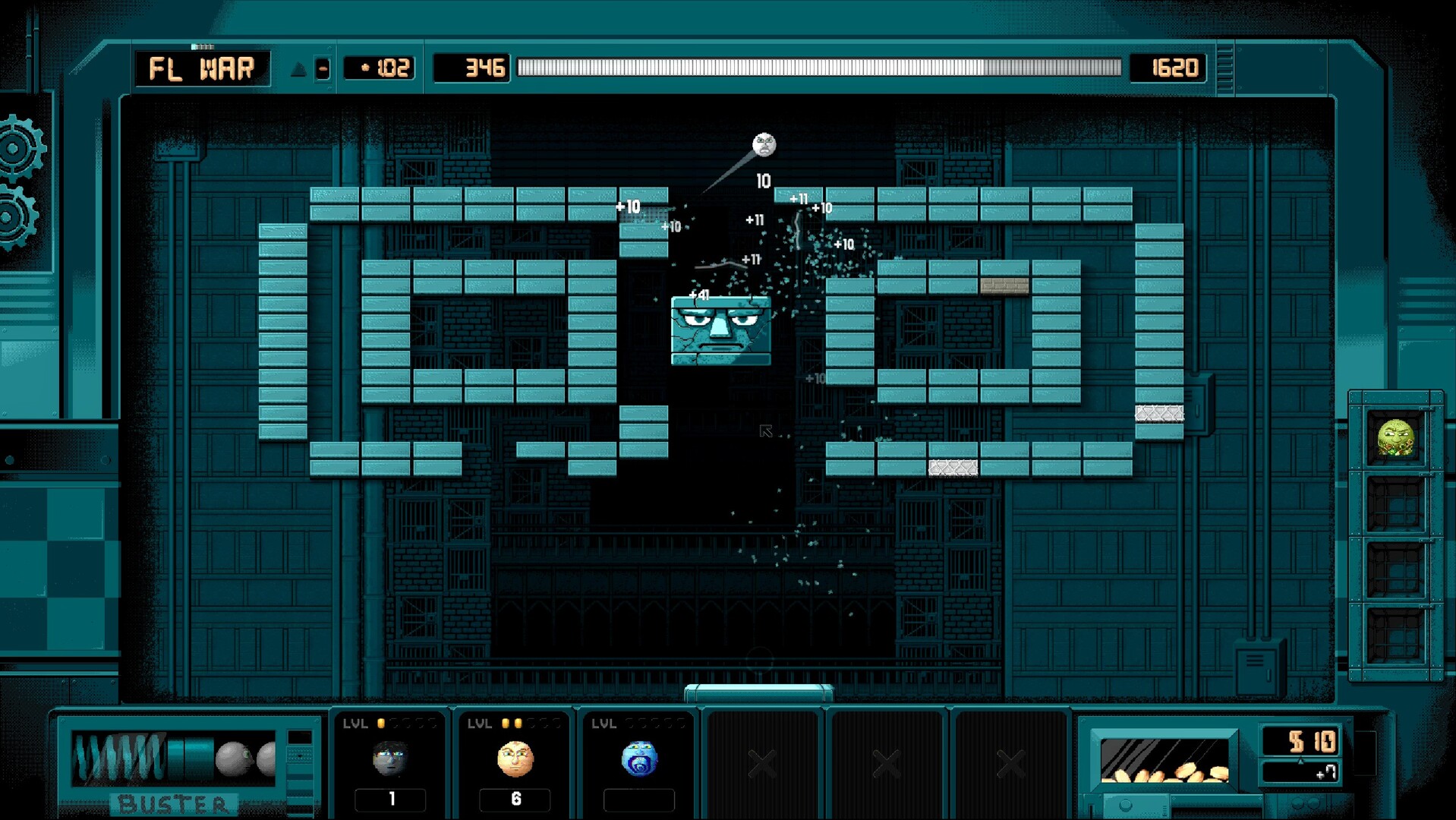
If you enjoy classic brick-breaking but want a roguelite shell layered on top, Buster Breaks Out delivers a punchy, repeatable loop where every wall hit costs health and every run rewards you with new toys. It's twitchy and punishing early, then snowballs into satisfying combo chaos once a build clicks. At $3.99 during its 20% launch discount (regular $4.99), it's an easy pickup for the genre crowd.
Game highlights
Brick-breaking with a roguelite skeleton
Instead of simply losing the ball off the bottom, every wall bounce drains a finite bounce counter, so you're constantly balancing aggression against survival. That twist forces you to rethink angle and pacing on every shot. It is a meaningful departure from the arcade template rather than a reskin, and it's the foundation everything else builds on.
Deep ball and upgrade pool to chase
The official store page lists 40+ upgrades of varying rarities, 18 Contraband balls, and 70 entries in the Ballpedia to fill out, plus 30 unlockable loadout items. Reviews repeatedly highlight how combos between balls and upgrades change how a run plays, with players describing clever synergies that emerge from those interactions. There is also a 15-challenge mode and a Weekly Run leaderboard for score hunters.
Multiple characters with tailored difficulty
Beyond Buster Ball, four additional unlockable characters each bring unique play styles, stories, and five difficulty levels tuned to that character. That gives the game meaningful reasons to restart with a fresh toolkit rather than just replaying the same loop. Players note the runs stay short enough to encourage the "one more attempt" habit.
Strong presentation and controller-friendly setup
The developer handled the original soundtrack and art solo, and reviewers consistently call out the music, Amiga-inspired visuals, and tactile sound design. Full controller support, save-anywhere, and mouse-only and keyboard-only options make it approachable regardless of input preference. It's a polished-feeling package for an Early Access title in this price range.
What players are saying
What keeps coming up positively
- Runs are short and restarting is smooth, creating a strong 'one more attempt' loop that fits short sessions
- Synergies between different Contraband balls and upgrades frequently change how a run plays, rewarding experimentation
- Original soundtrack and Amiga-style art are repeatedly singled out as standout presentation for a budget roguelite
- Difficulty curve lets late-game builds snowball into satisfying combo chaos once early floors are cleared
Where the friction shows
- Hitting side and top walls costs bounces, so chaining off those edges feels counterproductive and slows down clears
- Base ball speed is high enough that small paddle misreads can burn through the bounce counter in a single bad rally
- Early floors can be brutally dependent on shop RNG, leading to short failed runs before any build comes online
- Some players want more variety in modes, balls, and levels beyond what currently ships in Early Access
Is it worth buying?
At $3.99 on a 20% discount off a $4.99 regular price, it's an impulse-buy tier for anyone remotely interested in brick-breakers or roguelites. The reviews describe dozens of hours of content through characters, challenges, and leaderboard runs, which makes the current price easy to justify even at full cost later.
Price checked 2026-08-18:$3.99,down from $4.99(20% off)。Player-fit tags
Good fit
- Players who enjoy short roguelite runs they can finish or restart in one sitting
- Score-chasers chasing Weekly Run leaderboard spots and full Ballpedia completion
- Breaker fans who want a fresh twist instead of a straight arcade remake
- Players willing to fail the first several attempts while learning wall-bounce economy
- Controller, keyboard, or mouse-only players who want full input flexibility
Probably not for you
- Anyone expecting a forgiving, classic Breakout experience where walls are free
- Players who dislike runs that can end abruptly from one misread bounce or bad early RNG
- Those looking for co-op or multiplayer, since this is single-player only
- Players who want a long, campaign-style session in a single sitting rather than quick restarts
02BLOODLETTER review: a gothic deckbuilder for players who learn through repeated failure and punishing runs
STEAM DEAL · 35% OFF
BLOODLETTER
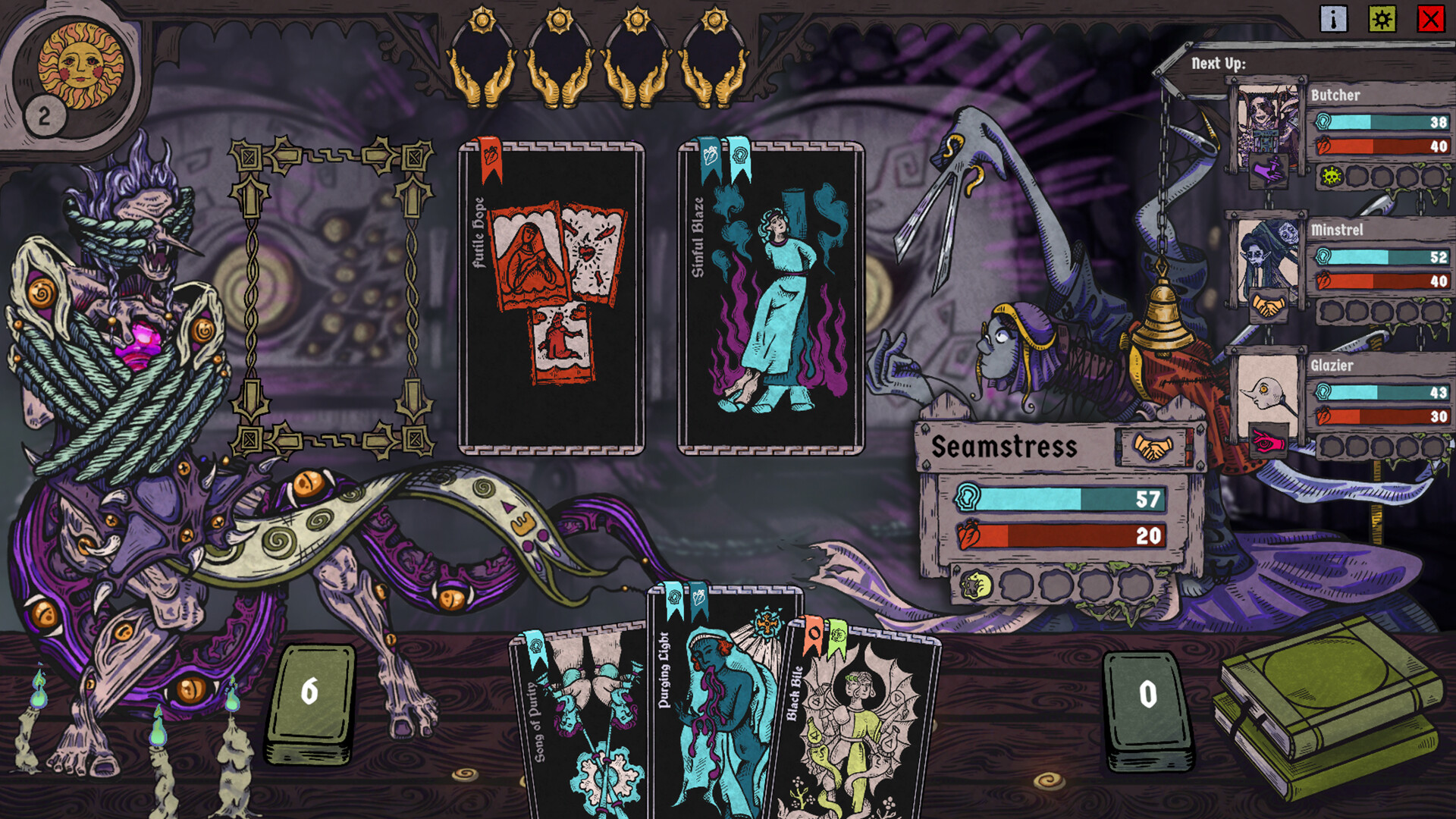
BLOODLETTER is a stylish, lore-heavy deckbuilder worth picking up on sale if you enjoy dark fantasy roguelikes, but expect a long learning curve and a deliberately grindy mitigation loop before runs click.
Game highlights
Run-defining difficulty across four Dreadful entities
Official details list four entities, each with its own victory condition, and three difficulty tiers per entity. Reviewers consistently say runs on medium and especially hard demand tight card economy and patient planning. Expect to lose many campaigns before understanding each antagonist's threat profile.
Card pool built on tarot and medieval remedies
The Steam store pages describe 80+ cards with unique incantations and artwork, plus six Blessing and Curse cards that swing momentum mid-encounter. Villagers are the upgrade path rather than shops, which multiple players singled out as a refreshing twist on the deckbuilder formula.
Eleven villager abilities plus transmuters shape every run
Eleven villager abilities let you influence deck construction and run rewards, while 10+ transmuters alter how your cards function during a campaign. Together these systems make each playthrough feel different depending on which villagers you prioritize.
Standout grim art and oppressive sound design
Both positive and negative reviews repeatedly call out the medieval horror art, the unsettling illustrations on cards like bloodletting and trepanation, and a heavy ambient soundtrack. Players who care about aesthetic atmosphere consistently rank the presentation above genre expectations.
Narrative snippets add worldbuilding between runs
Official copy advertises 100+ story snippets woven into runs. Reviewers mention enjoying the lore drops, though some note that named villagers with attached arcs are still thin, so worldbuilding currently leans more on flavor text than on character development.
What players are saying
What keeps coming up positively
- Original loop that swaps a shop track for villager abilities, giving each run a distinct upgrade path
- Atmosphere, art, and sound design praised as genre-leading and genuinely creepy
- Difficulty curve is high but fair for players who enjoy Soulslike-style trial-and-error mastery
- Active developer communication during Early Access, with patches already addressing reported issues
Where the friction shows
- Mitigation loop is described as repetitive, with long stretches of treating the same conditions before any win condition feels reachable
- Deck synergy is reported as shallow, with limited combo potential because decks do not reshuffle and only a few cards can be played per villager
- Early decisions carry outsized weight, and once a run falls behind recovery options feel scarce
- Repeated complaints about long, same-y runs and low build variety within a single playthrough
Is it worth buying?
At roughly $10.06 against a $15.49 regular price (about 35% off in USD per the supplied snapshot), BLOODLETTER sits in a comfortable impulse range for deckbuilder fans. However, the Early Access build still shows rough edges around pacing, build variety, and grind length, so waiting for a deeper discount or a larger content update is a reasonable play unless you specifically want in now to track development.
Price checked 2026-08-18:$10.06,down from $15.49(35% off)。Player-fit tags
Good fit
- Players who enjoy learning through repeated failure and slowly mapping a system's failure states
- Fans of dark medieval or lovecraftian art who want a deckbuilder with strong atmosphere
- Roguelike deckbuilder fans looking for a twist on the Slay the Spire formula that swaps combat for villager care
- Players who like long, thoughtful runs where resource distribution matters more than fast combo chains
- Early Access backers who enjoy watching a game balance and expand over time
Probably not for you
- Players who want quick 20-30 minute runs with frequent dramatic combo turns
- Anyone sensitive to repeated medieval medical horror imagery such as bloodletting and trepanation
- Players who dislike long mitigation grinds where most turns are spent stabilizing rather than escalating
- Players expecting a tightly balanced, content-complete release rather than an evolving Early Access game
- Anyone wanting built-in multiplayer or co-op, since the store page lists single-player only
03Nimbit Frontier: a cozy creature-collector roguelite where releasing your pets matters more than hoarding them

STEAM DEAL · 10% OFF
Nimbit Frontier
Nimbit Frontier is a strong Early Access pickup for anyone who likes Stardew-style care loops crossed with light Hades-style dives, and the price is already slightly trimmed. Hold off if you want a packed roster on launch day or expect a deep open-ended farming sim right now.
Game highlights
Creature care actually shapes your team
According to the store page, habitats influence each Nimbit's traits, personality, mood, and growth, so building the right enclosure is part of progression rather than decoration. Reviews back this up, with multiple players describing the capture-DNA-habitat-release pipeline as the hook that kept them logging back in. It is a meaningfully different loop from the usual collect-and-box design.
Roguelite Underwild dives with real choices
The official description frames the Underwild as a shifting dungeon where hazards and Mimocks change every run, and players confirm runs feel fresh thanks to random charm and artifact combos plus per-floor branching paths that include fishing and harvesting. Tethering Mimocks in battle feeds the genetic-fragment system that unlocks new species, so combat and collection are the same verb rather than separate chores.
Release them, don't hoard them
Nimbits are meant to be sent to Sanctuaries for long-term world changes, and the store copy is explicit that releasing is the goal, not keeping them forever. Reviewers repeatedly call out this design as the game's identity, and several admit that saying goodbye to a raised creature actually stings, which is exactly the emotional payoff the system is aiming for.
Cozy-friendly QoL from day one
The dev team has shipped several accessibility-minded features: a forgiving day-night cycle that pauses at midnight, no forced sleep or stamina fainting, a harder difficulty toggle for players who want it, full controller support, and Steam Cloud saves. Multiple Steam Deck owners report it runs well handheld, and at least one tester transferred 4.5 hours of demo progress across.
Town, League, and town-shaped progression
You pick a League discipline (Explorer, Tamer, or Adventurer) early on to earn pins, tools, and upgrades, and your choices feed Star's End through new NPCs, shops, and research unlocks. The official page stresses that exploration, research, habitats, and conservation all loop into each other rather than running on parallel tracks.
What players are saying
What keeps coming up positively
- The capture-raise-release pipeline is consistently described as charming and more meaningful than typical creature-collector loops.
- Underwild runs feel fresh thanks to random artifacts and per-floor choices like fishing, harvesting, or fighting.
- Cozy quality-of-life options like save-anywhere, no-faint mode, and a long day cycle make it easy to play in short sessions.
- The art, creature designs, and soundtrack are repeatedly called out as a major reason to keep playing.
Where the friction shows
- The current roster of Nimbits and tools feels small, and several players want more variety before judging the full game.
- A noticeable grind shows up in gathering, habitat building, and museum completion, which can slow mid-game progression.
- Repeated NPC dialogue, rough character animations, and limited navigation aids are common rough edges still being polished.
- English-only text and a small early-access world leave some players wanting more content and localization on day one.
Is it worth buying?
At $12.59 with a 10% discount off a $13.99 regular price in Early Access, the value is fair for genre fans, especially given the demo-to-launch progress transfer and Day 1 QoL. Skip it at full price only if a larger creature roster or deeper farming sim is a dealbreaker for you right now.
Price checked 2026-08-18:$12.59,down from $13.99(10% off)。Player-fit tags
Good fit
- Players who like raising and eventually releasing creatures rather than box-hoarding them
- Casual roguelike fans who want short, customizable runs instead of long dungeon grinds
- Stardew-style players who care more about cozy loops and town building than combat depth
- Steam Deck and controller players looking for a polished handheld creature-collector
- Players who enjoy Early Access titles that already ship with strong quality-of-life options
Probably not for you
- Players who want a huge, launch-ready roster of creatures to collect
- Anyone expecting deep open-ended farming sim mechanics and a sprawling world on day one
- Players who dislike repetitive gathering, habitat grind, or slow museum-style completion arcs
- Those who need non-English text or full localization support at release
04Peglin — A Pachinko Roguelike for Players Who Welcome Brutal Learning Curves and Repeated Failure
STEAM DEAL · 40% OFF
Peglin
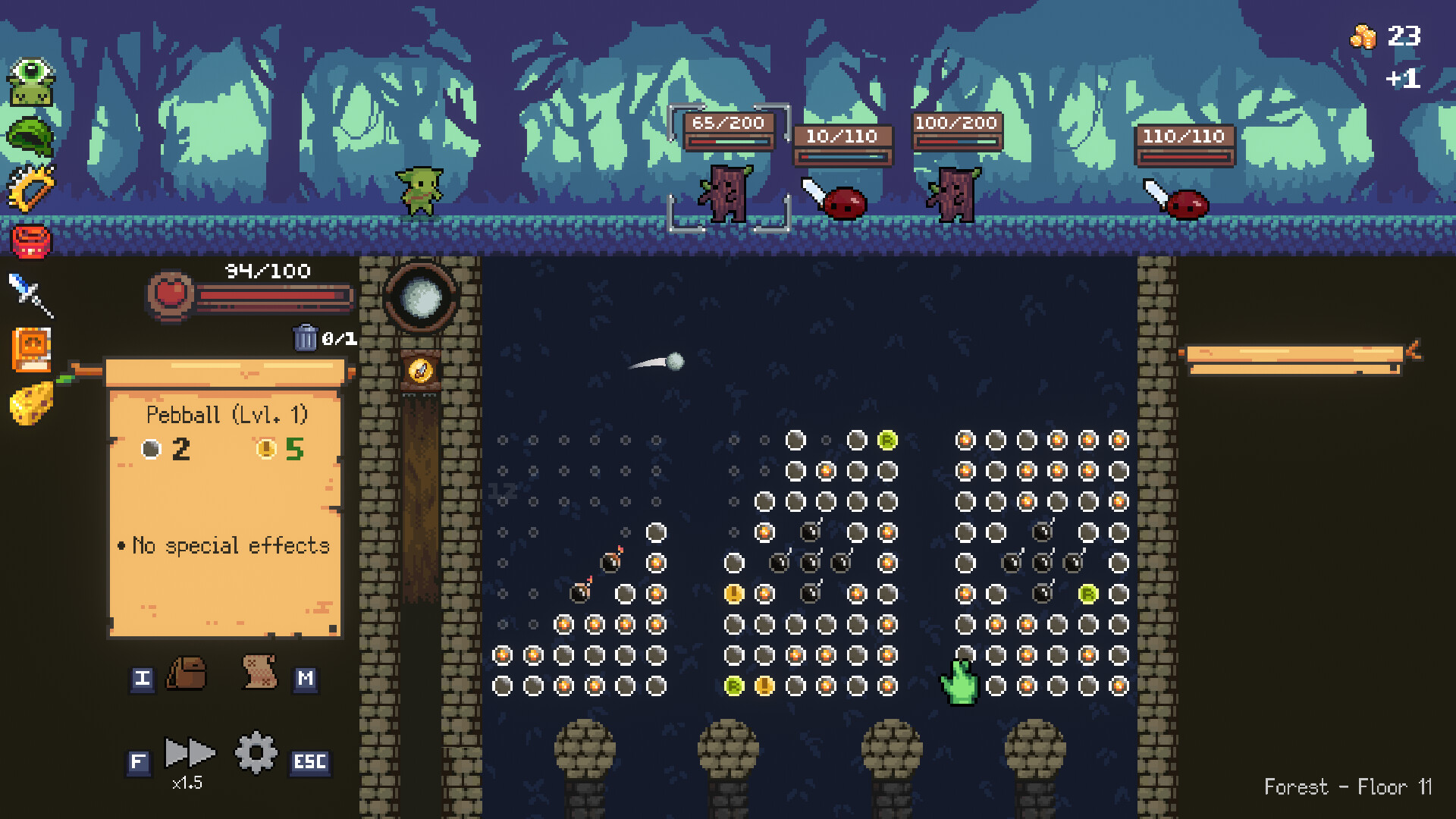
Peglin is a sharp, original roguelike that fuses Peggle-style bouncing with deck-building, and at the current 40 percent discount it is a worthwhile pickup for anyone drawn to fail-forward mastery. The Pachinko combat and orb-relic combos are genuinely inventive, though a small map pool and a meta-progression grind keep it from being a must-own.
Game highlights
Pachinko combat that rewards angle and risk
The official description frames the entire game around aiming orbs into a peg board, with each bounce contributing to damage and gold. Players confirm that aiming is meaningful but never fully controllable, which is exactly why the tactical decisions — when to refresh, crit, or burn a bomb — matter as much as the trajectory itself.
Orbs and relics drive real build variety
Orbs come with their own special effects, and relics reshape both enemies and the physics you rely on, which the store page promises will make every run distinct. Players echo that stacking the right ball with the right relic can produce massive damage spikes, so even short sessions can feel fresh when a new combination clicks.
Roguelike structure with roguelite meta-progression
Runs end on defeat, but gold and unlocks persist, giving the game the classic loop of losing, learning, and rebuilding stronger. Some unlocks, however, require repeated investments or runs with specific characters, which pushes the experience toward a longer grind for completionists.
Multiple characters, bosses, and Cruciball difficulty
The game offers several playable characters, layered bosses, and a Cruciball system that cranks up challenge for experienced runs. Higher Cruciball levels lean heavily on RNG and relic stacking, which players describe as making runs feel like a slugfest rather than a puzzle.
Single-player only with full controller support
Peglin lists only a single-player category, with full controller support on Windows and Mac, so it is built around solo play rather than couch or online co-op. That focus keeps the design tight but means anyone looking for shared runs should look elsewhere.
What players are saying
What keeps coming up positively
- The Pachinko-plus-deck-building combo feels genuinely original and keeps bouncing-orb moments satisfying.
- Defeats feel like lessons rather than roadblocks, with clear feedback that pushes players to try new builds.
- Boss variety and relic stacking can produce huge damage turns that make wins feel earned.
- Developer responsiveness and balance patches are frequently called out as a real strength.
Where the friction shows
- Only three main areas, which players say become familiar quickly and limit long-term variety.
- True-ending and character unlocks demand dozens of runs, creating a repetitive grind that stretches past the fun part.
- Some relics and orb upgrades are obviously stronger than others, making several choices feel skippable on higher difficulty.
- An anti-save-scumming change reportedly penalizes players who quit mid-run, frustrating short-session players.
Is it worth buying?
At $11.99 against a $19.99 regular price, the 40 percent discount brings Peglin into a comfortable impulse range, and the core loop delivers enough mechanical depth to justify that. The bigger question is whether the three-area structure and meta grind will still feel rewarding after the first dozen hours, so waiting for an even deeper sale is a reasonable hedge for completionists, while anyone who just wants the satisfying Pachinko combat should grab it now.
Price checked 2026-08-18:$11.99,down from $19.99(40% off)。Player-fit tags
Good fit
- Players who enjoy roguelikes where repeated failure is part of getting better
- Fans of Peggle or pachinko who want a combat-focused twist
- Short-session solo players looking for run-based progression
- Builders who enjoy stacking relics and orbs for explosive combos
- Players who appreciate a punishing difficulty toggle like Cruciball
Probably not for you
- Completionists who want long, branching campaigns rather than three repeating areas
- Players who dislike grind-heavy meta unlocks and long-term repetition
- Anyone who wants co-op, since the game is single-player only
- Players sensitive to RNG-heavy outcomes where runs can collapse on bad luck
05RIFTSTORM review: co-op PvE looter-shooter squads pushing Rift Exposure Zones for escalating loot and synergy-driven builds
STEAM DEAL · 20% OFF
RIFTSTORM
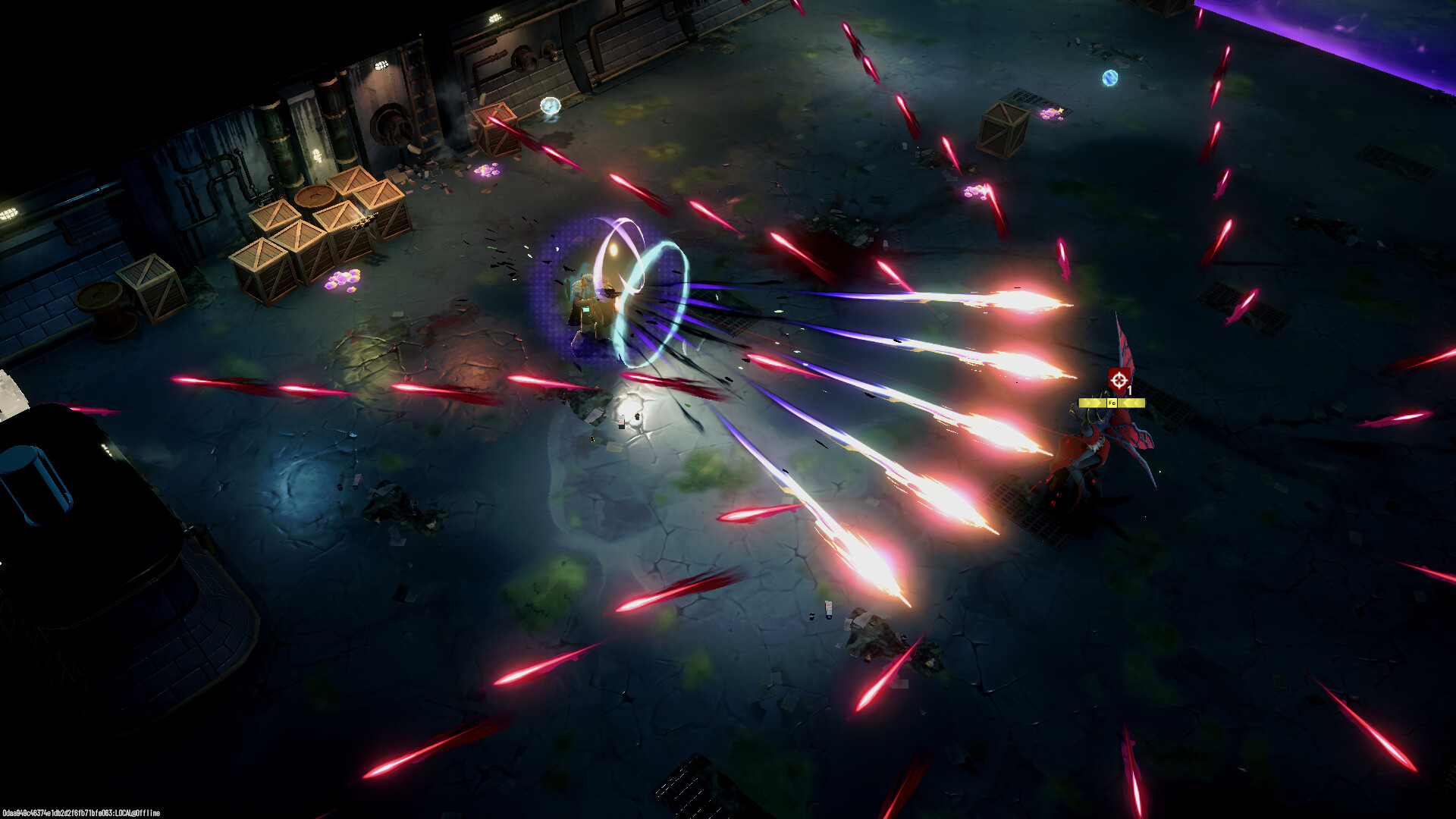
RIFTSTORM is a promising co-op extraction-tinged looter-shooter whose mid-mission build crafting and squad play loop land well, but recurring performance issues, always-online design, and a punishing weapon scarring system make it a cautious early-access pick rather than a must-buy today. Approach it with a duo in mind and expect some jank.
Game highlights
Squad-focused co-op with solo fallback
Up to three Weavers deploy into PvE missions investigating rifts, exterminating mythics, and extracting loot, with the option to run solo. Reviewers consistently enjoy the social loop and mention that tutorials and unlocks happen cooperatively, which makes onboarding with friends smoother than typical early-access extraction games.
Mid-mission build crafting via Lythograms
Each Weaver carries a personal skill tree and collects in-mission Lythogram upgrades that stack modifiers and trigger synergies, letting loadouts snowball before extraction. Players highlight this as the core of the power-fantasy pitch, with combinations reshaping playstyle from mid-run onward.
Rift Exposure Zones and risk versus reward
Optional high-corruption zones promise better loot but escalate enemy density and mortality risk, introducing a tangible push-your-luck decision alongside standard extraction. This optionality gives squads a clear choice between banking gains or chasing bigger hauls.
Weapon Scarring adds permanent loss on failure
Failed extractions scar carried weapons, replacing one mod with a random negative. The mechanic is central to the official pitch but is the most polarizing feature in reviews, with multiple players calling the penalty unfun and requesting crafting-based removal or a rework.
Extraction-lite, not hardcore extraction
The developer explicitly frames RIFTSTORM as power-fantasy forward rather than hardcore, focusing on momentum and fun over gear fear. That positioning shapes the forgiving-feeling core loop, though scarred weapons still introduce meaningful loss for risk-averse players.
What players are saying
What keeps coming up positively
- Most players describe the looter-shooter plus roguelite plus extraction mix as a genuinely creative genre blend that keeps missions varied.
- Co-op connectivity, character variety, and mid-match perk combinations are repeatedly called entertaining and well-suited for duos or trios.
- Several reviewers report the Early Access build feels more polished than expected and praise active developer engagement with community feedback.
Where the friction shows
- Performance problems including lag, stuttering, and frame drops are widely reported, with multiple players recommending a thread-count workaround just to stabilize the game.
- The always-online requirement causes disconnects that end runs and wipe progress, a major friction point for solo or unstable-internet players, and solo pausing is not supported.
- Players repeatedly criticize the Weapon Scarring mechanic, saying losing a mod after a single failure discourages experimentation and feels punitive.
- Early progression hits a materials wall that leaves unspent skill points idle, and some reviewers find loot pickups, tooltips, and mission variety shallow or repetitive.
Is it worth buying?
At $11.99 against a $14.99 regular price, the 20% discount trims the entry cost for a curious Early Access experiment, but the recurring reports of performance issues, always-online disconnects, and the polarizing weapon scarring penalty mean waiting for a deeper discount is reasonable. Buy now if you have a stable connection and a squad to play with; otherwise hold off until patches address stability and the scarring system is tuned.
Price checked 2026-08-18:$11.99,down from $14.99(20% off)。Player-fit tags
Good fit
- Squads of two or three who want a shared mission loop with friends and progressive unlocks over a single evening
- Players who enjoy stacking mid-run modifiers and crafting chaotic synergies rather than min-maxing from a menu
- Gamers comfortable with Early Access rough edges who want to influence development through active feedback rather than expecting a finished product
- Extraction-curious players who prefer an optional, power-fantasy-flavored risk loop rather than hardcore gear-fear tension
Probably not for you
- Solo players on unstable internet connections, since disconnects end runs and wipe progress without a rejoin option
- Anyone who dislikes losing gear or upgrades on a single failed mission, since the Weapon Scarring system consistently draws frustration
- Twitch-reflex perfectionists seeking hardcore extraction tension, as the official pitch and player feedback lean toward a lighter, more forgiving experience
- Players who expect offline or pause-friendly play, since the game is always online and solo runs cannot be paused
06ploink Review: A Plinko Roguelike Where Chaotic Builds Reward Repeated Failure and Creative Problem Solving

STEAM DEAL · 10% OFF
ploink
If you enjoy roguelikes that lean into messy, ever-shifting combos and don't mind losing runs while you learn the toolkit, ploink is a clever, mouse-driven sandbox worth picking up at its current discount. Hold off if you want a tightly balanced experience or hate long stretches where shop luck decides your run.
Game highlights
Build-your-own plinko sandbox
The core loop has you placing pegs on a board, dropping balls, and chasing a score threshold while triggers, walls, and obstacles steer the chaos. Boards are the real canvas, and the mouse-only control scheme means every layout is hand-placed rather than snap-aligned, which encourages experimentation over min-maxing.
Huge item catalog with open-ended interactions
The store description boasts over 200 pegs and 100 balls, including pocket dimensions, knight helmets with skill trees, amalgamations that merge pegs, and alternate universes that branch into new runs. Items are explicitly framed as open-ended components rather than forced combos, so players are expected to read tooltips and improvise rather than follow a build guide.
Difficulty layered through trinkets and boards
Trinkets stack modifiers on top of a rising score requirement, and six unlockable boards further twist how runs are designed. Twenty named bosses (a hot serial killer, a cheese god, a kamikaze uncle, and others) gate progress every few levels, so a run rarely feels like a straight shot from start to finish.
Built for slow, tinkering play
Tags include adjustable difficulty, save-anywhere support, playable at your own pace, and no timed input, which matches how most players actually engage with it: pausing, rearranging pegs, and rerolling shops for long stretches. The mouse-only option and camera comfort settings point to a deliberately friction-light interface once you get used to the cursor.
What players are saying
What keeps coming up positively
- Players consistently highlight the sheer volume of weird pegs and balls as the main reason runs feel fresh, with multiple reviewers comparing it favorably to Peggle and Balatro for combo-driven fun.
- The community loves how creative, almost Rube Goldberg-style setups can snowball into glorious screen-filling chaos when items finally click together.
- Several players describe it as one of the strongest roguelike releases of the year, citing the demo-to-full jump in content as well worth the wait.
- Reviewers repeatedly call out the high replay value, with many planning to sink serious hours into chasing new combinations.
Where the friction shows
- A common complaint is that the full game's larger item pool makes it harder to assemble coherent builds than the demo, forcing players into awkward or mixed setups when rerolls don't cooperate.
- Some reviewers warn that runs can hinge heavily on shop luck, which dilutes the satisfaction of clever planning and turns failures into feeling rather than learning.
- A few players note that the genre itself simply isn't for them even when they acknowledge the game is well made, suggesting the roguelike grind won't click for everyone.
- The mouse-only placement can feel slow for anyone expecting snap-to-grid or controller-friendly construction during longer design sessions.
Is it worth buying?
At $11.69 (10% off the $12.99 regular price) in USD at the snapshot, you're paying a modest premium over a brand-new release. The current discount trims a little off, but it isn't a deep sale, so the value depends almost entirely on whether the roguelike grind and tinkering appeal to you. If you've played the demo and clicked with it, the extra pegs and boards in the full version are worth the price; if you're curious but unsure, waiting for a bigger sale or trying the demo first is the safer move.
Price checked 2026-08-18:$11.69,down from $12.99(10% off)。Player-fit tags
Good fit
- Players who enjoy roguelikes that embrace messy, creative failure as the path to mastery
- Tinkerers who like reading tooltips, improvising combos, and watching chains snowball across a board
- Solo mouse-and-keyboard players who want a save-anywhere, at-your-own-pace sandbox without timers
- Fans of Peggle, Balatro, or similar score-chasing roguelikes who want a fresh item ecosystem to learn
- Players who enjoy long runs of board design and rerolling shops more than twitchy execution
Probably not for you
- Anyone looking for tight, balanced runs where smart planning reliably beats shop luck
- Players who dislike long stretches of grind, rerolling, and reading item descriptions before a build comes together
- Gamers expecting controller support, since the experience is mouse-only with hand-placed pegs
- Those who want cooperative or multiplayer sessions, as ploink is listed as single-player only
- Anyone put off by chaos on screen or the roguelike loop of losing runs while learning a large item catalog
07Bang Bang Barrage: A Cute Recoil-Driven Co-op Shooter for Players Who Enjoy Learning Through Repeated Failure

STEAM DEAL · 25% OFF
Bang Bang Barrage
Bang Bang Barrage is a strong pick for players who want a cute-looking shooter with a movement system that takes practice to control, especially in two- or three-player co-op. At $5.99 USD, down from $7.99, it is worth considering for local or online groups, but solo players should be ready for demanding higher difficulties and potentially repetitive gathering or progression.
Game highlights
Recoil Is the Whole Movement Language
Shooting pushes your character backward, so firing is simultaneously your attack, your dodge, and your positioning tool. The basic control is easy to start with, but learning when to tap, burst, or angle shots takes practice. This creates a satisfying link between survival and mastery rather than making recoil feel like a simple annoyance.
Build Variety Keeps Runs From Feeling Identical
Characters, weapons, upgrades, stage effects, and unusual item combinations can produce very different runs. Players specifically mention discovering chainsaws, demon-and-water-gun combinations, reflected damage, and other surprising synergies. Higher difficulties also discourage relying on one build for every encounter, which rewards experimentation and repeat play.
Co-op Is the Main Social Event
Official support includes online co-op, shared or split-screen co-op, and Remote Play Together. Reviews describe four-player sessions as chaotic and funny, with teammates knocking one another into danger, competing for shop items, and using the unusual in-game revival action. The recurring suggestion is to favor two or three players: one reviewer found four players too chaotic.
Simple Inputs, Adjustable Challenge
The game can be played with a controller, including a one-button-style setup, and it also supports mouse-only play. Adjustable difficulty and an assist mode make the early experience more approachable, while higher levels remain genuinely demanding. That makes the control floor low without removing the possibility of serious mastery.
Presentation Makes the Mayhem Approachable
The game uses a cute, quirky art style with bold animations, sound effects, music, and large on-screen announcements for hazards and bosses. That presentation softens the intensity of a top-down bullet-hell-style shooter and helps explain events during crowded co-op runs. Several reviews describe the result as adorable, funny, or cozy despite the chaos.
What players are saying
What keeps coming up positively
- Recoil movement feels simple at first but becomes deeply satisfying once players learn to control shots, combos, and positioning.
- The combination of characters, weapons, upgrades, enemies, and stage effects creates enjoyable build experimentation and keeps runs varied.
- Two- and three-player co-op is repeatedly highlighted as a fun, chaotic way to play with friends or family.
- The approachable controls, assist mode, adjustable difficulty, and cute presentation make it easy to start while still offering a hard mastery path.
Where the friction shows
- Repetitive gathering or progression grind is a recurring concern, particularly for players who want faster advancement between runs.
- Co-op can become extremely chaotic, and one review found four-player sessions less enjoyable than smaller groups.
- Friendly-fire accidents and poorly coordinated teammates can cause frequent deaths, making the social experience more demanding for some pairings.
- The same small set of actions and item combinations may feel limited to players who do not enjoy mastering timing and repeating runs.
Is it worth buying?
The supplied price is $5.99 USD versus a $7.99 regular price, a 25% discount. That is a sensible entry price for a solo player who wants an unusual arcade challenge, but it is an especially good fit for a group that will use the co-op features. Wait for a deeper discount if repeated gathering, grind-heavy progression, or highly chaotic four-player sessions are likely to be deal-breakers.
Price checked 2026-08-18:$5.99,down from $7.99(25% off)。Player-fit tags
Good fit
- Players who enjoy learning a small but demanding movement mechanic through repeated failure.
- Groups of two or three friends who want chaotic local, online, or Remote Play Together sessions.
- Players who enjoy trying unusual weapon, character, and upgrade combinations.
- Shooter fans who prefer cute presentation, bold effects, and adjustable difficulty over a grim or realistic tone.
- Solo players looking for a compact arcade challenge with assist options and a high mastery ceiling.
Probably not for you
- Players who dislike grindy gathering or slow progression between runs.
- Groups that want carefully coordinated, low-chaos multiplayer.
- Four-player groups where friendly fire, crowded movement, and overlapping effects become frustrating.
- Players who need a large, constantly changing arsenal or many distinct game modes.
08Luminary: an Early Access co-op action RPG where failure drives mastery and progression carries across runs

STEAM DEAL · 15% OFF
Luminary
Luminary is a charming but barebones Early Access action RPG best suited for patient friends who want to grow a small project alongside its two-person team. At $16.99 (15% off the $19.99 regular price), solo or co-op play feels forgiving and the visuals are vibrant, but current content thins out fast and the loop leans on gathering grind.
Game highlights
Small-team co-op with persistent characters
Drop-in, drop-out online co-op for up to three players is built into the core experience, and the same character levels up whether you play solo or in someone else's world. Town upgrades also carry into New Game+ runs, so progressing together with a regular group is the intended way to play.
Forgiving real-time combat with quick weapon swaps
Combat stays approachable for genre newcomers while offering melee, ranged, and blocking options you can switch between mid-fight. Sword/Shield and Bow are available on Day 1, with more weapon types and a Magic path promised in the roadmap.
Hand-crafted open zone with freedom of movement
About half of a planned 2km² map is available now, supporting climbing, gliding, and swimming across varied terrain. Players can reach normally hidden spots through jump exploits, which doubles as both a discovery tool and a shortcut for impatient explorers.
Tier-based difficulty and town-building loop
Each cleared boss unlocks a higher difficulty tier with tougher enemies and better XP payouts, while rescued townsfolk run Blacksmith, Armorer, Arcanist, and Chef stations that level up to craft improved gear. Mining, fishing, and animal catching feed the resource economy.
Distinctive high-fantasy art in a small package
The world avoids the grim dark palette common to many action RPGs, opting instead for colorful, vibrant environments across six playable races and a flexible character creator. Full controller support and Steam Cloud save syncing round out the presentation.
What players are saying
What keeps coming up positively
- Combat and movement feel polished for a duo-dev project, with several players comparing the melee favorably to bigger budget action RPGs.
- The high-fantasy art direction and character creator stand out, offering races and customization that look more appealing than most indie releases in the space.
- Drop-in co-op with persistent progression makes it a natural fit for groups of friends who want a shared character that grows across sessions.
- The community Discord is engaged, and several Early Access buyers enjoy watching the two-person team iterate and respond to feedback.
Where the friction shows
- Current content is thin and many reviewers finish the available map in roughly three to five hours with only a handful of enemy types and limited attack abilities.
- Gathering resources, healing potions, and arrows run out quickly, forcing players into repetitive farming and backtracking rather than varied encounters.
- Quest text, voice acting, towns, NPCs, and crafting stations are largely absent, so found loot often feels cosmetic with no clear progression payoff.
- Performance and map readability need work, with multiple players struggling to find their location on the map and noting missing quality-of-life features like sprint, weapon holstering, and retrievable arrows.
Is it worth buying?
At $16.99 (15% off the $19.99 regular), Luminary is cheaper than usual but still a real-money bet on a two-person Early Access project that multiple reviewers finished in under six hours. If you want a polished action RPG today, this will feel like a tech demo; if you are happy funding a small studio and growing a shared character with friends over time, the discount makes the risk more reasonable than paying full price.
Price checked 2026-08-18:$16.99,down from $19.99(15% off)。Player-fit tags
Good fit
- Co-op groups of two to three friends who want a shared progression sandbox to revisit as the Early Access roadmap expands.
- Genre newcomers who want forgiving combat and an approachable action RPG without the punishment of a Soulslike.
- Players who enjoy Early Access and want to influence a small two-person studio through Discord feedback and roadmap suggestions.
- Explorers who like finding hidden chests, gnomes, and jump-exploit shortcuts across a hand-crafted open zone.
- Loot-driven players who want to level up town NPCs like the Blacksmith and Arcanist to craft better gear across runs.
Probably not for you
- Solo players hunting a deep, quest-heavy action RPG with towns, NPCs, and long progression right now.
- Anyone who dislikes grinding resources, potions, and arrows because the current loop leans heavily on farming.
- Players expecting magic systems, spears, climbing, or robust crafting features at launch, since many of these are roadmap items rather than shipped content.
- Buyers who want a finished, content-complete game rather than an Early Access proof of concept with three to five hours of current content.
Share this article