01Project Hospital review: deep two-point-clinic management sim rewarding expressive building and steep onboarding for patient players
STEAM DEAL · 70% OFF
Project Hospital
If you enjoy slow, systems-heavy management and don't mind a punishing learning curve, Project Hospital is a strong pick at $7.49. If you want hand-holding, flash, or quick sessions, look elsewhere.
Game highlights
Layered diagnostic chains
Project Hospital asks you to contract insurance companies, then run examinations, lab tests, and specialized equipment to actually diagnose patients rather than guess. Multiple reviewers emphasize that real diagnostic chains, staff specialization, and insurance-driven patient flow are what make the sim feel clinical instead of cartoony. The depth is also what keeps long-time players engaged well past a hundred hours.
Expressive hospital building
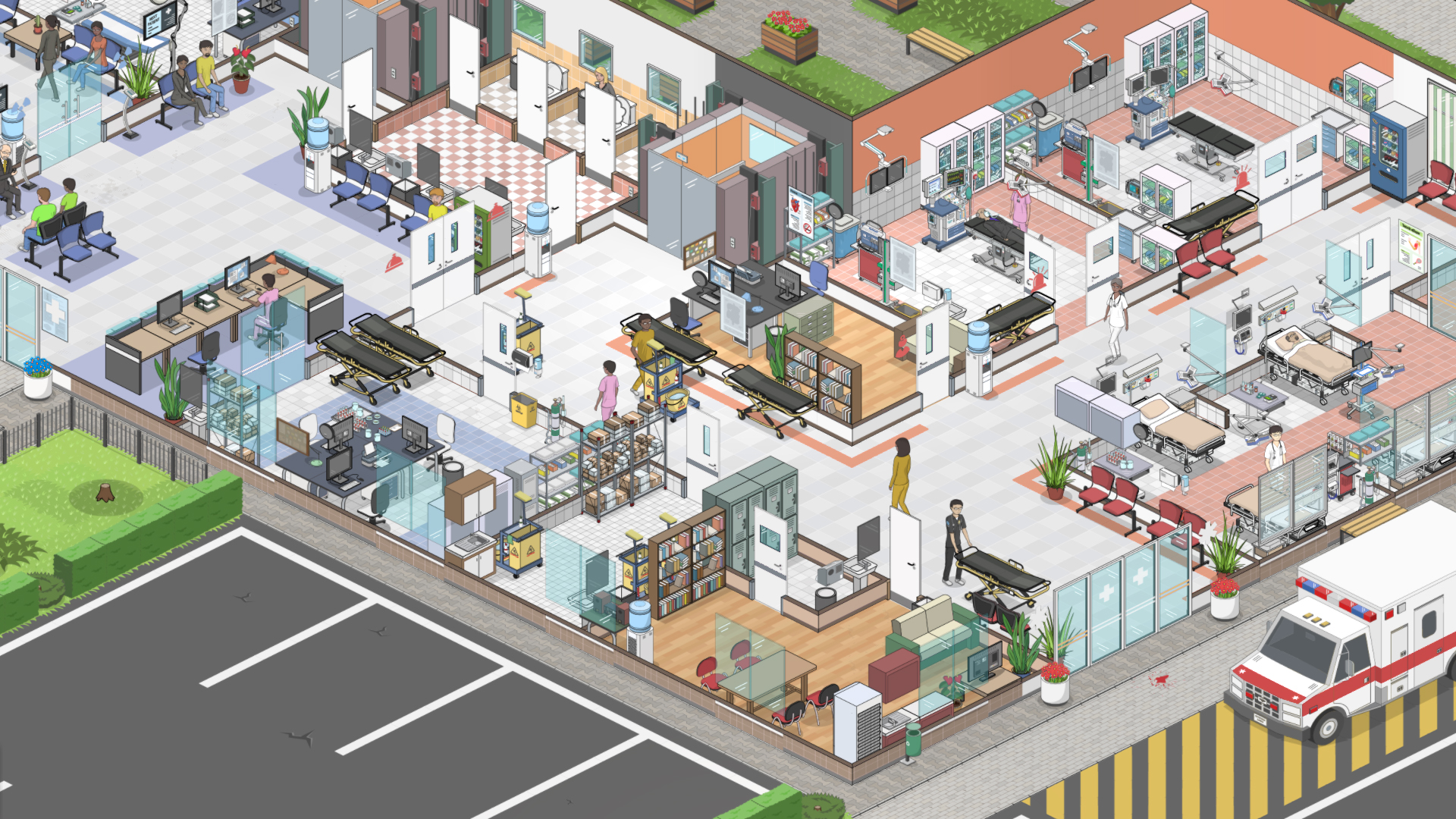
Official modes let you lay out everything from small clinics to multi-storey hospitals using objects, materials, colors, and prefabs. Reviewers describe designing flow architecture rather than just placing rooms — radiology distance, triage placement, and night-shift staffing all cascade into patient outcomes. It rewards players who like optimizing layouts as a creative exercise, not just decoration.
Multiple modes for different appetites
Tutorial levels walk new players through treatment and management basics, sandbox offers endless building from scratch or from prebuilt facilities, the campaign drops you into crisis-management saves, and six challenge levels isolate specialized departments. Solo play is the only option listed in Steam categories, and the slow-solo-management fit reflects how self-paced the experience is.
Long-tail content through mods and DLC
Players with hundreds of hours credit the Steam Workshop and official DLC for keeping the game alive years after its 2018 release, adding departments, diseases, and extra customization. The moddability is repeatedly called the reason the title still feels fresh in 2026. Expect to lean on community mods if you want maximum variety.
Broad platform support with caveats
The game runs on Windows, macOS, and Linux, with Steam Cloud, achievements, trading cards, and Workshop support. Asian-language users and Steam Deck players are directed to Proton for correct font rendering, and at least one reviewer says the Deck experience is technically playable but not comfortable. Keyboard and mouse is the strongly preferred control setup.
What players are saying
What keeps coming up positively
- Real diagnostic chains and staff specialization make medicine feel weighty rather than arcadey
- Sandbox building rewards careful layout planning, with department placement visibly affecting patient outcomes
- Hundreds of hours of engagement, with DLC and Workshop mods extending replay value well beyond the base game
- Self-paced solo management that lets you focus on intricate details of individual departments
Where the friction shows
- Steep onboarding with a dense UI and minimal tutorial help for knowing what to build or where
- A long-standing bug where expanding departments unassigns night-shift staff and locks workstation slots, frustrating players for years
- Template-based room building reduces the incentive to learn equipment requirements and diminishes layout optimization feedback
- Limited furniture, machinery, and visual variety leave expressive builders wanting more decorative options
Is it worth buying?
At $7.49 versus a $24.99 regular price (70% off), Project Hospital is an unusually cheap entry into a deep management sim, but only if you can absorb the steep learning curve and tolerate a UI that several players describe as dense. Casual or cozy players will bounce off the pressure; systems-minded players get hundreds of hours per save.
Price checked 2026-08-25:$7.49,down from $24.99(70% off)。Player-fit tags
Good fit
- Players who enjoy pathway management and bottleneck analysis across layered systems
- Solo builders who want to design flow architecture and decorate detailed hospital layouts
- Systems-focused sim players willing to push through a punishing onboarding
- Long-term players who like expanding a single sandbox save across many sessions
- Modding-curious users who want Steam Workshop content and DLC to extend replay
Probably not for you
- Players looking for a cozy, low-pressure wind-down experience
- Anyone wanting quick pick-up-and-play sessions or strong hand-holding
- Builders who prioritize flashy visuals and large furniture catalogs over systemic depth
- Multiplayer-seeking players, since only single-player is supported
- Players unwilling to learn through trial, error, and outside references
02Against the Storm Roguelite City Builder: Smart Run-Based Strategy for Players Who Want Tight City Puzzles Without Sandbox Sludge
STEAM DEAL · 70% OFF
Against the Storm
A genuinely clever run-based city builder that pairs compact 60-90 minute settlements with a punishing prestige curve, so it is an easy pickup at this 70% discount unless you specifically want a calm sandbox to tinker with indefinitely.
Game highlights
Roguelite Structure Sidesteps Late-Game Sludge
Official details describe carrying resources, upgrades, and experience between expeditions across a world map. Reviews repeatedly highlight that cycles end before the micromanagement slog typical of long-form city builders sets in. The result is a loop where each settlement is a self-contained puzzle rather than a 40-hour commitment.
Multi-Race Settlement Management With Real Trade-offs
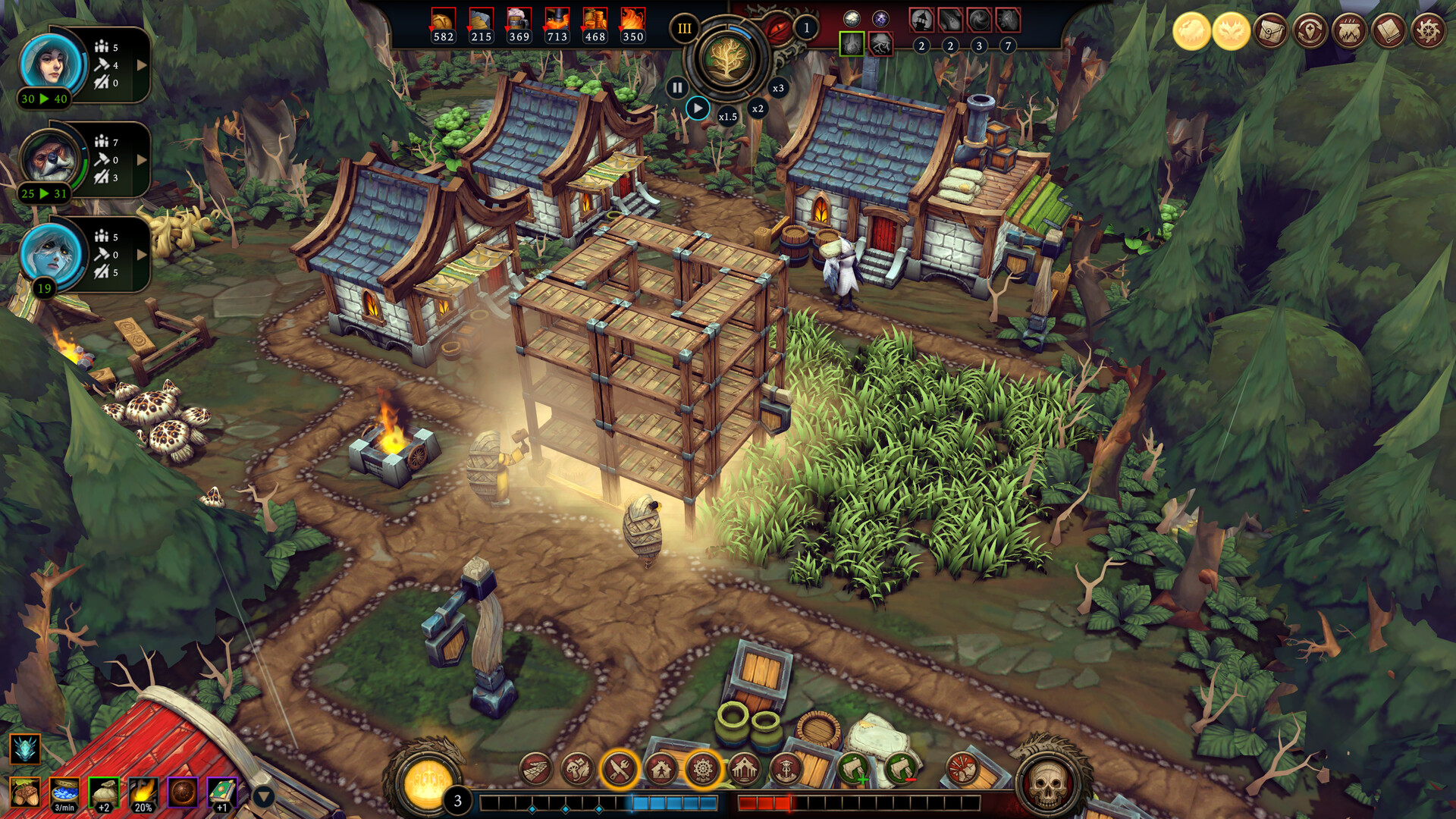
Five species with different housing, food, and luxury needs share each settlement, forcing constant prioritization. Official copy spells out race-specific strengths, and reviewers frame balancing human, beaver, lizard, fox, and harpy needs as the core skill check. Ignoring a species' preferences has visible morale consequences.
Deep Run-to-Run Variability From Modifiers and Biomes
Six biomes and hundreds of gameplay modifiers mean no two settlements open the same way, with randomized blueprints, resources, and world events per run. Players describe learning to read what the map actually offers rather than following a fixed build order. Choosing orders and blueprints after scouting is a recurring tip from experienced players.
Difficulty Ceiling Scales Through Prestige Levels
Roughly 25 prestige tiers above the base difficulty let players dial the Queen Impatience and modifier pressure upward at their own pace. Reviewers say higher prestige demands tighter optimization rather than new mechanics, which keeps the skill ceiling high without forcing newcomers into the deep end.
Atmosphere and Audio Get Frequent Praise
The Rainpunk aesthetic and somber, immersive soundscape come up in multiple reviews as a reason players return. Combined with adjustable difficulty and save-anywhere support, the package is welcoming for first sessions but heavy enough for long-term mastery.
What players are saying
What keeps coming up positively
- Players consistently say 60-90 minute runs are a perfect loop, easy to pick up after a long break without re-learning a sprawling campaign
- Reviewers repeatedly credit the randomized blueprints and resources for keeping each settlement feeling fresh rather than a copy-paste optimal build
- Many highlight strong production chain depth and the satisfaction of building a working economy from awkward starting conditions
- The Rainpunk art direction and soundtrack are frequently called out as standout atmosphere that pulls players back over hundreds of hours
Where the friction shows
- Several players describe endgame meta-progression as a heavy grind, requiring repeated tight runs and prestige climbs to unlock further content
- Multiple reviewers warn the learning curve is steep early on, especially if you try to play it like a traditional city builder instead of a roguelite
- Players note pressure from the Queen Impatience timer and hostile weather can feel punishing, which clashes with cozy expectations
- Some report that settlement layouts eventually feel repetitive even with biome and modifier variation, since core building patterns overlap
Is it worth buying?
At $8.99 against a $29.99 regular price (70% off), this is well below typical strategy pricing and a strong value for the depth on offer, especially if the run-based loop appeals. If you dislike losing settlements to pressure or you want a sandbox city you can keep tweaking forever, wait for a deeper discount or a demo run first.
Price checked 2026-08-25:$8.99,down from $29.99(70% off)。Player-fit tags
Good fit
- Players who enjoy city builders but bounce off endless late-game micromanagement
- Roguelite fans who like short, randomized runs they can complete in one or two sittings
- Strategy players who want to study a run, adapt to odd blueprint and resource combinations, and execute a tight build
- Returning players who want a game they can jump into after weeks away without rebuilding context
- Builders who like working within constraints and optimizing production chains rather than freeform decoration
Probably not for you
- Anyone seeking a calm, low-pressure sandbox to decorate indefinitely without failure states
- Players who dislike heavy unlock grinds tied to repeated prestige runs
- City builder fans who want one persistent megacity that grows across dozens of hours
- Couch or co-op players, as the game is strictly single-player with no multiplayer mode listed
- Players who prefer short sessions under 30 minutes, since most runs take 60-90 minutes once you learn the basics
03MEMORIAPOLIS historical city builder for players who enjoy watching districts grow organically through five ages
STEAM DEAL · 50% OFF
MEMORIAPOLIS
A pretty historical city builder with a satisfying organic-growth loop, but expect uneven challenge, mid-tier performance complaints, and shallow strategic depth. Worth a look at 50% off if the concept hooks you, otherwise wait for more updates.
Game highlights
Five ages and a final Wonder
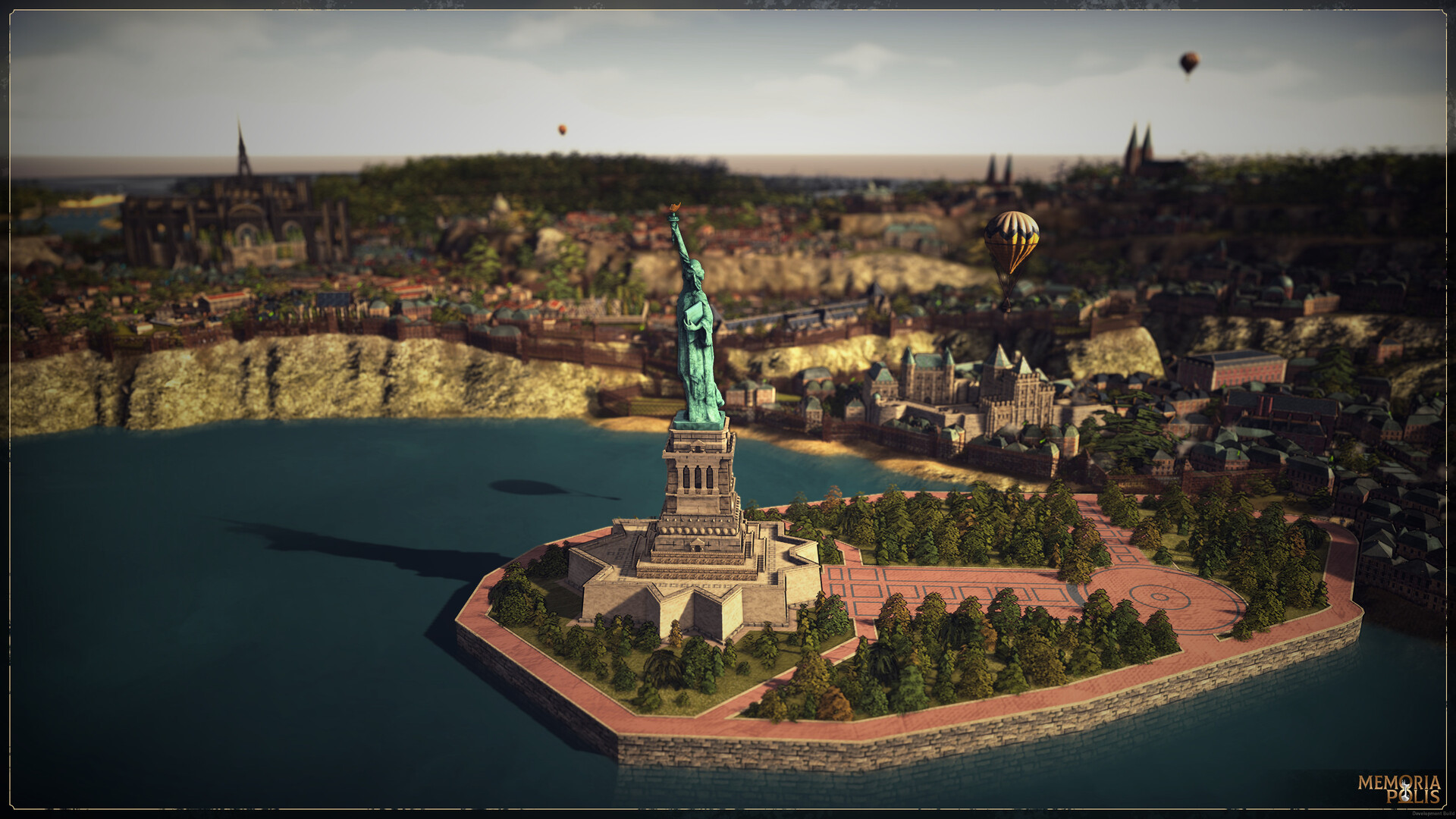
City development spans Antiquity, the Middle Ages, the Renaissance, the Age of Enlightenment, and the Industrial Revolution, with new architecture, monuments, and challenges each era. Each run ends by constructing one of three Industrial Revolution Wonders: the Eiffel Tower, Neuschwanstein Castle, or the Statue of Liberty. The dynasty hook carries progress between eras so later ages build on earlier districts.
Organic city growth
There is no rigid grid and no manual road or housing placement, so districts expand and fill in based on placement choices and citizen behavior. Players describe watching the city develop on its own as the core appeal, with no two layouts looking the same. The trade-off is that removal of placed buildings is essentially impossible, which can lock awkward shapes into your map.
Banners and Wonders overhaul
The Banners and Wonders update removed cycle limits and closed districts, added new maps, Steam achievements, difficulty levels, and a long-term dynasty goal. Factions now have distinct personalities such as Altruist, Warrior, and Expansionist with different demands and negotiation styles. Returning players report that progression now feels more natural and less constrained by a points race.
Three difficulty tiers
Easy, normal, and hard settings change resource balance, faction pressure, and objectives so the game can run relaxed or punishing. Lower difficulty lets you lean into watching growth, while harder modes demand more active management of factions and stockpiles. This is the main lever for adjusting how much pressure the campaign applies.
Monuments from history
Landmarks like the Library of Alexandria, Windsor Castle, the Leaning Tower of Pisa, and Palace of Versailles can be constructed to give each era a visual identity. Wonders and monuments act as era-defining goals beyond plain expansion. They give the long campaign a recognizable backbone across runs.
What players are saying
What keeps coming up positively
- Players enjoy watching districts expand on their own without managing roads or zoning
- The Banners and Wonders update is widely described as transforming the game into a more satisfying city builder
- Difficulty selection lets relaxed and challenge-oriented players both enjoy the campaign
- Returning players say the five-age progression and dynasty hook keep long campaigns engaging
Where the friction shows
- Several players report performance problems including memory leaks, slowdown, and stopped migration
- Many describe faction choices and political decrees as feeling inconsequential once you learn the patterns
- Resource production and storage pressure force players to dedicate districts to quiet quarries and mines
- Limited building variety and inability to remove placed structures cause districts to feel repetitive
Is it worth buying?
At $16.00 USD, half off the $32.00 regular price, the discount makes the experiment easier to justify for fans of organic-growth city builders. The price is fair given the campaign length, but the performance and depth complaints mean it is not an instant buy even at 50% off.
Price checked 2026-08-25:$16.00,down from $32.00(50% off)。Player-fit tags
Good fit
- Players who enjoy watching cities grow organically rather than zoning every block
- Fans of historical city builders spanning multiple eras with a dynasty throughline
- Strategy players who want adjustable difficulty from relaxed to punishing
- Players curious by the Banners and Wonders overhaul and willing to relearn the systems
- Anyone who likes Cities Skylines pacing but wants a less hands-on management loop
Probably not for you
- Players who want deep strategic choices comparable to Civilization or survival city builders
- Anyone sensitive to performance issues, memory leaks, or mid-game slowdowns
- Players who prefer manual road placement, zoning, and full removal of buildings
- Strategy fans looking for meaningful faction politics with high-stakes consequences
- Players expecting tight simulation challenge on medium difficulty without self-imposed goals
Share this article