Catch up on the essentials
- MENACE is a satisfying, deep tactical RPG from the Battle Brothers team, but it is firmly an Early Access product with steep onboarding costs, mid-mission save restrictions, and AI behavior that frustrates players looking for a quick, polished pickup-and-play XCOM-style experience.
- Buy if you enjoy deliberately awkward controls and want a short, repeatable 9-hole sim that genuinely improves with practice; wait for a deeper discount if you expect a full course roster or built-in multiplayer.
- Genre fans who enjoy tinkering will get strong value; players sensitive to performance drops or motion sickness should wait for a patch.
Selected from this article · 2026-10-01
Read on for the full picture01MENACE: a deep sci-fi turn-based tactical RPG for players willing to grind through a brutal Early Access learning wall

STEAM DEAL · 25% OFF
MENACE
MENACE is a satisfying, deep tactical RPG from the Battle Brothers team, but it is firmly an Early Access product with steep onboarding costs, mid-mission save restrictions, and AI behavior that frustrates players looking for a quick, polished pickup-and-play XCOM-style experience.
Game highlights
DEFE contributions and gear persistence
MENACE has squads and named squad leaders that operate on a combined-arms system with infantry, tanks, and walkers, and once you obtain gear through the black market or as spoils, you keep it across missions rather than losing it after each fight. The developers are also credited with intelligent, XCOM-informed design touches like HP-buffer squaddies around named leaders, which reduces the catastrophic spiral of losing a key character from a single bad RNG roll.
DEFE layered campaign and faction management
The campaign is built around responding to distress calls across multiple planets in the Wayback system and choosing which factions to align with, from pirates who gather intel to mercenary repair teams who supply advanced tech. The TCRN Impetus acts as a mobile HQ that ferries you between operations and unlocks orbital support and R&R upgrades, so strategic decisions about who to befriend ripple into the equipment and intel you can field in battle.
DEFE deadly, detail-rich tactical combat
Combat is large-scale and punishing, with permanent squad leader death, weather and biome effects, and enemies ranging from human forces to an alien threat whose behavior is unpredictable. The systems reward careful attention to weapon efficient ranges, suppression mechanics, flanking, and cover destruction, which is why veterans compare the tactical layer to tabletop wargames and Company of Heroes rather than a streamlined XCOM clone.
DEFE Early Access scope and ongoing rebalancing
MENACE launched into Early Access on February 5, 2026, with Overhype Studios actively pushing balance patches like the OCI rework and removal of the Promotion Tax. Players note that expensive troop tiers and high perk counts are now more viable than in the earliest EA builds, but the patch notes and recent negative reviews confirm there is still meaningful balance and polish work ahead before the combat loop feels fully tuned.
DEFE single-player only, Windows-only footprint
MENACE is strictly a single-player Windows experience with no macOS or Linux support and no co-op or multiplayer modes listed. Categories include Steam Achievements, Trading Cards, Cloud saves, and Family Sharing, so progression and unlocks carry on your own machine but cannot be shared with a friend in the same squad.
What players are saying
What keeps coming up positively
- The combined-arms tactical depth and the way named squad leaders are protected by squaddies is widely praised as a smart, XCOM-aware design choice that reduces the urge to savescum.
- Long-time Battle Brothers fans consistently call the core combat loop satisfying and the tabletop-wargame feel of firefights a long-craved experience, especially once you learn weapon effective ranges and ammo management.
- Presentation gets strong marks, with players calling out laser rifle animations, voice acting, and overall visual polish as standout for an Early Access tactics game.
- The strategic layer of choosing which distress calls to answer and which local factions to align with adds meaningful replay value between runs.
Where the friction shows
- Enemy AI is criticized for behaving as if it can see through concealment and knows player weapon ranges, with enemies camping just outside detection and forcing players to sacrifice a squad to bait them into firing positions.
- Multiple players report that MENACE cannot be saved mid-mission, which kills any chance of short sessions and makes the game essentially unplayable on a Steam Deck commute or for anyone with limited play windows.
- The opening hours present a steep learning curve with unintuitive UI elements, hard-to-read weapon range and line-of-fire indicators, and frequent misclicks that punish newcomers before the systems click.
- Several reviews describe repetition and resource scarcity as a recurring frustration, with mid-game progression feeling like a grind rather than the rewarding Battle Brothers-style momentum some hoped for.
Is it worth buying?
At $29.99 with a 25% discount off the $39.99 regular price, MENACE is a reasonable buy for tactics players who specifically want a deep Early Access project they are willing to grow with, but it is not an impulse pickup; budget for a rough first ten to twenty hours while you learn weapon ranges, UI quirks, and AI behavior, and expect to replay missions because there is no mid-mission save.
Price checked 2026-10-01:$29.99,down from $39.99(25% off)。Player-fit tags
Good fit
- Players who enjoy deep, punishing turn-based tactical RPGs like Battle Brothers, XCOM, or Jagged Alliance and want a sci-fi combined-arms sandbox with infantry, walkers, and tanks.
- Tactics hobbyists willing to read patch notes, learn ammo and weapon effective range mechanics, and tolerate an Early Access balance curve in exchange for systems depth.
- Solo players who can commit to long, uninterrupted sessions and treat each operation as a multi-mission arc rather than a quick one-off battle.
- Fans of faction diplomacy and strategic layer choices who like deciding which planets to prioritize and which local allies to cultivate for intel or equipment.
- Existing Battle Brothers fans who want to support Overhype Studios' next project and are comfortable funding an Early Access roadmap.
Probably not for you
- Anyone needing short, save-anywhere sessions, because mid-mission saves are not supported and interrupted runs must be restarted later.
- Buyers expecting a polished, fully balanced retail experience, since MENACE shipped into Early Access with active rebalancing, UI rough edges, and known bugs still being addressed.
- Tactics players who dislike opaque enemy AI behavior and want a fair, fully readable line-of-fire and detection model on the strategic layer.
- Anyone without a Windows PC, because the game has no macOS or Linux support and no co-op option for shared progression.
02Normal Golf Game: a QWOP-style sim rewarding patient golfers who accept the steep early learning curve
STEAM DEAL · 20% OFF
Normal Golf Game
Buy if you enjoy deliberately awkward controls and want a short, repeatable 9-hole sim that genuinely improves with practice; wait for a deeper discount if you expect a full course roster or built-in multiplayer.
Game highlights
Deliberately awkward swing controls
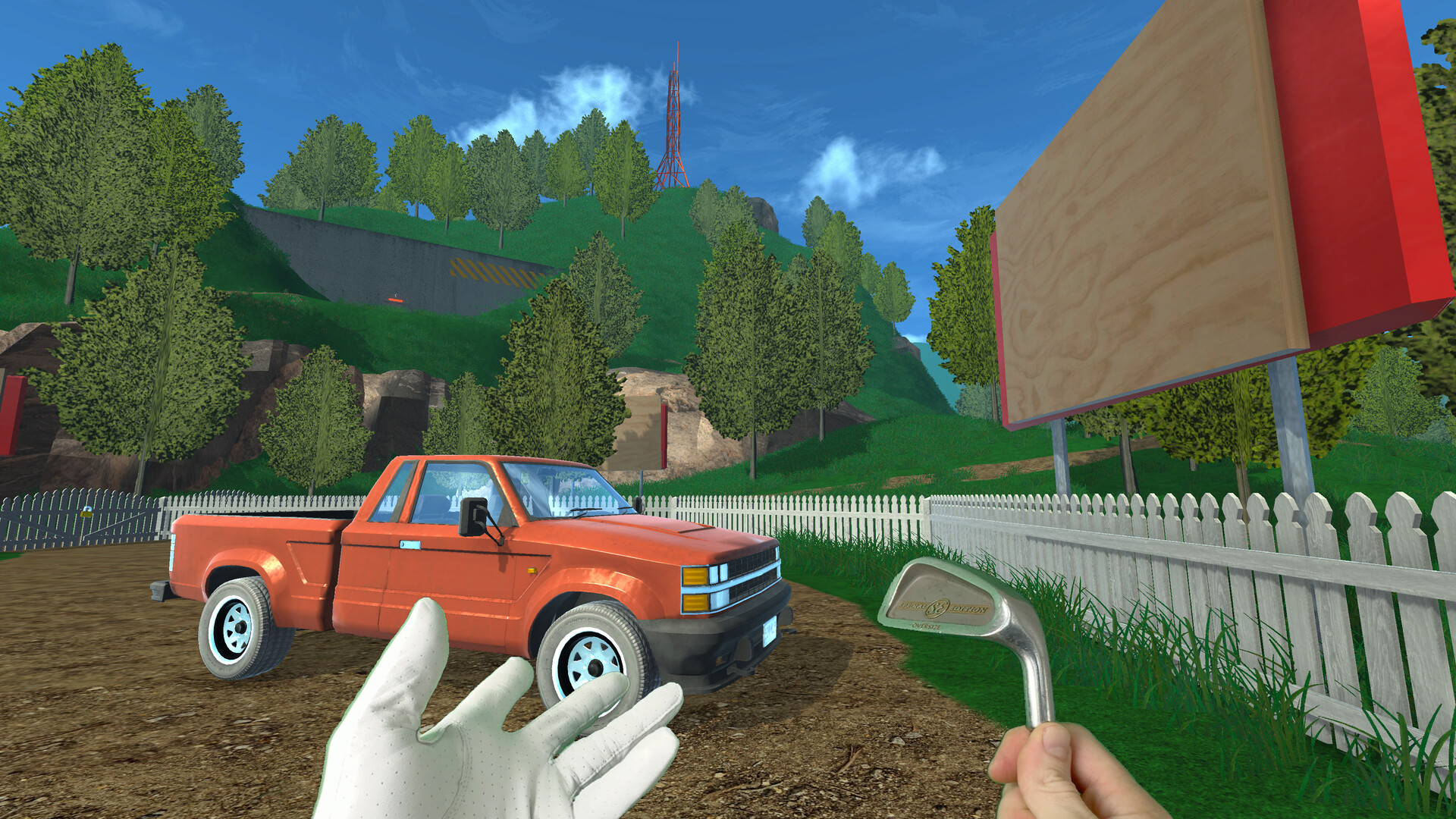
Stance, aim, swing path, and club-face orientation are all managed simultaneously, so a single variable going wrong ruins a shot. Multiple reviewers describe the early hours as foreign and unwieldy, then report the satisfaction clicking in once those inputs become intuitive. It is built in the QWOP tradition of awkward-as-feature design rather than arcade golf.
Only nine holes to play on release
The shipped course is a 9-hole layout that doubles as a playground for trick shots, and reviewers specifically note there is no back nine yet. Several players say they would happily replay those nine holes for dozens of hours, while others feel the content is thin for the asking price. Future courses and a back nine are explicitly wished for across multiple reviews.
Bounty-driven progression loop
Progression is gated by bounties, challenges like hitting signs or finding hidden gongs, which unlock better clubs and let you keep practicing. The grind surfaces repeatedly in negative feedback, with players complaining that bounties gate the basic ability to practice. Positive players generally enjoy the variety and difficulty spread.
Realistic shot feedback on mishits
Topping, slicing, and hooking the ball feel as punishing as real golf, and small swing adjustments produce meaningful improvement over time. Multiple reviewers, including self-described 20-handicap golfers, call it the most realistic golf sim they have played. The moment a clean strike flies straight is the recurring payoff players highlight.
Solo-dev presentation and writing
The game is built almost entirely by Luke Muscat of Fruit Ninja and Jetpack Joyride fame, and the intentionally janky chromakeyed player animations are part of the charm. Reviewers enjoy the tongue-in-cheek writing framing a $100,000 fee and a hostage-style premise. It is a clear auteur project rather than a polished studio production.
What players are saying
What keeps coming up positively
- The swing mechanics feel genuinely realistic, with mishits and recovery reading like real amateur golf.
- Players feel real improvement over a few hours as stance, aim, and club-face start to click together.
- The 9-hole course invites replay, with several reviewers returning for dozens or hundreds of hours.
- Bounty challenges add variety and difficulty, keeping sessions from feeling like straight scorecard grinding.
Where the friction shows
- Only nine holes are available, and reviewers explicitly ask for a back nine and more courses.
- Players cannot practice freely until bounties are completed, which reads as an artificial progression gate.
- Built-in multiplayer is missing, so turn-taking has to be improvised locally or via streaming setups.
- The bounty gimmick layer turns off golfers who simply want to play a round without side objectives.
Is it worth buying?
At $7.99 with a 20% discount off the $9.99 regular price, the cost is low enough that the nine holes and bounty loop can carry a week of casual play. Realistic-sim fans who specifically want QWOP-style golf will feel they got their money's worth even at full price. If you want a full 18-hole career, online multiplayer, or unrestricted practice, the current scope may not justify even the discounted tag.
Price checked 2026-10-01:$7.99,down from $9.99(20% off)。Player-fit tags
Good fit
- Players who enjoy QWOP-style awkward controls and reward patient practice sessions.
- Solo golfers who want a short, replayable 9-hole round they can pick up in 30-minute bursts.
- Real-golf hobbyists who care about realistic mishits like tops, slices, and hooks.
- Streamers or small groups willing to share a controller and play turn-based rounds together.
- Curious players who want a tight solo-dev project with personality over a polished studio package.
Probably not for you
- Players expecting a full 18-hole career mode at launch.
- Anyone wanting built-in online multiplayer or matchmaking for head-to-head rounds.
- Golfers who want to practice freely without completing bounty objectives first.
- Players who dislike deliberately clunky controls as a design choice.
03Shin Megami Tensei V: Vengeance on PC — A Steep-Learning JRPG Reward for Players Who Love Demonic Fusion and Press Turn Strategy

STEAM DEAL · 70% OFF
Shin Megami Tensei V: Vengeance
At $17.99 against a $59.99 regular price, this is a strong pickup for anyone ready to push through a punishing opening and a thick demon-fusion system. The combat loop and buildcraft carry it for players who like planning several moves ahead, but expect sparse storytelling and a brutal final-chapter grind.
Game highlights
Press Turn combat built on planning, not reflexes
The turn-based Press Turn system punishes wasted actions and rewards players who learn weaknesses, target priorities, and Magatsuhi timing. Builds lean heavily on crit paths and party synergies, and several players explicitly call the combat the best mechanical reason to stay. Because the same system shows up in many bosses, fights reward preparation over button-mashing.
270+ recruitable demons with surprising personality
Official details list over 270 demons, and players highlight near-unique dialogue and animations per demon, plus Demon Haunt chats that react to ongoing story beats. Fusion and team-building have serious depth, so changing your roster actually changes how every fight feels. Multiple reviewers describe the demon roster as the heart of why they kept playing.
Two full routes with very different tones
Vengeance ships with both a Canon of Vengeance path centered on the Qadištu and the original Canon of Creation route. New sidequests, demons, music tracks, and exploration features like Magatsuhi Rails expand the wasteland Tokyo map. Playing both routes is where most of the long-term value lives.
Demanding opening that eventually pays off
Several reviewers describe the early hours as a wall of menus, demon stats, and unfamiliar systems before the Press Turn loop clicks. Once it does, the strategic ceiling is one of the strongest in modern JRPGs, so the friction is front-loaded rather than constant. Players who bail before the system opens up usually miss the best part.
Final chapter asks for serious grinding
Multiple helpful reviews warn that the late game, especially superboss prep, can turn into a long item and level grind. The DLC Mitama dances and other paid boosters can shorten that loop, which is why some players regret buying them on a first playthrough and recommend waiting. Built-in difficulty spikes reward patience more than rushing.
What players are saying
What keeps coming up positively
- Press Turn combat gives every battle a strong strategic ceiling and rewards planning several turns ahead
- Fusion and demon customization produce enormous build variety, especially around crit-focused party setups
- Demon roster is huge, with most demons having unique animations, moves, and flavor dialogue that reacts to the story
- Presentation, atmosphere, and the wasteland-Tokyo aesthetic land especially well on PC and Steam Deck
Where the friction shows
- Story and named characters are thin and forgettable compared to most JRPGs, with the appeal sitting in lore and atmosphere instead
- Late game and superbosses push the game into noticeable grinding territory without paid Mitama DLCs
- Single-player game requires an internet connection at launch because of Denuvo-style DRM, which frustrates offline players
- Wasteland exploration and menus can blur into a monotone yellow-and-brown palette that some players find visually exhausting
Is it worth buying?
At $17.99 with a 70% discount off the $59.99 regular price, the price-to-content ratio is strong for a 60+ hour JRPG with two full routes and a massive demon roster. It is a much easier recommendation for players who already enjoy Atlus buildcraft and SMT's learning curve than for casual Persona fans expecting social links. If you hate grinding or offline-only play, wait for a deeper discount, since the final chapter is where most of that friction shows up.
Price checked 2026-10-01:$17.99,down from $59.99(70% off)。Player-fit tags
Good fit
- Players who like learning a deep combat system through trial, error, and boss preparation
- Players who enjoy fusion-heavy team building and min-maxing crit or Press Turn setups
- JRPG fans who value atmosphere, lore, and exploration more than character-driven story
- Returning Atlus fans who want the expanded Vengeance route plus the original Canon of Creation
- Players comfortable waiting for the combat and fusion systems to click before judging the game
Probably not for you
- Players who want a strong central cast and a tightly written main story
- Anyone who refuses to grind levels, items, or demon stats for late-game bosses
- Players who need a fully offline single-player experience without periodic internet checks
- Players who bounce off unforgiving openings and dense menu-driven progression
- Crossover Persona fans expecting social links, daily life sim, or a gentler difficulty curve
04DEATH STRANDING DIRECTOR'S CUT on PC: a slow-burn delivery epic for players who embrace a steep opening curve
STEAM DEAL · 75% OFF
DEATH STRANDING DIRECTOR'S CUT
Worth picking up at the heavy 75% discount if you have patience for a deliberate opening and want an unusual narrative journey; if you crave fast action loops or breezy sessions, give it a pass at any price.
Game highlights
Delivery-as-gameplay loop with a meaningful learning curve
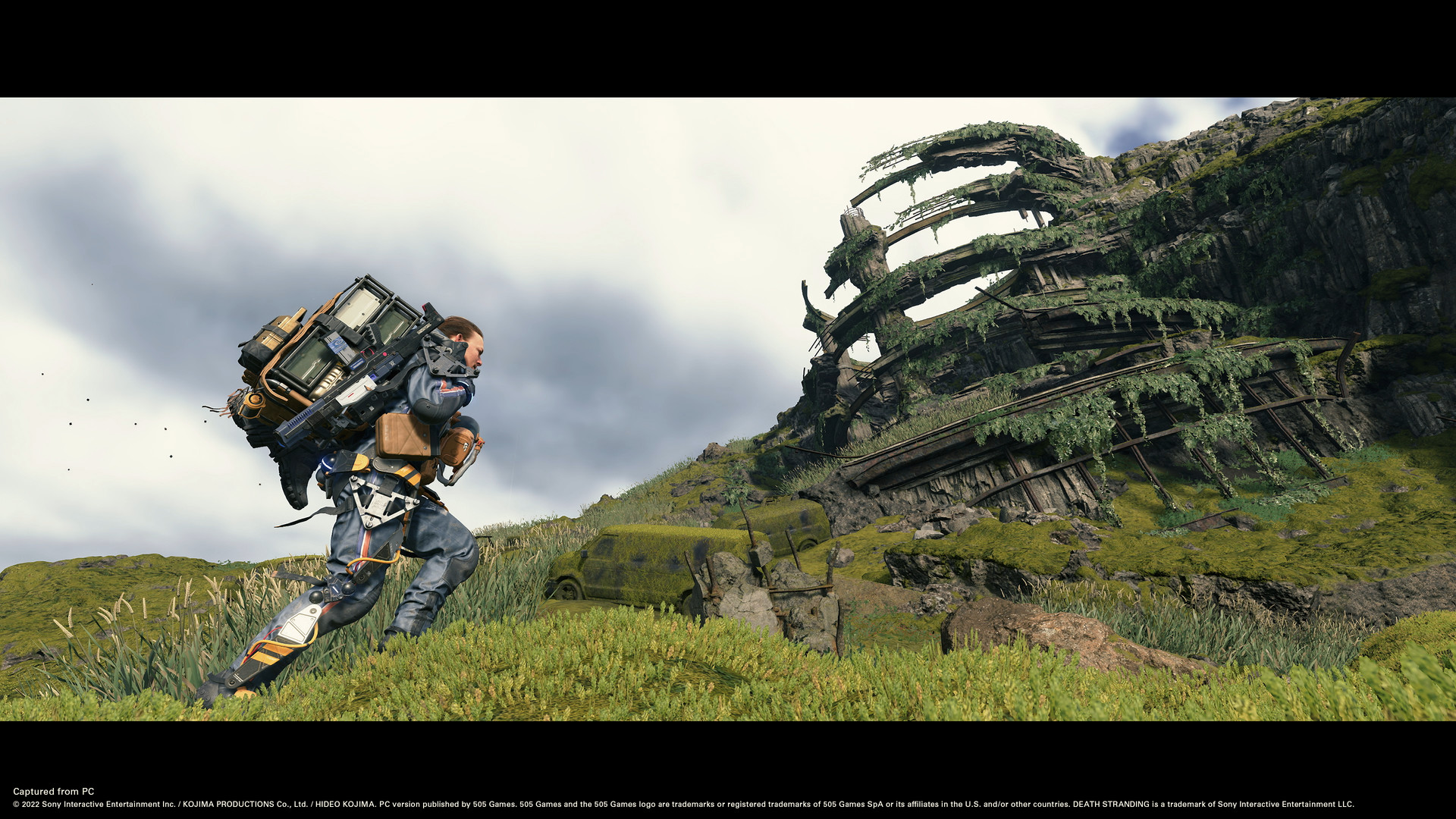
Official descriptions frame the core as Sam Porter Bridges carrying cargo across a fragmented America to bring survivors back online. Reviews repeatedly describe the first several hours as confusing or aimless, with the loop of planning routes, balancing cargo, and watching your footing only clicking later. That opening friction is the main thing to budget time for, especially since unlocks like better tools, vehicles, and structures only arrive as connection levels climb at each facility.
Asynchronous Social Strand System that softens the solitude
The official page highlights the Social Strand System, and player reports back that up: ladders, bridges, generators, and lost cargo left by other travelers show up in your world without traditional co-op. Several reviews specifically called out moments when a stranger's structure saved a tense delivery, framing it as a quiet, supportive community rather than a competitive multiplayer mode. If you play solo but still like the feeling that other people are rooting for you, this is a rare fit.
Director's Cut extras and PC-specific features
The PC release lists high frame rate, photo mode, ultra-wide monitor support, and crossover content from Half-Life and Cyberpunk 2077, with extra orders shown in the official breakdown including support skeletons, a firing range, and a racetrack-friendly vehicle. Reviews of the Director's Cut edition note that it refines the base game rather than reinventing it, layering in quality-of-life tools and side content rather than remaking the campaign. Worth knowing if you are deciding between this and the original release.
Story-first design that rewards sticking with it
Hideo Kojima's script leans heavily on lore, recurring characters, and abstract terminology, and reviewers consistently warn the first act can feel opaque. Multiple players who almost bounced early describe a turning point where delivery stops feeling like busywork and starts carrying narrative meaning, with themes of grief, connection, and rebuilding landing harder the longer you invest. Treat the opening as setup rather than the full experience.
Atmosphere, soundtrack, and slow traversal as a feature
Several reviews frame the lonely landscapes, Low Roar-adjacent soundtrack cues, and on-foot traversal as deliberately meditative rather than empty, contrasting with action-focused games. The trade-off, also called out in critiques, is that vehicles handle poorly over rough terrain and stealth against spectral BTs can feel tedious rather than tense. Going in expecting a contemplative mood piece, not a sprint, is the safest mindset.
What players are saying
What keeps coming up positively
- Many players describe the game clicking after a frustrating opening, with the delivery loop becoming genuinely satisfying once tools, structures, and connection levels unlock.
- The asynchronous Social Strand System gets recurring praise for making a solo journey feel supported, with strangers' ladders, generators, and signs arriving exactly when needed.
- Reviewers consistently call out the atmosphere, soundtrack, and cinematic framing as standout, often comparing the experience to a long post-apocalyptic film rather than a typical action game.
- Several players who initially bounced came back during a personal low point and found the themes of connection and rebuilding land harder than expected.
Where the friction shows
- Multiple reviewers describe the opening hours as confusing or empty, with jargon-heavy cutscenes and slow pacing that nearly made them quit.
- Vehicle physics, especially on uneven ground, draw repeated complaints, and on-foot traversal can feel like busywork between set pieces.
- Stealth against BTs and forced combat sections are flagged as awkward and underdeveloped, clashing with the delivery core loop.
- Several negative reviews argue the 40-plus-hour runtime stretches a thin delivery premise too thin, with the same cargo-balancing challenge repeated across many missions.
Is it worth buying?
At the observed $9.99 against a $39.99 regular price (75% off), this is a sensible trial price for a long single-player campaign if you already enjoy Kojima's storytelling. The discount is steep but there is no indication this is an all-time low, so if you are on the fence you can reasonably wait and see whether a sharper sale appears. Skip entirely on non-tier buyers expecting a breezy action game.
Price checked 2026-10-01:$9.99,down from $39.99(75% off)。Player-fit tags
Good fit
- Players who enjoy story-first single-player campaigns and tolerate opaque openings that pay off later
- Slow-burn explorers who like route planning, terrain reading, and gradual unlock progression
- Solo players who want a quiet sense of community through asynchronous shared structures rather than direct co-op
- Kojima fans and curious newcomers who have not played the original release and want the PC-tuned Director's Cut package
Probably not for you
- Action-first players who want responsive gunplay, fast vehicles, and constant combat pacing
- Anyone looking for a breezy or cozy wind-down game, since several players report pressure and tedium rather than relaxation
- Players unwilling to push through a multi-hour opening before the systems click
- Anyone expecting traditional multiplayer or co-op, since interaction is asynchronous and largely indirect
05The Last Caretaker: First-Person Survival Crafting on a Drowned Earth With a Demanding Early Learning Curve
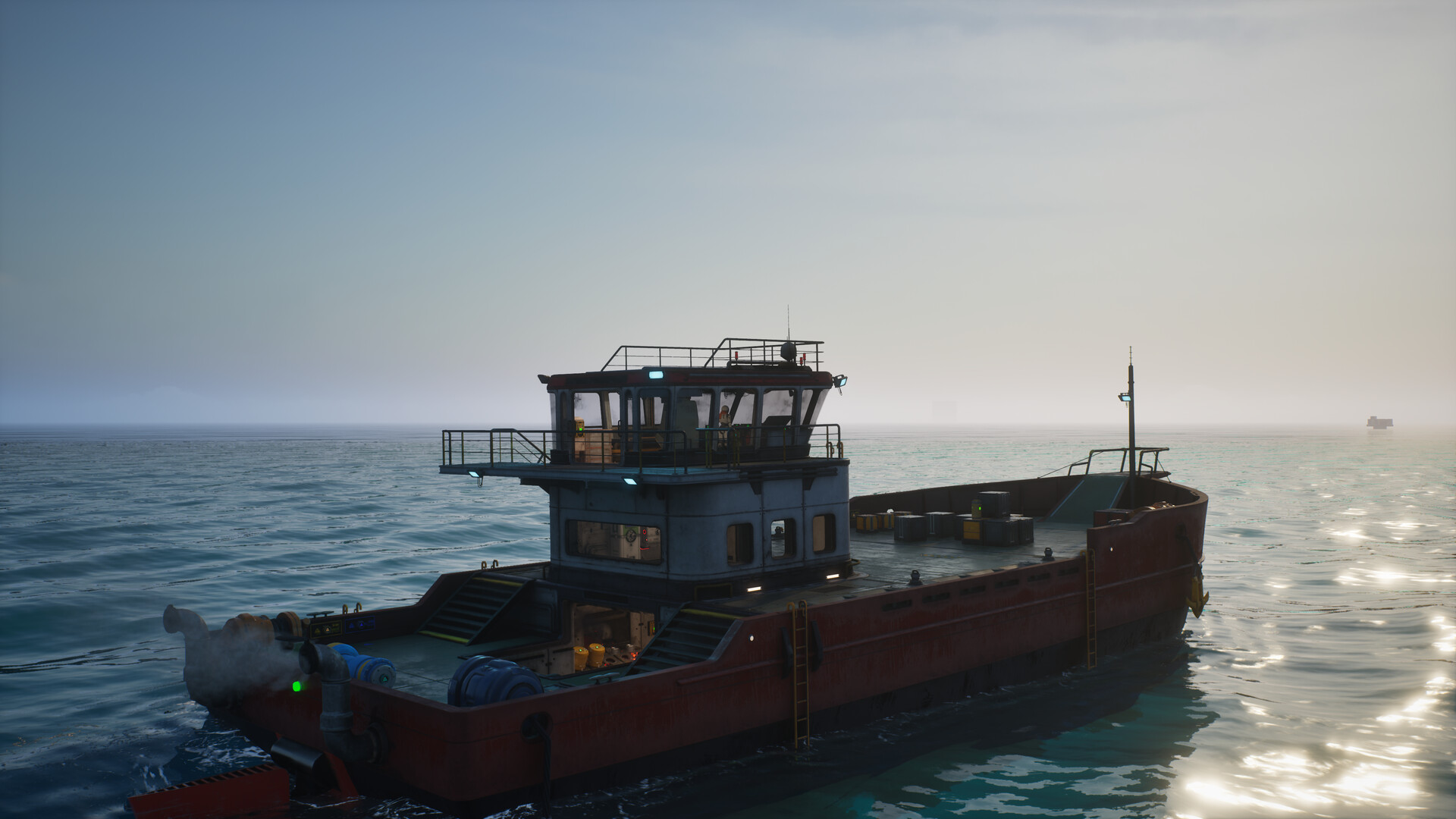
STEAM DEAL · 20% OFF
The Last Caretaker
The Last Caretaker is a meditative, systems-heavy solo survival-crafting adventure that rewards players willing to wrestle with cable management and automation. At $27.99 (20% off the $34.99 regular), it is a reasonable Early Access buy for genre fans, though performance and persistence bugs still bite.
Game highlights
Salvage, recycle, and rebuild an ocean world
Players pilot a ship across a flooded Earth, scavenging wrecked facilities and underwater ruins for materials that feed a recycler. Crafted outputs drive power grids, fuel networks, and the Lazarus Complex where rescued seeds are restored before orbital launch. Every structure ties back to the central goal of returning humanity to the stars.
Automation and bottleneck optimization as the core loop
Once basic production is online, the focus shifts to routing cables, balancing power draws, and reorganizing layouts for throughput. Reviewers describe spending dozens of hours rewiring sites purely for cleanliness and efficiency, treating the ship and docked outposts like a factory puzzle. That iterative tinkering is what keeps long sessions engaging.
Tone is lonely and melancholy, not horror
The atmosphere leans reflective rather than threatening, with empty docks, audio logs, and abandoned companions setting a quiet, post-civilization mood. Combat exists in the form of rogue machines, but hostile encounters are sparse and the default pace is calm exploration. Players who enjoy low-key survival sandboxes over action pressure will feel at home.
Single-player only, with full controller support
The Steam listing lists only a single-player mode, and several players explicitly wish co-op existed. Save Anytime, Steam Cloud, and DualSense/DualShock support make it accessible from a couch, though keyboard-and-mouse users report some friction with platforming sections.
Early Access with steady but unfinished systems
Released November 6, 2025, the game is still labeled Early Access, and players note roughly 25-30 hours of main content before endgame loops kick in. Quality-of-life patches have arrived regularly since launch, but review evidence shows cable-disconnect bugs and a steep onboarding cost are still part of the package.
What players are saying
What keeps coming up positively
- Solo salvage-and-rebuild loop is genuinely relaxing and easy to lose hours to
- Tinkering with power, fuel, and cable routing scratches the same itch as factory builders
- Visuals and flooded-world atmosphere are widely called out as beautiful
- Devs push frequent quality-of-life patches and respond to community feedback
Where the friction shows
- Cable connections frequently break or stop functioning when leaving an area, forcing manual reconnections
- Performance tanks on mid-to-high hardware, with reports of unplayable framerates even on a 4070 Super
- Head bobbing causes severe motion sickness and accessibility toggles are still missing
- Onboarding is rough and keybinds overlap, with the same mouse button firing, grabbing, and interacting
Is it worth buying?
At $27.99 during a 20% discount against a $34.99 regular, the price matches a typical Early Access survival-craft entry rather than a deep sale. Buyers should treat it as a bet on continued optimization and cable-persistence fixes, not a finished product. Genre fans who enjoy tinkering will get strong value; players sensitive to performance drops or motion sickness should wait for a patch.
Price checked 2026-10-01:$27.99,down from $34.99(20% off)。Player-fit tags
Good fit
- Players who enjoy optimizing automation and cable routing as a primary activity
- Solo survival-crafting fans comfortable with Early Access quirks
- Anyone wanting a calm, lonely exploration pace over combat pressure
- Tinkerers who like redesigning factory layouts for efficiency
- Controller players looking for a couch-friendly single-player sandbox
Probably not for you
- Anyone prone to motion sickness from head bobbing without an in-game toggle
- Players without patience for the early learning curve and overlapping keybinds
- Buyers who need multiplayer or co-op support
- Players on mid-range hardware unwilling to lower settings for stable framerates
Share this article